Smart gardens explained: hydroponic pots for your counter
A smart garden waters, feeds and lights your herbs automatically on a timer. How it works, what it costs to run, and which of our 3 models fits…
Read moreLearn how to grow herbs, vegetables, and leafy greens without soil using modern hydroponic systems and smart gardens. Here you’ll find guides, reviews, and tips on the latest technology that makes year-round indoor gardening easy, efficient, and sustainable.
A smart garden waters, feeds and lights your herbs automatically on a timer. How it works, what it costs to run, and which of our 3 models fits…
Read moreI compare compact smart gardens for studio apartments, from the 22 × 13 cm LetPot Mini at 59 € to silent no-pump pots, with real monthly running costs.
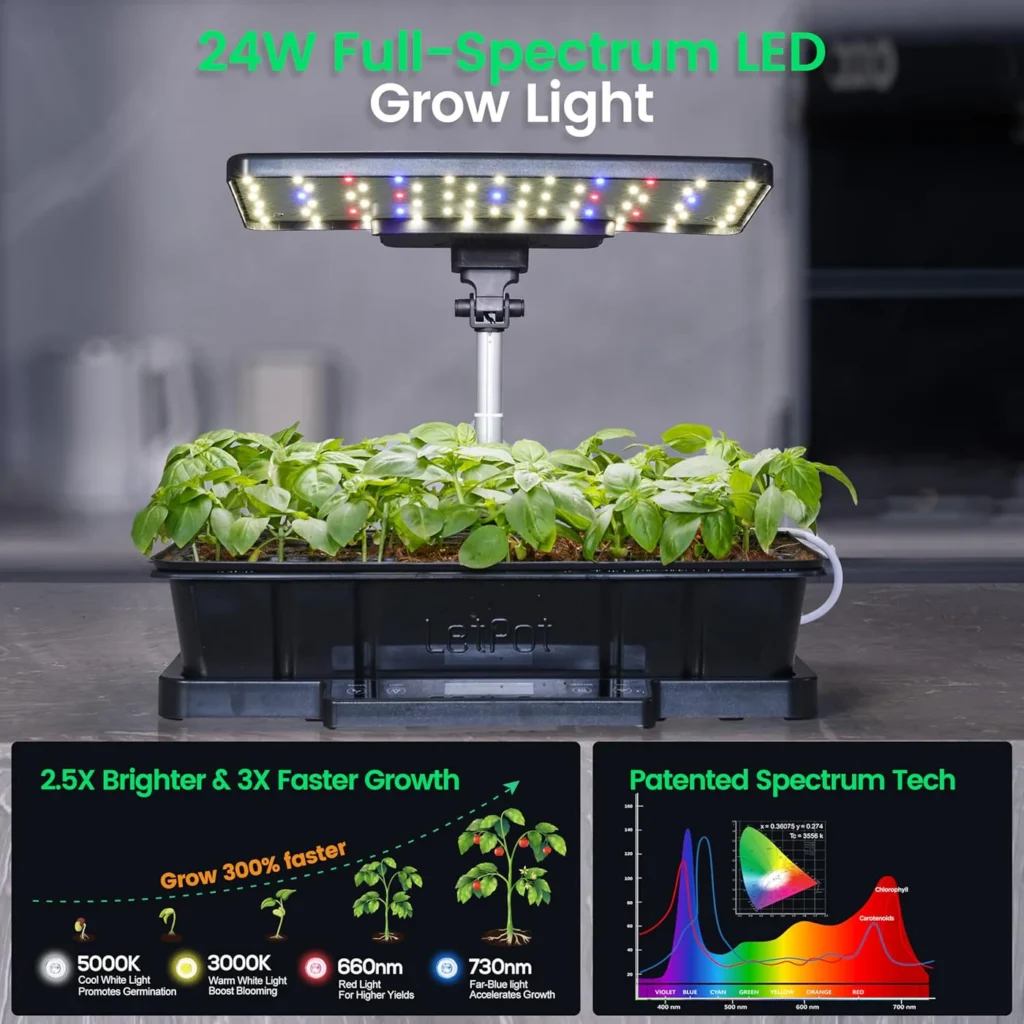
Read moreWhat do PAR, PPFD and kelvin actually mean for a grow light? I explain the spectrum your indoor plants need, with real numbers and simple buying advice.
Read moreA comparison of six smart gardens for 2026 through a European lens: pods, running costs, capacity and what you can actually buy and grow at home.
Read moreLetPot and Click & Grow compared for European kitchens: pods, running costs, capacity, automation and energy use, point by point.
Read moreDwarf and determinate tomatoes are the only realistic indoor choice. I explain the height trap, the varieties that work in a smart garden and how to keep them…
Read moreQuick answer: the 7 most common smart garden problems are algae growth, pump noise, slow plant growth, yellowing leaves, app or light glitches, white mineral film on pods,…
Read moreQuick answer: the kitchen counter is the best spot for most people. It sits within arm’s reach of the chopping board, has the loudest signal that you actually…
Read moreA 30-day kWh-meter test on three LetPot smart gardens, with the real annual cost calculated across 12 EU countries at Eurostat 2024 prices.
Read moreI trialled rockwool, coco coir, perlite, and clay pellets side by side. Full comparison table, per-medium sections, drainage data, cost per litre, and which to pick for each…
Read moreHydroponic problems usually trace back to five root causes: nutrient imbalance, wrong pH, low dissolved oxygen, light exposure on the reservoir, or pathogen pressure. Yellow leaves, slimy brown…
Read moreHydroponic pH chart with target ranges for lettuce, basil, tomato, strawberry and more, plus how to raise or lower pH safely.
Read more