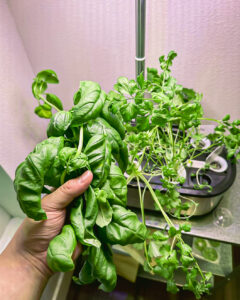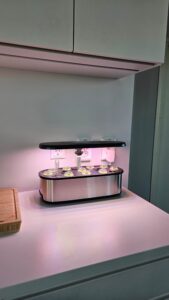
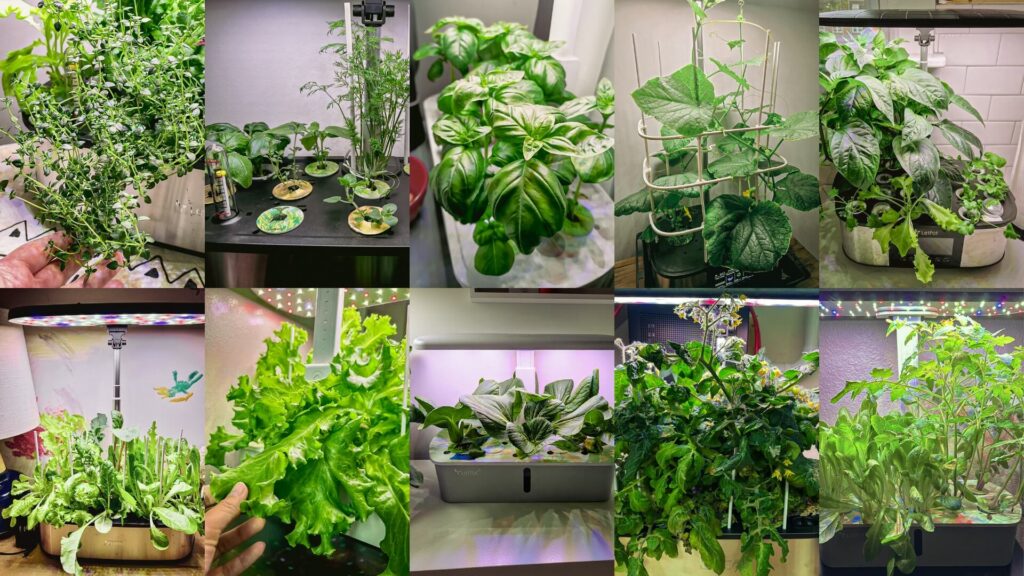
Quick answer: the kitchen counter is the best spot for most people. It sits within arm’s reach of the chopping board, has the loudest signal that you actually want to harvest, and most kitchens already have a free outlet and decent ambient light. If your counter is full, a quiet office shelf or a bright bathroom corner are the strongest backups.
Over the last 18 months I moved my smart gardens through six different rooms in two apartments. I started with the obvious kitchen counter, then moved them around out of curiosity, frustration, and a few rearranged pieces of furniture. Some rooms surprised me. One room I was sure would work failed within a week. This is what I learned about where to put a smart garden so it actually gets used — not just owned.
The 6 rooms I tested
I rotated two units — a 6-pod and a 12-pod — through these locations, leaving each in place for at least 4 weeks before judging. Same seeds (basil, lettuce, parsley, mint), same nutrients, same schedule. The variables were light access, ambient noise tolerance, distance to a water source, and how often I actually harvested.
| Room | Months tested | Harvest rate | Verdict |
|---|---|---|---|
| Kitchen counter | 7 | Daily | Best overall |
| Home office | 4 | 3–4×/week | Strong second |
| Bathroom shelf | 2 | 2×/week | Surprise hit |
| Bedroom corner | 2 | 1×/week | Workable |
| Hallway | 1 | Almost never | Failed |
| Utility room | 2 | Forgotten | Failed |
Kitchen — the obvious winner
The kitchen counter is the boring, correct answer. I cropped basil into pasta on a Tuesday night because the plant was sitting 30 cm from the stovetop — that proximity is the entire game. Refilling the water tank fits into the same trip I make to rinse a cup. The LED hum disappears under the fridge compressor. And the visual reminder of leafy greens at eye level is the single biggest reason I actually harvest before plants bolt.
One real concern: cooking splatter. Keep the unit at least 60 cm from the hob and avoid the side that catches frying oil. I learned this after wiping a film off the LED hood after a week of stir-fries. A second concern is heat — gardens placed directly above a dishwasher vent ran 4–6 °C warmer than recommended, which stressed lettuce in particular.
Living room and bedroom — quiet enough?
The bedroom test was the one I was sure would fail. Modern units run 28–35 dB on pump cycles — comparable to a quiet fridge — but the LEDs are the bigger problem. Even with the “night mode” timer turning the light off from 22:00 to 06:00, the first pump cycle at 6:15 woke me twice in the first week. I moved the unit 3 metres further from the bed and the issue disappeared. If you have a small bedroom, this is the room I would skip.
The living room worked better. I parked the 12-pod unit on a low console behind the sofa, where the back of the unit faced the wall. The LED glow became ambient mood lighting in the evening, and the pump was inaudible from 3 metres away. The drawback: the living room is the room I visit least often during the day, so I forgot to harvest. I caught two heads of butterhead lettuce on the edge of bolting because I just was not in there at lunchtime.
Office and home work area
This is my strong second place. The unit sat on a side cabinet about 1.5 metres from my monitor. I refilled water during coffee breaks. The LED bath gave me free natural-spectrum supplemental light during dark winter mornings — a small mood benefit I did not expect. Reading or work calls happened without any noise complaints.
One caveat: if you are on a lot of video calls, position the unit so the LED bar is not directly behind you. The full-spectrum lights cast a magenta tint that white-balances badly on most webcams. I rotated mine 45° toward the wall and the problem went away. For a deeper look at how the lights work, see the explainer on what a smart garden is and how it benefits home growers.
Bathroom — surprising humidity benefits
I put a 6-pod on a wide bathroom shelf as an experiment, expecting mould or pod rot. The opposite happened. The humidity that hangs around after a hot shower (often 60–75 %) gave basil and mint visibly bigger leaves than the same plants in the dry kitchen, where my winter humidity dropped to 28 %. Algae growth on the reservoir lid was slightly faster, but a weekly wipe handled it.
Three rules made this work. First, the unit must sit out of the direct shower spray — water on the LED bar voids most warranties. Second, the bathroom needs daytime ventilation; a closed, windowless bathroom traps too much moisture for the electronics. Third, expect to harvest less often, because most people do not visit the bathroom thinking “I will grab some parsley.”
Hallway, balcony, utility room — why they fail
The hallway lasted four days. I walked past the plant 40 times, never harvested anything, and the LED light pollution into the bedroom and living room was annoying. Hallways also tend to be the coldest part of an apartment — mine sat at 17–18 °C, which slowed everything by about 30 %.
The utility room (with the washing machine) was worse. Out of sight meant out of mind. After three weeks I noticed the water tank was bone dry and the basil had collapsed. If you cannot see the unit on a normal day, you will not harvest from it. The balcony failed for a different reason: most smart gardens are not rated for outdoor humidity swings or sub-zero nights, and direct summer sun cooked the reservoir to 35 °C, which crashed the roots. Balconies belong to soil pots, not smart gardens.
The 4 things to check before plugging in
After all this moving around, my checklist before placing any new unit is short.
- Light access. Smart garden LEDs do all the work, but you still want ambient daylight in the room so you actually see the plants. Dark cupboards and windowless storage rooms are out.
- Ventilation. Stagnant air encourages algae on the reservoir and mildew on lower leaves. A room with normal airflow (a door that opens a few times a day) is enough.
- Noise tolerance. Pump cycles run 5–15 minutes per hour at ~30 dB. Fine in a kitchen, marginal in a bedroom, irrelevant in a hallway.
- Water access. If the nearest tap is more than 10 metres away, you will refill less often than you should. The kitchen wins on this point by default.
For more on indoor placement basics across plant types, the University of Minnesota Extension keeps a useful overview of houseplant light, humidity and temperature ranges.
Frequently asked questions
Can I put a smart garden in a north-facing room?
Yes. The LED panel provides all the light the plants need, so window aspect is irrelevant for plant growth. North-facing rooms are slightly cooler, which actually suits lettuce and most leafy greens.
Is a smart garden safe near food prep?
Yes, as long as you keep it 60+ cm from the hob and away from regular splatter. The nutrient solution is sealed inside the reservoir. Wipe the unit weekly, the same as you would any other counter appliance.
How much space does a smart garden need?
A 6-pod unit needs roughly 25 × 25 cm of floor space and 50 cm of vertical height. A 12-pod needs about 40 × 25 cm and the same height. Leave 10 cm clearance behind the LED bar for ventilation.
Can two smart gardens go in the same room?
Yes. I ran two in a 14 m² kitchen for three months without any issue. Combined humidity rose by about 4 % and the noise floor was unchanged at normal listening distance.
Does the light bother people?
The full-spectrum LEDs are bright — measured at around 4000 lux at 30 cm from the panel. In an open-plan kitchen this reads as cheerful. In a small bedroom at 5 metres distance, it reads as a streetlight through the curtains. Use the timer or place the unit accordingly.
My final placement after trying everything
I settled on two units: the 12-pod on the kitchen counter for daily harvest, and the 6-pod in the home office as a winter mood booster. The bathroom shelf is reserved for a third unit during peak basil season when I want extra humidity. Everything else got rotated out within a month.
If you only have room for one unit, put it where you already make food. The kitchen wins because the kitchen is where the harvest gets used. If you are still deciding which size or model to buy, the beginner guide to indoor gardening covers the basics, and this honest look at whether indoor garden systems are worth it covers the cost side. Wherever the unit lands, it should be a place you walk past daily — that single habit decides whether it becomes a kitchen staple or a forgotten gadget.