The best smart garden for a studio apartment is the LetPot Mini, a 5-pod hydroponic unit with a 22 × 13 cm footprint, a 1,5 L tank and a 10 W grow light for 59,00 €. If counter space is truly scarce, the single-plant Botanium at 69,00 € or an 11,99 € self-watering herb pot still gets you fresh herbs.
I spent two years in a 28 m² flat where the kitchen counter doubled as my desk, so I have strong opinions about anything that claims permanent counter space. A smart garden earns its place in a studio only if it stays small, keeps quiet at night and produces herbs I actually cook with. After years of testing the compact systems we stock at IndoorGarden, plus a few pot-based alternatives, these are the picks I would put in a studio today, with exact footprints, running costs and the honest trade-offs between them.
What studio-friendly actually means
A studio-friendly indoor garden is a self-contained growing system that fits a patch of counter no larger than 30 × 40 cm, runs quietly enough to share a room with your bed and needs attention once a week at most. Those three filters sound easy until you apply them. Plenty of popular systems measure 40 cm or more across, which eats a third of a typical 120 cm kitchenette counter run. In a studio the garden also lives in your bedroom and your living room at the same time, so light schedules and pump noise matter far more than they would in a separate kitchen. I walk through the full setup logic in my guide to setting up an automated indoor herb garden, but the short version is that size, sound and schedule decide everything in a small flat.
LetPot Mini: the 22 × 13 cm default pick
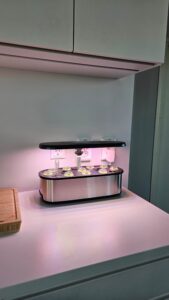
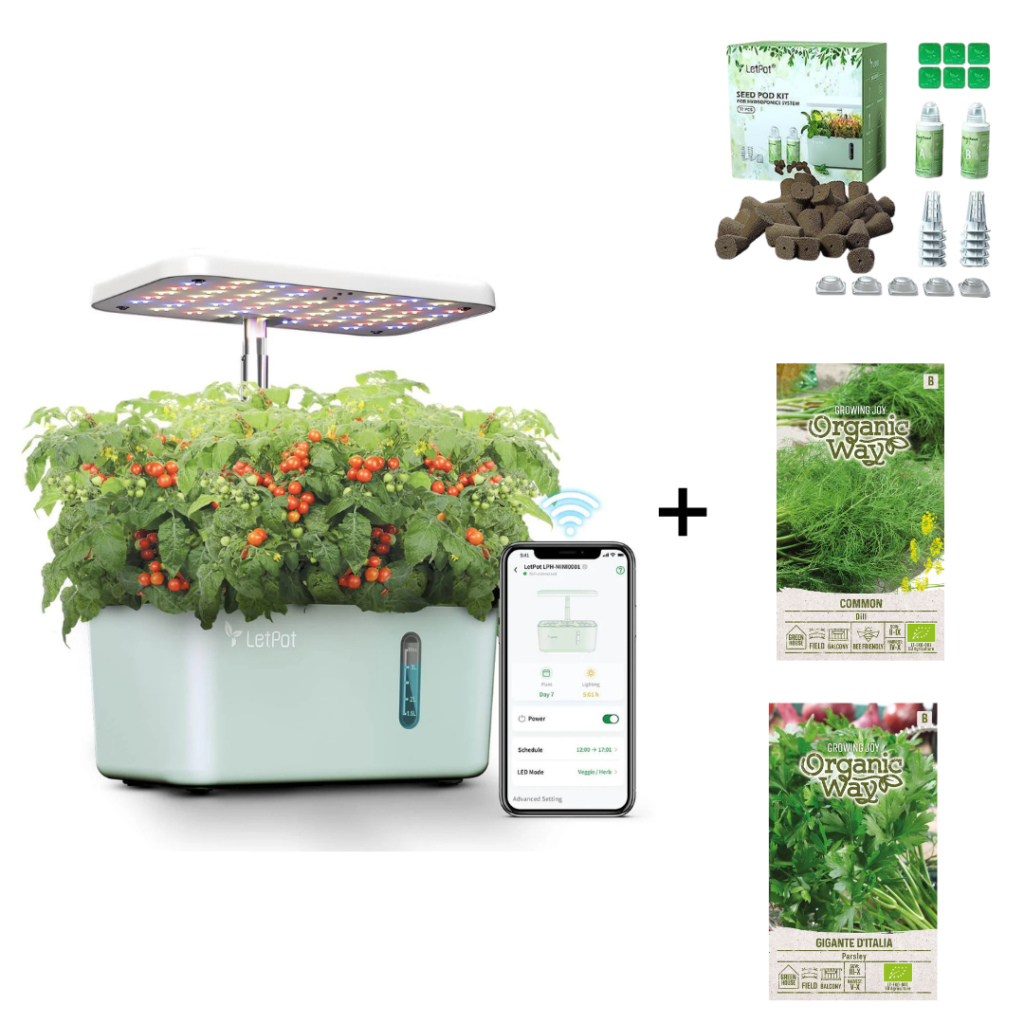
The LetPot Mini is a 5-pod hydroponic smart garden that takes up about as much space as a cutting board. The base measures 22 × 13 cm, the light arm adjusts from 11 to 41 cm in height, and the whole unit costs 59,00 €. The 1,5 L tank lasts 7 to 10 days between refills, and the 10 W full-spectrum LED runs on an automatic schedule, so the system asks for nothing more than a litre of water and a few drops of nutrients once a week.
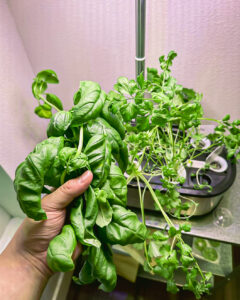
Plants get up to 29 cm of grow height, which is enough for basil, parsley, dill and compact lettuce, and that range covers most of what I harvest weekly in my own kitchen. If you would rather not pick seeds separately, the LetPot Mini starter bundle at 79,99 € puts organic basil, parsley and dill seeds in the same box. One practical studio note from my own counter: the pump runs intermittently rather than constantly, and I only hear mine when the room is otherwise silent.
Botanium: one plant, no pump noise
The Botanium is a Scandinavian-designed self-watering hydroponic pot that grows a single plant in a footprint of roughly 14 × 14 cm. It costs 69,00 € and works differently from a pod system. You sow into a porous growing medium, fill the reservoir and the pot waters itself for days at a time, with no electric pump cycling water while you sleep. There is no built-in light either, so it belongs on a bright windowsill. I treat the Botanium as the pick for one statement plant, a big basil bush or a tall chilli, in a studio that already gets decent sun.
Two options with no electricity at all
A self-watering herb pot is the lowest-commitment way to keep supermarket herbs alive on a studio counter. The Elho Happy Herbs planter is a 14 cm pot with a built-in water reservoir for 11,99 €, and in my experience it reliably stretches a 2,50 € supermarket basil from one week to four or five. It suits renters who want zero cables and zero apps. The CitySens transparent planter at 55,00 € is the decorative version of the same idea, a hydroponic glass vessel on a wooden stand that turns a single plant into a visible centrepiece. Neither matches a smart garden’s output, but both fit spots where even the Mini would feel crowded.
The step-up: LetPot Air at 43 × 19 cm
The LetPot Air is a 10-pod hydroponic system measuring 43 × 19 × 13 cm, and I am listing it even though it breaks my own 40 cm rule by 3 cm. Doubling the pod count gets you a 4 L tank that stretches refills to roughly two weeks and a stronger 24 W light with separate modes for leafy and fruiting plants, all for 89,00 €. If your kitchenette has one long uninterrupted counter, the LetPot Air is the better long-term buy. I keep a size-by-size breakdown of every model in our LetPot comparison guide if you want the full picture before deciding.
Side-by-side: footprint, capacity and price
| System | Footprint | Pods | Water supply | Grow light | Price |
|---|---|---|---|---|---|
| LetPot Mini | 22 × 13 cm | 5 | 1,5 L tank | 10 W | 59,00 € |
| LetPot Air | 43 × 19 cm | 10 | 4 L tank | 24 W | 89,00 € |
| Botanium | 14 × 14 cm | 1 | Built-in reservoir | None | 69,00 € |
| Elho Happy Herbs | Ø 14 cm | 1 | Built-in reservoir | None | 11,99 € |
| CitySens transparent planter | Single glass vessel | 1 | Hydroponic vessel | None | 55,00 € |
My rule of thumb after helping a lot of first-time growers: pick the Mini if you cook with herbs more than twice a week, pick the Air if you also want lettuce in steady rotation, and pick one of the pot options if you mainly want something green and alive without a weekly routine.
Light and electricity in a real studio
Leafy herbs and lettuce need 12 to 14 hours of light per day according to the University of Minnesota Extension, which is more than most European windowsills deliver between October and March. A built-in grow light removes that problem, and the running cost is smaller than most people guess. Eurostat puts the average EU household electricity price at 28,96 € per 100 kWh in the second half of 2025, so the Mini’s 10 W light on a 14-hour schedule uses about 4,2 kWh a month and costs roughly 1,20 €. The Air’s 24 W panel lands near 2,90 € a month. If you skip powered systems entirely, Penn State Extension recommends a bright south-facing windowsill for herb pots, which is exactly where the Botanium and the Happy Herbs pot earn their keep.
Frequently asked questions
How much electricity does a small smart garden use?
Very little. The LetPot Mini’s 10 W light on a 14-hour daily schedule comes to about 4,2 kWh per month, which is roughly 1,20 € at the average EU household rate of 28,96 € per 100 kWh. The small circulation pump adds only a few cents on top.
Can I sleep in the same room as a smart garden?
Yes, and in a studio you will. Set the light schedule to switch off before bedtime, because even a 10 W full-spectrum LED is bright in a dark room. The Mini’s pump cycles intermittently and stays quiet, while the Botanium and the self-watering pots make no sound at all.
Do smart gardens need a sunny window?
No. The built-in full-spectrum LED covers the 12 to 14 hours of daily light that herbs and lettuce need, so a smart garden grows happily against a windowless kitchen wall or in a north-facing studio where pots would struggle.
How often do I need to refill the tank?
The Mini’s 1,5 L tank lasts 7 to 10 days depending on plant size and room temperature, and the Air’s 4 L tank stretches to about two weeks. Both remind you through the app, so there is nothing to track manually.
What can I actually grow in a 5-pod system?
Herbs and compact greens do best. Basil, parsley, dill and loose-leaf lettuce all stay within the Mini’s 29 cm height limit. I usually run three herb pods and two lettuce pods, which covers regular cooking for one or two people.
Is a smart garden worth it in a small apartment?
If you cook with fresh herbs every week, yes. A 59,00 € system that replaces two or three 2,50 € supermarket herb pots a month pays for itself within a year, and the bigger win in a studio is getting a continuous harvest out of just 286 cm² of counter space.
Start with the counter space you actually have
Measure the spot first, then choose the system. If you have 30 × 40 cm free, the Mini fits with room to spare, and anything smaller still has a pot-based answer. You can compare every compact system we stock in our mini smart gardens collection, and if you are still unsure, start small. A studio rewards the garden you barely notice until you harvest from it.