The best dwarf tomatoes for an indoor smart garden are compact, determinate cherry types that stop growing at a set height instead of vining endlessly. Balcony and ornamental cherry varieties stay short enough for a grow light, ripen in one concentrated flush and crop in 70 to 85 days, which makes them far easier indoors than any full-size tomato.
My first indoor tomato was an ordinary cherry variety, and it grew straight into the grow light, bent sideways and gave me three sad fruits before I gave up. The mistake was choosing the wrong type, not growing it badly. Tomatoes can absolutely work in a smart garden, but only the compact, determinate ones, and the difference comes down to a single trait: when the plant decides to stop growing taller. Here is how to pick a tomato that fits under your light and actually fruits.
Determinate is the word that matters
A determinate tomato grows to a genetically fixed height, sets all its fruit in a short window and then stops, while an indeterminate tomato keeps vining and fruiting until frost or your ceiling stops it. The University of Wisconsin Extension describes determinate plants as having a shrub-like habit that needs far less staking, which is exactly what a smart garden requires. Indoors, where you have 30 to 80 cm of clearance under the light, an indeterminate vine is a losing battle. Every dwarf tomato worth growing in a pod system is determinate or a true compact dwarf, so that single word on the seed packet filters out most of the failures before you start.
Why height is the real constraint
The limiting number in any smart garden is grow height, the gap between the pods and the raised light panel. Compact systems give 29 to 41 cm, while the tall LetPot Senior and Max reach about 76 cm, and your tomato has to mature within that gap. A determinate cherry that tops out around 30 to 45 cm fits a tall system comfortably, whereas a standard variety aiming for 150 cm never had a chance. This is the same height logic I apply to peppers and other tall crops in my guide to pruning tall plants to fit a smart garden, and it is worth measuring your clearance before you sow a single seed.
The varieties I grow indoors
A balcony cherry tomato is a determinate variety bred for pots and small spaces, and it is my default recommendation for a smart garden. Our Tomato Balconi Yellow at 1,49 € is a determinate hybrid that stays compact and crops heavily for its size, producing sweet yellow cherries in a tidy bush. For something with a trailing, decorative habit, Tomato Gartenperle at the same 1,49 € is an ornamental cherry that cascades rather than climbs, which suits the edge of a larger system or a tall planter. Both belong to the wider cherry tomato seeds range, and the dedicated compact selection sits under dwarf tomato seeds.
What to expect from an indoor tomato
| Trait | Dwarf or determinate | Standard or indeterminate |
|---|---|---|
| Mature height | 30–45 cm | 120–200 cm |
| Smart garden fit | Tall systems (about 76 cm) | None |
| Harvest pattern | One concentrated flush | Continuous until stopped |
| Staking needed | Minimal | Heavy |
| Seed to ripe fruit | 70–85 days | 75–90+ days |
Set expectations on yield too. One determinate cherry plant gives you a concentrated handful of harvests rather than a season-long trickle, so for steady picking I stagger two plants a few weeks apart, the same way I rotate lettuce.
How to keep a dwarf tomato short and productive
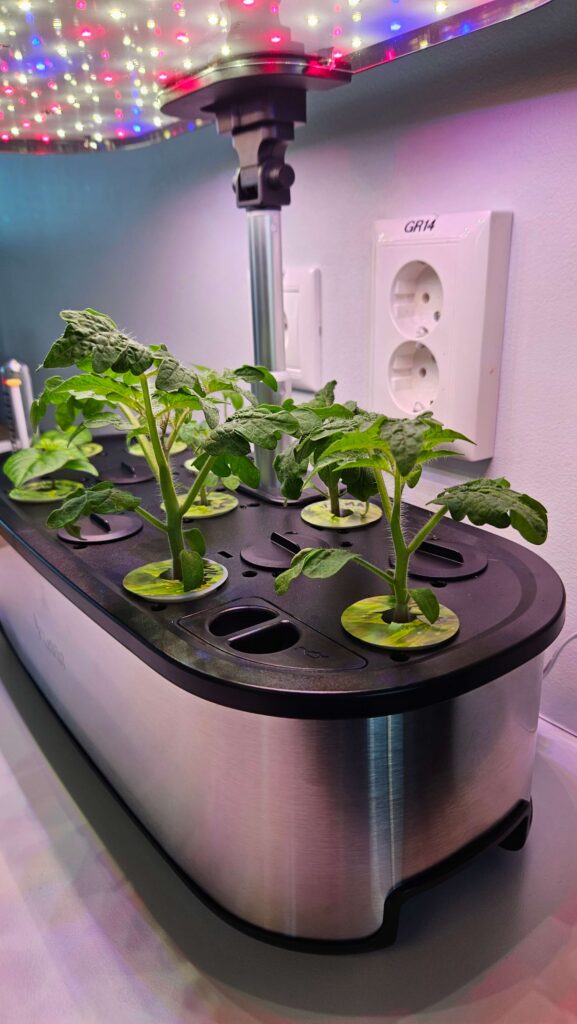
Even a compact tomato benefits from a little management indoors. Raise the light panel as the plant grows to keep 10 to 15 cm of clearance above the canopy, which stops the top leaves scorching. Do not prune side shoots the way you would an indeterminate vine, since a determinate plant fruits on those shoots and removing them costs you tomatoes. Feed matters more than with leafy crops: tomatoes are hungry, so a hydroponic system needs a proper fruiting nutrient rather than a leafy-greens dose. A determinate plant also tends to need support once it is laden, and a small ring or a few stakes keeps the fruit trusses off the reservoir. Tomatoes belong among the more rewarding things you can grow at home, a point I make in my piece on the most profitable plants to grow indoors.
The pollination catch nobody mentions
Outdoors, wind and bees shake tomato flowers and move pollen, and indoors neither exists, so even a perfect dwarf plant can flower heavily and set almost no fruit. The fix takes ten seconds: tap or vibrate each flower truss every couple of days while the plant is blooming. It is simple enough that it has its own short routine, which I have written up separately so this guide stays focused on choosing and growing the plant rather than pollinating it.
Frequently asked questions
Can you really grow tomatoes in a smart garden?
Yes, as long as the variety is a compact determinate or dwarf cherry and the system is a tall one with around 76 cm of grow height. Full-size indeterminate tomatoes outgrow any indoor light and are not worth attempting in a pod system.
How tall do dwarf tomatoes get?
Most compact determinate cherries mature at 30 to 45 cm, which fits the tall LetPot Senior and Max. Mini systems with 29 to 36 cm of clearance are too short for fruiting tomatoes, so match the variety to your light height.
How long until an indoor tomato fruits?
Expect roughly 70 to 85 days from sowing to the first ripe cherry under a 14 to 16 hour light schedule. Fruiting crops want more daily light than leafy greens, so run the brighter setting if your system offers one.
Do dwarf tomatoes need pruning?
No. Unlike indeterminate vines, determinate and dwarf tomatoes fruit on their side shoots, so removing those shoots reduces your harvest. Leave the plant bushy and only raise the light to keep clearance above it.
Why is my indoor tomato flowering but not fruiting?
Almost always a lack of pollination, since there is no wind or bees indoors. Tap or vibrate each flower truss every two to three days while it blooms, and fruit set improves dramatically.
What nutrients do indoor tomatoes need?
A fruiting-stage hydroponic nutrient with enough potassium, not a leafy-greens dose. Tomatoes are heavy feeders, and underfeeding shows up as small, slow fruit even on a healthy-looking plant.
Pick compact, grow tall-system, pollinate by hand
The whole indoor tomato puzzle solves itself once you choose a determinate dwarf, give it a tall system and remember to tap the flowers. Start with a balcony cherry, keep the light a hand’s width above the canopy and feed it properly. You will find every compact option in our tomato seeds collection, ready to turn a sunny shelf into a steady supply of cherries.