The easiest things to grow in an office garden are quick, leafy plants people can pick straight into lunch: basil, rocket, lettuce, parsley, chives, dill, coriander and garden cress. Most are ready to pick within three to six weeks from seed in a hydroponic smart garden, and need only a sunny spot or a small grow light to get going.
An office kitchen counter or a quiet corner of an open-plan floor is enough room for a herb garden that staff actually use, not just look at. The real question most teams face isn’t whether something will grow indoors — it’s which plants are worth the counter space, grow fast enough to stay interesting, and end up in an actual sandwich or salad rather than wilting behind the coffee machine. Below are eight herbs and leafy greens that fit that brief, roughly how long each takes to reach a usable size, and which system suits a shared office setup.
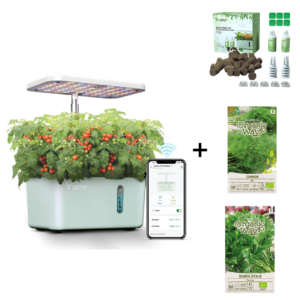
Products mentioned — in stock at IndoorGarden, shipped from Tallinn across the EU.


Why a small office garden works
Herbs are forgiving of exactly the conditions an office provides: steady indoor temperatures, no frost, and a reasonably bright spot rather than full outdoor sun. Iowa State University Extension and Outreach notes that most common herbs can be grown indoors, and lists basil, parsley, chives, oregano, coriander and thyme as good first candidates because they tolerate lower light and the cooler, drier air typical of a building. University extension guidance commonly recommends five to six hours of direct light a day for herbs on a windowsill, or eight to ten hours under a grow light if there is no good window — which is exactly what a self-watering hydroponic smart garden with a built-in LED is designed to supply on a timer, without anyone needing to remember to water it.
Fast growers worth planting first
If the goal is to keep a team interested, start with the plants that show progress fastest. Garden cress is usually ready to snip within a week to ten days of sowing, which makes it the quickest win for a first planting. Basil and rocket (rucola) follow a few weeks later: hydroponic growing guides commonly quote three to four weeks from seed to a first proper pick for basil, and about three weeks for rocket’s baby leaves, though exact timing depends on light and room temperature. Both keep producing new leaves for weeks after the first harvest if only the outer leaves are picked each time, rather than cutting the whole plant back.

Herbs worth the wait
Parsley takes longer to get going — commercial hydroponic guides put it at around five to six weeks before there is enough to pick regularly — but it then holds for months as a steady garnish and salad herb. Chives are usually ready in about four weeks and, as a perennial, keep regrowing after each cut. Dill needs roughly four to five weeks for fronds worth using, and coriander is closer to three weeks for a first useful handful of leaves, though it tends to bolt to seed faster than the others once an office gets warm in summer, so a second sowing a few weeks behind the first keeps a steady supply going.
What actually gets used at lunch
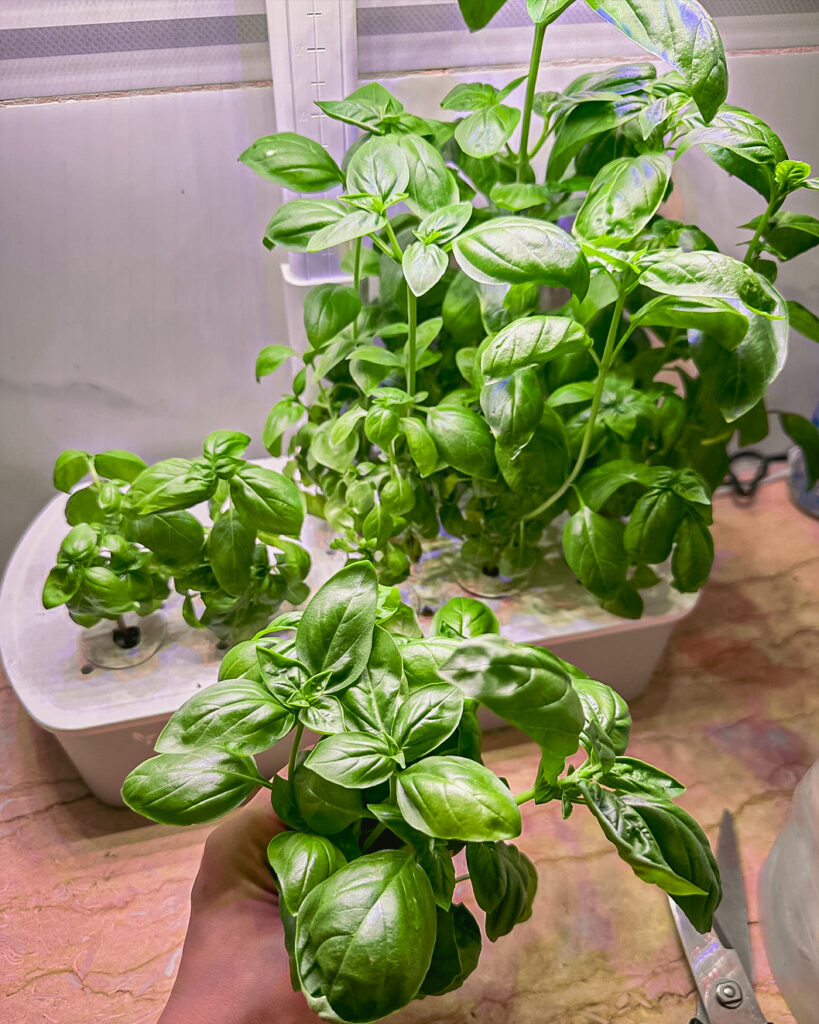
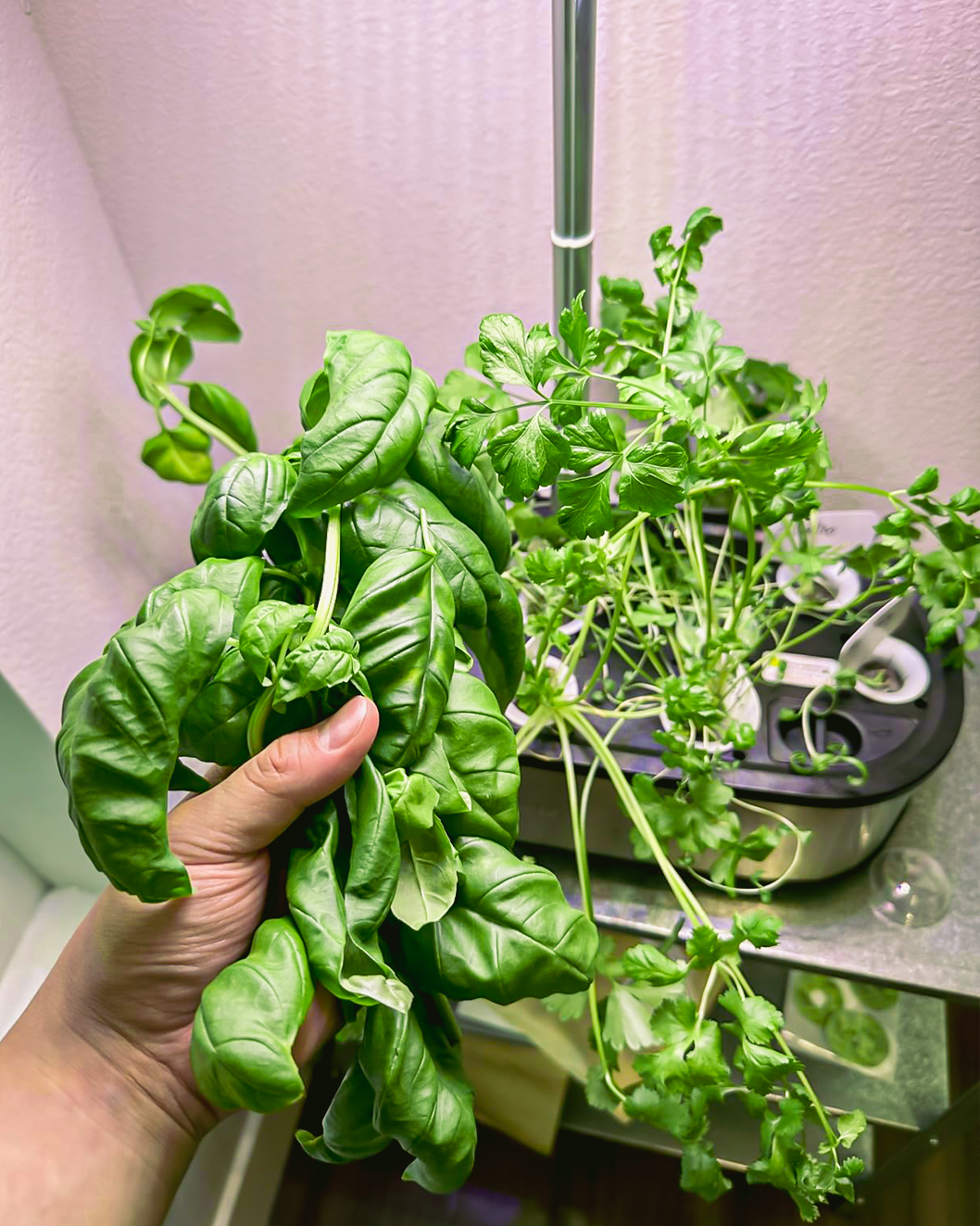
The plants that earn their counter space are usually the ones that go straight into food without extra prep. Basil and rocket work in sandwiches, wraps and pasta without any cooking. Lettuce and rocket together cover most salad-bowl lunches on their own. Parsley, chives and dill are classic additions to a dressing, a soup or an egg sandwich, and garden cress works well simply scattered over a sandwich or a bowl of soup for texture. Coriander fits anything with an Asian or Mexican lean — rice bowls, wraps, salsas. Because a hydroponic smart garden lets anyone pinch a few leaves at a time rather than needing to harvest a whole plant, the herbs stay productive for weeks rather than being stripped bare on day one; a short guide on harvesting herbs without killing the plant covers the basic technique for a shared office garden where several people will be cutting from the same pods.
Choosing a system size for a shared kitchen
A small team testing the idea is usually better off starting with one compact mini smart garden running two or three herbs rather than trying to cover all eight at once. A busier floor, or a kitchen several teams share, generally gets more use out of a larger smart garden with ten or more pods, since it keeps a wider mix going at once and halves the number of times someone has to top up the water tank. Either way, the reservoir and timed LED do the daily watering and lighting, which matters in an office where nobody is specifically assigned to plant care and weekends and holidays go unattended.
| Plant | Typical time from seed to first use |
|---|---|
| Garden cress | About 1–1.5 weeks |
| Coriander | About 3 weeks |
| Rocket (rucola) | About 3 weeks |
| Basil | About 3–4 weeks |
| Chives | About 4 weeks |
| Dill | About 4–5 weeks |
| Lettuce | About 4–5 weeks |
| Parsley | About 5–6 weeks |
A 2009 study of office environments by Edinburgh Napier University found that staff working in planted offices generally reported feeling more comfortable and more productive than those in offices without plants, though the research covered a single office building and reflects self-reported perception rather than a controlled trial — worth keeping in mind as a general observation rather than a guarantee for any particular office.
Frequently asked questions
Which of these is easiest to start with in an office?
Garden cress is the fastest to show results, often ready within a week to ten days, which makes it a good first planting while slower herbs like parsley are still getting established.
How much light does an office herb garden actually need?
University extension guidance generally recommends five to six hours of direct daylight, or eight to ten hours under a grow light if the spot gets little natural sun — a self-watering smart garden with a built-in LED on a timer covers this automatically.
Can several colleagues share one small hydroponic garden?
Yes, as long as people pick a few outer leaves at a time rather than cutting a plant back hard. A simple sign-up sheet or rota next to the unit helps spread out who waters or tops up the tank.
Do these plants need daily watering?
Not with a self-watering hydroponic system — the reservoir typically lasts one to three weeks depending on the model and how many pods are planted, which covers most long weekends without anyone needing to check it.
What if the office has no windows or very little daylight?
A smart garden with its own grow light does not depend on a window at all. The timed LED supplies the hours of light the plants need, so placement comes down to counter space and a nearby power socket rather than sunlight.
Which herb should a first-time office garden avoid?
Slower, fussier herbs like rosemary or sage are better added once the simpler plants are established, since they are less forgiving of inconsistent light and watering in a shared space with no single dedicated carer.
Where to start
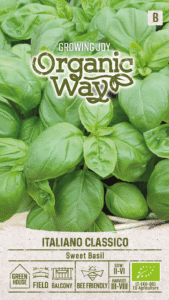
Most offices do well starting with one herb seed and one leafy green growing together in a single small unit, then adding more varieties once the first round has been picked and eaten. We ship basil seeds and the rest of our seed catalogue from our Tallinn warehouse across the EU, so restocking a shared office garden is a quick reorder rather than a trip to a garden centre.