A 2024 Scientific Reports study found that nature exposure’s link to office workers’ wellbeing runs mainly through vigour — feeling more energised at work — while a 2021 Journal of Cleaner Production experiment found roughly 12% visible greenery to be the most effective dose, far more than a single desk plant.
Office plants get pitched as a fix for almost everything, from stress to productivity, and the claims often outrun the evidence behind them. This article works through what credible research actually links to plants and greenery at work, including how nature exposure seems to help, how much greenery a space actually needs, and which of the frequently cited numbers hold up. It also looks at what fits a real office: who waters things, what survives low light, and which setups need the least upkeep.
Products mentioned — in stock at IndoorGarden, shipped from Tallinn across the EU.
What the research on office plants and wellbeing actually says
Dozens of studies have looked at whether having plants around the workplace changes how people feel or perform, and the honest summary is that the picture is mixed and smaller than most marketing copy suggests. Reviews of workplace nature-based interventions, meaning plants, views of greenery or short outdoor breaks brought into office settings, generally report modest and inconsistent effects on stress and mood rather than large, reliable gains. That does not mean plants do nothing. It means the mechanism matters more than the plant itself: a 2024 study in Scientific Reports, run on white-collar employees in open-plan offices in Spain, is one of the more carefully designed recent attempts to work out why nature exposure at work might help, rather than just whether it does. Systematic reviews of workplace nature-based interventions tend to agree on this point: plants, views of greenery and short outdoor breaks show up fairly consistently in self-reported mood and stress measures, but the effect sizes are usually small, and reviewers routinely flag that many of the underlying studies are short, have no control group, or rely on self-report alone. That is a reasonable backdrop for reading any single number from a single study, including the two covered below.
Vigour: the link researchers keep finding
The 2024 Scientific Reports study surveyed employees twice, about three months apart, and found that nature exposure’s effect on general wellbeing worked mainly through vigour, a feeling of being energised and alert at work, measured with standard workplace-engagement items. A view of greenery or a desk plant does not seem to calm people down so much as it perks them up, and that lift in energy is what then carries through to broader wellbeing. The study covered several hundred respondents across two linked surveys of open-plan office workers, a reasonably solid sample for this kind of workplace research, though it is one study in one country and reads better as a data point than as a settled finding.
How much greenery an office actually needs
A frequently cited figure asks for more than most offices manage. A 2021 Journal of Cleaner Production experiment compared several greenery coverage levels, roughly 0%, 0.2%, 5%, 12% and 20% of a room’s visible surfaces, and found that around 12% worked best across self-reported mood, physiological stress markers and task performance. Coverage below about 5% was not enough to produce a measurable restorative effect, and 20% tipped into feeling overwhelming for some participants. Twelve percent of a typical meeting room or open-plan bay is more plant than a single pot on a shelf. It sits closer to a cluster of plants at every few desks, a green wall section, or several vertical planters placed where people actually sit.
The “15% productivity” number, and why to treat it carefully
Office plants are often sold with a specific claim: that adding plants to a sparse workplace raises productivity by around 15%. That figure traces to one widely reported 2013 study comparing “lean” offices with no greenery to “green” offices with plants added, and it has circulated through hundreds of articles since, almost always as a secondary citation rather than a fresh finding. That does not make it false, but the number has not been independently replicated at the same scale, and newer reviews of workplace greenery tend to report smaller, more mixed effects on performance. Treat 15% as a historical headline from one experiment rather than a guaranteed return.
Which plants and systems fit a real office
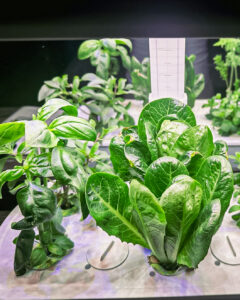
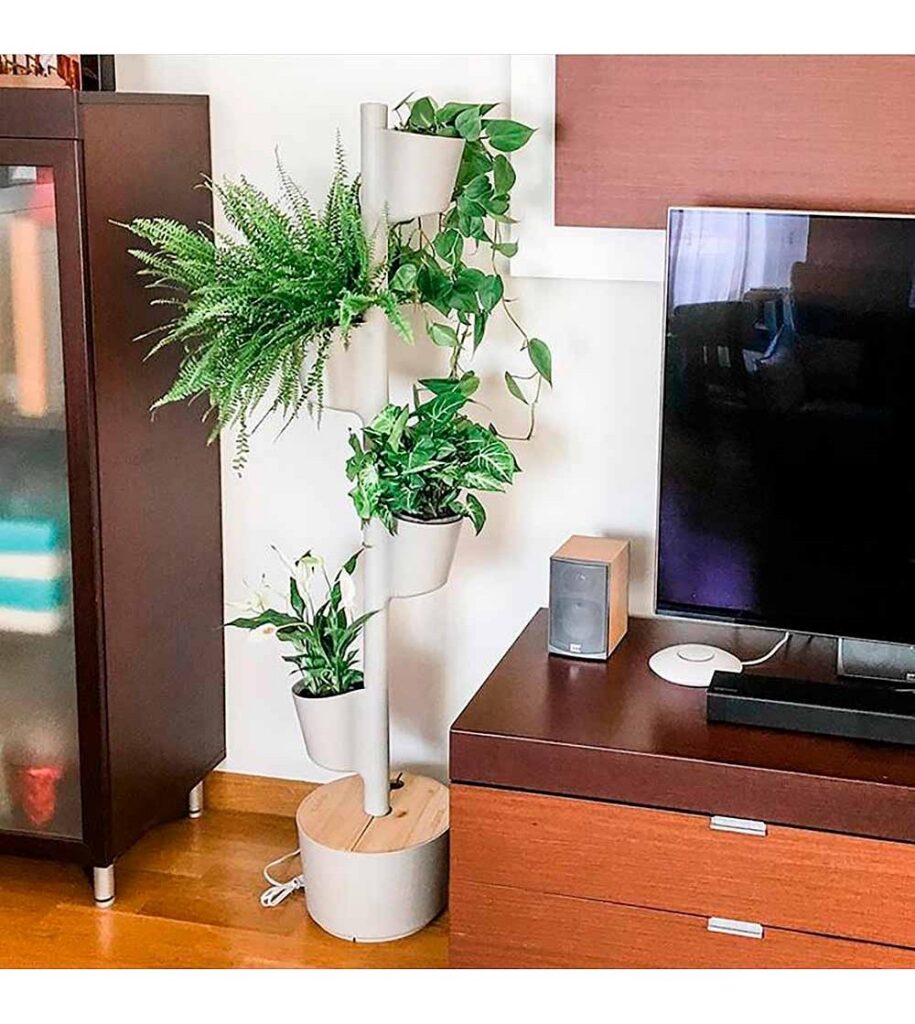
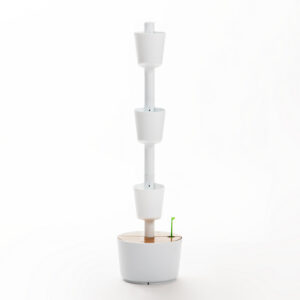
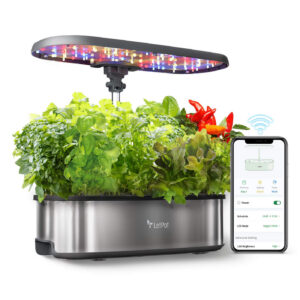
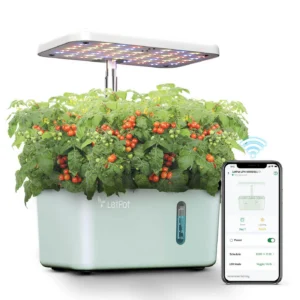
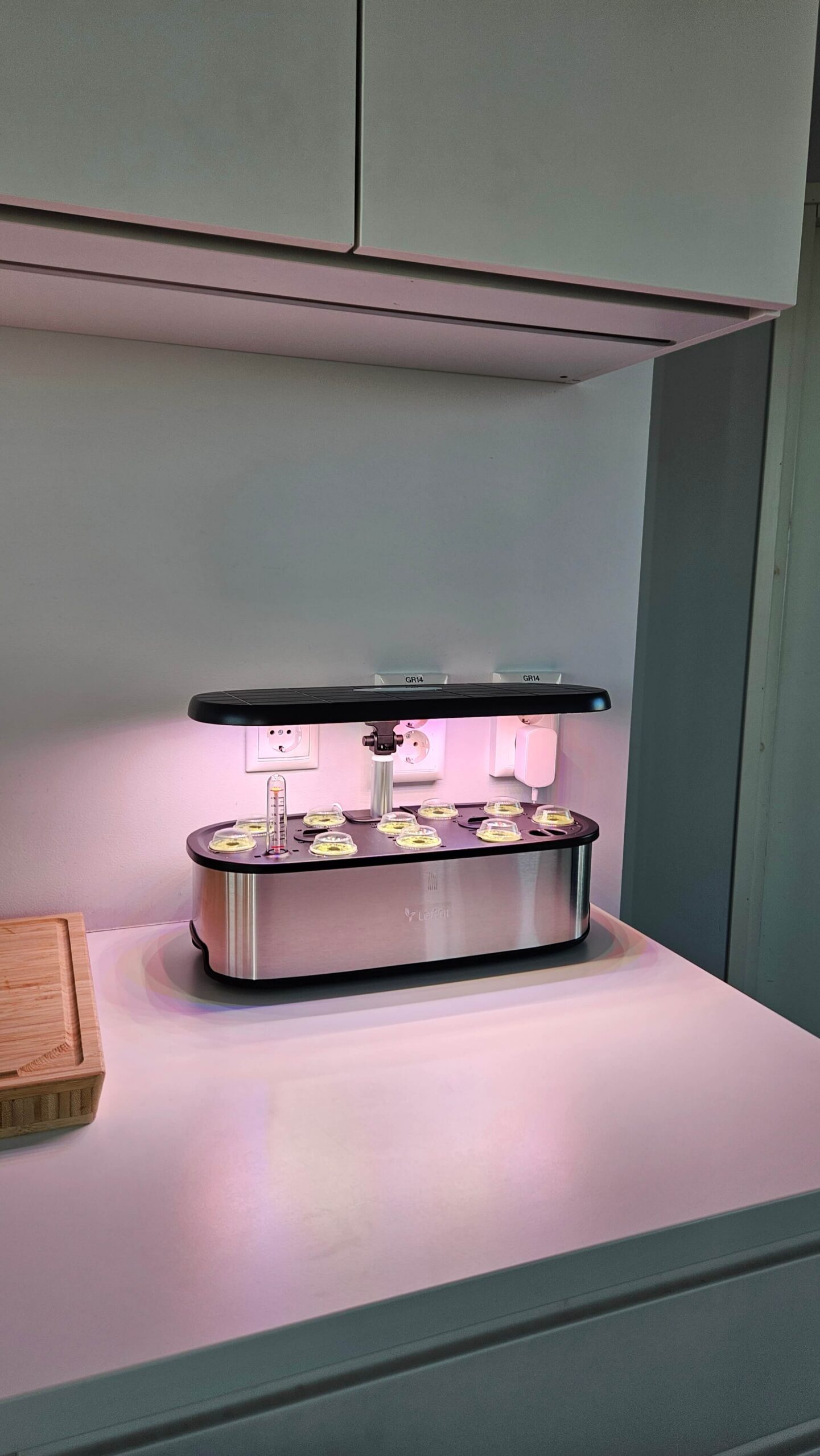
Office greenery fails for practical reasons as often as it fails for lack of evidence: low light, nobody assigned to water it, pots that leak onto a desk. A self-watering system removes the most common failure point. A smart garden such as a LetPot Mini holds its own water reservoir and LED light, so a desk corner with no window can still grow herbs or salad leaves. For a shared kitchen or break room, a larger LetPot Senior gives several people something to tend between them. Where the goal is visible greenery rather than something to eat, a vertical planter with a built-in watering kit, such as a CitySens unit, covers more wall or floor area per plant than scattered pots, closer to the coverage level that experiment linked to the best outcomes.
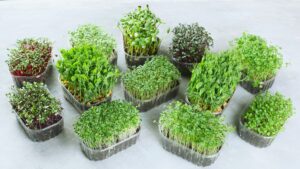
Crop choice matters almost as much as the hardware. Fast, leafy herbs such as basil, parsley, chives and mint germinate and fill a pod within a few weeks under LED light, which keeps a desk garden looking alive rather than stalled on bare sponges for a month. Leaf lettuce and rucola work well in a shared kitchen unit because several people can harvest a few leaves at a time without stripping the plant. Flowering or strongly scented plants are worth placing with more care, since a handful of staff may find pollen or heavy scent irritating in a small meeting room, so a quieter foliage herb near a shared desk is usually the safer default.

Who actually looks after it
Every office plant plan needs an answer to this before it needs a budget. A self-watering reservoir typically buys two to three weeks before anyone has to refill it, which covers most short absences and holiday weeks without a formal rota. For anything larger than one or two units, it still helps to name one person responsible for refills and one backup, the same way a kitchen has a rota for the dishwasher. Get in touch if you are ordering for more than a handful of desks and want help sizing the setup to the space.
| Model | Best for | Price |
|---|---|---|
| CitySens Vertical Planter (3 pots, Wi-Fi watering) | Visible greenery on a wall or in reception | €189.00 |
| LetPot Senior (12-pod hydroponic) | Shared kitchen or break room, several people harvesting | €129.00 |
| LetPot Mini (5-pod hydroponic) | A single desk or low-light corner | €59.00 |
Frequently asked questions
Do office plants really improve productivity?
The evidence is mixed. The often-quoted 15% figure comes from one 2013 study and has been repeated widely as a secondary citation. More recent reviews of workplace nature-based interventions report smaller and less consistent effects on performance, even where mood or engagement improves.
How many plants does an office actually need to make a difference?
A 2021 Journal of Cleaner Production experiment found around 12% visible greenery coverage worked best across mood, stress and task measures, with coverage below about 5% showing little effect. That is more plant than most offices have, closer to a cluster at every few desks than a single pot near reception.
What is “vigour” and why does it matter for plants at work?
Vigour is a feeling of being energised and alert, measured with standard workplace-engagement surveys. A 2024 Scientific Reports study found that nature exposure’s link to employee wellbeing ran mainly through this feeling of vigour, rather than through calm or stress reduction directly.
What is the easiest low-maintenance option for a desk or office kitchen?
A self-watering hydroponic system such as a LetPot Mini or LetPot Senior holds its own water and light, so it needs refilling roughly every two to three weeks rather than daily attention.
Can office plants cause allergy or health problems for some staff?
Some people are sensitive to pollen, mould from overwatered soil, or strong scents from certain herbs. Choosing low-pollen, non-flowering foliage, or a hydroponic herb garden with routine reservoir cleaning, limits most of these issues. Check with anyone who has a known plant or mould sensitivity before placing units near a shared desk.
Where should plants be placed for the best effect?
Research on nature exposure generally favours line-of-sight placement, somewhere people can see from their desk, over plants tucked in a corner no one passes. Reception areas, meeting rooms and break rooms that people pass through regularly make better locations than a shelf behind a monitor.
Where to start
Most offices get more from one well-placed cluster than from a scattered handful of small pots. A CitySens vertical planter covers more visible area per unit than loose pots, while a smart garden sized for a shared kitchen gives a whole team something to tend. If you are ordering for more than a handful of desks, get in touch and we will help size the setup to the space.