A team-building herb garden challenge gives office teams a shared, low-cost project: each team grows basil, cress, rucola, lettuce and dill in a smart garden over six weeks, tracks growth on a shared scoreboard, and finishes with a lunch made from the harvest. Cress is usually ready within one to two weeks, most growers find.
Running a team-building activity that isn’t another round of trivia can be hard to pin down, especially when budgets are tight and desks are already full of screens. A herb garden challenge solves both problems at once: it needs one small smart garden per team, costs little beyond a bag of seeds, and gives colleagues something to check on together for weeks rather than a single afternoon. This guide covers a six-week plan, a simple scoring system, which herbs grow fastest, and how to turn week six into a shared lunch.
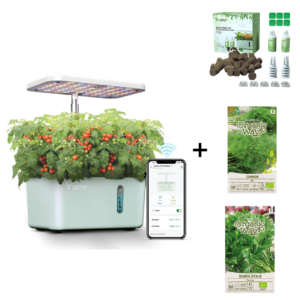
Products mentioned — in stock at IndoorGarden, shipped from Tallinn across the EU.


Why a herb garden works as a team challenge
A herb garden challenge is a shared growing project run over several weeks: small teams each get a smart garden, sow the same seeds on the same day, and compare progress until a final harvest. It works as a team activity because it asks for only a few minutes of attention a day, it is visible on a shelf or windowsill rather than hidden in an app, and it gives quieter colleagues an easy, low-pressure way to take part. Unlike a one-off workshop, it also keeps running in the background of a normal working week, so there’s a small, shared thing to talk about at the coffee machine for over a month.
Setting up the six-week challenge
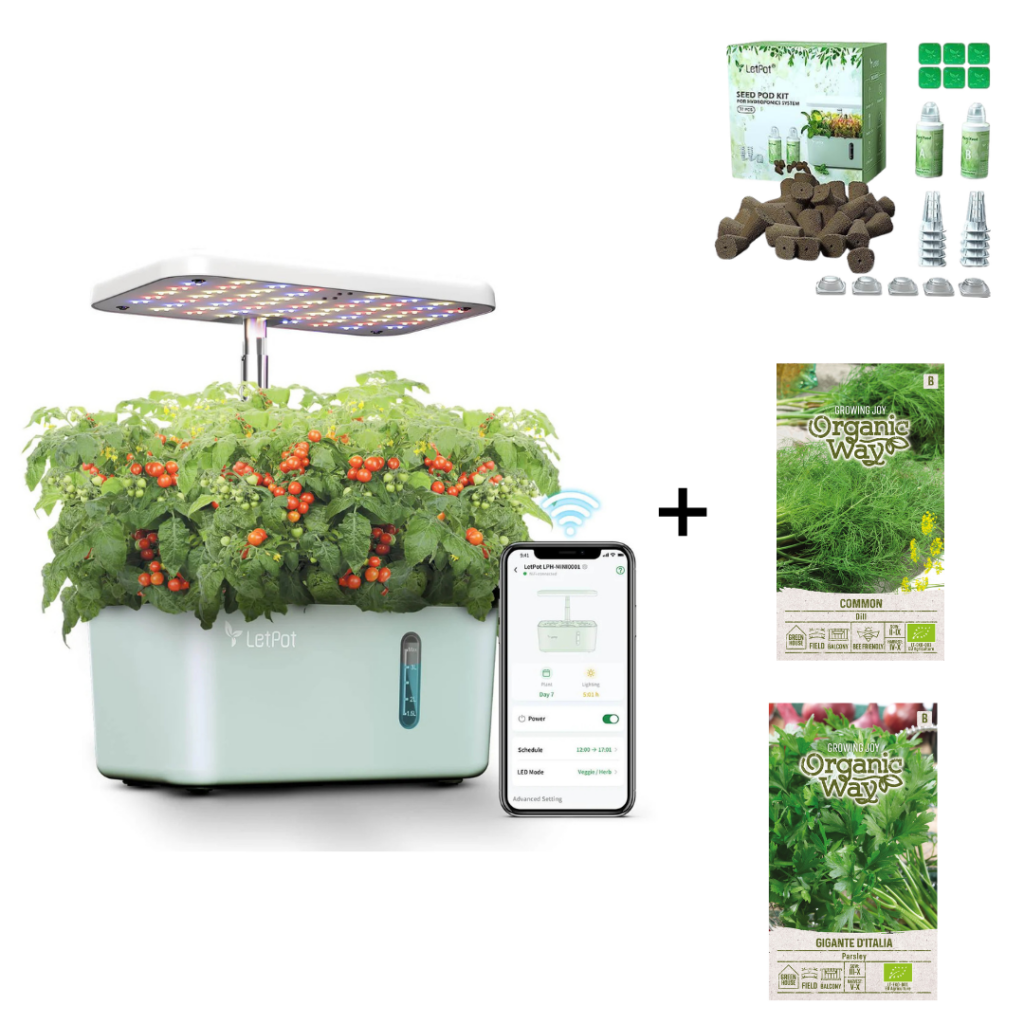
Split the office into teams of three to six people and give each team its own smart garden, such as the LetPot Mini or a ready-made LetPot Mini Herb Garden Starter Bundle, so every group starts from the same point. Agree on a sowing day, pick the same seed mix for every team to keep scoring fair, and appoint one person per team to log progress once or twice a week. A shared spreadsheet or a printed scoreboard pinned near the kitchen both work. The goal is just a visible, easy place to note germination, growth and any problems.
Week-by-week plan: what to grow and when
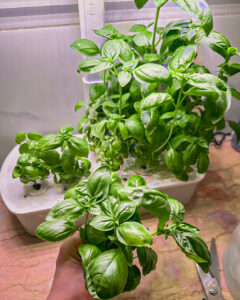
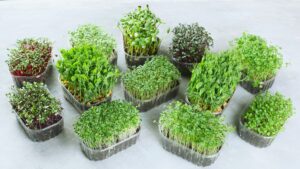
Start with a fast-growing crop so teams see results in the first week. Cress seeds germinate in as little as one to two days indoors in a warm spot and reach edible size within one to two weeks, according to BBC Gardeners’ World, which makes them a good confidence-builder before the slower crops catch up. Pea microgreens move at a similar pace and give teams a second early win. By week three or four, rucola seeds are usually ready, since arugula is often ready to harvest as early as four weeks after sowing, Cornell’s gardening guide notes, with seedlings typically emerging five to seven days after planting. Basil takes longer: UC Master Gardeners in Santa Clara County reports that indoor basil is usually ready for its first harvest in about four to five weeks. Dill is the slowest of this group, with Utah State University Extension putting harvest at roughly six to eight weeks after sowing, so it works well as the crop that peaks right at the final week. Leaf lettuce sits in between, typically ready within four to five weeks depending on the variety.

Scoring the challenge fairly across teams
Keep scoring simple so it stays about participation rather than who has the greenest fingers. A workable system gives points for consistent logging (did the team check in twice a week), for germination within the expected window for each crop, and for a tidy, well-labelled setup, with a smaller bonus for total harvest weight at the end. Giving equal weight to consistency and to final yield stops one keen gardener from carrying an entire team, and it also means a team that started late or had a slow germination week can still catch up on points. A short midpoint check-in, around week three, is a natural point to share tips between teams and fix anything that has gone wrong, such as a dry reservoir or a light set too far from the leaves.
Choosing the right smart garden and seeds
For an office challenge, a small, low-maintenance unit works better than a large system, since teams are optimising for an easy daily check rather than maximum yield. The table below shows the three products used in this guide and their current prices.
| Product | Best for | Price |
|---|---|---|
| LetPot Mini Herb Garden Starter Bundle | A ready-to-go kit per team, seeds included | €79.99 |
| Microgreens pea seeds (100 g) | A fast early win in week one | €6.99 |
| Garden cress seeds | The quickest crop to show results | €1.39 |
For teams that already have a smart garden, buying just the seed packets is the cheaper option. For a brand-new team, the starter bundle is simplest, since it removes any setup differences between groups. Either way, keep every team on the same hardware and the same seed packets so the comparison stays fair. Browse the full herb seed range or the mini smart garden range if you’re setting up more than a handful of teams.
Turning week six into a shared lunch
The final week is the point of the whole challenge, so build the lunch around whatever each team actually grew rather than a fixed menu. A simple format works well: everyone brings their smart garden to a shared table, teams harvest together, and the kitchen or a nominated cook turns the herbs into something easy, such as a basil and rucola salad, a cress and egg sandwich platter, or a herb butter for shared bread. Our guide on how to harvest herbs without killing the plant is worth sharing with teams beforehand, since cutting correctly in week six keeps perennial herbs like basil producing for longer if anyone wants to keep their smart garden running afterwards. Award a small prize for best harvest and a separate one for best team log, so the result isn’t only about who grew the most.
Frequently asked questions
How many people should be in each team?
Three to six people per smart garden works well. Smaller teams make logging easier to share fairly, while larger teams can lose that sense of shared ownership over the plants.
What if a team’s seeds don’t germinate?
Give every team a small backup packet of the same seeds at the start. A patchy tray is usually down to an uneven water level or a cold windowsill rather than bad seeds, and resowing a few pods rarely sets a team back by more than a few days.
Can remote or hybrid staff take part?
Yes — send remote team members their own small unit or a seed packet and a simple pot, and have them log progress in the same shared sheet with a photo each week so they stay part of the same team score.
Do we need grow lights, or is a windowsill enough?
A smart garden with a built-in LED light removes the guesswork, since a windowsill’s light changes with the season and the weather. If you’re using open trays on a windowsill instead, a bright, south-facing spot is the closest substitute.
How much does it cost to run for, say, ten teams?
Budget per team at checkout once you know which hardware and seed packets you’re using. As a rough guide, a starter bundle plus one or two extra seed packets per team keeps costs predictable across a group of ten.
What happens to the smart gardens after the challenge ends?
Most teams either keep them running on a rota in the kitchen or office, or individual staff take theirs home. Either way, a few extra basil seeds or a fresh packet of lettuce seeds keeps the unit productive well beyond week six.
Where to start
A herb garden challenge is one of the easier team activities to set up: pick a sowing day, give every team the same LetPot Mini Herb Garden Starter Bundle, and agree on a simple scoring sheet before week one starts. If you’re running this across a larger office, the full mini smart garden range makes it easy to order enough matching units in one go. For bulk orders or a tailored seed mix for your teams, our contact page is the quickest way to reach us.