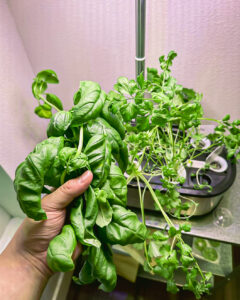
The best lettuce for a smart garden is a loose-leaf type: oak leaf and lollo varieties stay compact, cope with tight pod spacing and regrow after repeated picking. Butterhead works as a single-head project with extra room, while classic romaine is the hardest fit thanks to its height and 60 to 75 day timeline.
A frilly lollo and a tall romaine want completely different things from the same five pods, since the type matters far more than the variety name on the packet. Here is how the four classic types compare indoors and where each fits in a compact system.
The four lettuce types, translated to pods
A lettuce type describes how the plant organises its leaves, and the University of Minnesota Extension sorts the family into non-heading loose-leaf types, which include oak leaf and lollo, soft butterhead heads, ruffled summer crisp types, tall romaine and dense iceberg. That structure decides everything in a smart garden. Loose-leaf types spread their energy across leaves you can pick continuously, while heading types spend weeks building one harvest you cut once. UMN’s blunt note that loose-leaf varieties are the easiest to grow holds doubly indoors, where pod spacing of a few centimetres and a light hanging 20 to 40 cm overhead punish anything tall or slow. As a rule, heading types need twice the space and twice the patience.
Oak leaf: the smart garden default
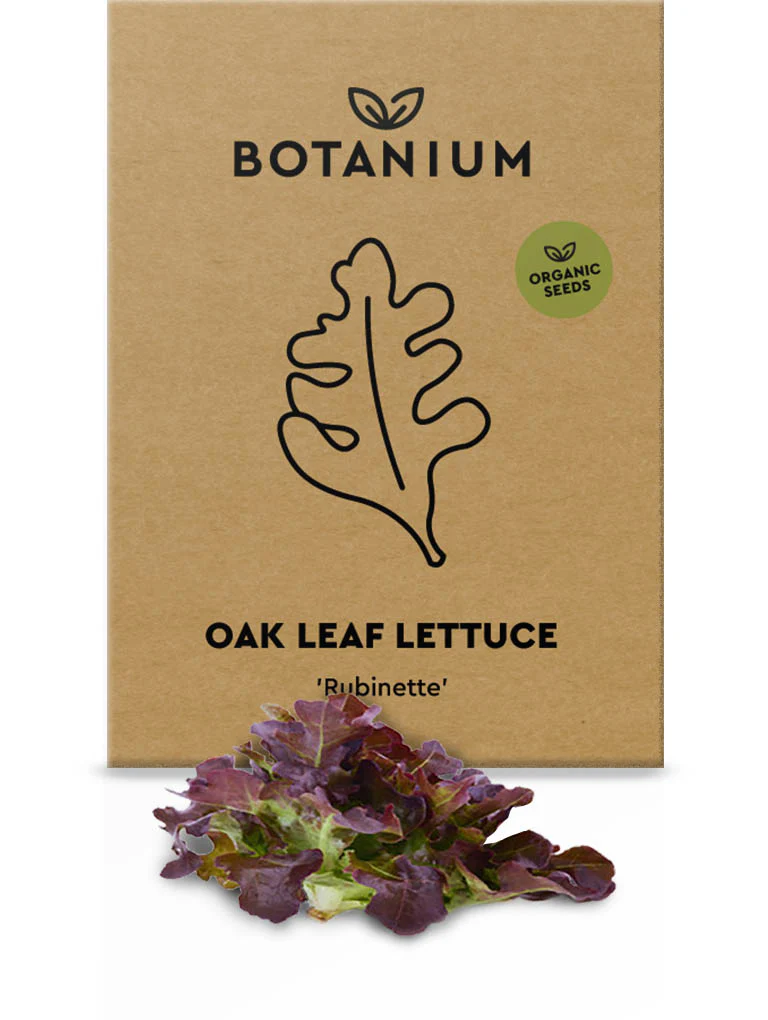
Oak leaf is a non-heading loose-leaf type with soft, lobed leaves shaped like its namesake, and it is the default choice for reliable salad. It reaches first picking size in 30 to 40 days, regrows after harvest for weeks and never threatens the light panel. The green classic in our range is Salad Bowl, a fast oak-leaf type bred for repeated cutting, and the red option is the Botanium organic oak leaf, which adds colour and a slightly crisper bite. Two oak leaf pods supply a household of two with a bowl of salad roughly every five days once the plants hit their stride.
Lollo: frilly, decorative and forgiving
Lollo is the deeply frilled loose-leaf type that looks like a green or burgundy pom-pom, and it earns its pod on texture alone. The ruffles bulk up a salad, hold dressing well and bounce back from picking in 7 to 10 days under a 12-hour light schedule. Our closest match is Bionda a Foglia Riccia, a fast curly-leaved Italian variety in the lollo bionda style that reaches first harvest in about 30 days. The one caution with frilly types is heat, since the thin leaf edges turn bitter first when the room creeps past 24 °C for days in a row.
Butterhead: a soft head if you give it room
Butterhead is a soft heading type that folds tender leaves into a loose rosette, and indoors it behaves like a single 35 to 50 day project rather than a continuous supplier. It can absolutely work in a smart garden, but it works best with an empty pod either side, because a cramped butterhead never forms its signature heart. We deliberately stock no dedicated butterhead variety for compact systems, and the early loose-leaf Grunetta works well instead, since its soft, mild leaves give the closest butterhead eating experience while still regrowing after harvest like any loose-leaf type.
Romaine: the honest warning
Romaine is the tall, upright heading type behind every Caesar salad, and it is the one that most often needs a second thought before choosing. It needs 60 to 75 days for a proper head, grows 30 cm tall or more and is the least forgiving type when light or nutrients wobble. In a compact garden with 29 to 32 cm of clearance, a maturing romaine simply hits the lamp, so it only suits tall systems with 40 cm or more of grow height, and even then works best as baby leaves cut young. If what you want from romaine is crunch and a mild, fresh flavour, lamb’s lettuce is a good sidestep, a compact cool-loving green that asks for none of romaine’s patience.
Light and temperature targets for every type
All four types want the same environment, which makes the schedule easy. Hydroponic lettuce grows best with 12 to 14 hours of light per day according to the University of Minnesota Extension, and more is not better, since long days combined with heat push lettuce towards bolting. Keep the room under 24 °C, because several warm days in a row flip the plant into flowering mode and the leaves turn bitter. Cooler nights around 16 to 18 °C noticeably improve flavour and crispness. The leafy or veggie light mode suits lettuce well, and what the modes actually change is covered in the guide to choosing a grow light for leafy greens.
Side-by-side: the four types in a smart garden
| Type | First harvest | Texture | Smart garden fit | Pick from our range |
|---|---|---|---|---|
| Oak leaf | 30–40 days | Soft, mild | Excellent, regrows for weeks | Salad Bowl, Botanium oak leaf |
| Lollo | About 30 days | Frilly, bulky | Excellent, decorative | Bionda a Foglia Riccia |
| Butterhead | 35–50 days | Tender, buttery | Good with extra spacing | Grunetta as soft-leaf stand-in |
| Romaine | 60–75 days | Crisp, juicy | Tall systems only | Lamb’s lettuce as alternative |
Counting days to first harvest, a loose-leaf pod produces roughly twice as many salads per month as a heading type in the same spot, which is the whole argument in one number.
Frequently asked questions
How many lettuce pods should I run in a 5-pod garden?
Two works well, alongside three herbs, which keeps salads and seasoning in balance for one or two people. If you are starting from zero, the LetPot Mini starter bundle covers the herb half of that split on day one.
Which lettuce grows fastest indoors?
Loose-leaf types. Lollo and oak leaf varieties reach baby-leaf picking in as little as 25 to 30 days under a 12 to 14 hour light schedule, and hydroponic growth runs noticeably faster than the same variety in soil.
Why does my indoor lettuce taste bitter?
Heat is the usual culprit. Several days above 24 °C push lettuce towards bolting, and bitterness is the first symptom. Move the garden away from radiators and direct afternoon sun, and harvest younger leaves.
Can I grow iceberg lettuce in a smart garden?
Technically yes, practically no. A dense iceberg head needs 70 days or more, wide spacing and cool conditions throughout, and one head occupies the space where a loose-leaf type would have produced ten harvests in the same period.
Do the different types need different nutrients?
No. All lettuce types share the same leafy-green feeding profile, so a standard hydroponic nutrient at the dose your system recommends covers every variety in this article without adjustment.
How long does one lettuce plant keep producing?
A loose-leaf plant harvested correctly produces for 8 to 12 weeks before quality drops or it bolts. Heading types are single-harvest plants, which is why a pod mix weighted towards the loose-leaf side keeps the garden producing.
Start loose, experiment later
A solid recipe for a first salad rotation is two oak leaf pods and one lollo, then swap one pod each cycle to try something new. The full range, from Salad Bowl to lamb’s lettuce, is in our lettuce and leafy green seeds category, and the variety index lives under lettuce seeds. Whatever you pick first, the loose-leaf habit of giving back after every harvest is what makes lettuce the most grateful crop a smart garden can hold.