Microgreens vs sprouts comes down to how you grow and eat them. Sprouts are germinated seeds grown in water and darkness for 2 to 7 days and eaten whole, roots included. Microgreens grow in soil or on a pad under light for 7 to 21 days, and you cut the stems above the roots, leaving the roots behind.
People ask me which is better almost every week, and they are usually surprised that microgreens and sprouts are not the same thing at all. I have grown both on the same windowsill, and the gaps in flavour, effort, and safety are wider than the tiny plants suggest. If you are deciding which to start with, it helps to understand what each one actually is before you buy a single seed. Here is how they compare, and which I reach for most.
What sprouts are
A sprout is a seed that has just germinated and is eaten whole, including the seed, the root, and the pale shoot. You grow sprouts in a jar or tray with no soil and no light, rinsing them in water two or three times a day in a warm spot. They are ready fast, usually in 2 to 7 days, which is most of their appeal. Because nothing is discarded, a tablespoon of seed turns into a full jar of food with almost no equipment. Lentils are one of the most reliable seeds to start with, and you can grow them in a simple sprouting jar or bowl using lentil seeds. The trade-off is that the warm, damp, dark conditions that make sprouts grow so quickly are the same conditions that let bacteria multiply, which I will come back to.
What microgreens are
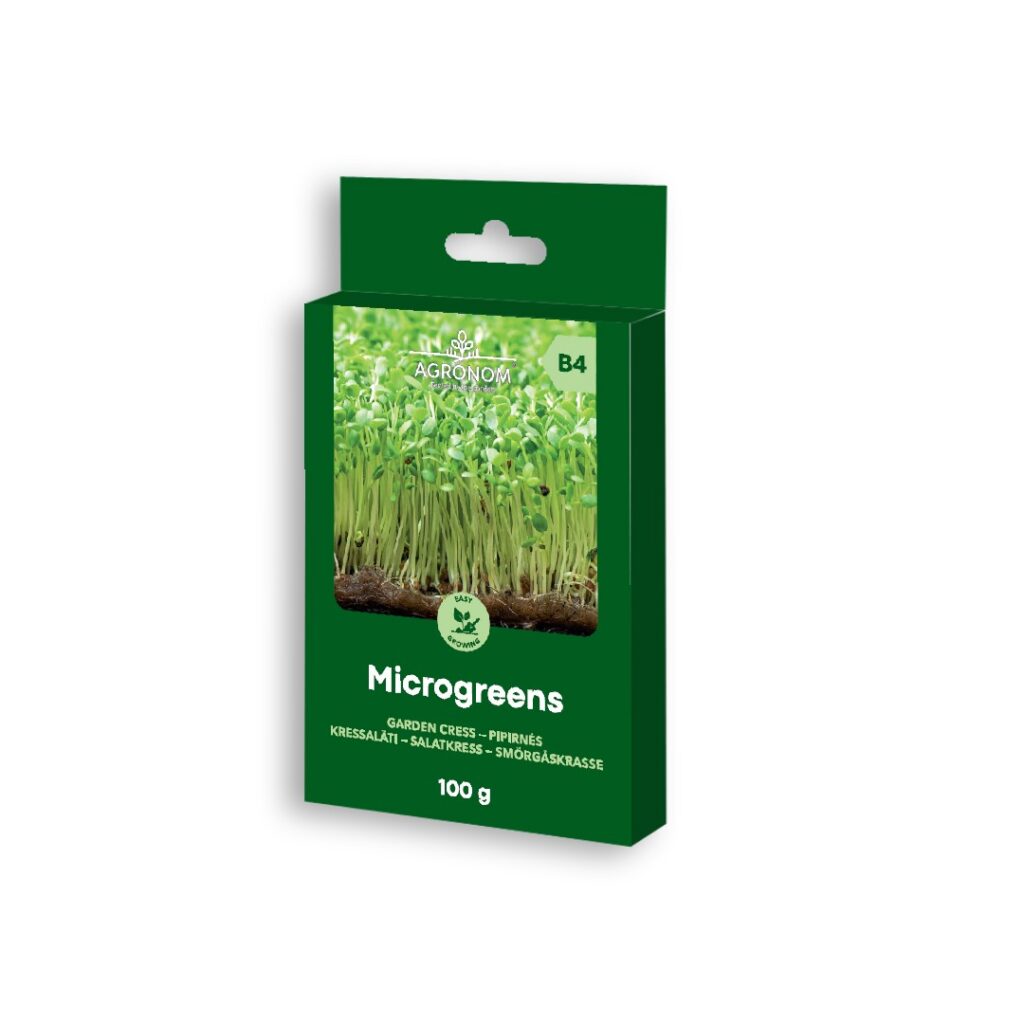
A microgreen is a young vegetable or herb harvested at the seedling stage, once the first true leaves appear, and cut just above the growing medium so the roots stay behind. They grow in a shallow tray 4 to 5 cm deep, in soil or on a hydroponic pad, under a window or a grow light for about 7 to 21 days depending on the variety. You eat the stem and leaves rather than the whole plant. The range of crops is wide: broccoli, radish, pea, and sunflower all make excellent microgreens, and you can browse the full selection in the microgreens seeds range. If you have never grown a tray before, our beginner guide to growing microgreens walks through it step by step.
The key differences at a glance
The table below sums up where the two methods part ways.
| Feature | Sprouts | Microgreens |
|---|---|---|
| Growing medium | Water only, no soil | Soil or hydroponic pad |
| Light | Grown in the dark | Grown under light |
| Time to harvest | 2 to 7 days | 7 to 21 days |
| What you eat | The whole plant, roots included | Stem and leaves, cut above the roots |
| Flavour | Mild, crunchy, watery | Stronger and more concentrated |
| Main risk | Higher bacterial risk | Lower bacterial risk |
Nutrition: do microgreens or sprouts win
Both are nutrient-dense foods harvested at a young, concentrated stage, so neither is a poor choice. The edge tends to go to microgreens because they grow longer and develop leaves under light, which builds vitamins and pigments. Published analyses, including a 2025 study of microgreen quality in Scientific Reports, report that microgreens can carry several times the vitamin and antioxidant levels of the mature version of the same vegetable. Sprouts are still a good source of fibre and plant protein, and they deliver that within days, so the honest answer is that both belong in a healthy kitchen for different reasons.
Food safety: the most important difference
Food safety is the single biggest reason I lean towards microgreens for most home growers. The warm, humid, enclosed environment that sprouts need is, in the words of the regulator, ideal for bacteria. The US Food and Drug Administration warns that raw or lightly cooked sprouts can carry Salmonella, Listeria and E. coli, and that even seeds grown at home under clean conditions can be affected if a few bacteria are present on the seed. The agency advises that anyone more vulnerable to foodborne illness, including young children, older adults, pregnant people, and those with weakened immune systems, should avoid raw sprouts altogether. Microgreens are cut above the growing medium and grown with airflow and light, so the roots and the seed are left behind and the risk drops considerably. If you do grow sprouts, rinse them well, keep them cold, and cooking them removes the risk entirely.
Which should you grow
Choose sprouts if you want food in under a week with no soil, no light, and the least possible kit. They suit anyone who likes a fast result and is happy to follow careful hygiene. Choose microgreens if you care about flavour, presentation, and a lower safety risk, and you do not mind waiting a couple of weeks and using a tray and a little light. For most people in a normal kitchen, I recommend starting with microgreens for those reasons, then adding a sprouting jar later if you want speed as well. You can pick a first variety from the microgreens seeds range and follow our microgreens beginner guide to get a clean first harvest.
Frequently asked questions
Are microgreens just bigger sprouts?
No. A sprout is a germinated seed eaten whole after 2 to 7 days in water and darkness. A microgreen grows in a medium under light for 7 to 21 days and is cut above the roots, so you eat only the stem and leaves.
Are sprouts safe to eat raw?
They can be, but they carry a higher risk than most raw produce. The FDA advises vulnerable groups to avoid raw sprouts and recommends rinsing, refrigeration, or cooking for everyone else, since the growing conditions can let bacteria multiply quickly.
Which is faster to grow?
Sprouts are much faster. Most are ready in 2 to 7 days, while microgreens take about 7 to 21 days depending on the variety. Pea and radish are among the quicker microgreens, often ready in around 10 days.
Do I need a grow light for either?
Sprouts need no light and are grown in the dark. Microgreens do need light once they germinate, but a bright windowsill is often enough, and a small grow light gives more even, faster growth in winter.
Can I use the same seeds for both?
Some seeds work for both methods, such as broccoli and radish, but the technique differs. For sprouting, choose seeds sold for that purpose and follow strict rinsing. For microgreens, sow into a shallow tray of medium and harvest above the roots.
Starting your first tray
Microgreens and sprouts both turn a spoonful of seed into fresh food on a kitchen counter, and the right choice simply depends on how fast you want to harvest and how much you weigh convenience against safety. For a reliable, flavourful, and low-risk start, I would put a tray of microgreens on the windowsill first. When you are ready to choose seeds, browse the microgreens seeds collection and pick a variety that matches the flavours you already cook with.