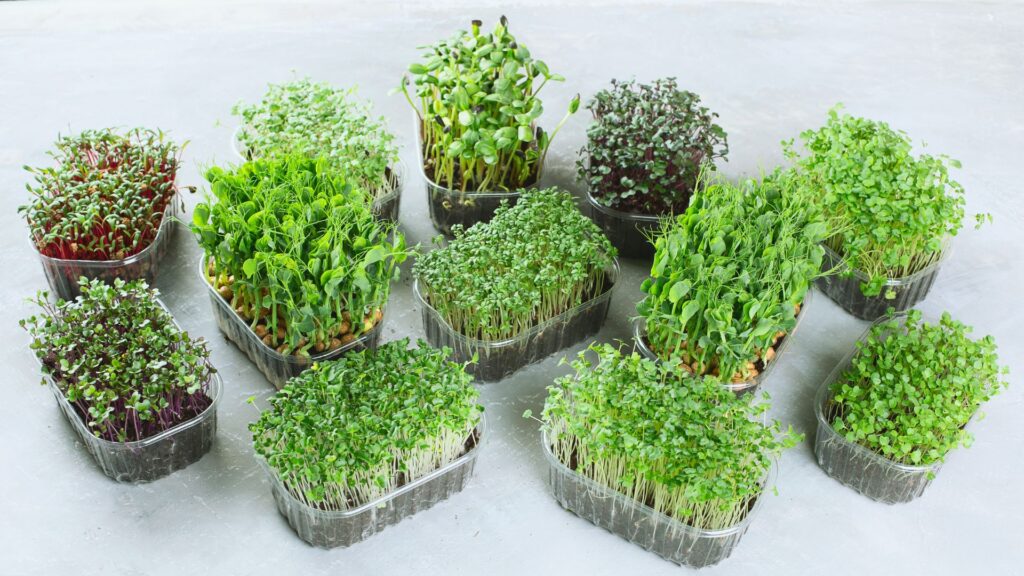
The easiest microgreens for beginners are radish, broccoli, pea, sunflower and mustard, and most are ready to harvest in under 10 days. They germinate fast, forgive small mistakes, and need only water, a shallow tray and a bright windowsill to go from seed to plate, which makes them the ideal place to start indoor growing.
I have grown a lot of trays that failed, and almost all of those failures came from picking the wrong seed first. When I started, I reached for slow, fussy varieties and ended up with patchy, mouldy trays that put me off for weeks. The five microgreens below are the ones I now hand to every nervous beginner, because they sprout quickly, grow evenly, and reward you with something edible before you have a chance to overthink it.
What makes a microgreen easy to grow
An easy microgreen is a fast-germinating crop that produces a dense, even canopy with very little intervention. The best beginner varieties share three traits: large or vigorous seeds that sprout within 2 to 3 days, a short cycle that ends in harvest 6 to 10 days later, and a forgiving nature that tolerates uneven watering. According to UMN Extension, microgreens are harvested 7 to 14 days after germination, once the seed leaves have opened but before true leaves expand. Most germinate well at 18 to 24 °C, so a normal heated room is enough. You can read my full method in the beginner guide to growing microgreens at home.
Radish: the fastest win for first-timers
Radish is a peppery brassica microgreen and the single fastest variety most beginners will ever grow. The seeds are large enough to handle by hand, they germinate within 2 days, and a tray is usually ready to cut 6 to 7 days after sowing. Radish forms a thick, upright canopy that looks impressively full, which is exactly the confidence boost a first grower needs. The flavour is a clean, mild heat that works in sandwiches, salads and on top of soups. If you only buy one packet to start, make it radish seeds, because it is almost impossible to get wrong.
Broccoli: the reliable all-rounder
Broccoli is a mild brassica microgreen prized for how evenly and predictably it grows. It germinates within 2 to 3 days and reaches harvest in 7 to 10 days, forming a stable, compact carpet of fine green stems. The flavour is gentle and slightly cabbage-like, which makes it the easiest variety to add to everyday meals without anyone complaining. Broccoli microgreens are also the variety most often studied for their nutrient density, and Illinois Extension notes that microgreens can carry far higher vitamin levels than the mature plant. Reach for broccoli seeds when you want a dependable, crowd-pleasing tray.
Pea shoots: sweet, crunchy and forgiving
Pea shoots are a large-seeded legume microgreen with a sweet, fresh-pea flavour and a satisfying crunch. The seeds are the biggest on this list, so they are easy to spread evenly, and they tolerate rough handling better than fine seeds. Soak them for 8 to 12 hours before sowing and they will germinate fast, with a tray ready in roughly 8 to 10 days. Pea shoots regrow once or twice after the first cut, which stretches the value of a single sowing. They are my go-to for stir-fries and grain bowls. Start with pea seeds for the most generous harvest by volume.
Sunflower: the substantial, nutty microgreen
Sunflower is a thick-stemmed microgreen with a nutty taste and the most substantial texture of any beginner variety. The hulled seeds benefit from an 8 to 12 hour soak, then germinate strongly and produce sturdy shoots ready in about 8 to 10 days. The one beginner quirk is the seed hull, which sometimes clings to the leaf and needs a gentle rub to remove at harvest. Sunflower shoots hold up well in salads where softer greens would wilt. A packet of sunflower seeds gives you a microgreen that eats almost like a vegetable.
Mustard: spicy greens in about a week
Mustard is a fast brassica microgreen that delivers a bold, horseradish-like kick. It germinates within 2 days and is usually ready 6 to 8 days after sowing, making it one of the quickest crops you can grow. The fine seeds need only a light, even scatter, and the tray forms a vivid green canopy that signals success early. Mustard is the variety I use to add heat to otherwise mild dishes, and a little goes a long way. Try mustard seeds once you are comfortable handling smaller seed.
Beginner microgreens compared
| Microgreen | Days to harvest | Flavour | Seed size | Difficulty |
|---|---|---|---|---|
| Radish | 6–7 days | Mild peppery heat | Large | Very easy |
| Mustard | 6–8 days | Hot, horseradish-like | Fine | Easy |
| Broccoli | 7–10 days | Mild, cabbage-like | Fine | Easy |
| Pea shoots | 8–10 days | Sweet, fresh pea | Large | Very easy |
| Sunflower | 8–10 days | Nutty, substantial | Large | Easy |
How to grow your first tray in 5 steps
The same simple routine works for every variety on this list, and Penn State Extension lays out a similar method in its step-by-step home guide.
- Fill a shallow tray about 4 to 5 cm deep with moist growing medium and level the surface.
- Scatter seed evenly across the top, soaking large seeds like pea and sunflower for 8 to 12 hours first.
- Mist well, cover the tray to hold humidity, and keep it at 18 to 24 °C for 2 to 3 days.
- Uncover once the seeds have sprouted and move the tray to a bright windowsill or under a grow light.
- Water from the base, then harvest with clean scissors just above the medium in 6 to 10 days.
Light, water and the first-week routine
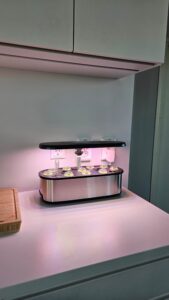
Light and watering are where most first trays succeed or fail, and the good news is that the easiest microgreens forgive minor lapses. For the first 2 to 3 days, the covered tray needs warmth more than light, so keep it at 18 to 24 °C and out of direct sun. Once the seedlings lift their cover, give them the brightest spot you have. On a north-facing windowsill in an Estonian winter, daylight alone is often too weak and shoots stretch tall and pale, so a small LED grow light run for 12 to 16 hours a day pays for itself in sturdier, greener trays. Water from the base by adding a few millimetres to a lower tray and letting the medium wick it up, which keeps leaves dry and discourages mould. Check moisture once a day rather than soaking on a schedule, because a tray that is heavy and damp does not need more. By day 6 to 10, depending on the variety, you will have a dense little crop ready to cut, rinse and eat the same afternoon.
Frequently asked questions
Which microgreen is the fastest to grow?
Radish is the fastest reliable choice, with most trays ready to cut 6 to 7 days after sowing. Mustard runs a close second at 6 to 8 days.
Do I need a grow light to start?
No. A bright windowsill is enough for your first trays, though short, dark winter days in Europe give weak, leggy growth. A small grow light produces sturdier shoots and more even results year-round.
Can I grow these microgreens without soil?
Yes. Radish, broccoli and mustard grow well on a damp paper towel or a hydroponic mat, while large seeds like pea and sunflower also do fine on a thin growing medium for support.
Are microgreens actually more nutritious than full-grown plants?
Research summarised by university extensions suggests microgreens can contain several times the vitamin and carotenoid levels of the mature plant, harvested in a fraction of the time.
How do I avoid mould on my tray?
Sow seed thinly, water from the base rather than over the top, and give the tray gentle airflow. Mould is almost always a sign of overcrowding or trapped moisture.
Can I grow more than one variety in the same tray?
You can, but it is easier to keep varieties separate so each can be harvested at its own pace. Radish and mustard finish days before pea and sunflower.
Ready to sow your first tray
If you are starting out, pick one fast variety, grow it well, then add the others as your confidence builds. Radish and broccoli are the safest first choices, with pea, sunflower and mustard close behind. When you are ready to stock up, browse the full range of microgreen seeds and choose a couple of packets to get your windowsill harvest going.