Workplace wellbeing on a €500 budget works best as a mix of free habits and one lasting fixture, not a single big purchase. Moving desks nearer a window, starting walking meetings, and setting up a shared herb garden all cost little, and one Stanford study found walking raised creative output by around 60% compared with sitting.
A real wellbeing budget for a small office rarely stretches to a meditation room or an in-house gym, and it does not need to. What changes an ordinary workday is often smaller: better light at a desk, a short walk instead of a sit-down meeting, a snack nobody had to bring themselves, and a reason to step away from a screen. This article lays out ten ideas that fit comfortably inside roughly €500, mixing one-off purchases with small recurring costs, and ends with the one addition that keeps paying off long after the rest of the budget is spent.
Products mentioned — in stock at IndoorGarden, shipped from Tallinn across the EU.
Start with what costs nothing: daylight and walking meetings
Before spending anything, two habits are worth trying because the evidence behind them is unusually solid for workplace advice. Moving desks closer to windows, or simply keeping blinds open through the day, addresses something measurable: a 2014 case-control study in the Journal of Clinical Sleep Medicine found that office workers with more daylight exposure slept around 46 minutes longer a night and reported better overall sleep quality than colleagues working away from windows. Walking meetings are the second free change. A Stanford University study found that walking, whether on a treadmill or outdoors, raised creative-thinking output by roughly 60% compared with sitting, an effect that held for several minutes after the walk ended. Replacing one short status meeting a week with a walk around the block costs nothing and fits almost any office.
Fresh fruit, water, and small team rituals
A standing fruit bowl, refilled once or twice a week, is one of the most commonly recommended low-cost wellbeing ideas, and it earns its place mainly because it is visible every day rather than because of any single health claim. Budget roughly €10-15 a week for a small team, more for a larger office. A simple water station, a jug and a set of reusable cups or bottles on the kitchen counter, costs little more than a one-off €30-40 and removes the small daily friction of not having a glass to hand. Neither needs a committee to run, just someone willing to do the weekly shop.

A recognition board that costs less than lunch
A corkboard or whiteboard in a shared space, where anyone can pin a thank-you note or flag a colleague’s good work, costs under €20 to set up and nothing to run beyond sticky notes and pins. Recognition is one of the more consistently cited low-cost wellbeing practices precisely because it needs no budget approval and no scheduling, only a habit of actually using the board. Pairing it with a short, optional round of shout-outs at the end of a Friday meeting keeps it visible without turning it into another task.
A team herb-growing challenge
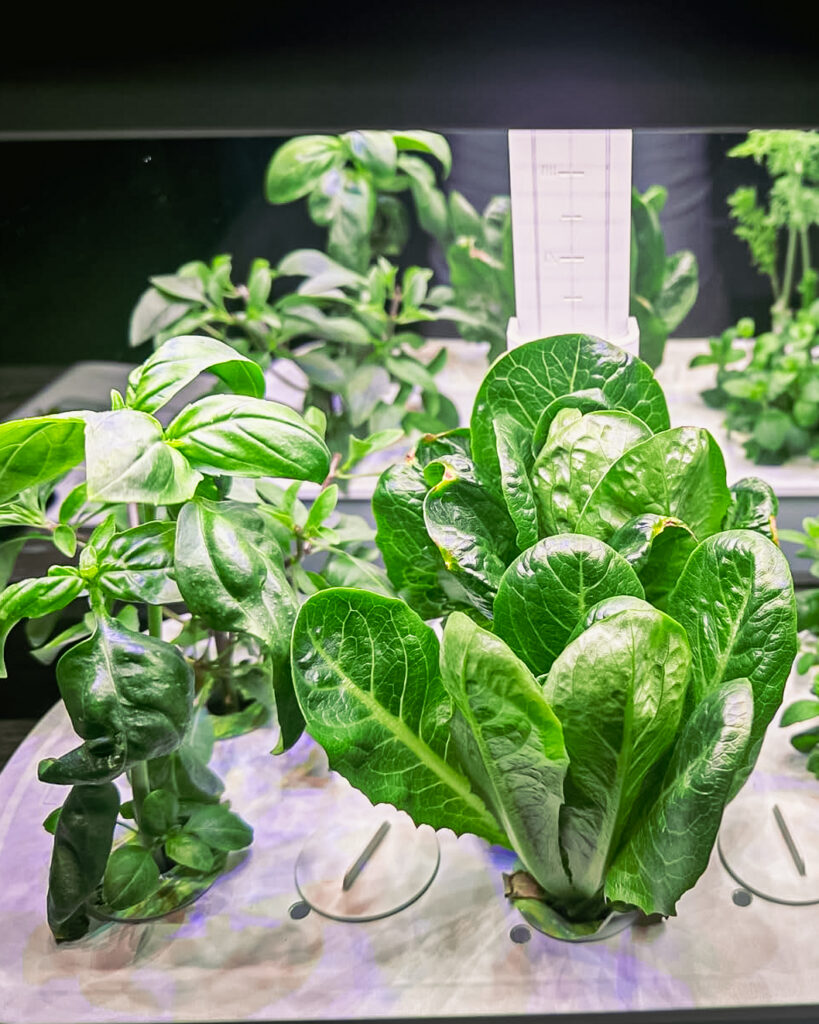
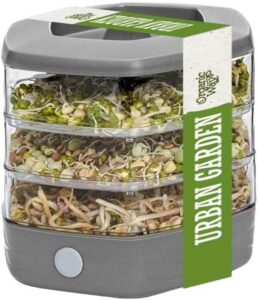
A sowing contest gives people a reason to check in on something other than email. A few microgreens sprouters split between desks or small teams, seeded on the same day, turn into a simple first-to-harvest challenge that needs no supervision beyond a daily glance and a splash of water. Microgreens are a reasonable choice for an office challenge because most varieties are ready to cut within one to two weeks from sowing, so the result shows up before interest fades. The loser buys the winner’s coffee, or the team just compares trays at the end.
A quiet corner to recharge
Not every break needs to be social. A chair turned away from the main desks, a cushion, and a small screen or bookshelf used as a visual divider can turn an unused corner into somewhere to sit for ten minutes without being drawn into conversation. This is one of the cheaper items on the list, usually €50-80 depending on what is already sitting in a storage cupboard, and it tends to matter most in open-plan offices where there is otherwise nowhere to step away from the noise.
The one that keeps giving: a living herb garden for the kitchen
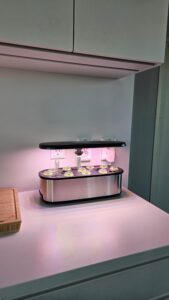
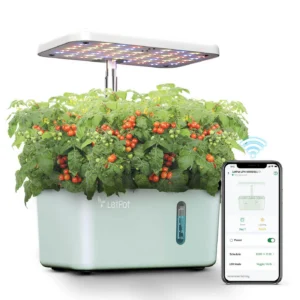
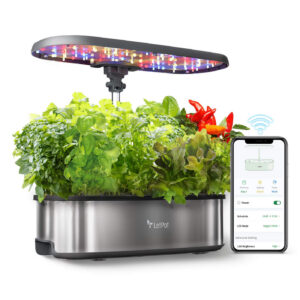
Most items on this list are either free habits or one-off purchases that eventually fade into the background. A shared herb garden in the office kitchen behaves differently, since it needs a small amount of attention every week and gives something back in return. A LetPot Mini holds its own water and light for a desk or small kitchen corner and costs €59.00, while a LetPot Senior suits a shared kitchen where several people will harvest from it and costs €129.00. Both run on a self-contained reservoir that typically needs refilling every one to three weeks, so the task fits easily into a rota rather than needing a dedicated plant owner. It is also one of the few wellbeing ideas on this list that produces something a team can actually use, a handful of basil or parsley for lunch, rather than only a feeling.
| Idea | Approximate cost | One-off or ongoing |
|---|---|---|
| Move desks nearer windows, open blinds | €0 | One-off |
| Walking meetings | €0 | Ongoing habit |
| Recognition board | ~€20 | One-off, low upkeep |
| Weekly fruit bowl | ~€10-15/week | Ongoing |
| Water station | ~€30-40 | One-off |
| Microgreens sprouting challenge (3 units) | ~€36 (Microgreens Sprouter, €11.99 each) | One-off |
| Quiet-corner setup | ~€50-80 | One-off |
| Living herb garden | €59.00 (LetPot Mini) or €129.00 (LetPot Senior) | One-off, ongoing use |
Even with a fruit bowl running for a full month and the larger LetPot Senior as the herb garden, the total sits comfortably under €500, with room left over for a second small item such as the quiet corner or an extra sprouter.
Frequently asked questions
How much should a small business actually budget for workplace wellbeing?
There is no fixed figure, and the research on office wellbeing generally measures specific interventions rather than total spend. A useful way to plan a first budget is to pick a handful of free habits plus one or two purchases under €150 each, which keeps the total manageable and easy to review after a few months, as this list does.
Do office plants actually improve wellbeing?
The evidence is mixed but not nothing. Our own review of the research on office plants and wellbeing found that a 2024 study linked nature exposure at work mainly to vigour, a feeling of being more energised, while a 2021 experiment found that plants need to cover around 12% of visible surfaces before most people notice a restorative effect. A single desk plant is unlikely to do much on its own.
Are walking meetings suitable for every meeting?
No. Research on walking meetings generally finds they help with open-ended, creative discussion but are less suited to meetings that need notes taken in detail or a shared screen. A short check-in or a one-to-one works well as a walking meeting, while a budget review probably does not.
Who looks after a shared office herb garden?
Treat it the same way as a kitchen dishwasher rota. Self-watering hydroponic systems such as LetPot models hold their own reservoir for one to three weeks at a time, so naming one person responsible for refills and one backup covers most holidays and absences without a formal schedule.
What is the cheapest way to start?
Daylight and walking meetings cost nothing and can start this week. If a budget line is available, a recognition board or a microgreens sprouting challenge are the lowest-cost purchased items on this list.
Does natural light really affect sleep, or is that overstated?
The daylight-and-sleep link is one of the better-supported findings in this area. The 2014 Journal of Clinical Sleep Medicine study is a small sample by research standards, 49 office workers, so it is worth treating as a solid data point rather than a guarantee, but the direction of the effect lines up with later studies on daytime light exposure and sleep.
Where to start
Begin with the two free changes, more daylight at desks and one walking meeting a week, since neither needs approval or a budget line. For the one purchase worth making first, a LetPot Mini fits a single kitchen counter or desk corner and gives a small team something to tend between them. Browse the full range of smart gardens if a larger shared kitchen needs a bigger system, or get in touch if ordering for several teams or desks at once.