A vertical planter with built-in automatic watering, such as the CitySens 3-pot or 4-pot system, lets a reception or lobby keep real, well-kept greenery without a recurring florist or plant-hire contract. The reservoir and pump water the display on their own for roughly 30 to 60 days between top-ups, and the planter itself is a one-off purchase rather than a monthly line item.
A lot of receptions end up with either a dying desktop plant or a florist subscription nobody quite remembers agreeing to, because nobody at the front desk has time to water anything on a schedule. A self-watering vertical planter sidesteps both problems: the watering runs on a timer, the footprint is narrow enough for a corner by the door or against a wall, and a column of stacked pots reads as considerably greener than the same number of plants spread across separate pots on a shelf. This article covers how the watering actually works, which CitySens size fits a typical lobby, roughly what a plant-hire contract costs by comparison, and what upkeep is still needed even with the watering automated.
Products mentioned — in stock at IndoorGarden, shipped from Tallinn across the EU.
Why a reception needs a different plant plan than a desk
A desk plant only has to survive its owner’s attention span. A reception or lobby planter is seen by every visitor who walks through the door, sits there all day under air conditioning that dries out soil faster than a normal room, and usually has no single person responsible for it once the novelty of watering it wears off. That combination is exactly why so many receptions default to a florist contract: someone else takes on the watering and replacement, for a fee, because the alternative looked like a dying plant within a month. A planter that waters itself removes the main reason that fee exists.
How the automatic watering actually works
The CitySens system pumps water from a base reservoir up to the top pot, then lets it flow down through the stack pot by pot, so every plant in the column gets watered on the way down rather than needing its own line. Water that isn’t absorbed collects back in the reservoir and is reused on the next cycle, which the manufacturer says saves up to 50% on water and nutrients compared with watering each pot by hand. A Wi-Fi timer with app control schedules up to 16 watering cycles a week, each a minimum of one minute, and the manufacturer’s own guidance is 2–3 minutes once a week, increasing to twice a week in summer. Left on that schedule, the reservoir runs for roughly 30 days in summer and up to 60 days in winter before it needs refilling, and the pump itself is built to run quietly, with power use costing around €0.20 a year.

Choosing between the 3-pot and 4-pot planter
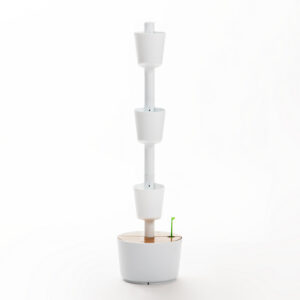
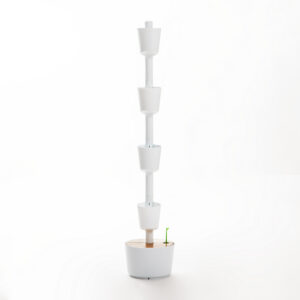
The 3-pot CitySens stands 115 cm tall on a 29 cm base, weighs 3.8 kg, and suits a narrower corner, an alcove beside the reception desk, or a spot under a sloped ceiling where the taller model wouldn’t fit. The 4-pot version reaches 148 cm on the same 29 cm base, for roughly €10 more, and reads as noticeably taller and fuller against a plain wall. Both use the same 13 cm pots, the same Wi-Fi timer kit, and the same watering cycle, so the choice comes down to ceiling height and how much visual weight the space can take rather than any difference in upkeep.
What a florist or plant-hire contract typically costs
Published pricing guides from UK and US plant-maintenance providers commonly quote maintenance-only visits at roughly €100–500 a month for a small office or lobby, with full rental programmes that include the plants themselves costing more again on top of that. Over a three-year contract, that adds up to several thousand euros for a handful of displays the business never actually owns. A CitySens planter runs the opposite way: one purchase of €189 or €199, no monthly invoice, and the only ongoing spend is topping up the reservoir and buying replacement nutrients roughly twice a year.

Setting it up and keeping it going
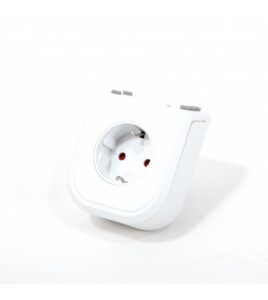
CitySens says assembly takes about three minutes, and the kit includes the base, the stackable pots, the Wi-Fi timer, a water-level indicator, and enough plant nutrients for two years, so there is nothing extra to source before it goes by the door. Once it is running, the manufacturer’s maintenance guidance is to prune leaves monthly, trim roots every three months, and change the irrigation water once a year, which is a short task for whoever is already tidying the reception area rather than a specialist visit. If the building’s guest Wi-Fi makes it awkward to connect another device, CitySens also sells a standalone digital timer that runs the same weekly watering cycle from an EU wall socket, with no app or network connection needed.
| Model | Price | Height | Pots |
|---|---|---|---|
| CitySens 3-pot, Wi-Fi watering kit | €189.00 | 115 cm | 3 |
| CitySens 4-pot, Wi-Fi watering kit | €199.00 | 148 cm | 4 |
| CitySens digital timer (standalone, EU plug) | €30.00 | — | — |
Frequently asked questions
Does a reception planter need watering every day?
No. The Wi-Fi timer runs the watering cycle automatically, and the reservoir itself lasts roughly 30 days in summer and up to 60 days in winter before anyone needs to refill it.
What happens over a long weekend or a building shutdown?
Nothing needs to happen. The watering schedule keeps running on the timer regardless of whether anyone is in the building, as long as the reservoir still has water in it.
Will the pump be noisy in a quiet lobby?
CitySens describes the pump as ultra-quiet and built for everyday indoor use, and it only runs for the scheduled one-to-three-minute cycles rather than continuously.
Is this actually cheaper than a florist or plant-hire contract?
Maintenance-only visits from plant-care providers commonly start around €100 a month according to published pricing guides, and full rental programmes cost more again, so a one-off €189–€199 purchase is normally the cheaper route over anything beyond a few months.
Which plants suit this kind of planter?
CitySens planters are sold with their own nutrient kit and are commonly used for herbs, leafy greens and trailing houseplants; for a reception that wants greenery rather than a kitchen herb bed, a trailing or leafy variety usually reads better from a distance.
Who tops up the water and nutrients if there’s no dedicated plant person?
Whoever already restocks the reception area can do it in a couple of minutes every few weeks, since refilling the reservoir and adding the nutrient dose is the only manual step in the whole system.
Where to start
Most receptions start with one vertical planter by the entrance or behind the desk, then decide after a few months whether a second unit elsewhere in the building is worth it. If you want the thinking behind why vertical growing works well in a limited footprint, our article on vertical gardens covers that in more detail, and our contact page is the quickest way to ask about ordering more than one unit for several locations.