
A coworking herb garden survives on a system, not good intentions: one named owner, a fixed refill day, and a short printed list of house rules keep a shared smart garden alive for months, where a plant nobody owns usually dies of neglect within weeks.
Coworking operators already write down rules for kitchen use, meeting rooms and guest visits rather than leaving them to unspoken norms, and a shared herb corner works best when it gets the same treatment. This guide covers picking an owner and a refill day, a short house-rules template you can print and pin up, fair harvest etiquette for a space shared by a dozen or more people, and how the garden survives quieter weeks when half the desks are empty.
Products mentioned — in stock at IndoorGarden, shipped from Tallinn across the EU.

Why a shared herb garden needs rules, not luck
Coworking Resources, a trade publication for shared-workspace operators, recommends posting house rules in prominent spots around the space and folding them into membership agreements, rather than relying on everyone just knowing what to do. A countertop smart garden is one more shared resource that fits the same pattern: it has a reservoir that needs topping up, pods that need sowing, and leaves that everyone quietly assumes someone else is watering. Skip the rules and the garden usually ends up one of two ways: a half-dead stick by the second month, or oddly waterlogged because three different members topped up the tank on the same afternoon.
Give it an owner and a refill day
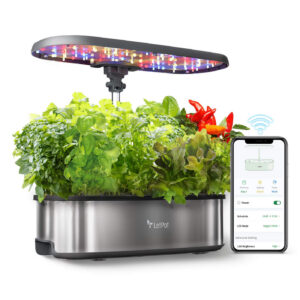
One named owner, rotated monthly or left with whoever volunteers first, removes the biggest point of failure in any shared plant setup. Their job is small: check the water level on a fixed day each week, add nutrient solution on the schedule the system’s app suggests, and flag anything that looks off in the group chat rather than quietly fixing it alone. A LetPot Senior holds a 5.5-litre reservoir that typically lasts about three weeks between refills at normal light settings, which comfortably covers a long weekend or a short closure without anyone having to come in specially. The larger LetPot Max holds 7.5 litres and commonly stretches a little further, which matters more once a space has grown past a couple of dozen members sharing one unit.
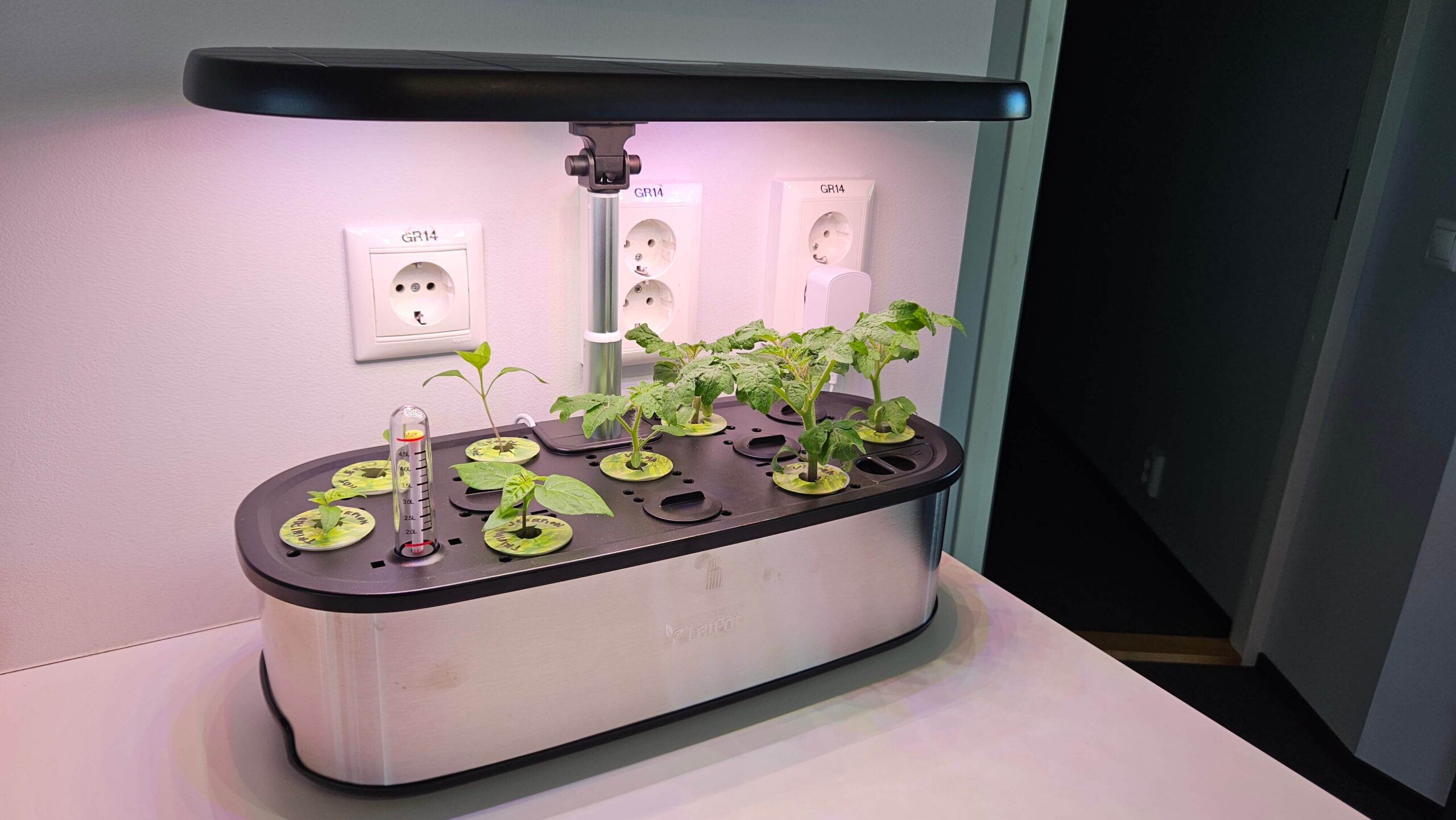
A house-rules template you can print and pin up
Keep the actual rules short enough to fit on one printed card near the garden, since a long policy document gets read once and then ignored. The points below cover most of the friction a shared growing setup runs into, and the list is short enough to laminate and stick to the side of the unit.
- Owner: name and contact listed, reviewed monthly
- Refill day: a fixed weekday, logged on a shared calendar or whiteboard
- Harvest rule: take no more than a third of any one plant per visit
- Labels: every pod gets a plant name and sowing date, no guessing
- Problems: post in the group chat rather than quietly topping up the tank yourself
- New seeds: check with the owner before resowing an empty pod
Harvest etiquette: what’s fair to pick, and when
The one rule that keeps a shared herb garden alive longer than a few weeks is the one-third rule: never take more than a third of a plant’s leaves in one visit, then leave it to recover. In a system shared by a dozen or more people, that matters more than usual, since five separate people each taking “just a little” basil can strip a plant bare by lunchtime. Stem herbs such as basil, peppermint and oregano regrow fastest from a cut just above a leaf pair, while rosette crops like lettuce are better picked as whole outer leaves rather than from the centre, which is the growing point. Our longer guide to how to harvest herbs without killing the plant covers the cutting technique crop by crop, and it is worth pinning next to the house-rules card so nobody has to guess.
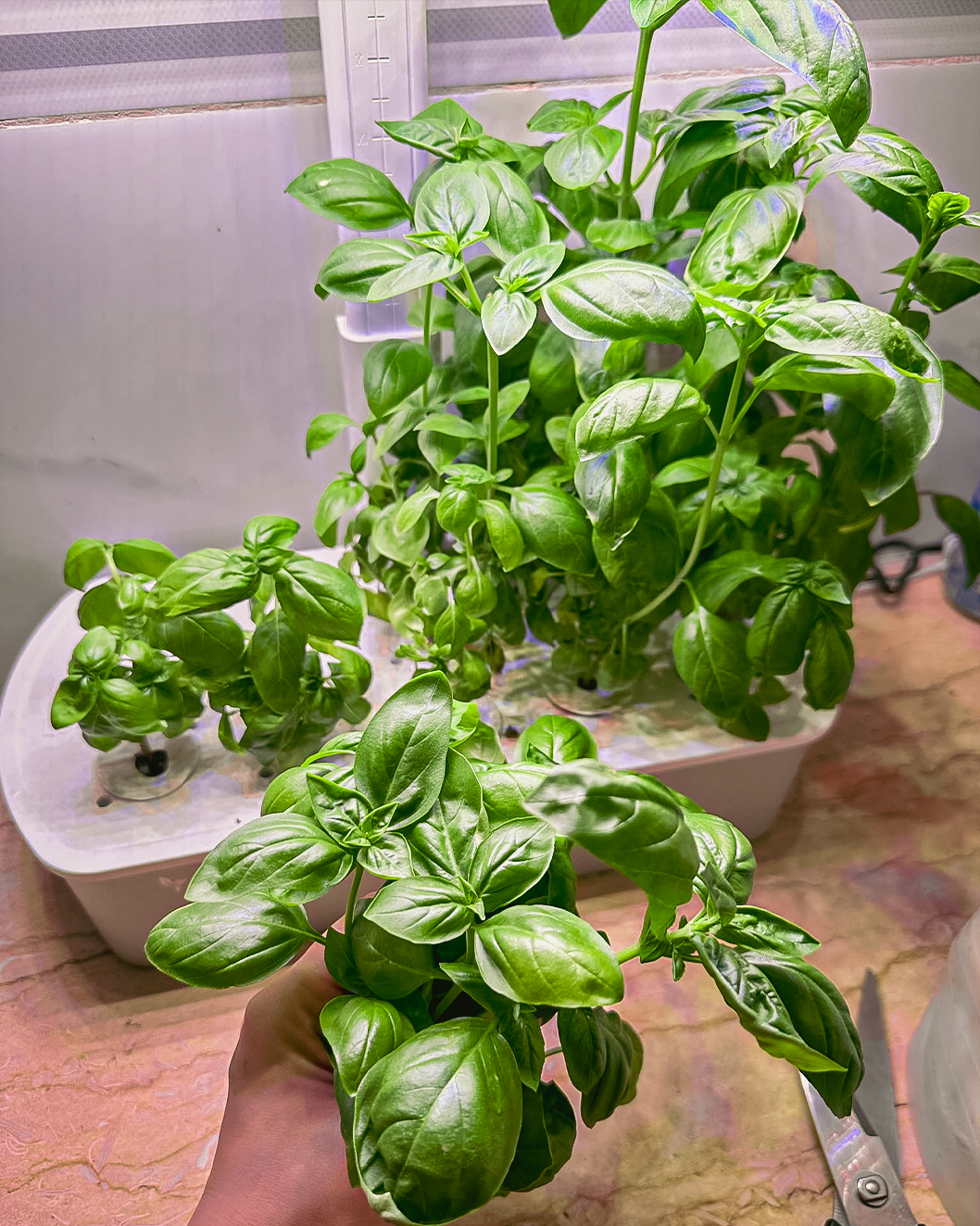
Labels and a shared calendar keep it running
A pod with no label invites exactly the kind of guessing that stalls a shared garden: two look-alike seedlings get mixed up, or someone harvests a crop that was meant to grow for another two weeks. Write the plant name and the sowing date on a small tag at each pod, and keep a simple shared calendar, whether that’s a shared spreadsheet or a paper chart on the fridge, so the refill day and the next expected harvest are visible to everyone rather than living in one person’s head. During quiet weeks, such as a public holiday closure or a run of remote-working days, the reservoir sizes above do most of the work on their own, so the only real task is making sure the last refill before a closure happens on schedule rather than getting skipped because the office feels empty.
| Model | Capacity | Reservoir | Typical refill interval | Price |
|---|---|---|---|---|
| LetPot Senior | 12 pods | 5.5 L | About 3 weeks | 129,00 € |
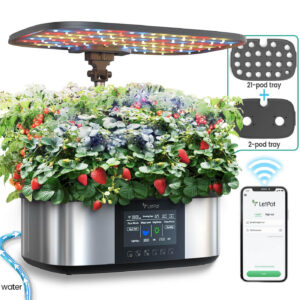
| LetPot Max | 21+2 pods | 7.5 L | About 4 weeks | 249,00 € |
| LetPot nutrient solution | — | — | Topped up alongside each refill | 17,99 € |
Frequently asked questions
Who should own the coworking herb garden?
One named person at a time works better than a rotating group with no single point of contact. A monthly rotation among volunteers spreads the small weekly task without any one member carrying it indefinitely.
How often does a shared smart garden need refilling?
A 12-pod LetPot Senior typically needs its 5.5-litre reservoir topped up about every three weeks under normal light settings. The 21+2-pod LetPot Max, with a 7.5-litre reservoir, commonly stretches a little further.
What counts as a fair harvest in a shared system?
Take no more than a third of any single plant per visit, and favour outer leaves on rosette crops like lettuce so the centre keeps producing. Posting that one rule on the card prevents most of the disputes.
Can a coworking space run more than one smart garden?
Yes, and larger spaces often do, splitting units by floor or by neighbourhood of desks so each one stays small enough for its own owner and refill day. Several small units are usually easier to manage fairly than one oversized system everyone shares.
What happens over a long closure or holiday period?
A full reservoir covers most short closures on its own, so the main task is making sure the last scheduled refill before the closure actually happens. For a closure longer than the reservoir’s typical interval, assign someone on a rota rather than assuming the system will simply wait.
Where to start
Most coworking spaces start with one shared medium smart garden, a printed house-rules card and a volunteer owner, then decide after a month or two whether a second unit makes sense. If you’re setting one up for a larger membership base or want help picking between models, our contact page is the quickest way to reach us.