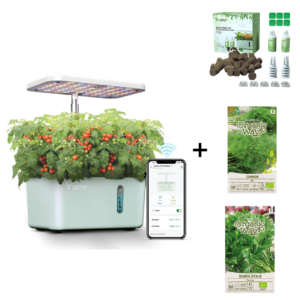
Buying a 12-pod smart garden such as the LetPot Senior (€129) typically costs less over three years than renting office plants, once electricity and feeding are included — a rough three-year total lands around €345–390, against rental fees that usually continue indefinitely with no ownership at the end. The right answer still depends on office size, who is willing to do the watering, and the rates a local plant-hire company actually quotes.
Office plants are often sold as a design choice, but the real decision underneath it is financial: pay a recurring fee to a plant-hire company, or buy equipment that waters and lights itself and keep it for as long as it runs. This article works through what plant rental commonly includes, what a smart garden or vertical planter actually costs to run over three years, and which option tends to suit which size of office.
Products mentioned — in stock at IndoorGarden, shipped from Tallinn across the EU.

What office plant rental actually includes
Commercial plant-hire contracts generally bundle the plant itself, a planter, and a visit from a technician who waters, feeds, and replaces anything that declines. Plant-hire services commonly quote a monthly fee per plant, with the exact rate depending on plant size, contract length, and how often the technician visits, so it is worth asking two or three local companies for a quote before comparing anything against a one-time purchase. The trade-off is straightforward: the office never owns the plant, the fee continues for as long as the contract runs, and someone outside the company decides what gets grown and when it gets replaced.
Buying a smart garden: the three-year numbers
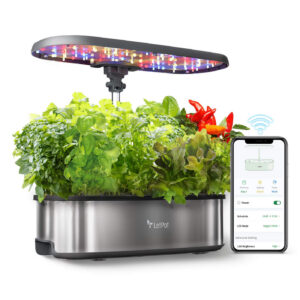
A self-watering hydroponic unit removes the recurring labour, not the recurring cost — it simply moves most of that cost from a service fee to electricity and plant food. A 12-pod LetPot Senior costs €129 to buy and, according to the energy-use figures already published on this site for this model, draws roughly 180 kWh a year. Eurostat’s household electricity price data puts that around €36–51 a year depending on the country (the full country-by-country breakdown and measurement method are in our own smart garden electricity cost article). Add plant food on top: the manufacturer’s dosing guide is the right reference for an exact schedule, but about two bottles of nutrient concentrate a year is a reasonable planning figure for one fully-loaded 12-pod unit.
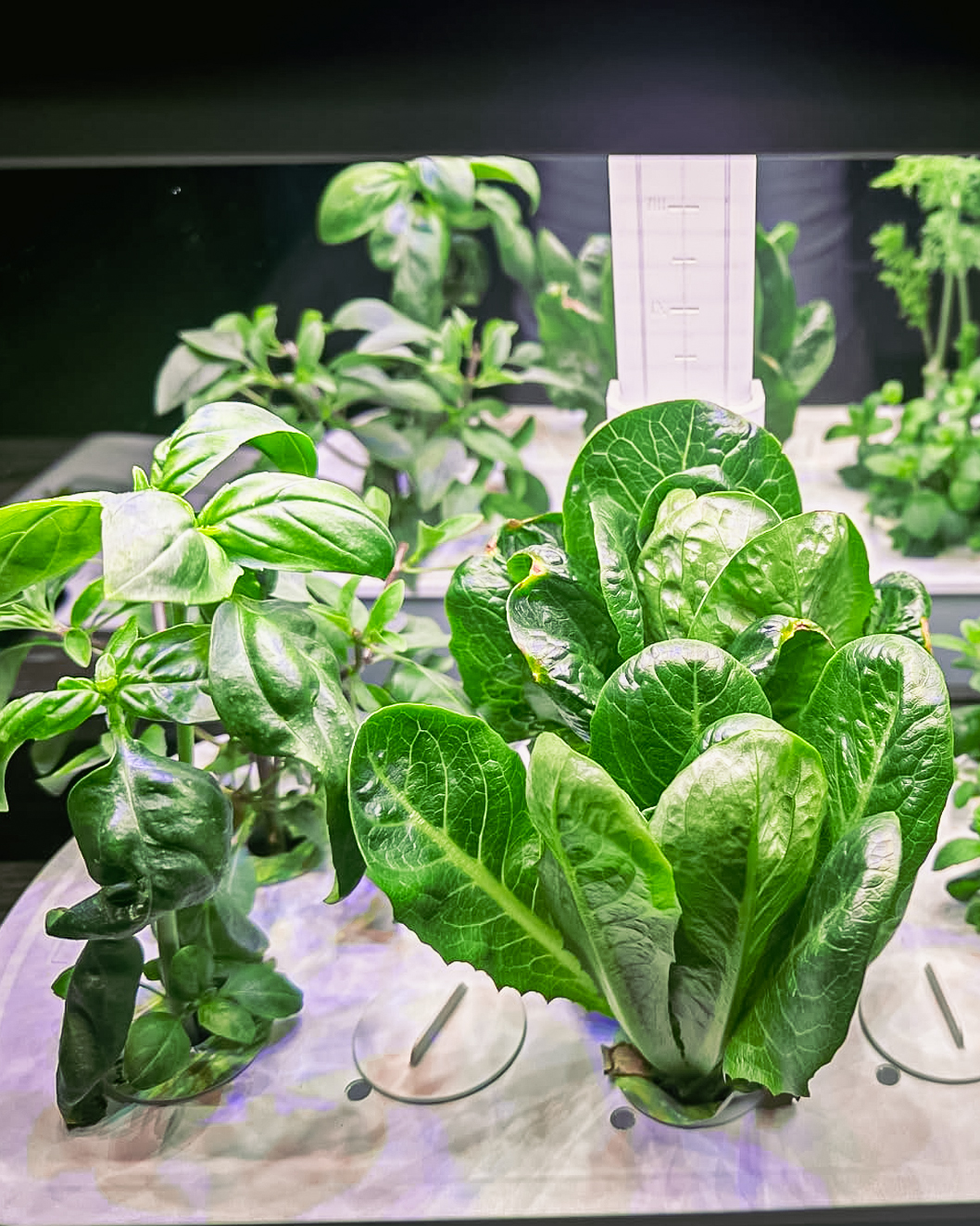
Added up over three years, that is roughly €129 upfront plus €108–153 of electricity plus around €108 of plant food — a total somewhere between €345 and €390, after which the office owns the unit outright and the only ongoing cost is electricity and feeding. There is no technician visit and no renewal decision to make each year. Someone in the office just tops up the reservoir, which most 12-pod units need roughly every two to three weeks, and resows a pod with a new seed once a crop is harvested, rather than waiting for a delivery or a site visit.
A smaller option: a vertical wall planter
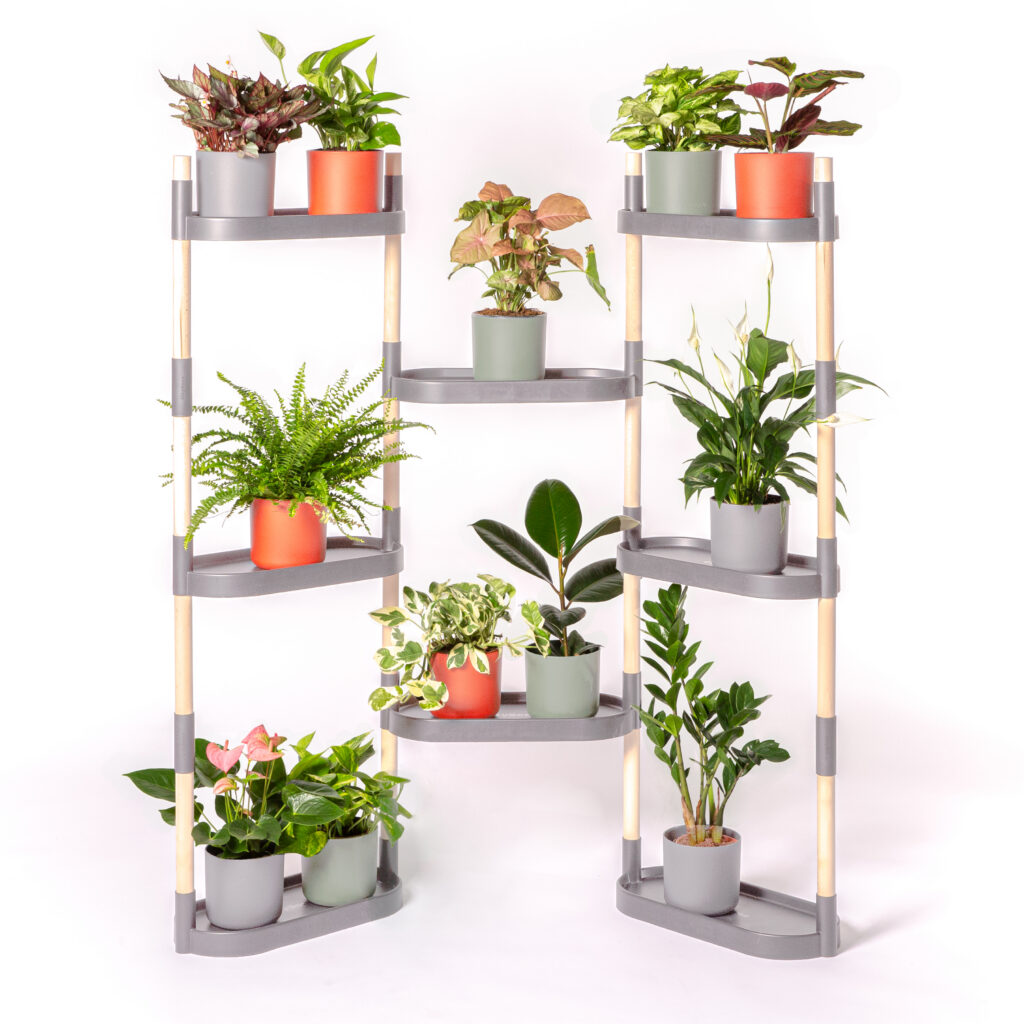
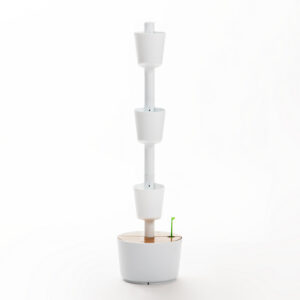
Not every office has the counter space, or the budget, for a full hydroponic unit. A three-pot wall-mounted system such as the CitySens vertical planter (€189) covers a reception desk or a narrow wall instead, and because it carries far fewer pods than a 12-pod unit, it also draws a smaller LED load and correspondingly less electricity per year. It suits an office that wants visible greenery near an entrance rather than a working herb garden for a shared kitchen.
Who actually does the work
This is where the real trade-off sits, not in the sticker price. A rental contract pays someone else to show up, water, feed, and swap out whatever is struggling, which is convenient but only lasts as long as the invoices do, and it also means the office has little say over which plants it gets or how often they are refreshed. A smart garden shifts that work to the device itself: the reservoir and LED timer handle watering and light on a schedule, and a person only needs to refill water and nutrient concentrate every few weeks and wipe the reservoir if algae appears, which takes a few minutes rather than a scheduled visit. Office plant rental guides that discuss staff time usually note that someone still has to let the technician in, keep a key or access card available, and flag problems between visits, so “zero maintenance” rarely means literally no involvement from the office either way. A smart garden trades that coordination for a short, predictable task that any willing colleague can take on without training.
Which option fits which office
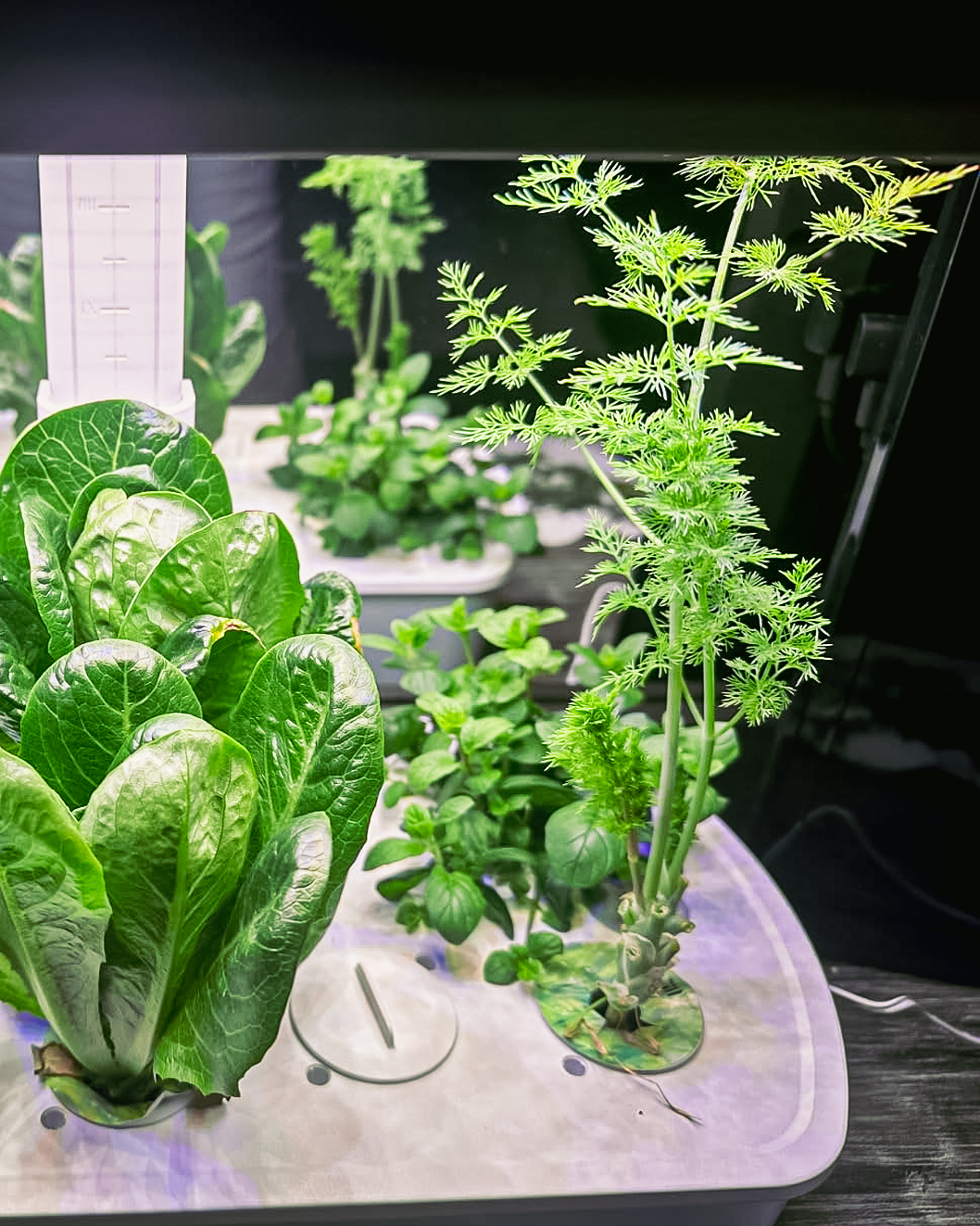
A large open-plan floor with a shared kitchen area tends to get the most value from one or two 12-pod units, since the running cost per plant drops as pod count goes up and the result is edible rather than purely decorative. A small office or a reception area that mainly wants greenery to look at, with little interest in harvesting anything, is often better served by a wall planter or by a short-term rental contract while the space is still being designed. A business deciding between buying outright and ordering several units at once can check current stock, bulk pricing, and shipping timelines through our contact page, or browse the smart gardens and vertical planters categories directly.
| Option | Upfront cost | Typical 3-year running cost | Ownership at year 3 |
|---|---|---|---|
| LetPot Senior 12-pod (buy) | €129 | ~€216–261 (electricity + plant food) | Owned outright |
| CitySens vertical planter 3-pot (buy) | €189 | Lower electricity use than a 12-pod unit, with a correspondingly smaller feeding cost per pot | Owned outright |
| Commercial plant rental | Usually none | Recurring monthly fee per plant, continuing for as long as the contract runs | Never owned |
Frequently asked questions
Is office plant rental ever cheaper than buying?
For a very short-term need — a single event, a temporary office, or a space being redesigned within months — a rental contract can cost less than buying equipment that will barely be used. Over three years of continuous use, a one-time purchase usually overtakes the running total of a monthly fee, but the only way to know for a specific office is to compare an actual quote against the numbers above.
How much electricity does a 12-pod smart garden actually use?
According to the energy-use figures in our smart garden electricity cost article, a 12-pod unit draws around 180 kWh a year, which comes to roughly €36–51 annually depending on the local electricity price.
Does a smart garden need daily attention from staff?
No. The LED runs on a timer and the reservoir holds enough water for roughly two to three weeks of normal use, so the usual task is an occasional refill rather than daily watering.
What happens to the plants if the office closes for a holiday period?
A full reservoir covers most short closures. For anything longer than about three weeks, topping up before leaving and expecting slower growth on return is the realistic plan, since no countertop unit is designed to run completely unattended for months.
Can one unit support more than one type of plant?
Yes. A 12-pod system can run several pods of herbs alongside salad greens or microgreens at once, which is part of why it tends to suit a shared office kitchen better than a single wall planter does.
What happens to a rental contract if the company downsizes or moves office?
Most plant-hire agreements run for a fixed term and include an early-termination clause, so moving or downsizing partway through a contract can mean paying out the remaining period. A purchased unit has no such clause: it simply moves with the office, or stays behind for the next tenant, with no notice period to manage.
Where to start
Most offices start with one shared smart garden in the kitchen area and decide after a few months whether a second unit or a wall planter near reception makes sense. Comparing that purchase against an actual rental quote, rather than a general assumption about which is cheaper, is the only way to know which fits a specific office and budget.