Office plants that go two or three weeks without anyone watering them rarely die from cold or short days — they die of thirst. The Royal Horticultural Society’s own holiday-care guidance treats anything longer than about a week away as needing what it calls “creative measures,” and a Christmas, Midsummer or summer closure is exactly that kind of gap.
A watering rota looks solid on a shared calendar until the one colleague who actually remembers it is also the one who booked the same week off. This article sets out a rota that survives a real office calendar, three low-cost tricks that buy a plant an extra week with no equipment at all, and the point at which it is simply cheaper to buy a device that waters the desk plant, or the shared kitchen herbs, on its own.
Products mentioned — in stock at IndoorGarden, shipped from Tallinn across the EU.
Why office plants actually die over a long weekend
Two failure modes account for most dead office plants, and they pull in opposite directions. The first is simple neglect: nobody waters anything for two or three weeks, the compost dries out, and shallow-rooted plants such as basil or mint wilt within days. The second is overcorrection: a well-meaning colleague gives every pot a heavy soak on the last afternoon before the break, the pot has no real drainage into a saucer, and the plant comes back to root rot instead of thirst. RHS guidance on houseplant holiday care notes that overestimating water needs causes waterlogging and rot such as grey mould just as reliably as underestimating it causes wilting and dry-root problems, so the fix has to solve both ends, not just top up the water.
The third, quieter cause is light and heat. A pot left on a sunny windowsill over a closed, heated office dries out far faster than the same pot in a shaded corner, so moving plants away from bright windows before a break is one of the few genuinely free changes that makes a measurable difference.
Build a rota that survives the actual holiday
A rota fails for a predictable reason: it is built around named people rather than around dates, and named people go on leave too. A rota that holds up has three parts. First, a single shared note — a printed card by the plants or a shared document — listing each plant, how it should feel when it needs water (dry 2–3 cm down, not bone dry), and who is down for which week, with a backup name against every slot. Second, a thorough watering on the Friday before any closure longer than a few days, so the compost is moist but not waterlogged, which is the state RHS guidance recommends leaving plants in before a break. Third, a short rule for the return: nobody should water on the first day back if the compost still feels damp, since a second watering right after a dry spell is a common way to tip a stressed plant into rot.
The RHS shortcuts: wick watering, capillary matting and covers
For a short closure of under a week, RHS holiday-care guidance suggests three low-cost methods that need nothing from a shop. A wick made from a strip of capillary matting, with one end in a container of water and the other tucked into the pot, lets a single large plant draw up water over several days. Capillary matting laid across a kitchen draining board or a surface next to the sink, with one end draped into a water-filled basin, can hold several smaller pots at once if they are pressed down for good contact with the wet matting — RHS notes this does not work well with pots that have broken crockery blocking the drainage holes. A clear cover or a reused plastic bag propped above the foliage with a cane traps the plant’s own water vapour and buys a few extra days, though RHS is clear this is a short-term measure, not a holiday-length fix. None of these three methods comes with a stated day limit beyond “a few days” to “more than a week,” so for an office closing for a full school-holiday stretch, they are a backstop rather than the main plan.
When a self-watering device is worth buying
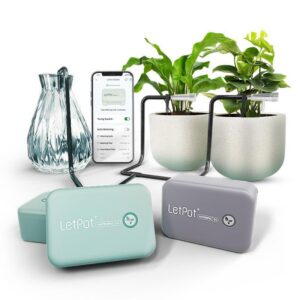
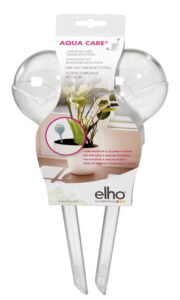
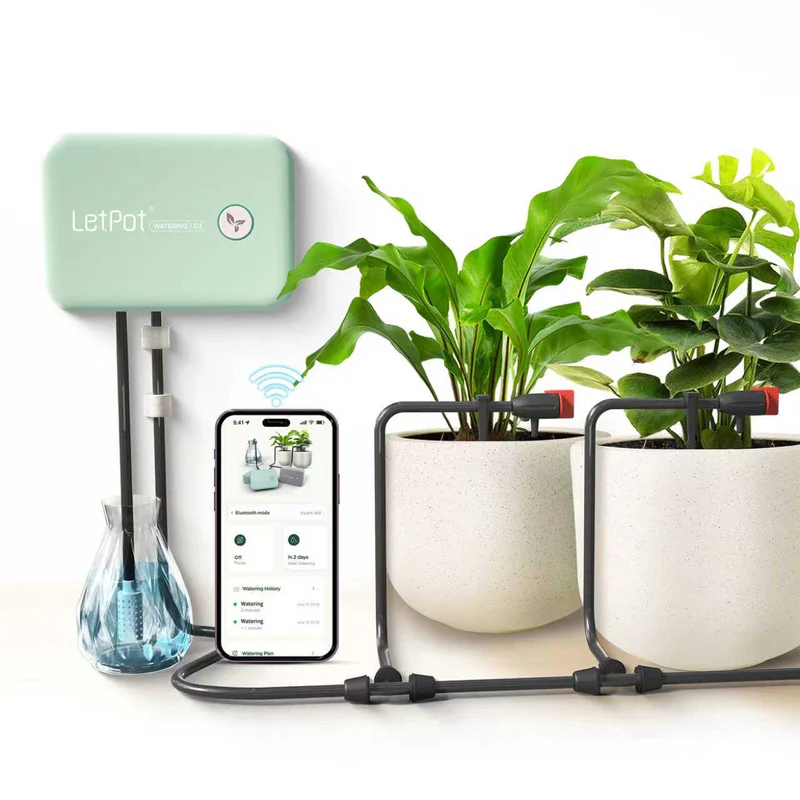
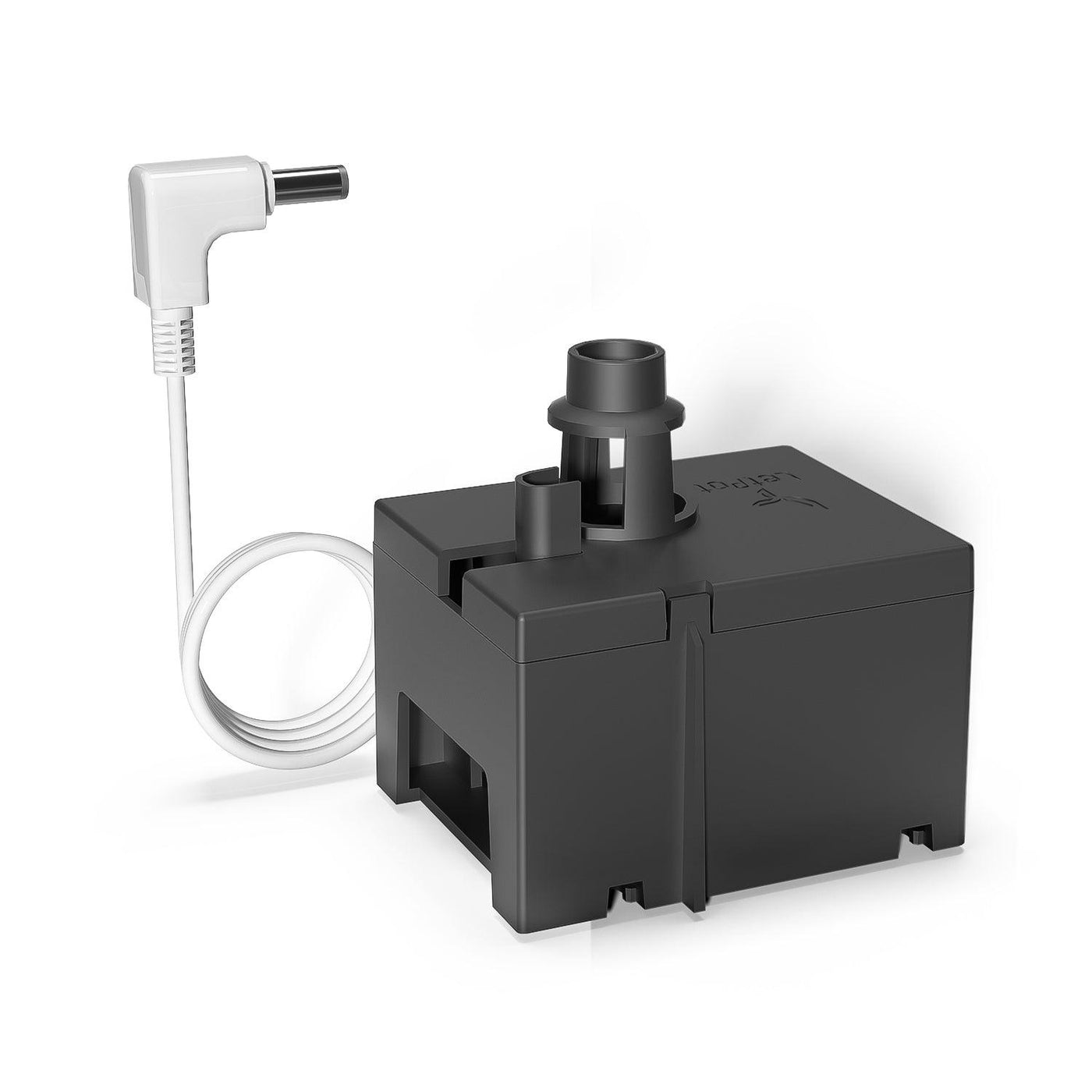
Past about a week, a device that tops up water on a schedule is more reliable than any colleague’s memory. A self-watering reservoir such as the Elho Aqua Care, which is pushed into the soil at an angle and holds its own small water supply, suits pots from 14 to 50 cm across and needs no power at all — it is the right size for a handful of desk plants, not a whole kitchen windowsill of them. For more pots on a timer, the LetPot Automatic Watering System 2.0 runs a small pump through a 6 mm, 10-metre hose with ten adjustable drippers, rated for up to 20 plants, and draws from any container of water the office already has rather than a built-in tank. It needs a mains socket within about 2.5 metres height difference of the plants and a Wi-Fi connection to schedule watering from a phone.
Which device fits which office
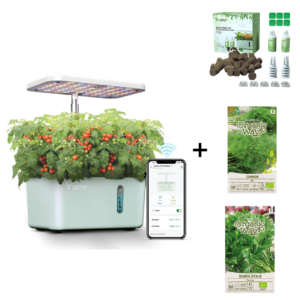
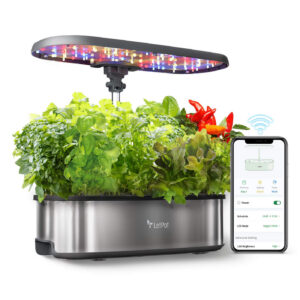
A handful of pots on one desk rarely justifies a pump and hose: the Elho units cost a fraction of the price and need nothing plugged in. A shared kitchen or reception corner with eight or more pots across different window ledges is closer to what the LetPot system’s ten drippers and 20-plant capacity are built for, and it keeps watering off anyone’s calendar for good, not just over the holidays. For an office that wants fresh herbs on the counter rather than a collection of pot plants, a self-contained smart garden such as the LetPot Senior skips the watering question completely: its 5.5-litre tank typically lasts around three weeks on its own, which comfortably covers a Christmas or summer closure without a rota, a wick or a single reminder.
| Option | Price | Best for |
|---|---|---|
| Elho Aqua Care, 2-pack | €15.99 | A few desk pots, 14–50 cm diameter, no power needed |
| LetPot Automatic Watering System 2.0 | €69.00 | Up to 20 pots on a schedule, needs a power socket and Wi-Fi |
| LetPot Senior 12-pod smart garden | €129.00 | Herbs and salad with no soil watering at all, about 3 weeks per fill |
Holiday closures across Estonia, Finland, Latvia and Lithuania
The gap a rota has to cover depends on the country. Estonian offices typically close around jõulud (Christmas) and many also shut for jaanipäev (Midsummer’s Eve) in June. Finnish offices follow a similar pattern around joulu and juhannus. Latvian workplaces clear out for Jāņi, the Midsummer solstice holiday, and Lithuanian ones for the equivalent Joninės, both in late June, on top of the Christmas period. None of these closures runs past the two-to-three-week range that RHS guidance already covers with its fallback of asking a neighbour, friend or colleague to help once an absence stretches past a couple of weeks, so the same plan — rota, Friday watering, and a device for anything over a week — holds across all four countries.
Frequently asked questions
How long can an office plant go without water?
Most houseplants tolerate a few days unattended, and RHS guidance treats anything over about a week as needing one of the methods above rather than being left alone. Cacti and succulents are the exception and cope with much longer gaps.
Should we water heavily right before a holiday closure?
Yes for a winter break — RHS guidance recommends watering so the compost is moist but not waterlogged before leaving. For a summer closure of more than a week, a reservoir method or a device is more reliable than one heavy soak, since the compost can still dry out completely before anyone is back.
Do self-watering devices need a lot of maintenance?
The Elho units just need refilling and occasional cleaning. The LetPot Automatic Watering System 2.0 needs its water container topped up and its drippers checked for blockages every so often, and a smart garden such as the LetPot Senior needs its tank refilled roughly every three weeks.
What is the cheapest fix for a one-week closure?
For a single week, the free RHS methods — a wick, capillary matting, or a propped-up cover — cost nothing and work for most plants. They are a backstop rather than a long-term plan, and RHS itself does not give them a guaranteed day limit past “more than a few days.”
Can one device cover the whole office?
It depends on the layout. A single LetPot Automatic Watering System 2.0 covers up to 20 plants from one water container as long as they are within reach of its hose and drippers. Pots spread across several rooms usually need either a second unit or a mix of devices and the free RHS methods.
Who should be on the rota if the office uses a device instead?
Someone still needs to check the water container level and the drippers before a long closure, even with a device doing the watering. It removes the daily task, not the one pre-holiday check.
Where to start
Most offices start with one self-watering device for the pots that cause the most trouble, then decide after one holiday season whether to extend it or add a smart garden for the kitchen herbs instead. For background on how these systems compare day to day, not just over a holiday, see our guide to self-watering systems for indoor plants. For a bulk order across a larger office, get in touch and we can work out what a given floor plan actually needs.