A smart garden under 100 euros exists, and it actually works — but the trade-offs are real. In this guide, I compare three sub-€100 hydroponic systems side by side: the LetPot Mini (5 pods), the LetPot LPH-Lite (12 pods), and the Botanium Smart Hydroponic Pot (1 pod). All three are available in Europe, all three sit at or below the €100 mark, and all three grow herbs and salad greens with almost no effort.
I’ve used every smart garden in this list, and I’ll tell you which one is worth your money, which one to skip, and what corners these cheaper systems cut compared to the €150+ category. If you want the short answer: the LetPot LPH-Lite is the best buy under €100 for most people, the LetPot Mini wins on countertop size, and the Botanium is a niche pick for a single statement plant.
What counts as a “smart garden” at this price?
A smart garden is a self-contained indoor hydroponic system with three things built in: a water reservoir with a circulating pump, a full-spectrum LED grow light on a timer, and pre-formatted pods or sponges that turn seeds into harvest-ready plants without soil. At the under-€100 tier, you also get app or Wi-Fi control on two of the three picks below, which is unusual for the price — most budget hydroponic kits skip the app entirely.
What you give up at this price: bigger reservoirs (you’ll refill more often), auto-dosed fertilizer (you mix nutrients yourself), and the tallest LED rod heights for fruiting plants like tomatoes. None of that matters if you’re growing herbs and salad greens, which is what 90% of buyers actually do.
The three sub-€100 smart gardens I tested
Here’s how they stack up on the specs that actually matter: pod count, light wattage, reservoir size, max grow height, and whether you get app control. Prices are EU retail in May 2026 and may shift with promotions.
| Spec | LetPot Mini | LetPot LPH-Lite | Botanium |
|---|---|---|---|
| Price (EU) | ~€59 | ~€89 | ~€90 |
| Pod count | 5 | 12 | 1 (1 large plant) |
| Light | Full-spectrum LED | 24 W full spectrum | None (lamp sold separately) |
| Water tank | 1.5 L | 5.5 L | ~0.5 L |
| Max grow height | ~25 cm | ~40 cm (16 in) | Limited by your room light |
| App / Wi-Fi | Yes (LetPot app) | Yes (Wi-Fi + app) | No |
| Refill cycle | ~1 week | ~3 weeks | 2–4 weeks |
| Best for | Small countertops | Whole salad supply | One showpiece plant |
Pick 1: LetPot Mini — best for tight kitchens
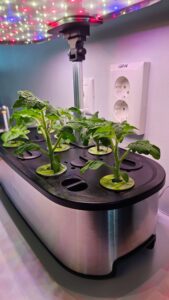
The LetPot Mini is the cheapest smart garden in our store at around €59. It runs five pods, has a built-in full-spectrum LED, and connects to the LetPot app like its bigger siblings. The reservoir is small — 1.5 litres — which means you’ll refill every five to seven days when plants are mature, but the upside is a footprint that fits next to your kettle.
I keep one with sweet basil, parsley, and dill permanently on the counter. Five pods covers two adults cooking from scratch. If you want a ready-to-go bundle, the LetPot Mini herb garden starter bundle ships with the device plus those three organic seed varieties and nutrient solution.
Verdict: Buy it if your counter is small and you don’t need to feed a family of salad-eaters. Skip it if you want to grow tomatoes or chillies — the LED rod doesn’t go high enough.
Pick 2: LetPot LPH-Lite — the best buy under €100
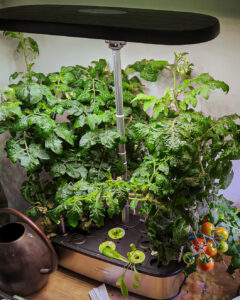
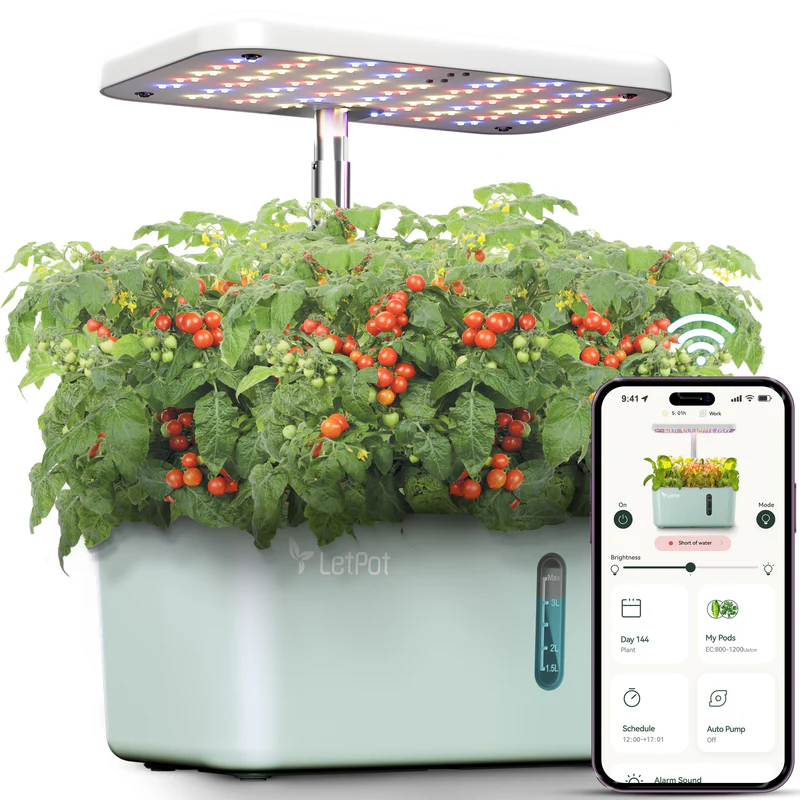
The LetPot LPH-Lite is the one I recommend by default. At ~€89 you get twelve pods, a 24-watt full-spectrum LED, a 5.5-litre tank that lasts about three weeks between refills, and Wi-Fi with app control. The 16-inch (~40 cm) adjustable rod height is what unlocks bigger plants — small cherry tomato varieties, leafy lettuce, even compact chilli peppers with some pruning.
What you give up versus the more expensive LetPot Senior or Max: there’s no automatic water refilling and no automatic fertilizer dosing. You add water and nutrients by hand every few weeks. The app warns you when the tank gets low. For me, that’s a perfectly fair trade for saving €60–€150. The LPH-Lite is the model I’d buy if I were starting from zero today.
Verdict: The clear winner under €100. Twelve pods is enough to grow a continuous salad supply and a herb rotation at the same time.
Pick 3: Botanium — the one I’d skip for most readers
The Botanium Smart Hydroponic Pot is a beautiful Scandinavian-designed single-plant hydroponic pot at around €90. It auto-waters a single plant for 2–4 weeks at a time, runs on batteries, and looks like a piece of homeware. Botanium sells matching organic basil and other seed varieties tuned to the pot.
The honest catch: no grow light is included. The Botanium relies on the daylight in your room, or a separate 15 W LED grow lamp you buy on top (~€30). That pushes the real cost over €100 for anyone without a bright south-facing window. And you’re growing one plant. For the same money you can run twelve in the LPH-Lite.
Verdict: Skip unless you want a design object more than a productive smart garden. If you love its look, fine — just know you’re paying for aesthetics, not yield.
What sub-€100 smart gardens give up versus the €150+ tier
If you’re wondering whether you should stretch to the next price band, here’s exactly what jumping to the LetPot Senior or Max gets you (full spec breakdown in our LetPot smart garden comparison): automatic refilling from a larger external reservoir, automatic fertilizer dosing from cartridges, a touchscreen on the unit itself, higher-wattage LEDs (36 W vs 24 W), taller adjustable rods for fruiting crops, and stainless-steel construction on the Max.
None of that changes what you can grow — herbs and greens grow equally well in the Lite — but it changes how often you touch the system. Under €100, plan to interact with the unit every 2–3 weeks. Over €150, you can leave it alone for a month or more.
Are smart gardens under 100 euros actually worth it?
For most home cooks, yes. A €90 LPH-Lite pays for itself in roughly four to six months of replacing supermarket herb pots and bagged salads — and that’s before you factor in the fact you’ll actually eat more fresh greens because they’re already growing on your counter. I cover the longer cost-benefit math in are indoor garden systems worth it, but the short version is: at this price, the unit pays back faster than at the premium tier.
Browse the full lineup in our mini smart gardens (1–6 pods) category if you want something countertop-sized, and check the manufacturer spec sheets directly at LetPot.com for the latest pricing and firmware updates.
FAQ: smart gardens under 100 euros
Can you really grow vegetables in a smart garden under €100?
Yes — for herbs and leafy greens. The LetPot LPH-Lite at ~€89 will grow basil, lettuce, spinach, parsley, dill, and small chillies easily. What you can’t grow well at this price is tall fruiting crops like full-sized tomatoes; the LED rod doesn’t go high enough.
How much electricity does a sub-€100 smart garden use?
A 24-watt LED running 14 hours a day uses about 0.34 kWh per day, which is roughly €1.50–€3 per month at current EU electricity rates. The Mini’s smaller LED is even less. It’s the cheapest appliance in your kitchen to run.
Do I need to buy separate nutrients with a budget smart garden?
The starter bundles ship with enough nutrients for the first few months. After that you buy a refill — usually €15–€20 per bottle that lasts six months to a year of normal use. Plan for it in your total cost.
Is the LetPot LPH-Lite or the Mini the better first smart garden?
The LPH-Lite, unless you’re tight on counter space. Twelve pods versus five is a big practical difference, and the €30 price gap is recovered in a few months of herbs. The Mini wins only on footprint and price.
Why is the Botanium so much more expensive per plant?
You’re paying for Scandinavian industrial design and a battery-powered standalone form factor. Botanium doesn’t compete on yield; it competes on aesthetics. If yield-per-euro is your priority, the LPH-Lite wins by a wide margin.