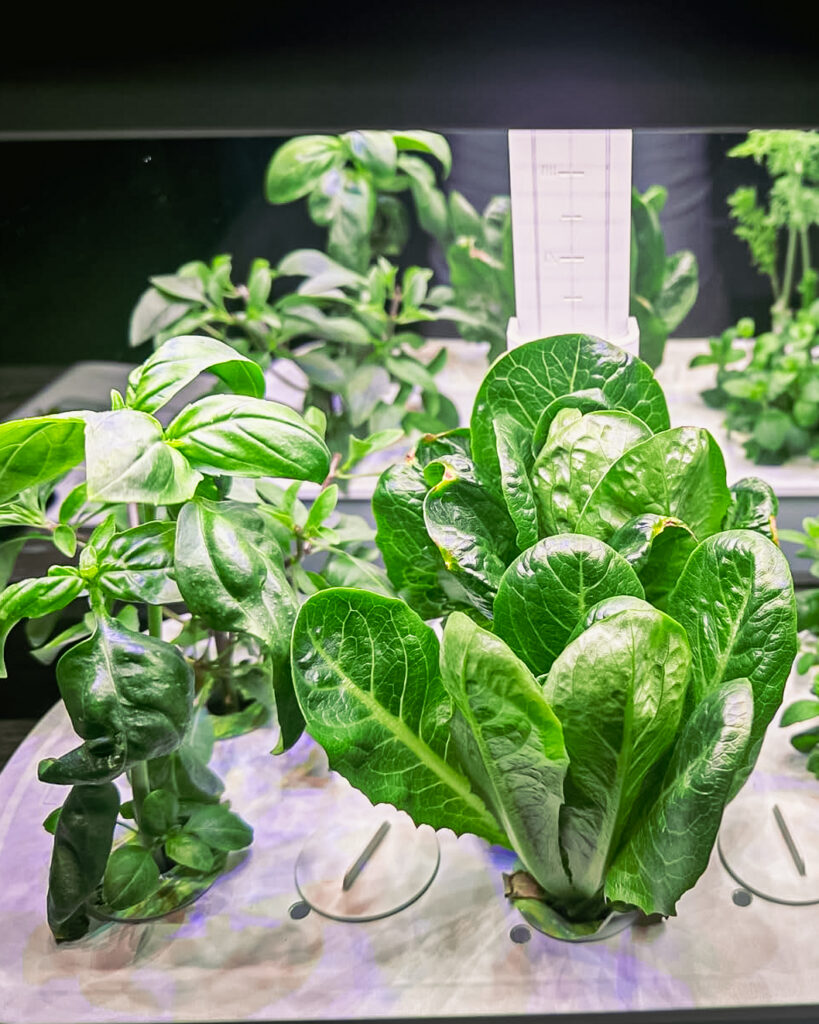
A smart garden in the office kitchen keeps fresh herbs growing for the whole team with almost no daily attention: a 12-pod unit such as the LetPot Senior typically costs only around 3-6 € a month to run, according to Eurostat household electricity prices. The part that actually needs planning is not the growing — it is who refills it.
A countertop smart garden has become a common sight in Nordic and Baltic office kitchens. It needs no soil, no window with direct daylight, and no single person responsible for it every single day. This article covers where to put one in a shared kitchen, how to set up a watering rota that survives staff turnover and holidays, which LetPot model suits a team of five versus twenty-five, and what the running cost looks like once electricity and refills are added up.
Products mentioned — in stock at IndoorGarden, shipped from Tallinn across the EU.

Why an office kitchen is a good place for a smart garden
Office kitchens already have what a smart garden needs: a stable room temperature, a power socket, and people walking past several times a day who will actually notice if a leaf looks off. A widely cited 2013 University of Exeter study found that adding plants to bare offices was associated with a 15% rise in measures of workplace wellbeing and productivity, and a visible, edible plant tends to get more attention from staff than a silent pot in the corner. A smart garden also solves the problem that kills most office plants: nobody remembers to water a windowsill pot on a Friday before a long weekend, whereas a hydroponic reservoir can run for a week or more unattended. For general placement advice that also applies to a break room, see where to place a smart garden.
The main constraint in most offices is counter space, not light. A 12-pod unit footprint is roughly the size of a large toaster, and most teams find a spot near the kettle or coffee machine, where people already gather and will glance at the plants several times a day.
Setting up a watering rota so it is never nobody’s job
The single biggest reason office plants fail is that “someone” is responsible, which in practice means no one is. A smart garden removes daily watering from the equation, but it still needs a refill every 10-14 days and an occasional top-up of nutrients. The arrangement that tends to hold up over time is a single named “plant owner” who rotates monthly, posted on a shared calendar or a label on the unit itself, rather than an open invitation for whoever feels like it. Pairing the role with an existing office duty — the same person who restocks the coffee, for example — means it rarely gets forgotten.
A simple two-line routine works for most teams: top up the water tank every 10-14 days, and add a capful of liquid nutrients at the same time. Both jobs take under five minutes and need no special skill, which is why the rota survives even after the original enthusiast leaves the company.
Which model fits your team
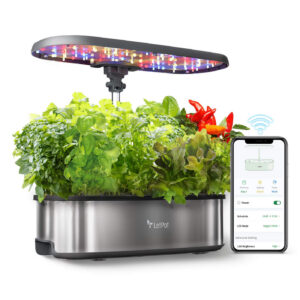
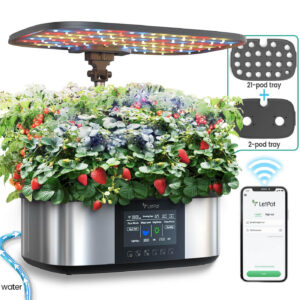
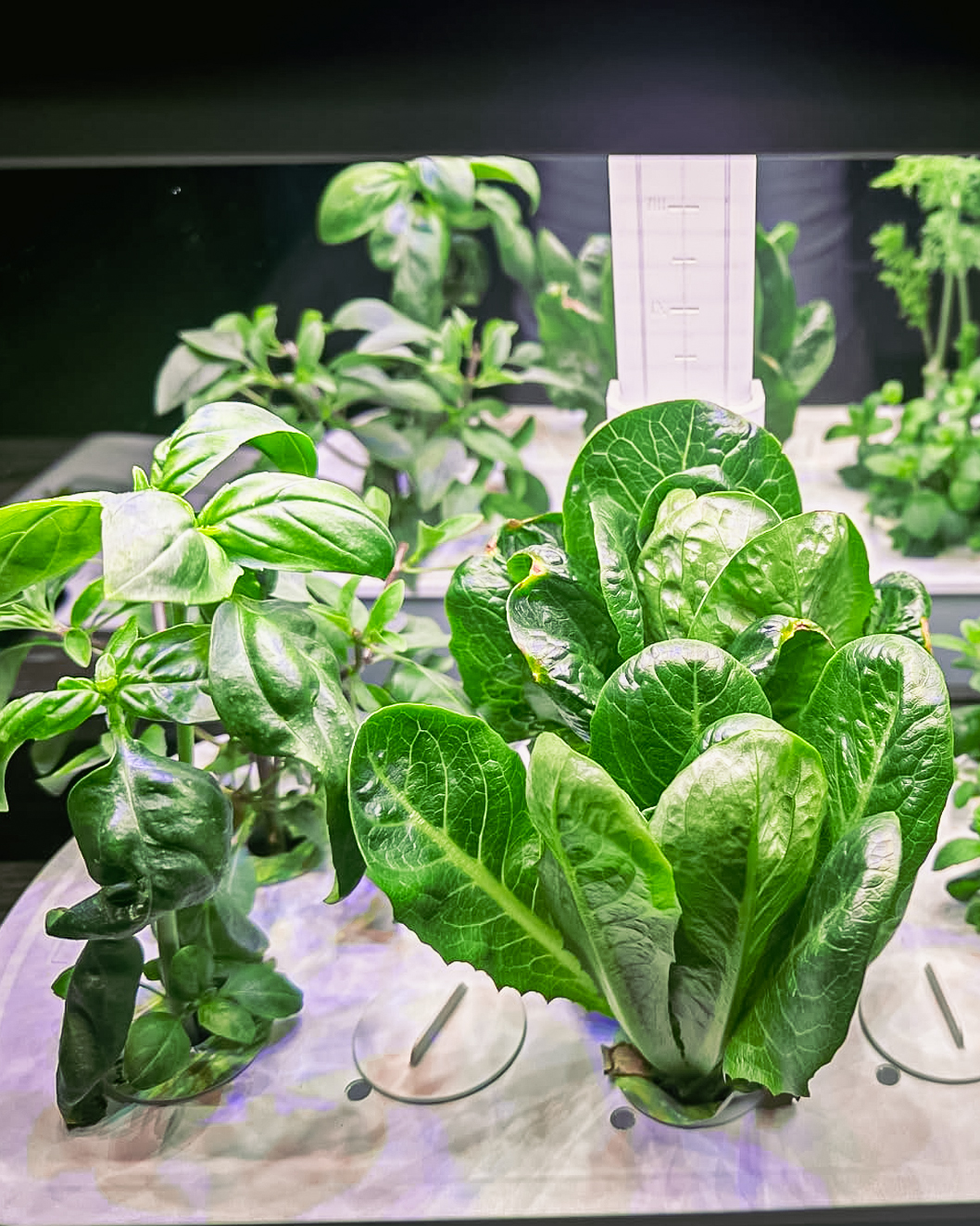
Team size is the main thing that should decide the model, since both run on the same automated watering and lighting cycle and need the same few minutes of attention. A small team of up to about eight people is usually well served by a 12-pod unit, which gives enough variety for basil, peppermint and a couple of lettuce varieties without outgrowing a single kitchen counter. Larger, open-plan offices or teams split across several kitchens tend to get more use out of a 21-pod system, simply because there is more produce to go around before anyone has to wait for a regrow cycle.
| Model | Pods | Good for | Price |
|---|---|---|---|
| LetPot Senior 12-pod | 12 | Teams up to ~8 people | €129.00 |
| LetPot Max 21-pod | 21 | Larger or open-plan offices | €249.00 |
| LetPot hydroponic nutrients | — | Refill every 10-14 days | €17.99 |
If a 12-pod unit outgrows a particularly thirsty team, it is usually simpler to add a second small unit on the other side of the kitchen than to crowd everyone around one system. This also means watering duty can rotate between two people instead of one, which further reduces the chance of a missed refill. Browse the full range of medium smart gardens to compare sizes before ordering for a team.
What it actually costs per month
The electricity draw is modest. According to a wall-meter comparison published on how much electricity a smart indoor garden uses, a 12-pod LetPot unit with a roughly 36 W LED panel uses about 179 kWh a year, or around 15 kWh a month. At the EU-27 average household electricity price Eurostat recorded for the second half of 2024 (0,2843 €/kWh), that works out to roughly 4,20 € a month. In Estonia, where household electricity runs cheaper at around 0,2025 €/kWh, the same unit costs closer to 3,00 € a month; in higher-priced markets such as Germany it can reach 5,50-6,00 €. A 21-pod unit draws more because the LED panel is larger — manufacturers typically specify 30-50 W for team-sized systems — so budget roughly double the 12-pod figure as a starting point.
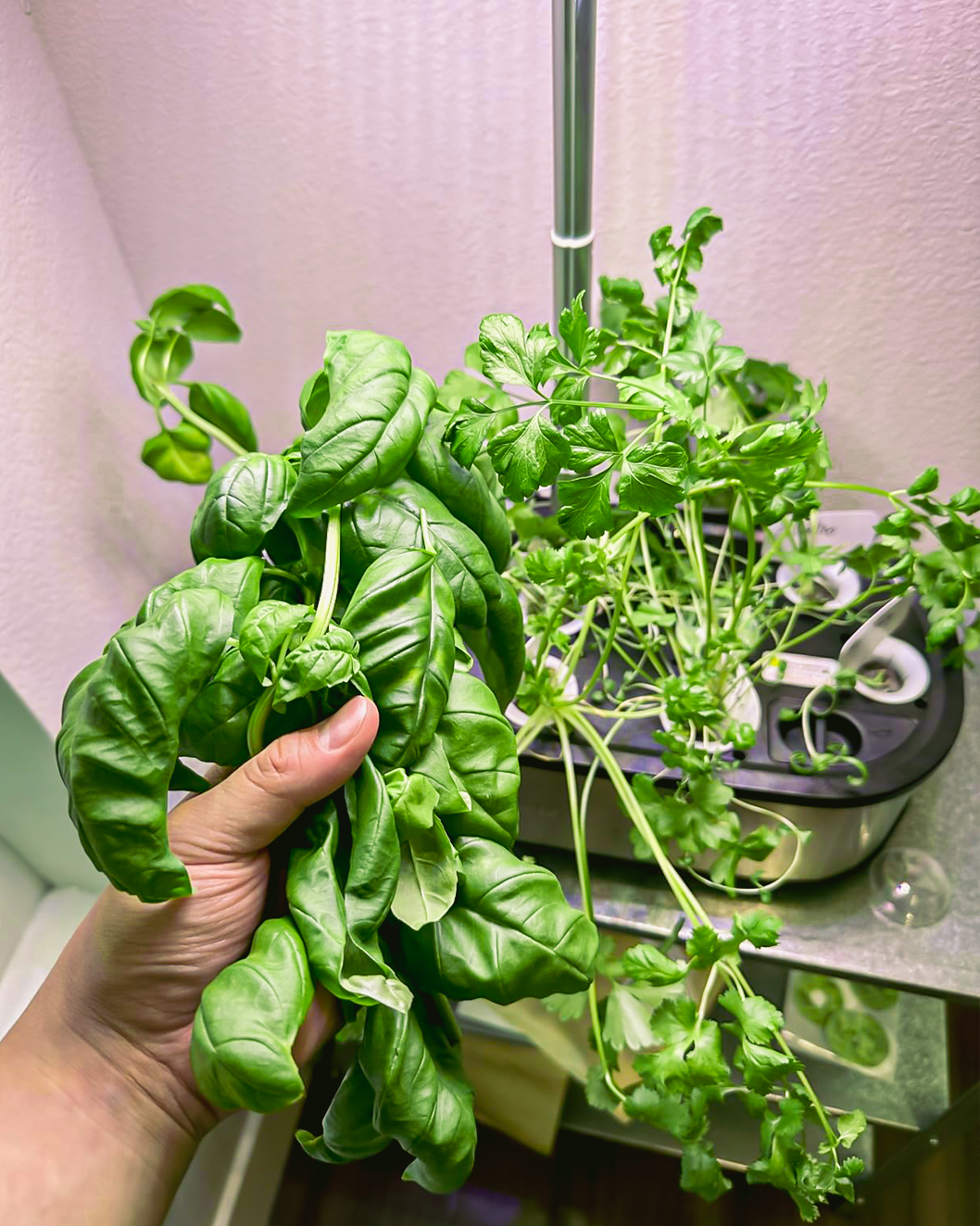
Nutrients add a small, predictable cost on top: a 500 ml bottle of liquid plant food lasts a 12-pod unit roughly two to three months at the every-10-14-days dosing rate, so the running cost for electricity and nutrients together on a mid-size team unit typically lands somewhere between 5 € and 9 € a month, depending on the country and how many pods are in use. For comparison, that is less than the cost of a single bag of supermarket basil replaced weekly.
Keeping it low-maintenance between refills
Beyond the water and nutrient top-up, there are two small habits that keep an office unit looking good. First, wipe the LED panel every couple of weeks; dust and splashed nutrient solution can cut light output by 5-10%, which shows up as slower growth before anyone notices the dust itself. Second, harvest regularly rather than letting pods get overgrown — cutting basil or peppermint back by about a third every week or two keeps the plant producing rather than bolting, and gives the team a reason to actually use what is growing. Pair the unit with hydroponic nutrients sized for a 10-14 day dosing routine so the plant owner never has to guess the amount.
Frequently asked questions
Does someone need gardening experience to keep it alive? No. The unit handles watering and lighting automatically; the plant owner’s job is limited to a water and nutrient top-up every 10-14 days and an occasional harvest.
What happens over a long weekend or a week of holiday? A full reservoir on a 12-pod unit comfortably covers 10-14 days without intervention, so most office closures do not need a backup plan.
Will it smell or attract pests in a shared kitchen? A clean, well-maintained hydroponic reservoir has no soil and little odour. Keeping the water topped up and avoiding spilled nutrient solution on the counter is normally enough to avoid both issues.
What should a team actually grow? Basil, peppermint and lettuce varieties are the easiest starting point because they regrow quickly after each harvest and need the least adjustment to the default lighting schedule.
Can the unit run on a timer tied to office hours instead of all day? The default lighting schedule already runs on a fixed daily cycle rather than constantly, so no separate timer is needed; most teams leave the default settings as they are.
Does it need a special power socket? No. It runs on a standard 230 V EU socket, the same as a kettle or a phone charger.
Where to start
For most office kitchens, a 12-pod smart garden is the simplest starting point: it fits a normal counter, suits teams up to around eight people, and keeps the monthly running cost under a coffee subscription. Add a named plant-owner rota from day one, and pair it with the LetPot nutrients it needs every 10-14 days. If you are ordering for a larger office or want help choosing between sizes, get in touch and we will recommend a setup based on team size.