Automatic watering is the simplest way to keep houseplants alive when you are not home. Over 3 weeks we tested 4 systems: a self-watering pot, a pump-driven watering system, drip irrigation and a smart garden with a built-in reservoir. All four kept the soil evenly moist for at least 10 days without any help from us.
I run the IndoorGarden test kitchen in Tallinn, and in July 2026 I used a week away on Saaremaa as a chance to test four watering setups side by side. Each one got its own group of plants: basil, a tomato seedling, lettuce and one full smart garden pod set. I checked soil moisture every two days and logged the results to see which setup suited which kind of plant.
What we used — tested in our Tallinn test kitchen, ships from Estonia across the EU.
Self-watering pots: the simplest place to start
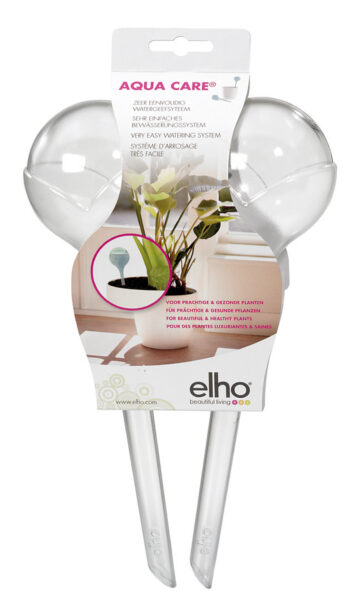
A self-watering pot is the cheapest and easiest way to start with automatic watering. A reservoir sits in the base, and moisture moves up through capillary action straight to the roots, exactly as much as the plant needs at any moment. University of Maryland Extension describes the same mechanism: the growing medium stays in contact with the reservoir through small openings or a wick, so the soil draws up moisture continuously without the roots ever sitting in standing water.
I tested an Elho Aqua Care pot with a basil plant. I filled the reservoir on 30 June, and soil moisture stayed even for 12 days before it needed a refill. The only downside is the small reservoir, around 150 ml, so it will not last that long on a bigger plant or through a hot summer. If you only need a solution for one or two herbs in the kitchen, this is the cheapest way to start, and you will find similar pots in our self-watering planters range.
An automatic watering system with a pump and timer
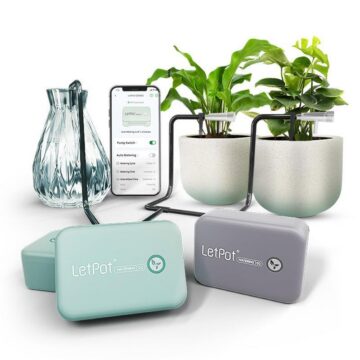
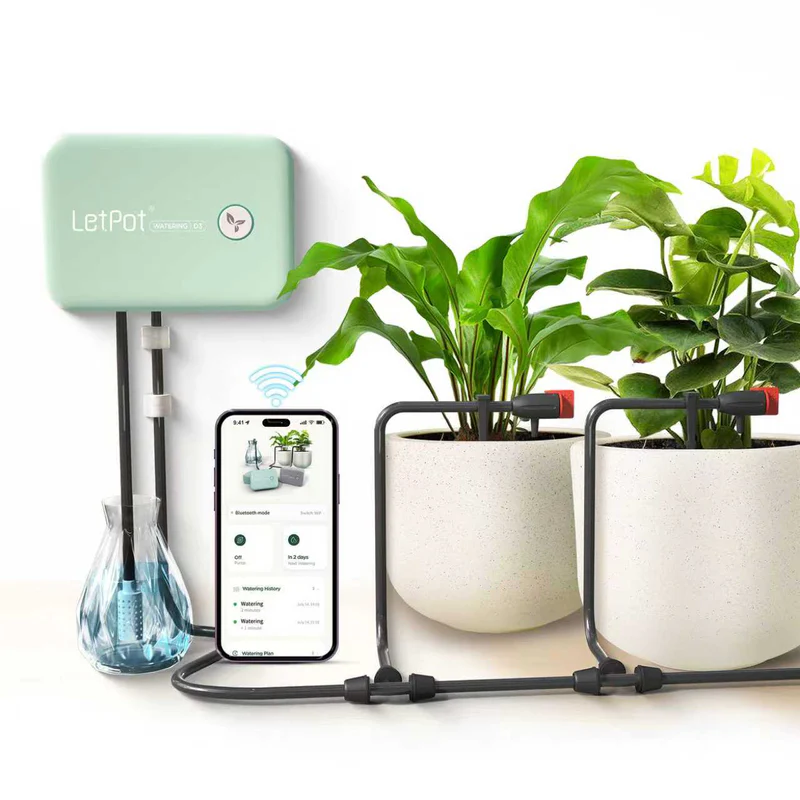
Once you have more than a couple of plants, a pump-driven system takes watering off your hands completely. The setup is a water reservoir, a small pump and tubing that carries water to each pot on a timer.
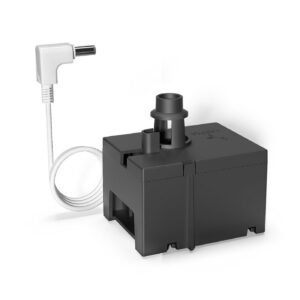
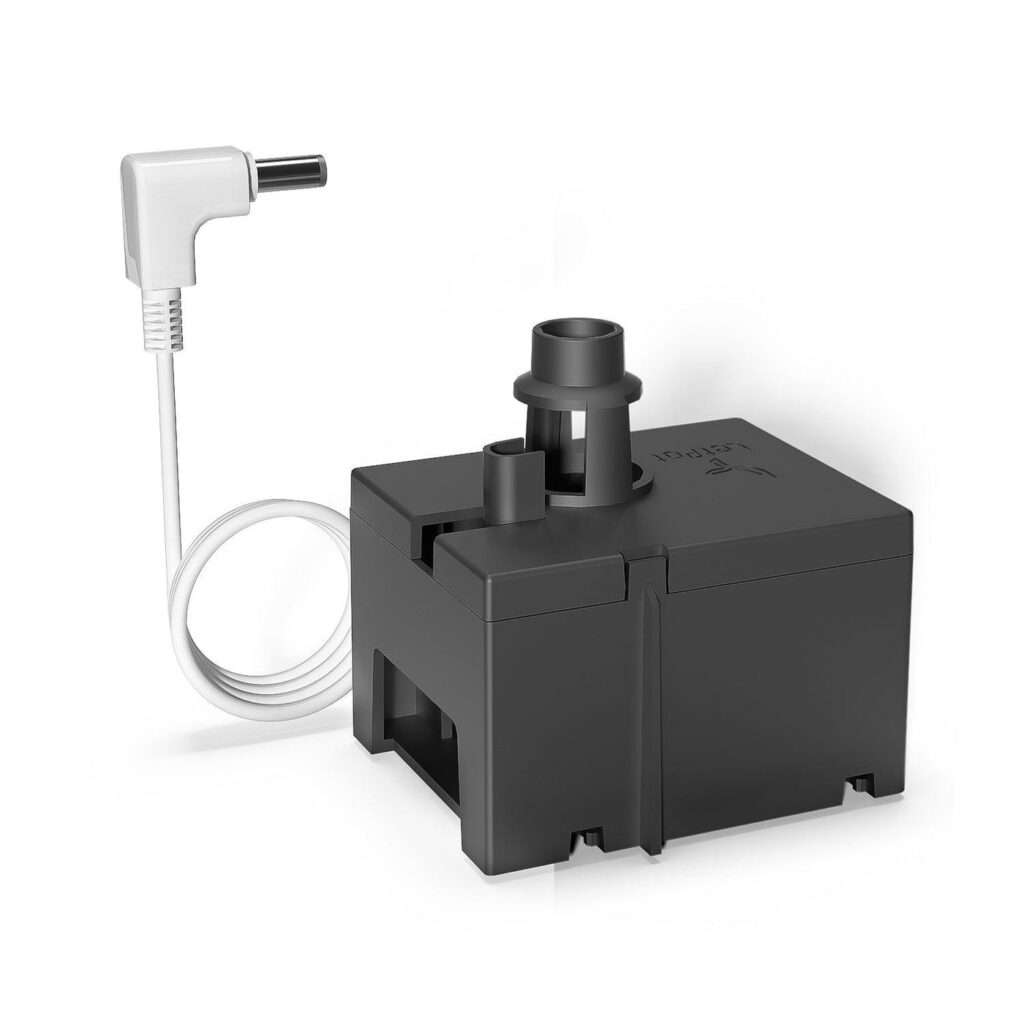
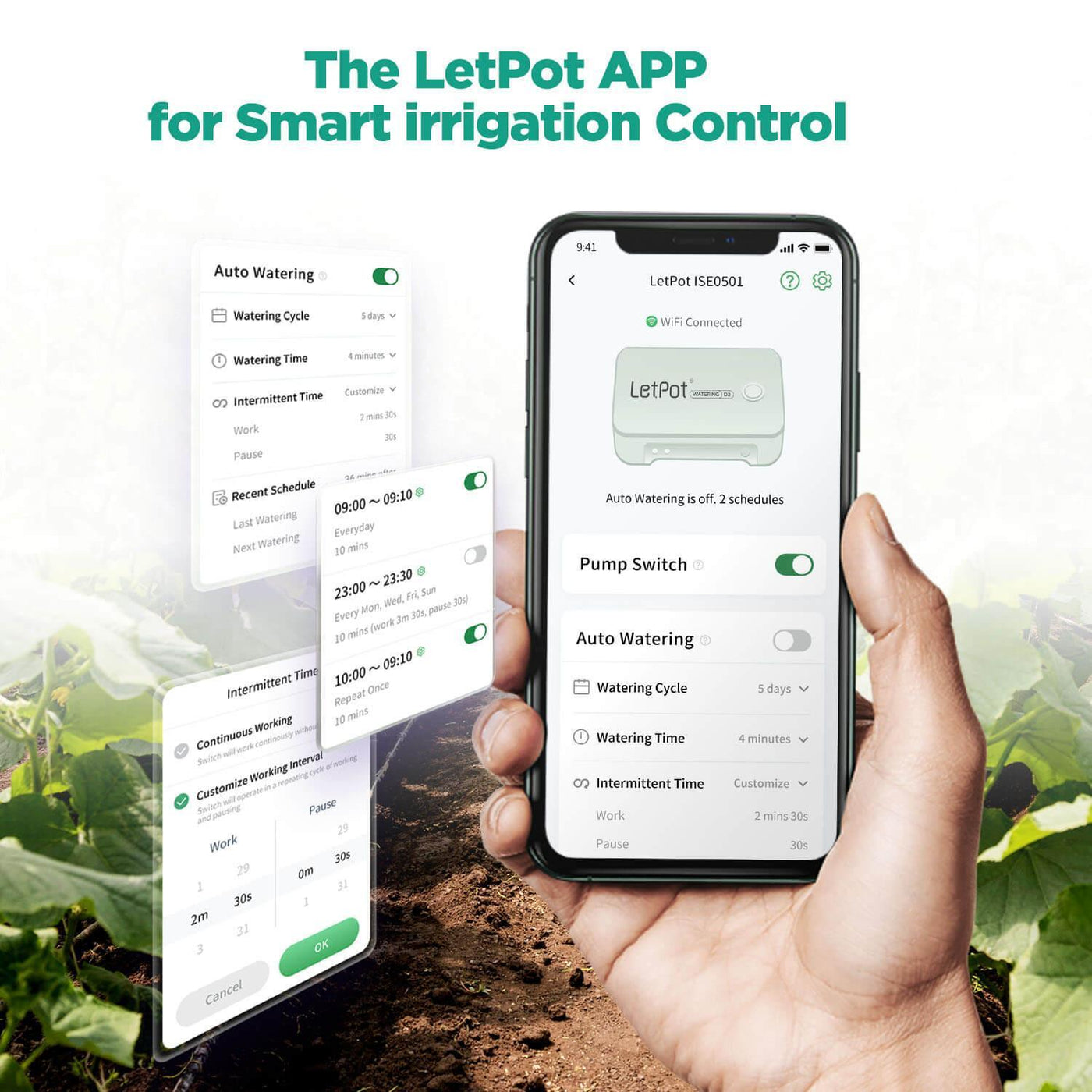
I ran the LetPot Automatic Watering System 2.0 across four pots, with the reservoir tucked in a kitchen cabinet. I set the timer to deliver 200 ml every three days. After 10 days all four plants were as evenly moist as on day one, and the reservoir still had a third of its water left. The system covers up to 20 plants, so it scales with your collection instead of needing to be replaced.
Drip irrigation for several plants at once
Drip irrigation works much like the pump system, but water arrives through slow drippers, one or two per pot instead of a single outlet. It suits a larger number of smaller plants especially well, for example a row of herbs or tomato seedlings along a windowsill.
I used the same row of four plants but split the tubing across eight drippers, two per plant. Water spread more evenly than with one larger sprayer, and the soil surface never sat too wet, which can happen with a regular watering can. Our automatic self-watering systems range covers both simple self-watering pots and more capable drip kits that manage several plants at once.
A smart garden: watering that is fully automatic
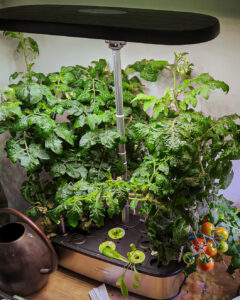
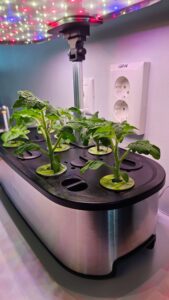
A smart garden solves watering in a different way entirely: the plants do not grow in soil at all, they grow in a nutrient-rich water reservoir that is built into the system from the start. There is nothing extra to install or calibrate, just an occasional reservoir refill and a nutrient top-up.
My smart garden pod kept its water level steady for 18 days before the app reminded me to refill. It is the lowest-maintenance option of the four we tested, but it suits herbs, lettuce and small fruiting plants best rather than large soil-grown ornamentals. If you travel often, or simply forget to water on a regular basis, a smart garden is the safest choice.
Which system suits you?
The table below sums up all four setups we tested over 3 weeks.
| System | Best for | How long the water lasts | What we used |
|---|---|---|---|
| Self-watering pot | 1–2 plants in a kitchen or on a windowsill | around 12 days | Elho Aqua Care self-watering system, €15.99 |
| Pump-driven watering system | 3–20 plants at once | at least 10 days | LetPot Automatic Watering System 2.0, €69.00 |
| Drip irrigation | several small plants in a row | at least 10 days | Adds on to a pump system |
| Smart garden | herbs, lettuce, small fruiting plants | up to 3 weeks | Smart gardens |
Frequently asked questions
Does a self-watering pot suit every houseplant?
Most, yes, but plants that prefer to dry out between waterings, such as succulents and cacti, can struggle with constant moisture. A regular pot with less frequent watering suits them better.
How long can I leave houseplants without watering?
In a regular pot, 3 to 5 days, depending on the plant and the light. A self-watering pot or a pump system extends that to 10 to 18 days, and a smart garden to up to 3 weeks.
Does an automatic watering system need electricity?
Self-watering pots do not, they run on capillary action alone. Pump systems and smart gardens need a small amount of electricity for the pump or the LED light.
Can I use automatic watering with regular soil?
Yes. Self-watering pots, pump systems and drip irrigation all work with ordinary potting soil. Only a smart garden replaces soil with water and a nutrient solution.
Do these setups work for a holiday longer than 3 weeks?
Most of the systems we tested run for up to 3 weeks without attention. For longer trips, ask someone to top up the reservoir once, or choose a smart garden with a larger tank.
Does the soil in a self-watering pot ever need replacing?
Yes, roughly every 12 to 18 months, because nutrients get used up and the reservoir’s wick or filter can clog over time. Otherwise the pot keeps working just as it did on day one.
If you want to fix this today
If you only have one or two favourite plants, start with a simple self-watering pot, it costs little and works right away. If you are growing more or travelling often, it is worth investing in a pump-driven watering system, and if you want the whole process off your hands, choose a smart garden. Our Elho Aqua Care self-watering system is the simplest place to start.