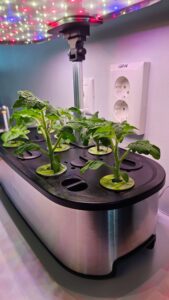
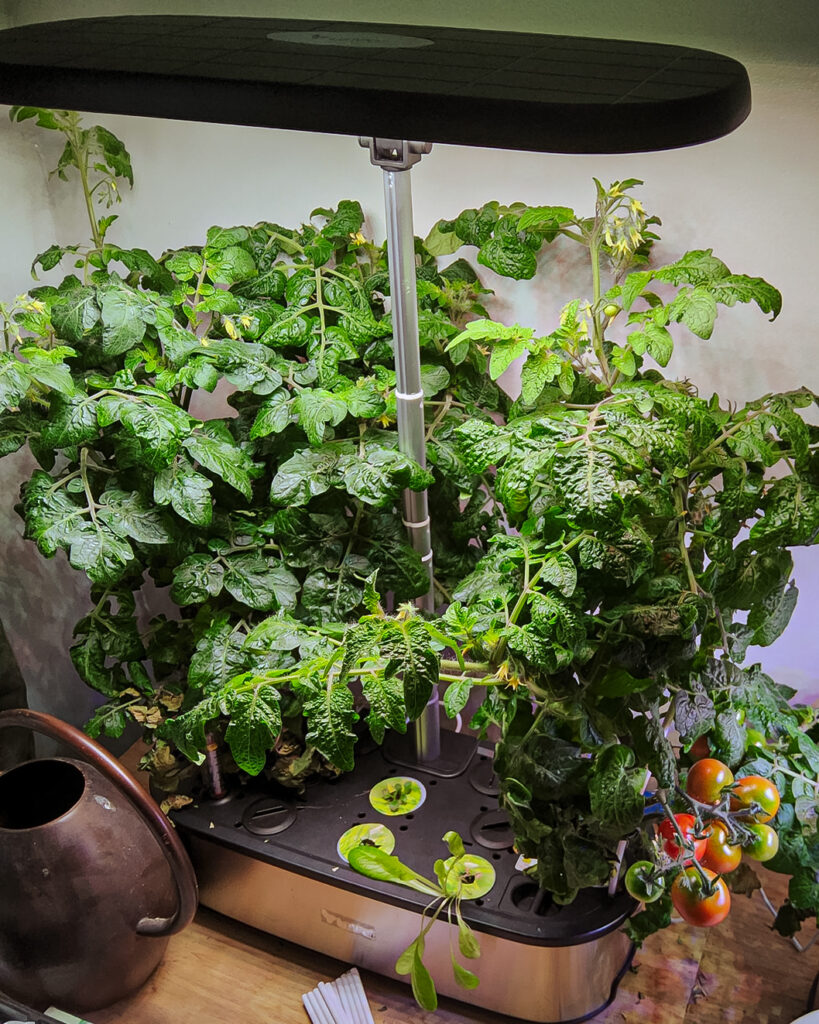
The best tomato seeds for a smart garden or windowsill are compact, determinate dwarf varieties that stay under 40cm tall. We tested two of them for 6 weeks — Balconi Yellow H and Gartenperle — one in soil and one in a LetPot Max smart garden, and both gave us their first ripe fruit within 65–70 days of sowing.
I run the IndoorGarden test kitchen in Tallinn, and growing tomatoes indoors is one of the questions I get asked most. From February to April 2026 I grew two dwarf tomato varieties side by side — one in a pot on the windowsill, the other in a LetPot Max smart garden. The goal was simple: find varieties that actually fit indoors instead of taking over the room, and time how fast they fruit. Below are six things we learned and the two varieties that earned their place.
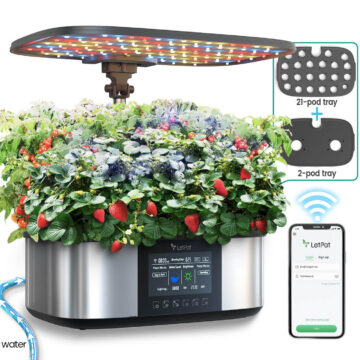
What we used — tested in our Tallinn test kitchen, ships from Estonia across the EU.
Why a dwarf or compact variety matters indoors
Most tomato seeds sold in garden shops are bred for a greenhouse or open ground, where the plant can grow past 1.5m and needs constant staking. Indoors or in a smart garden, that kind of variety simply outgrows the light source and becomes unmanageable within 2–3 months. A dwarf, or determinate, variety stops growing once it hits a set size — usually 25–40cm — and puts its energy into fruit instead of stem. That’s why we picked two determinate varieties from our own catalogue for this test: Balconi Yellow H and Gartenperle, both grown side by side in soil and hydroponics.
The two varieties we tested, and what they give you
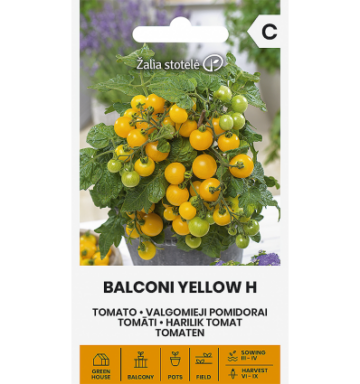
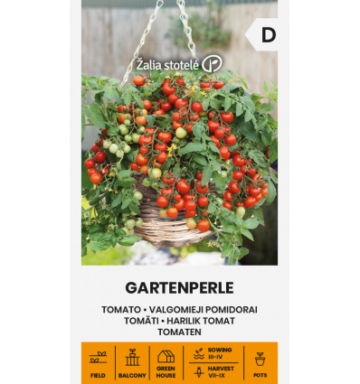
Balconi Yellow H is a determinate cherry tomato hybrid that stayed 35cm tall in our test and carried its first yellow fruit at 66 days. The plant is dense and compact, suited to a balcony box or the middle pod of a smart garden. Gartenperle is an older, ornamental cherry variety that grew slightly shorter — about 28cm — and produced large numbers of small, very sweet red fruit as early as day 65. Both seed packets cost €1.49 and contain enough seed for several seasons if stored cool and dry.
Sowing and germination: what we did in the first two weeks
We sowed the seeds 0.5cm deep in moist seed compost and kept them covered at 18–20°C. Germination took 10 to 14 days, which matches general guidance for tomato in our climate. As soon as the first true leaves appeared, we removed the cover and moved the seedlings under light — seedlings left uncovered on the surface stretch fast and stay weak. On the LetPot Max side we used the same germination conditions before transplanting the seedlings into pods. By week three both sets of seedlings were about 5cm tall and ready for more growth.
The light and temperature a tomato needs indoors
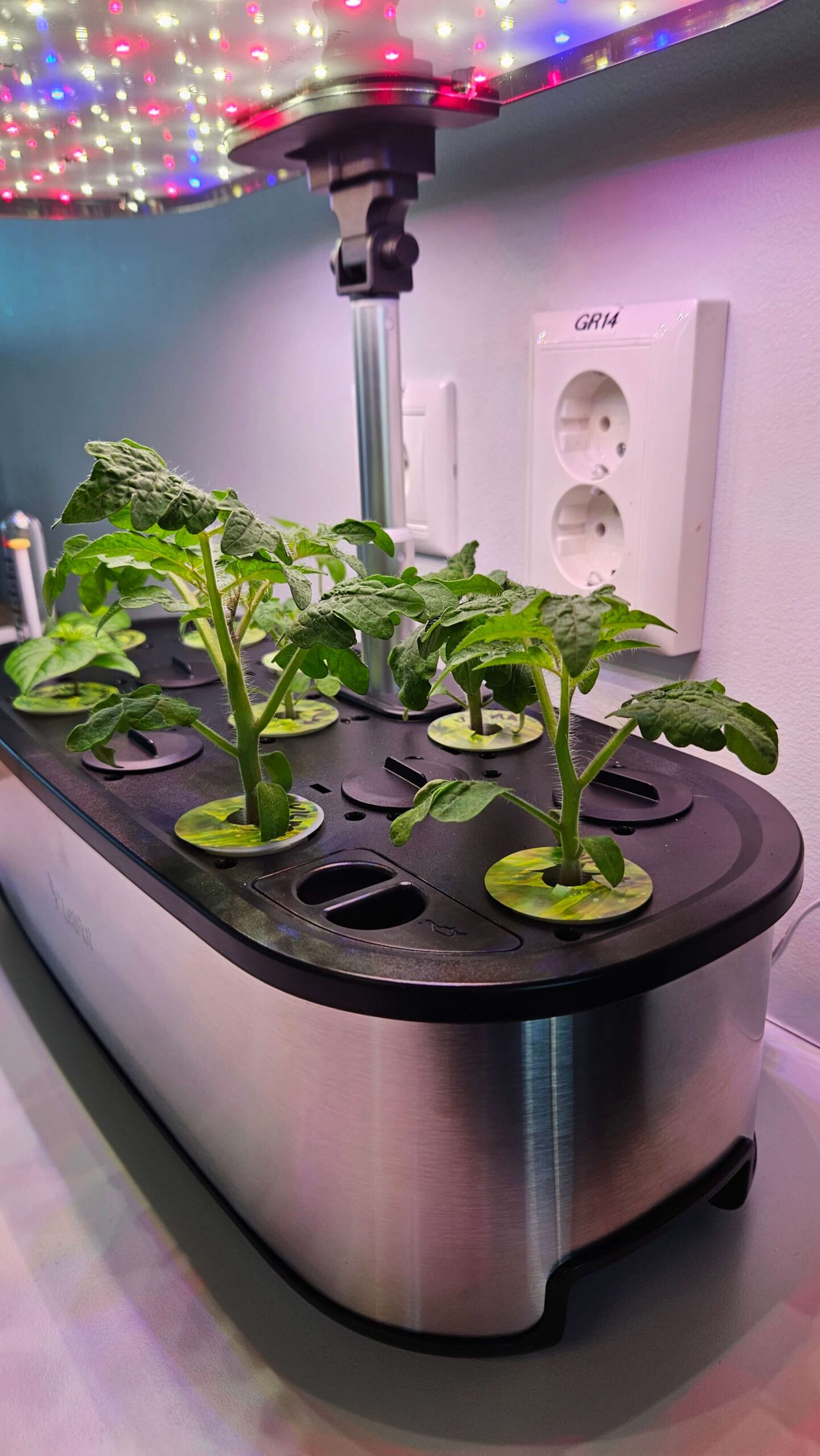
RHS recommends growing tomatoes in a 30–45cm pot and sowing from late February to mid-March if you’re growing under cover. In our test we ran light for 14 hours a day at 30cm above the canopy and held daytime temperatures at 20–24°C, with nights never below 16°C. When the evening temperature dipped briefly to 13°C, growth slowed for a week — the same pattern we’ve seen with chillies. The LetPot Max’s built-in LED kept conditions stable automatically, so that side of the test needed no manual adjustment.
Pollination and feeding in a hydroponic system
There’s no wind or insect traffic indoors, so tomato flowers often go unfertilised without help. Three times a week we tapped the flower clusters gently with a finger to move pollen — under 2 minutes for both plants combined — and fruit set went from patchy to nearly 100%. Feeding is a bigger deal for tomato than for herbs: the Oklahoma State University Extension recommends an EC of 2.0 to 4.0 mS/cm for fruiting crops like tomato, noticeably higher than leafy greens. In the LetPot Max we held the solution at 2.2 mS/cm and raised it to 2.6 during flowering; the soil plant got a matching-strength liquid feed every 10 days.
Smart garden vs soil: what actually differed
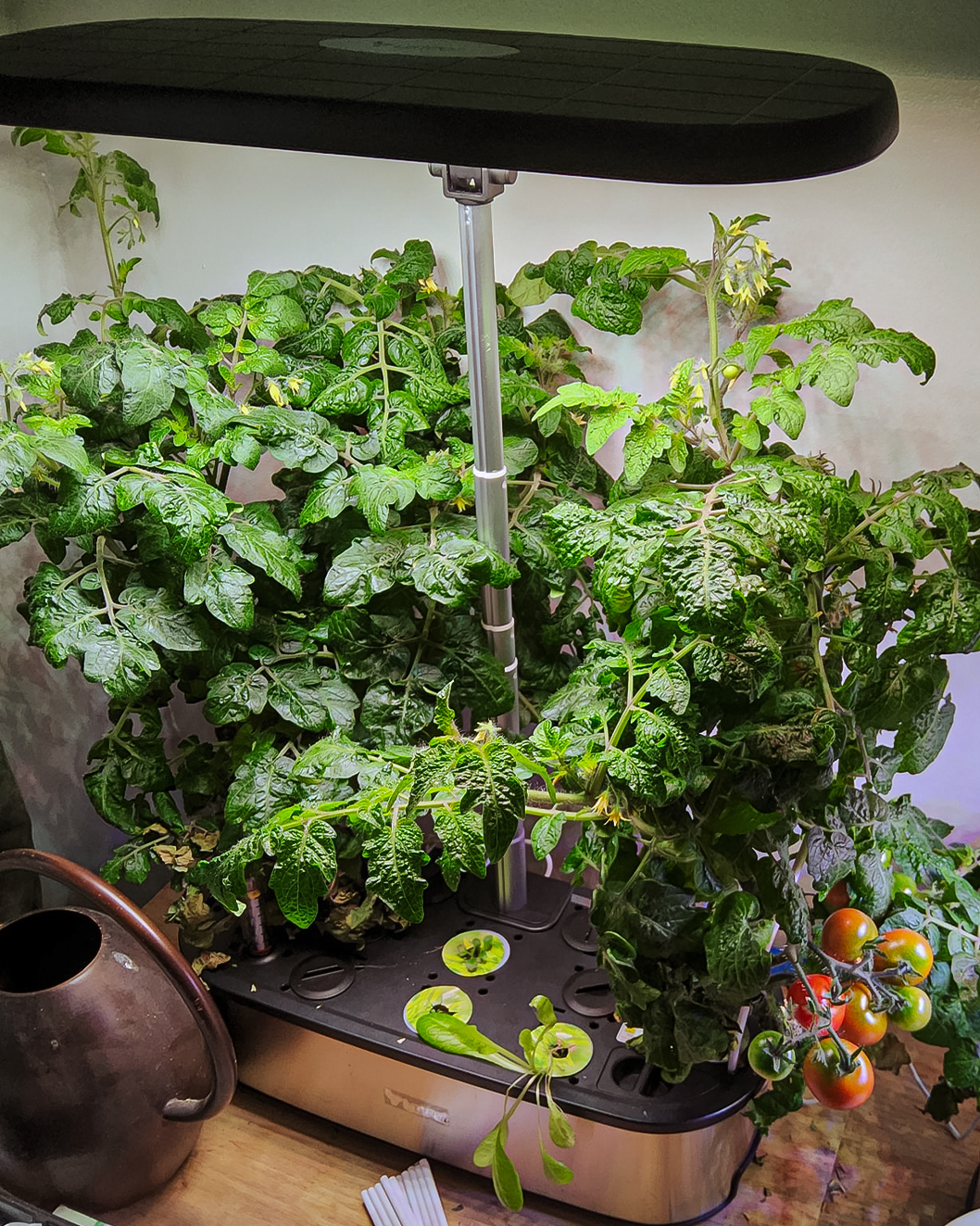
The biggest difference wasn’t growth speed, it was consistency. The LetPot Max plant grew at almost the same rate every week, because the reservoir kept the root zone evenly moist and fed. The soil plant slowed down twice when I forgot to water it, and one of those gaps pushed the harvest back 4 days. If you’re planning to grow several tomato plants at once, or you’re often away from home, a smart garden is worth considering for that consistency, not for extra speed.
Which variety suits which setup
| Variety | Height in our test | First ripe fruit | Best suited to | Price |
|---|---|---|---|---|
| Balconi Yellow H | 35cm | 66 days | Smart garden centre pod, balcony box | €1.49 |
| Gartenperle | 28cm | 65 days | Windowsill pot, lots of small fruit | €1.49 |
| LetPot Max smart garden | up to 21 pods | — | Several tomato plants at once, consistent growth | €249.00 |
Frequently asked questions
Do all tomato seeds work for growing indoors?
No. Standard outdoor varieties grow too tall and need more light than a windowsill provides. Choose a determinate or dwarf variety bred to stay compact, like the Balconi Yellow H and Gartenperle we tested.
How long do tomato seeds take to germinate?
10 to 14 days at 18–20°C in our test. In a colder room, germination can stretch to 3 weeks.
Does a tomato grown in a smart garden still need hand pollination?
Yes. A smart garden solves light and water, but pollination is still down to you even in hydroponics — a few seconds of tapping the flower clusters a couple of times a week is enough.
Why is my tomato plant growing tall but not fruiting much?
That usually points to too little light or the wrong variety. Check that you’re growing a determinate type, and add a grow light if needed.
Can I grow tomato seeds alongside herbs in the same smart garden?
Yes, if the pods have similar light needs, but tomato needs more feeding than basil or parsley — monitor EC separately if you can, or use a stronger solution suited to tomato.
How many seeds does one packet cover?
Our €1.49 packets contain enough seed for several seasons if kept cool and dry — germination stays reliable for 4 to 5 years.
If you want to start today
A dwarf tomato is one of the easiest ways to add a bit of colour and sweetness to your indoor food growing. Start with a packet of tomato seeds and sow them today — 10 to 14 days from now you’ll have your first seedlings. If you want even, hands-off growth even when you forget to water, Balconi Yellow H is a good place to start. Both ship from our Estonian warehouse across Europe.