
If an office smart garden or vertical planter is going into your sustainability report, report what you can measure — electricity, water refilled, staff participation — and skip carbon-offset language. Since March 2026, mandatory CSRD reporting applies only to companies over 1,000 employees and €450 million turnover; most SMEs report voluntarily under the VSME standard.
More companies now mention an office herb garden, a vertical planter, or a countertop hydroponic unit somewhere in their CSR or ESG materials, usually a photo and a line about “greening the workplace”. The trouble starts when that line turns into a specific claim nobody can check: a carbon number, a percentage, a “carbon-neutral office”. This guide covers what a small office actually has to work with when it reports on an indoor growing setup: the figures you can pull from the device itself, where the current CSRD threshold sits for smaller companies, and which claims are worth leaving out entirely.
Products mentioned — in stock at IndoorGarden, shipped from Tallinn across the EU.
What counts as an office greening initiative
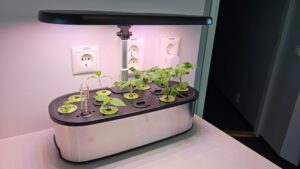
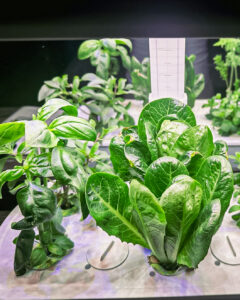
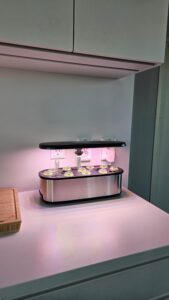
An office greening initiative is any change that adds living plants or a growing system to a workplace: a smart garden on the kitchen counter, a vertical planter in reception, or a windowsill of pots. For reporting purposes it is a small facilities change, not a climate programme on its own. Most sustainability reports and internal ESG updates treat it as one line item under “workplace environment” or “employee wellbeing”, alongside things like recycling stations or bike parking, rather than as a standalone climate action with its own targets and baselines.
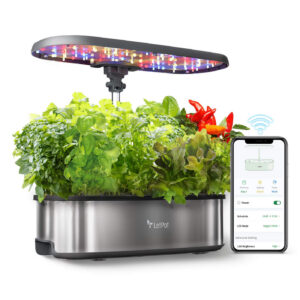
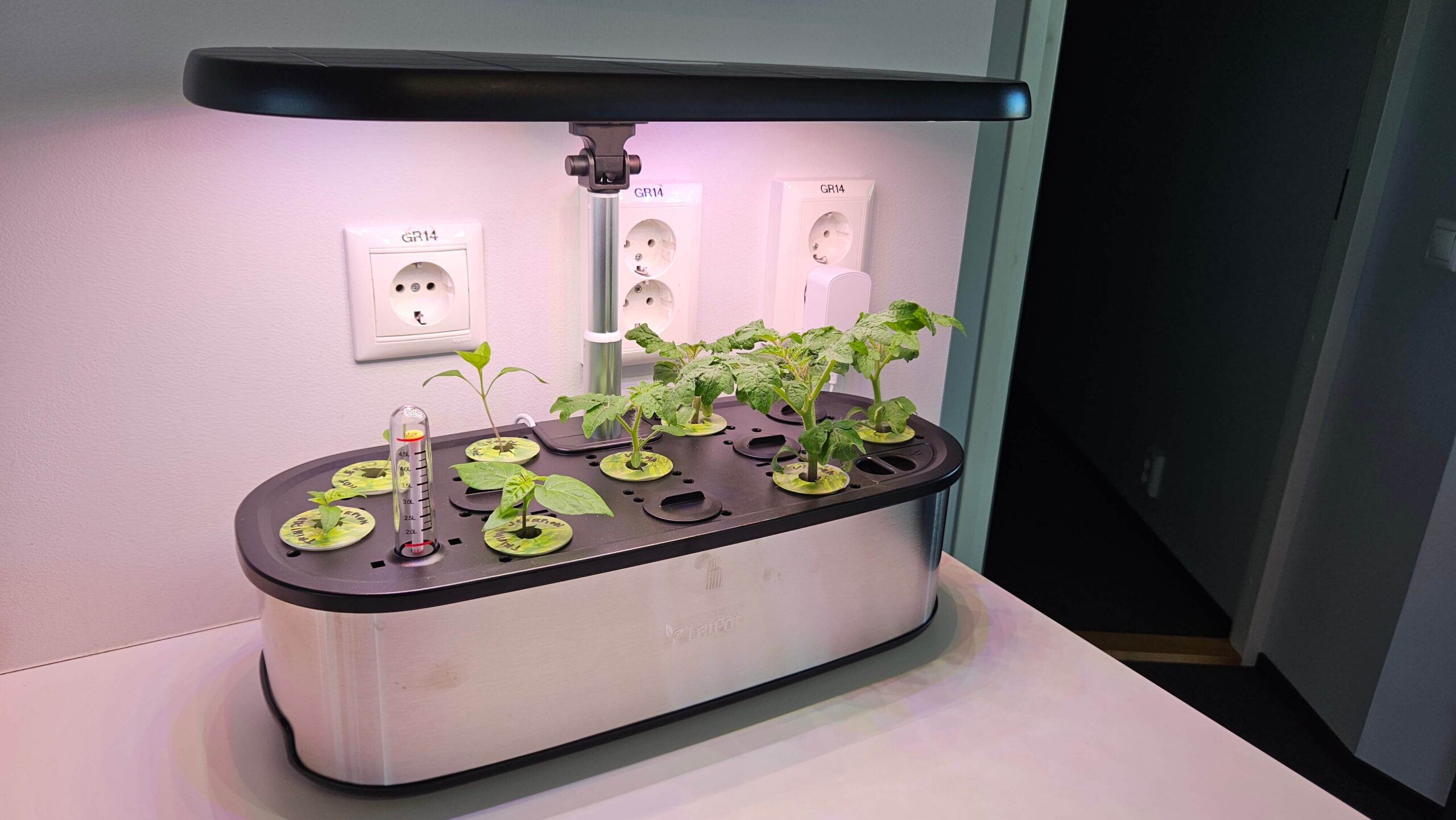
That framing matters for what follows. A line about wellbeing can rest on soft, qualitative detail. A line that implies a measured environmental outcome needs numbers behind it, and the numbers available from a countertop unit are modest. Deciding which bucket your mention belongs in, before you write it, avoids most of the trouble described below. For a closer look at the device itself, see the LetPot Senior 12-pod smart garden we reference in the template below.
Numbers you can measure without guesswork
Three figures are realistic to track for a single unit or a small cluster of units, and none of them require specialist equipment. Electricity use: a countertop hydroponic smart garden typically draws 70–180 kWh a year, depending on pod count and how many hours the LED panel runs, with the LED accounting for most of that draw; see our smart garden electricity cost breakdown for model-by-model figures. The manufacturer’s spec sheet already gives you the LED wattage, so multiplying that by the daily photoperiod is enough for a defensible estimate even without a plug meter.
Water: most units hold a 1.5–7.5 litre reservoir and need refilling every one to three weeks, so a rough annual water-use figure is easy to log from refill counts over a reporting period. Participation: how many staff signed up for a harvest or watering rota, or how often the unit came up in an internal survey, is a legitimate qualitative metric, and one that is far easier to defend under scrutiny than an invented emissions figure. None of these numbers are dramatic, and that is the point: a credible, modest figure holds up better than an impressive one that does not.
Where the CSRD line sits for small companies in 2026
The Corporate Sustainability Reporting Directive originally pulled in companies with as few as 250 employees and €50 million turnover. Under the Omnibus I simplification package, which the European Commission proposed in February 2025 and which entered into force on 18 March 2026, mandatory CSRD reporting now applies only to companies with more than 1,000 employees and over €450 million in net turnover. That change removed roughly 80-90% of previously in-scope companies from mandatory reporting. As of 2026, confirm your own company’s status against the current thresholds directly, since a future review clause could adjust them again.
Being outside mandatory scope does not mean there is no format to use. EFRAG’s Voluntary Sustainability Reporting Standard (VSME) gives SMEs a simple, two-module structure, Basic and Comprehensive, built for exactly this situation: a bank, investor or large customer asking for sustainability data with no mandatory reporting obligation behind it. An office greening line fits naturally into the Basic Module’s workplace and resource-use disclosures, at whatever level of detail your company chooses to report voluntarily.

Claims to avoid in a sustainability report
A few phrasings cause more trouble than the plant ever saves. Avoid “carbon-neutral office” or any offset-style neutrality claim tied to a herb garden: no device or plant in a typical office catalogue absorbs enough CO2 to justify one, and EU consumer-protection rules tightening from September 2026 specifically target neutrality claims based only on offsetting. Avoid unsourced percentages such as “30% greener workplace” with no stated baseline or measurement method behind them, since an unsubstantiated figure is harder to defend than no figure at all.
Avoid implying the whole office uses less energy because of one countertop unit. A 10-pod smart garden adds roughly 10 kWh a month to the building’s consumption, a rounding error next to total office electricity use, so it reads better as a wellbeing or workplace-culture item than as an energy-reduction claim. Finally, avoid comparing your setup to a specific competitor’s product or claiming a “first in the industry” status without checking that it’s actually true; both are the kind of specific, checkable claim that draws scrutiny once a report is public.
A simple one-page template for one unit
A single paragraph plus a small table is usually enough for one unit in an annual report or VSME filing. State what was installed and when, its measured or estimated electricity and water use for the reporting period, and a brief participation note. Skip numeric targets unless you plan to track and report against them for several years running; a one-off description of what exists today is safer than a target nobody revisits.
| Item | What to record | Typical figure |
|---|---|---|
| Device | Model and date installed | e.g. LetPot Senior, 12-pod, installed March 2026 |
| Electricity | Annual kWh from the spec sheet or a plug meter | ~179 kWh/year at 24 W LED, 16 h/day |
| Water | Reservoir refills logged over the year | 5.5 L reservoir, refilled every 1-2 weeks |
| Participation | Staff signed up to a harvest or watering rota | Count taken from the rota sheet |
| Running cost | Unit price plus estimated annual electricity cost | 129,00 € unit, well under 50 €/year to run |
Frequently asked questions
Does a single office smart garden need to go in a mandatory sustainability report?
Only if your company already sits inside CSRD’s mandatory scope: more than 1,000 employees and over €450 million turnover as of 2026. Below that threshold, any mention is voluntary, typically written under the VSME standard or simply noted in an internal wellbeing update.
Can we call an office herb garden “carbon neutral”?
Not as a standalone claim. A handful of herb pods does not offset meaningful CO2, and EU consumer-protection rules are tightening specifically around neutrality claims based only on offsetting. Report the electricity and water figures instead, and let readers draw their own conclusion.
What is the easiest number to report?
Electricity. Most smart gardens state LED wattage on the product page or spec sheet, and multiplying that by the daily photoperiod, commonly 14-16 hours, gives a defensible annual kWh figure without needing a plug meter.
Do we need to report water use for a hydroponic unit?
It is optional but straightforward: log how many times the reservoir was refilled over the reporting period and multiply by its litre capacity, typically 1.5-7.5 L depending on the model.
Should we set a target, like doubling the number of units next year?
Only if you intend to track and report against that target in future years. A one-off mention of what exists today, with no forward commitment, is the lower-risk option for most small reports.
Where does a vertical planter fit compared with a hydroponic smart garden?
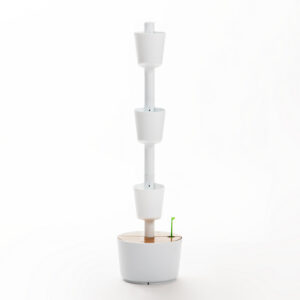
Both report the same way: electricity for any lighting or pump, water for the reservoir, and participation for staff involvement. A vertical planter with a Wi-Fi watering kit, such as CitySens, adds its own small current draw for the timer, which is worth including alongside the planter’s water use.
Where to start
If you’re adding a reporting line for the first time, pick one unit, log its electricity and water use for a full quarter, and note staff participation; that is enough for a credible first entry. A countertop smart garden suits a shared kitchen, while a vertical planter works better in a reception or lobby area with more wall space than counter space. If you’d like help choosing a model to match your office size before you write it up, contact us and we’ll suggest one based on the space and headcount you describe.