DLI for indoor plants ranges from about 4 mol/m²/day for low-light seedlings up to 16 mol/m²/day or more for fruiting crops like chilli and tomato, with most herbs and leafy greens sitting around 10-14 mol/m²/day. We measured our own grow lights against these targets over 3 winters in Tallinn, and the gap between what a light claims on the box and what a plant actually receives is often 40-60%.
I run the test bench at IndoorGarden, and for two winters I watched my chilli seedlings grow leggy and pale under a light that looked bright enough to my eyes but was badly underpowered where it mattered. Once I started measuring Daily Light Integral instead of judging by watts, the problem was obvious and fixable in an afternoon. This guide explains what DLI actually is, how much your crop needs, why Estonia and the rest of the Baltics make it harder than most grow-light guides assume, and how to use the free calculator we built to check your own setup.
What we used — tested in our Tallinn test kitchen, ships from Estonia across the EU.
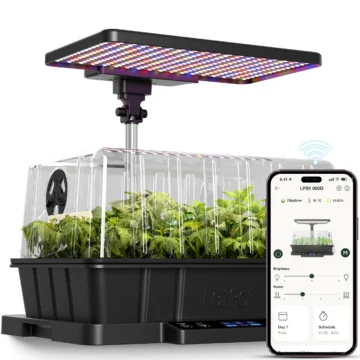
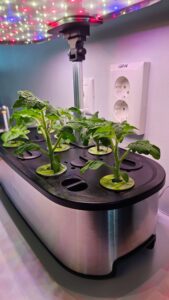
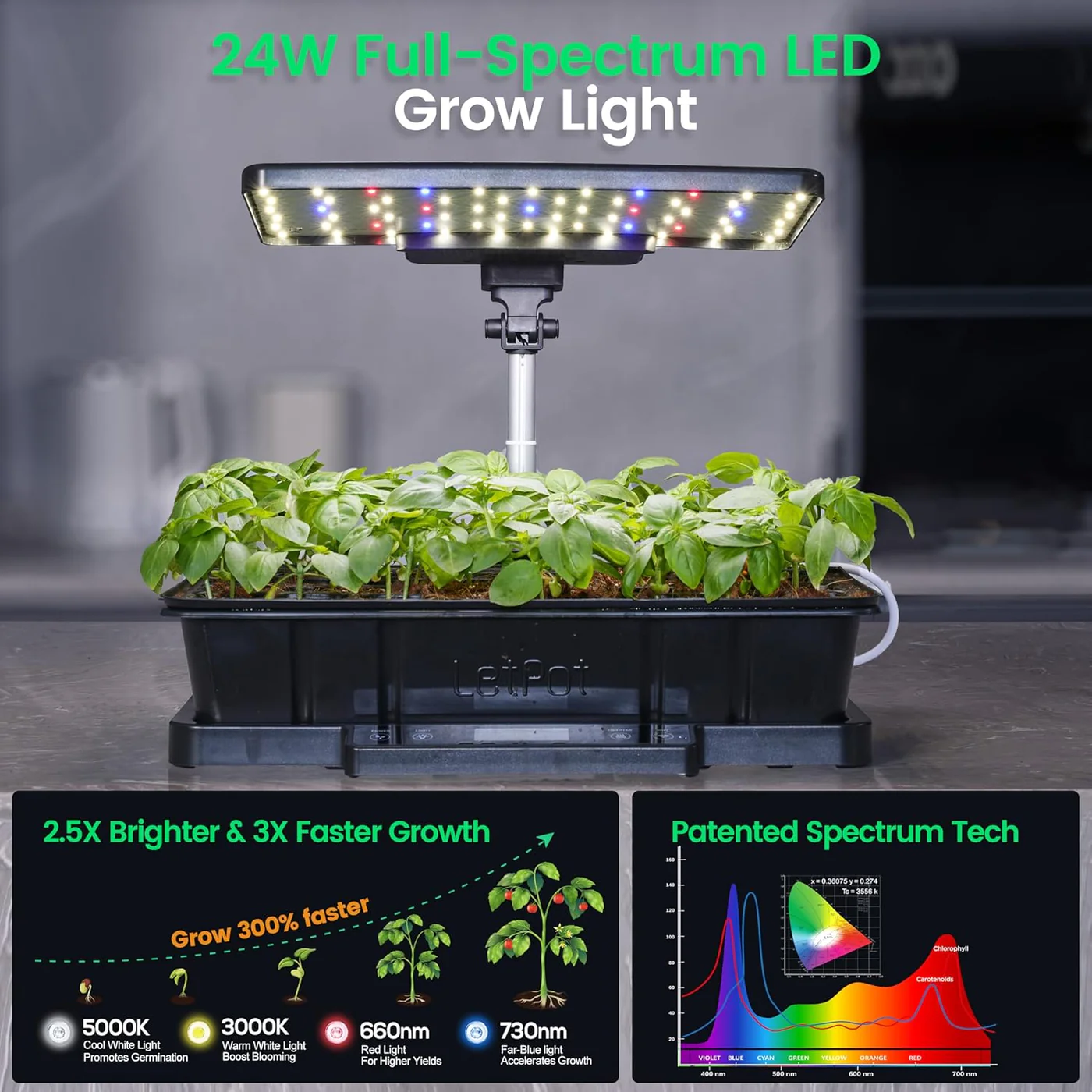
LetPot SS-Pro Smart Seed Starter Kit – 24W Full Spectrum Grow Light + 24W Heated Base with App Control
119,99 €Add to cart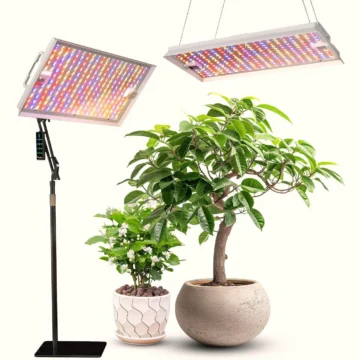
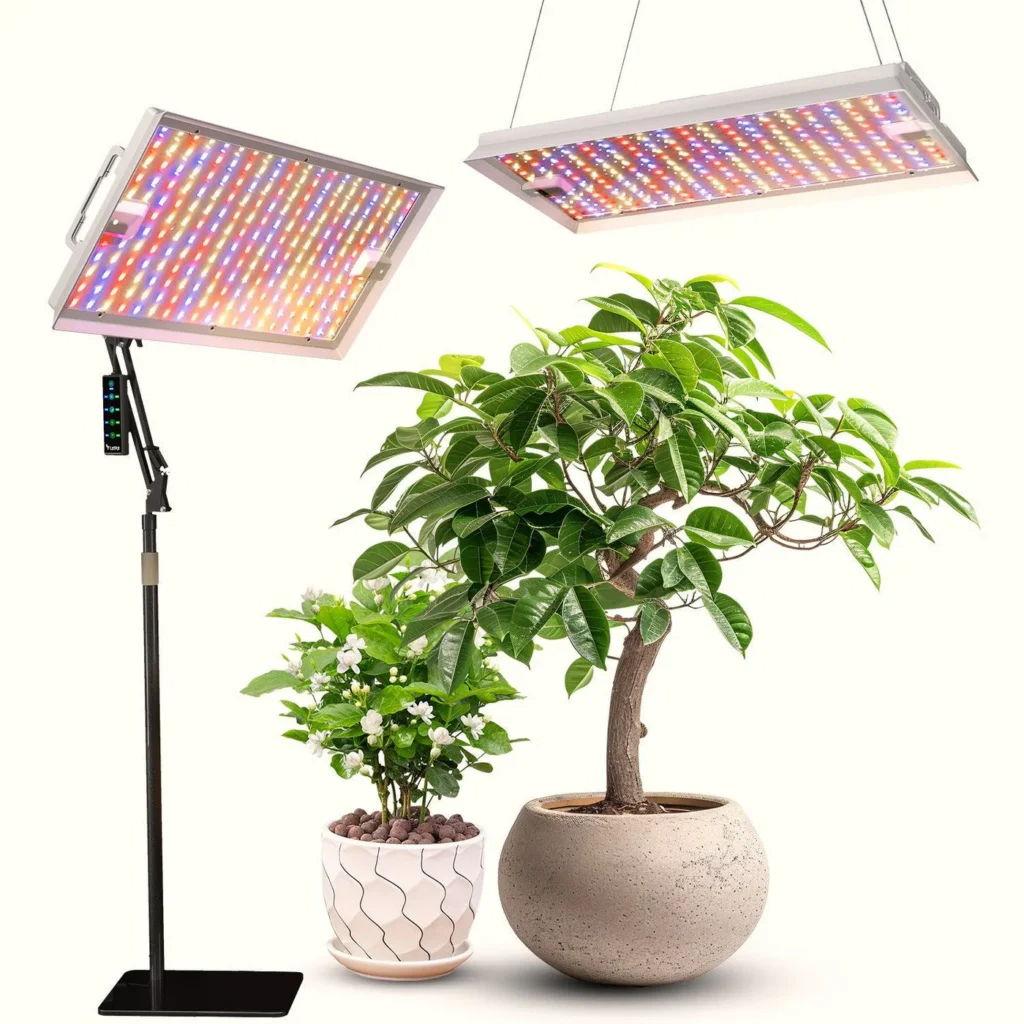
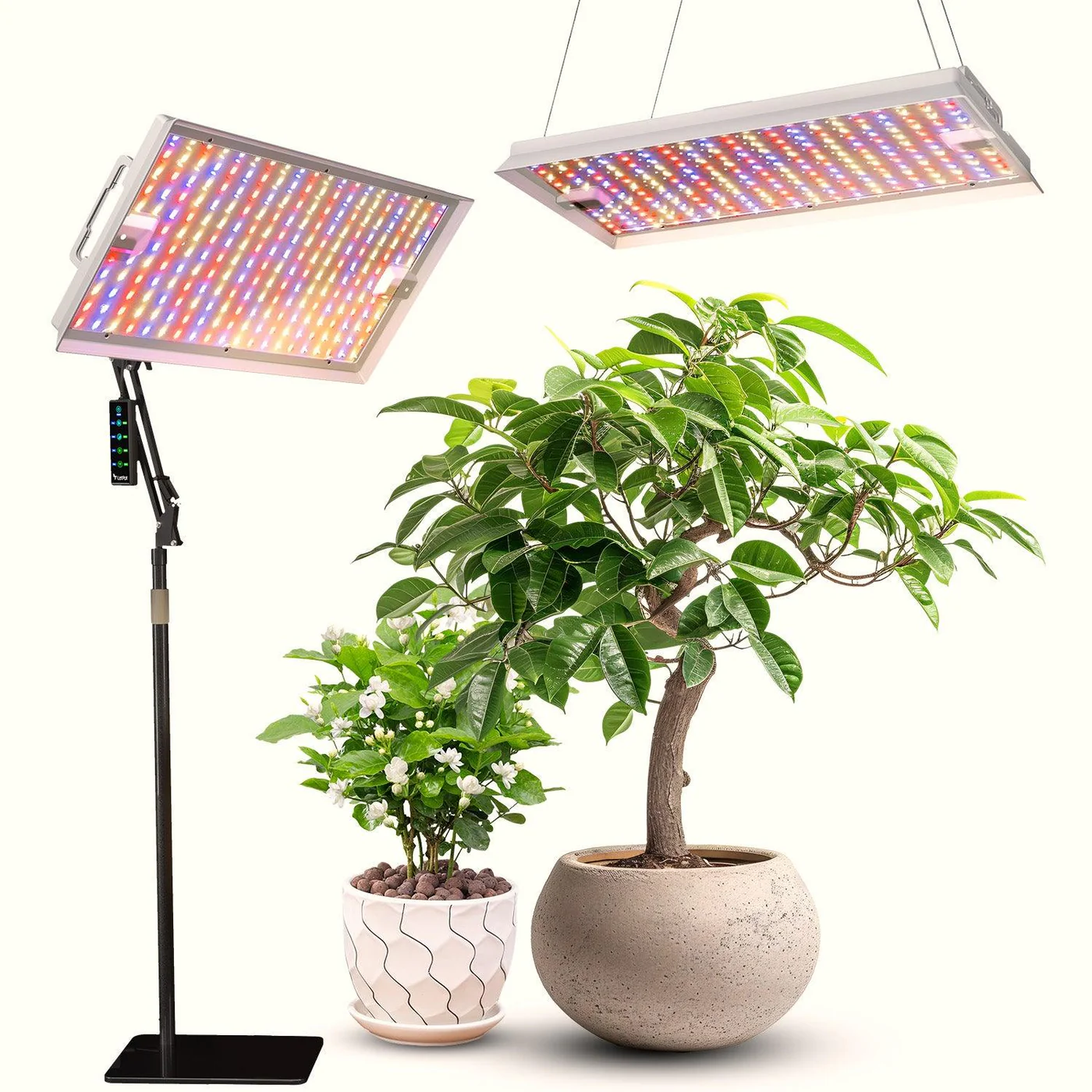
LetPot Smart Grow Lights for Indoor Plants (100W) – Full Spectrum, App + Remote, Standing or Hanging (EU Adapter)
159,00 €Read more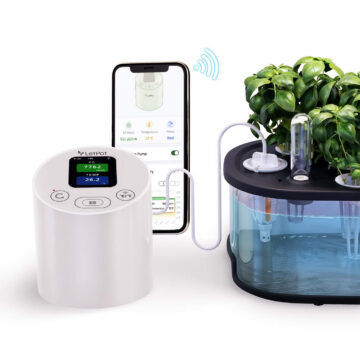
LetPot Smart Temperature & EC Meter for Hydroponic Indoor Garden
69,00 €Add to cart
What DLI actually measures, and why watts do not
When most people buy a grow light, they look at watts, and a 100 W light sounds more serious than a 24 W one. Watts measure electricity use, not how much usable light reaches the leaf. Lumens are worse for this job, because lumens measure brightness the way a human eye sees it, weighted heavily towards green light that plants barely use for photosynthesis. The number that matters is PPFD, photosynthetic photon flux density, measured in micromoles of photons per square metre per second. PPFD tells you the light intensity at one moment, but plants accumulate light across a whole day, which is where DLI comes in. Daily Light Integral is the total photosynthetically active light a surface receives over 24 hours, in moles per square metre per day. The formula is PPFD multiplied by the number of hours the light runs, multiplied by 3600, divided by 1,000,000. A light delivering 300 µmol/m²/s for 16 hours gives a DLI of 17.3, which is strong for lettuce, good for herbs, and only just adequate for a fruiting tomato.
DLI targets for the crops we actually grow
Crops fall into three rough bands. Low-light crops such as lettuce, spinach, salad mixes and microgreen trays do well at 10 to 14 mol/m²/day and are the easiest to satisfy under a modest light. Herbs including basil, parsley, chives and mint sit a little higher at 12 to 16 mol/m²/day, and essential oil concentration in culinary herbs actually rises with more light, which is part of why basil grown under a strong panel tastes noticeably more intense than a supermarket bag. Fruiting crops are the demanding group: chilli, cherry tomato and pepper plants want 16 mol/m²/day and up once they start flowering, and below about 12 to 14, fruit set drops off and flavour suffers. Seedlings and cuttings are the outlier at the low end, needing as little as 4 to 6 mol/m²/day while they are establishing roots, before their requirement climbs as true leaves appear.
Why Estonia and the Baltics need more light than most guides assume
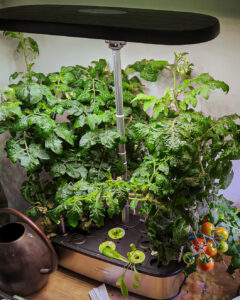
Most grow-light advice online is written for latitudes around 40 to 45°N, where winter daylight is two to four times stronger than what we get here. In Tallinn, outdoor DLI in December runs at roughly 1 mol/m²/day on a clear day, barely enough to keep a houseplant ticking over, let alone grow food. January is about 2, February around 4, and even by March natural DLI only reaches about 9, still short of what most food crops need. A grow light that acts as a gentle top-up in a milder climate is doing the entire job here for 5 to 6 months of the year. That is the whole reason a dedicated grow light for indoor plants earns its place on a Baltic windowsill, and it is also why a fully enclosed smart garden with its own timed LED sidesteps the whole seasonal problem rather than fighting it.
The inverse square law: height matters as much as wattage
PPFD drops sharply with distance from the light. Light intensity follows the inverse square law, so doubling the distance from the canopy to the light cuts PPFD to roughly a quarter of its value at the closer distance. A panel delivering 400 µmol/m²/s at 20 cm only delivers around 100 µmol/m²/s at 40 cm. This means the height you hang a light matters as much as its rated power. For herbs and leafy greens we keep the panel 20 to 30 cm above the canopy. For a chilli or tomato that grows tall, either the light needs to be genuinely powerful to hold DLI at a greater working distance, or you lower it gradually as the plant grows, moving it down about 5 cm every few days rather than in one jump that can scorch new leaves.
Use our free DLI calculator to find your own numbers
Rather than asking you to do the arithmetic by hand, we built a free calculator that takes your light type, wattage bracket and daily photoperiod, estimates your PPFD, and gives you a DLI verdict against the crop you have chosen. It also works in reverse: pick a crop and your PPFD, and it tells you how many hours to run the light to hit the target range. The free indoor gardening tools page also has an EC and nutrient calculator and a room-light quiz if you want to check your natural window light before buying anything. Estimates carry roughly a 25 to 35% variance because PPFD genuinely differs that much between fixtures in the same wattage class, so if you know the exact PPFD from your light’s own spec sheet, use that number directly for a more accurate result.
What to do when your DLI is too low
If the calculator puts you below your crop’s target, you have three practical levers. The simplest is extending the photoperiod: adding 2 to 3 hours on the timer costs nothing and can meaningfully lift DLI, though most crops do best with at least 6 hours of darkness and rarely benefit from more than 18 hours of light. The second lever is lowering the light closer to the canopy, which raises PPFD directly, and moving a panel from 40 cm to 25 cm roughly doubles the intensity the leaves receive. The third and most expensive option is a stronger or more efficient light. If you are trying to fruit a chilli plant through a Baltic winter on a small clip lamp, no amount of photoperiod stretching closes that gap, and stepping up to a proper panel such as our 100 W full-spectrum model is the only fix that actually works.
DLI targets by crop type
| Crop group | DLI target | Typical light height | What we used |
|---|---|---|---|
| Seedlings and cuttings | 4-6 mol/m²/day | 25-30 cm | LetPot SS-Pro seed starter, 24 W, €119.99 |
| Lettuce, spinach, microgreens | 10-14 mol/m²/day | 20-30 cm | Any full-spectrum panel on a 14-16 h timer |
| Basil, parsley, chives, mint | 12-16 mol/m²/day | 20-30 cm | LetPot 100 W panel, €159.00 |
| Chilli, cherry tomato, pepper | 16 mol/m²/day and up | 30-40 cm, lowered over time | LetPot 100 W panel, €159.00 |
| Checking your own setup | — | — | LetPot temperature & EC meter, €69.00 |
Frequently asked questions
What is a good DLI for indoor plants overall?
There is no single good number, because it depends on the crop. As a rough anchor, 10 mol/m²/day satisfies most leafy greens and seedlings, while fruiting crops such as chilli and tomato want 16 or more once they start flowering.
Can I reach a high DLI with a weak light by just running it longer?
Only up to a point. Most crops tolerate up to about 18 hours of light a day and need at least 6 hours of darkness for healthy cell function, so a genuinely underpowered light cannot be stretched far enough to reach a high DLI within a safe photoperiod.
Does natural window light ever provide enough DLI in winter here?
Rarely. Outdoor DLI in Tallinn is around 1 to 4 mol/m²/day from December to February, and a window loses more of that again to glass and room depth, so a supplemental light is doing almost all of the work for a leafy crop and the entire job for anything fruiting.
How do I measure my light’s PPFD without buying a meter?
Use the manufacturer’s spec sheet if it lists PPFD at a specific distance, and check that the distance matches how you actually mount it. If no PPFD figure is published, our calculator’s wattage-based estimate, with its stated variance, is the practical alternative.
Does a smart garden solve the DLI problem automatically?
Largely, yes. A hydroponic smart garden runs its LED on a fixed daily schedule at a fixed distance from the pods, which removes most of the guesswork in this guide. You still choose crops that suit the panel’s intensity and the unit’s height clearance.
Why does blue light matter alongside DLI?
DLI tells you how much light a plant gets, but spectrum affects how it uses that light. Blue wavelengths in particular shape compact growth and leaf strength, which we cover in full in what plants use blue light for.
If you want to fix this today
Run our free DLI calculator with your current light and photoperiod and see where you land against your crop’s target before changing anything else. Most people are closer than they think, and a timer adjustment or lowering the panel a few centimetres closes the gap. If the numbers show you are genuinely underpowered, a full-spectrum grow light sized for your shelf, such as our 100 W panel, is the fix that actually moves the needle for fruiting crops through a Baltic winter.