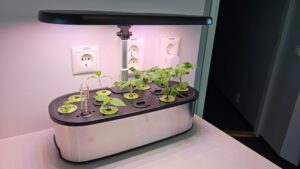

A kindergarten growing corner needs three things checked before the first seed goes in: the power cable and adapter are out of small hands, the water stays inside the tank, and the LED light sits above eye height. Most smart garden systems run on a low-voltage adapter rather than being wired into the mains directly, which removes one of the bigger risks, but cables, standing water and a bright light at child height still need a plan.
Setting up a growing corner in a group room is mostly about where things sit and who is responsible for them, not about finding specialist childproof equipment. This article walks through the four areas worth checking before the first group of three to seven year olds gathers around the garden: power and cabling, water, light, and which plants are actually safe to touch and taste. It ends with a short checklist you can run through in a few minutes.
Products mentioned — in stock at IndoorGarden, shipped from Tallinn across the EU.


Why a growing corner needs a different safety check than a houseplant
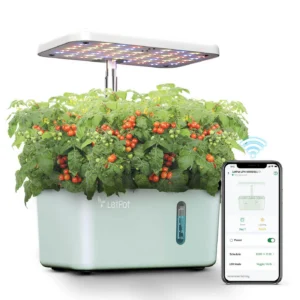
A houseplant on a windowsill rarely needs a safety review. A hydroponic smart garden adds three things a houseplant does not have: a powered LED light, a water reservoir, and a cable running to a wall socket. None of that makes the device unsafe for a group room, but it does mean the checklist is different from “keep the soil out of reach.” The LetPot Mini, a compact 5-pod system sized for a shared classroom shelf, runs its light and pump from a 5V, 2A adapter rather than a direct mains connection, which is the same category of low-voltage supply used for USB chargers and many baby monitors.
Cables and the adapter: keep the connection out of reach
Place the garden close to the socket it uses, so the cable does not run across a walkway or a table where it can be pulled or tripped over. Tape or clip the cord flat against the shelf edge rather than leaving a loop a child could catch a hand in. The adapter itself plugs into a standard socket and is rated for continuous use, but it still benefits from sitting behind or beside the unit rather than dangling where little hands reach first. If a cord or adapter is ever damaged, replace it rather than taping over bare wire — spare power adapters and pump parts are sold separately, so a single worn part does not mean retiring the whole system.

General preschool guidance on electrical safety usually comes down to the same few points: cords taped or routed away from walking paths, sockets not overloaded, and damaged cables replaced rather than repaired with tape. Since rules differ by country and by preschool authority, it is worth checking your own national preschool safety guidance alongside the manufacturer’s instructions before the garden goes on permanent display.
Water stays in the tank
The reservoir is a sealed tank that the adult in charge fills by hand with a jug, not a hose connected to plumbing, so there is no ongoing water supply to worry about. Spilled nutrient solution should be wiped up the same way any spill would be, and hands are worth washing after refilling or after handling the nutrient sachets, which are a mild fertiliser rather than anything edible. Keep the unit on a stable surface that will not tip if bumped, and avoid placing it on the very edge of a shelf a child could reach up to and pull at.
Light: positioning the LED for young eyes
The built-in grow light is bright by design, since it is doing the work that direct sun would otherwise do. France’s food and environmental safety agency, ANSES, has flagged that young children’s eyes let in more blue light than an adult’s and recommends avoiding prolonged close-range exposure to bright LED sources for this age group. The practical response for a growing corner is simple: mount the garden high enough that the light sits above a seated or standing child’s eye line, and ask the group not to look directly into it, the same way you would with any bright lamp. Positioned on a shelf rather than a low table, this is a one-time adjustment rather than something to monitor daily.
Which plants are safe to grow, touch and taste
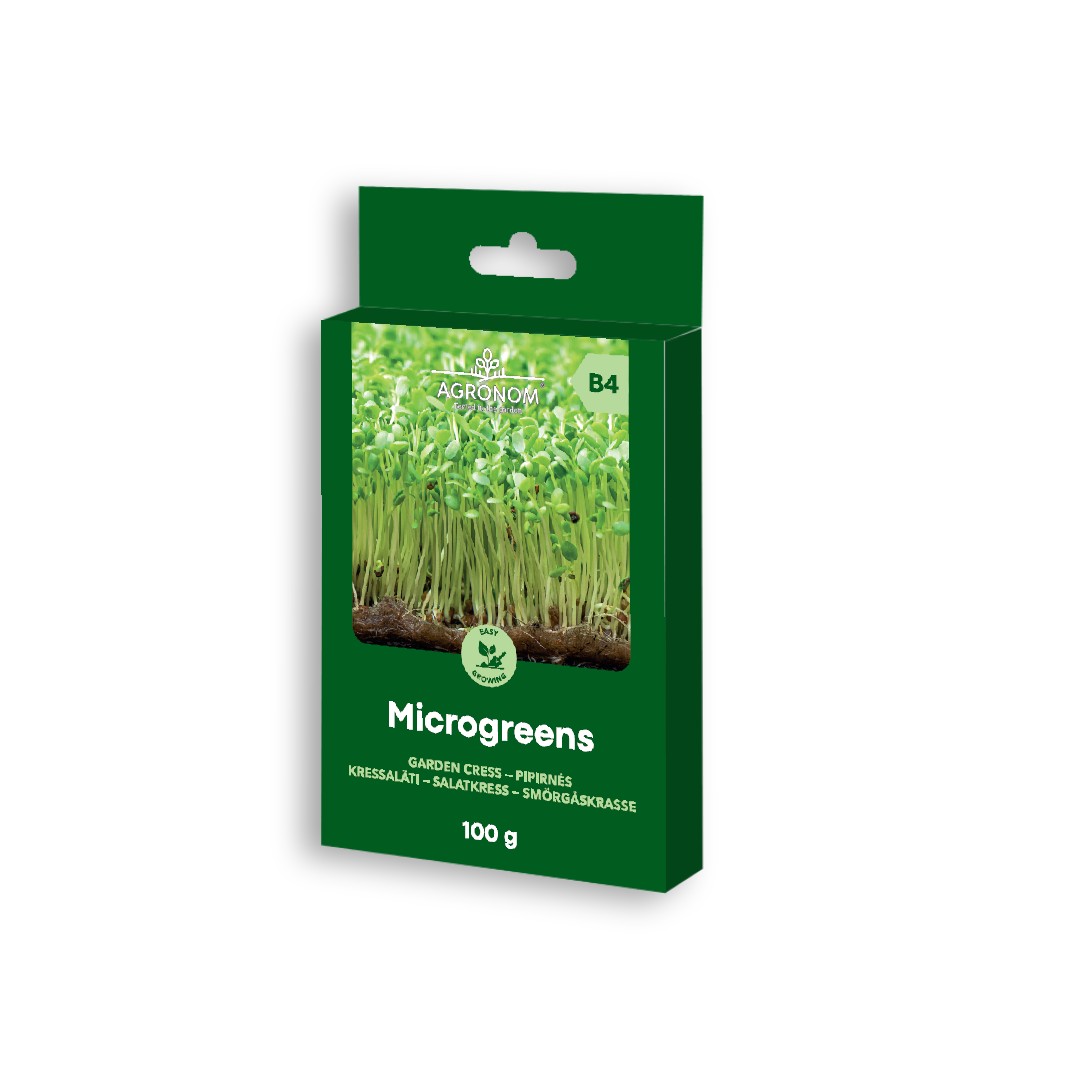
For a group of young children, the safest choices are fast, leafy and genuinely edible: garden cress, pea shoots and basil are commonly grown with children because there is little to go wrong if a leaf ends up in a mouth before harvest day. Most growing guides put cress at about seven to ten days from sowing to a usable harvest, which suits a group’s attention span better than a slower crop.
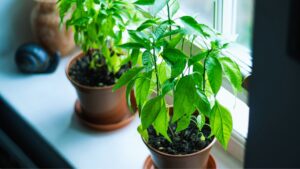
Chilli pepper plants are the one item in our own catalogue we would leave out of a room with unsupervised three to seven year olds. Queensland Children’s Health Service lists chilli and other capsicum species among plants that can cause burning pain and irritation on contact with skin or eyes, which is a reasonable caution for a group setting even without an exposure having happened. If older children want to grow chillies as a dedicated, closely supervised project, that is a different setup than a shared, low-supervision shelf.
Small parts and everyday hygiene
Grow sponges, the small plastic baskets, and the germination domes that come with most systems are all small enough to be a choking consideration for the youngest children in a mixed-age room. Store spares in a closed box rather than loose on the shelf, and have an adult handle refills and part changes rather than the children. Between terms, empty, rinse and dry the reservoir before storage, the same way you would with any container that has held standing water, to avoid mould or odour building up while the room is closed.
| Item | Price | Why it matters here |
|---|---|---|
| LetPot Mini 5-Pod Smart Garden | €59.00 | runs on a 5V, 2A low-voltage adapter rather than a direct mains connection |
| LetPot EU replacement power adapter | €19.99 | spare adapters are sold separately, so a worn cord does not mean replacing the unit |
| Garden Cress Seeds | €1.39 | ready in roughly 7–10 days, one of the fastest safe crops to harvest and taste |
Frequently asked questions
What voltage does a smart garden like this run on?
The LetPot Mini runs on a 5V, 2A adapter, the same low-voltage category as a phone charger, rather than being wired directly into the mains.
Can children touch or drink the water in the tank?
The tank holds water mixed with a mild liquid nutrient, not something intended to be drunk. Spills should be wiped up and hands washed after refilling, the same as with any household fertiliser product.
Is the grow light safe for a child to be near all day?
It is designed to run for long daily cycles safely at a normal viewing distance. The main precaution, per ANSES guidance on LED exposure in young children, is to avoid positioning it at direct eye level or encouraging children to look straight into it.
Which plant would you leave out of a kindergarten room?
Chilli pepper. It is the one crop in our own range we would skip for an unsupervised group of young children, since contact with the fruit can irritate skin and eyes.
How often does an adult need to check on the system?
Checking the water level every few days and glancing at the cable and socket area occasionally is normally enough; the system itself runs its light and pump cycles automatically.
What should we do with spare parts and seed packets?
Keep baskets, sponges and germination domes in a closed container, and let an adult handle restocking rather than leaving loose parts on the shelf.
Where to start
Most kindergartens running a shared growing corner start with one compact smart garden on a high shelf and a fast crop like cress for the first few weeks, adding plants once the routine of watering and checking is settled. If you are weighing up models, group sizes or ordering for a public institution, our kindergartens and schools page covers pricing and invoicing in more detail.