
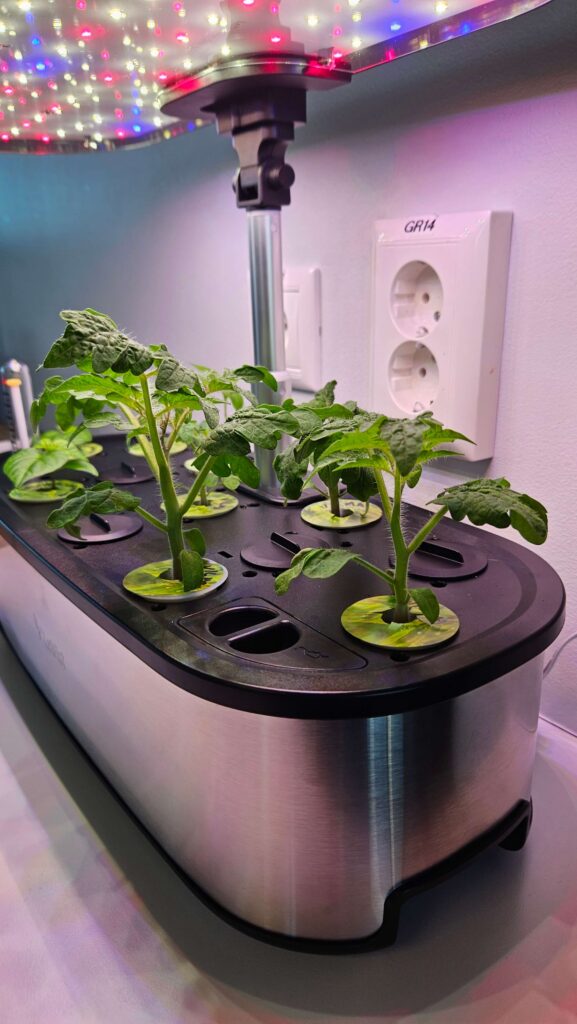
Blossom end rot is a dark, sunken patch that forms on the base of a developing tomato, caused by calcium failing to reach the fruit while it is expanding rather than a true shortage of calcium in the soil or nutrient solution. It shows up most often on the first truss or two, and steadying water and feed usually keeps the next fruit clean within a week or two.
If the bottom of your first ripening tomato has turned brown and leathery, blossom end rot is almost always the reason, whether the plant is in a pot or in a hydroponic smart garden. It is not a pest or a fungus, so there is nothing to spray on the leaves that clears it. What actually prevents it is steadier water and feed, a lighter hand on nitrogen, and sometimes a different variety next time. This guide covers why it happens indoors, the three changes that prevent it, and what to do with fruit that already has it.
Products mentioned — in stock at IndoorGarden, shipped from Tallinn across the EU.

What blossom end rot actually is
Blossom end rot starts as a small, water-soaked patch at the base of the fruit, opposite the stem, usually noticed when the tomato is roughly a third to half grown. The patch darkens, sinks and turns leathery over the following days, and mould or bacteria often move into the damaged tissue afterwards, which is what gives an older spot its black, slightly fuzzy look. It is a physiological disorder rather than a disease, meaning no pathogen causes it and nothing you spray on the plant will cure a fruit that already has it. Worth knowing early: this is a different problem from the flowers dropping before any fruit forms at all, which is covered in our guide to tomato flowers falling off. Blossom end rot only affects fruit that has already set and is actively swelling.
Why it happens indoors: calcium that never reaches the fruit in time
Calcium moves through a plant mainly in the water stream, carried up from the roots as the fruit’s cells divide and expand. Once it is built into a leaf it stays there, so a developing tomato has to pull in its own fresh supply rather than borrowing it back from older growth. If the flow of water to the plant falters for even a day or two while the fruit is in that rapid early-growth window, the cells at the blossom end are the first to come up short, because they are furthest from the stem and growing fastest. In a pot, that usually traces back to compost drying out and then being soaked heavily, which swings the roots between two extremes rather than keeping them evenly supplied. In a hydroponic system the trigger is usually similar in effect but different in cause: a reservoir left to run low between refills, or a nutrient pH that has drifted outside the 5.5 to 6.5 range most crops need for calcium to stay available to the roots.
Prevention 1: keep water and EC steady, not just topped up
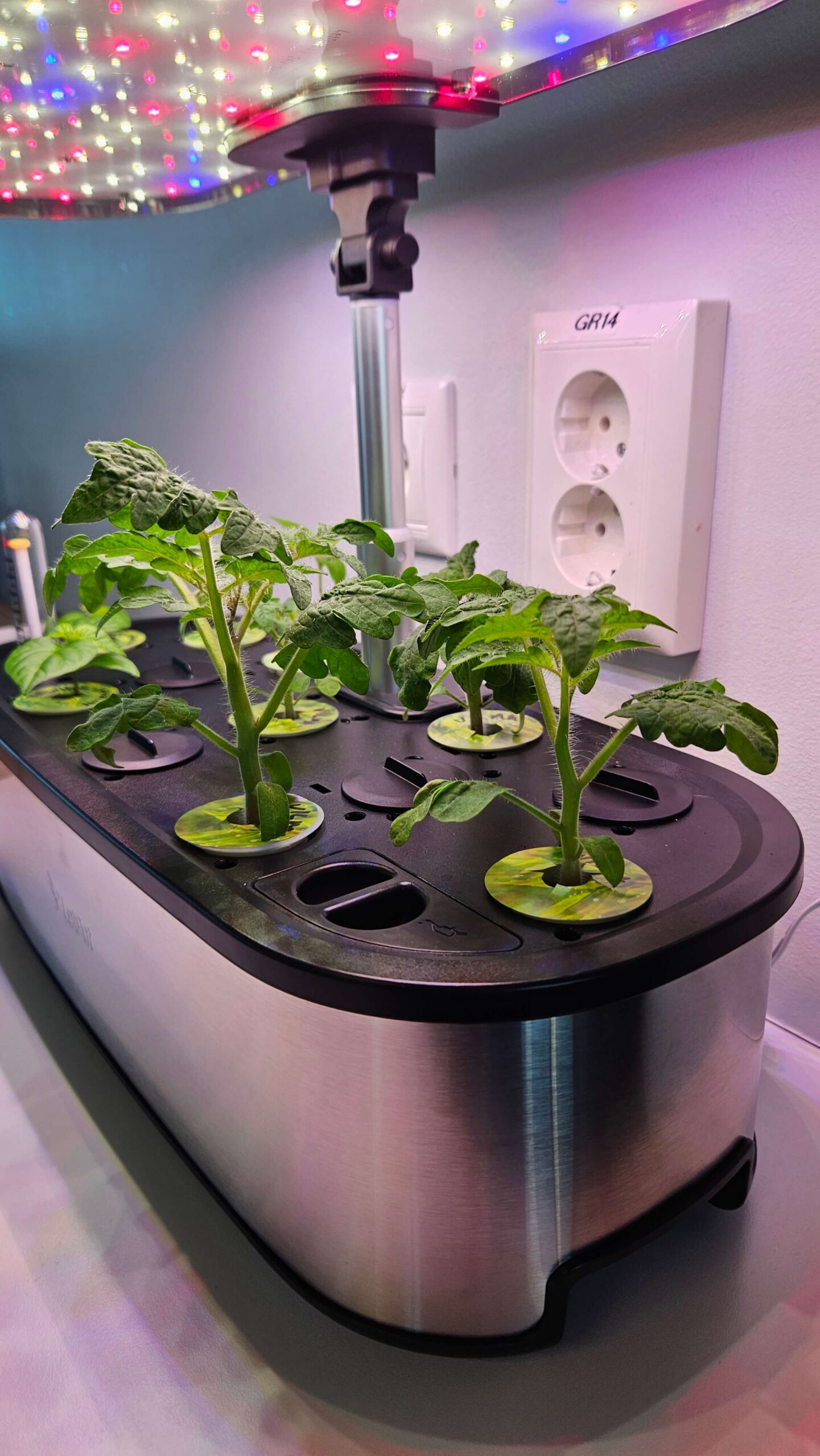
The single biggest lever is removing the swing between dry and flooded, not simply watering more. In a pot, that means checking the top few centimetres of compost regularly and giving a smaller amount more often rather than letting it dry hard and then soaking it once a week. In a smart garden, the equivalent failure mode is a reservoir that quietly runs close to empty for a day before the low-water alert gets noticed, so checking the tank a little ahead of the refill schedule matters more during fruiting than it did while the plant was still leafy. Our guide to EC in hydroponics covers how to check and adjust the strength of the solution itself, which matters here too, since a sudden jump in EC after a top-up can be as disruptive to calcium uptake as a dip in water level.
Prevention 2: feed for fruit, not leaves
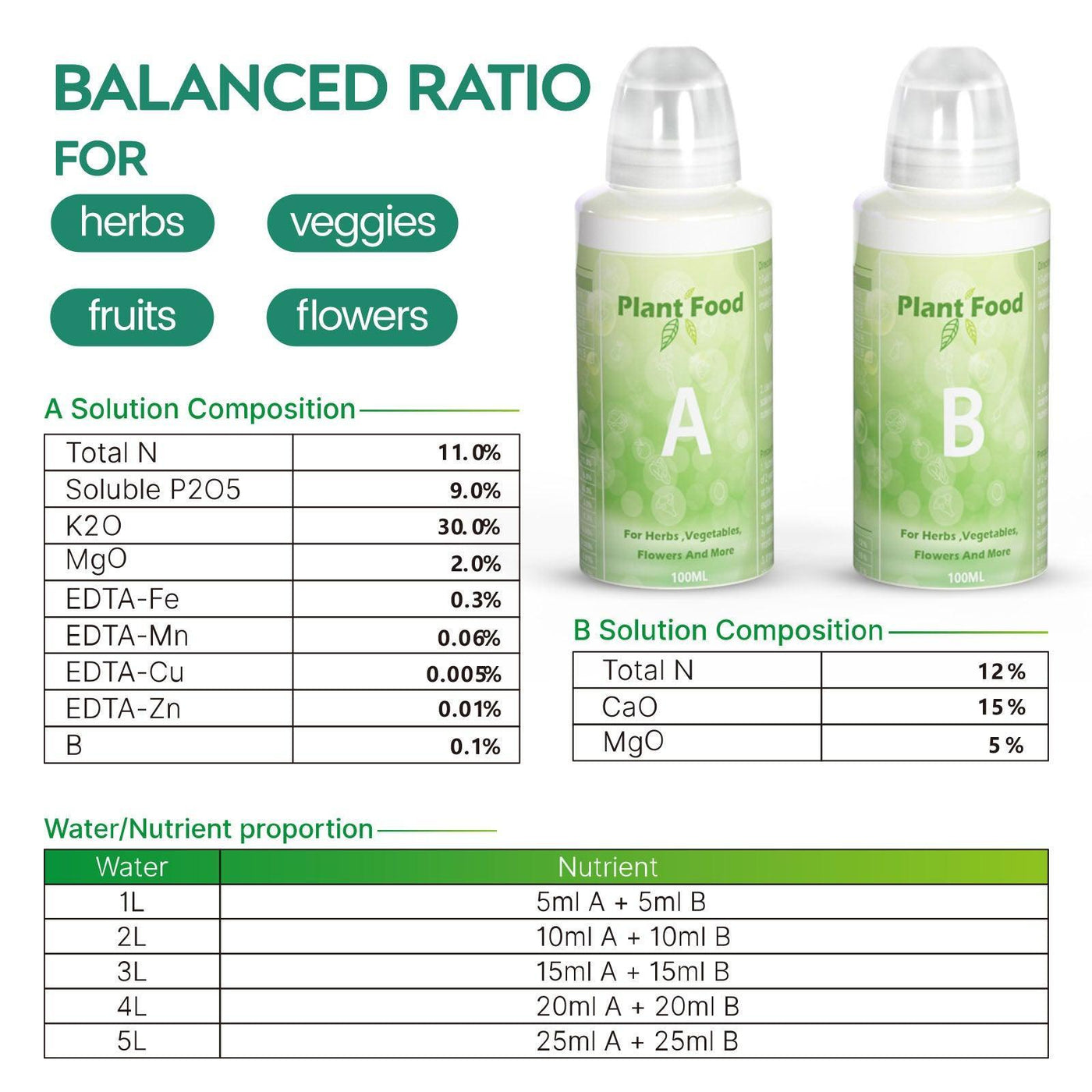
Excess nitrogen is the other common driver, because it pushes the plant into vigorous leafy growth that competes with the fruit for the calcium that is available, even when the total supply looks adequate on paper. A plant that is dark green, dense and still showing blossom end rot is usually overfed rather than underfed. Once the first trusses are visibly swelling, a lower-nitrogen, higher-potassium feed suits fruiting far better than the balanced or nitrogen-heavy mix that grew the plant’s early leaves. In hydroponics this usually means stepping the solution up in strength as flowering turns to fruiting, commonly to somewhere in the 2.0 to 4.0 mS/cm range that fruiting crops want, a step up from the roughly 1.2 to 1.6 mS/cm that suits basil and other leafy pods in the same system. Make that change gradually over a few days rather than all at once, since a sharp EC jump is its own version of the swing this whole guide is trying to avoid.
Prevention 3: choose a variety that handles the swing better
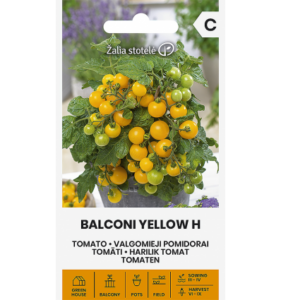
Some varieties are simply more prone to it than others. Elongated plum and paste types, and large single-fruited beefsteak varieties, are generally the quickest to show blossom end rot once conditions wobble, while compact cherry and dwarf types bred for pots and smart gardens tend to show less of it. Part of that is genuine variety difference, and part of it is that a smaller, cherry-type plant in a hydroponic reservoir is already growing in one of the more consistent watering environments available indoors, which removes much of the swing that triggers the disorder in the first place. Balconi Yellow H is a determinate cherry type bred to stay compact, which makes it a reasonable pick if blossom end rot has been a recurring problem with a taller variety in the past.
What to do with fruit that already has it
A tomato with blossom end rot will not heal, so there is no fix for that specific fruit beyond cutting the damaged end away and eating or composting the rest; the undamaged flesh is unaffected and fine to eat. The good news is that the disorder tends to ease off once water and feed settle down, and it is common for the first truss or two to carry most of the damage while later trusses on the same plant stay clean once the cause is corrected. Spraying calcium onto the leaves is a widely repeated home-garden tip that does little in practice, since calcium barely moves from a leaf surface into developing fruit; fixing the water and feed delivery at the root is what actually changes the next truss.
Spot it, fix it: a quick reference
| What you see | Most likely cause | Fix | Time to clean fruit |
|---|---|---|---|
| Brown, leathery patch on an otherwise healthy-looking plant | Compost or reservoir drying out between waterings | Water little and often, check the tank before it runs low | 1 to 2 weeks |
| Spot appears after a missed refill or a hot spell | Short gap in water supply during rapid fruit growth | Keep the reservoir topped up ahead of schedule while fruiting | 1 to 2 weeks |
| Large, dark green plant, several fruit affected | Too much nitrogen relative to calcium uptake | Switch to a lower-nitrogen, higher-potassium feed | 2 to 3 weeks |
| Recurs every season on the same tall variety | Variety more prone to the disorder | Try a compact cherry or dwarf type next sowing | Next crop |
| Checking your own setup | — | LetPot hydroponic nutrients, €17.99 | — |
Frequently asked questions
Can I eat a tomato that has blossom end rot?
Yes. Cut away the dark, sunken patch and the rest of the fruit is unaffected and fine to eat, as long as the remaining flesh looks and smells normal.
Does blossom end rot spread from one tomato to the rest of the plant?
No. It is a physiological disorder tied to how calcium reached that particular fruit while it was swelling, not an infection, so it cannot spread to other fruit or other plants.
Is blossom end rot really caused by a lack of calcium in the soil or solution?
Usually not. Most home gardens and nutrient solutions already contain enough calcium; the problem is almost always inconsistent water delivery or, in hydroponics, a pH drift that makes the calcium already present harder for the roots to take up.
Can a hydroponic smart garden still get blossom end rot?
Yes, though it is less common than in soil pots because the reservoir removes most day-to-day watering guesswork. It still shows up if the tank runs low between refills or the nutrient strength jumps sharply right as fruit is forming.
Why did only my first tomatoes get it, with later ones staying clean?
The first truss or two often sets fruit while the root system and watering routine are still settling in, which is exactly when a watering gap is most likely. Once the routine steadies, later trusses commonly avoid it even on the same plant.
Does spraying calcium on the leaves actually help?
Rarely. Calcium applied to foliage moves very little from the leaf into developing fruit, so a foliar spray mostly treats the symptom’s reputation rather than its cause. Correcting water and feed at the root is what prevents the next fruit from being affected.
Where to start
If a fruit has already turned, cut away the damaged end and focus on the next truss: check the reservoir or compost for consistency before anything else, then look at feed strength if the plant is lush and still affected. A compact tomato variety bred for indoor growing makes the whole job easier the next time around, since it pairs naturally with the steady watering a smart garden already gives it.

