Hydroponics basics come down to two numbers worth tracking — pH and EC. Most plants do well with a nutrient solution pH between 5.5 and 6.5, and according to Oklahoma State University Extension, tomatoes want an EC of 2.0 to 4.0 mS/cm, while most leafy greens and herbs do fine at a lower concentration.
Hydroponics tends to sound more complicated than it actually is. Plants grow in water carrying a mineral nutrient solution instead of soil, and the whole system comes down to three things: light, water, and a balanced feed. This guide covers how hydroponics differs from growing in soil, which smart garden to choose, what pH and EC actually mean, and how to set up and maintain your first system.
Products mentioned — in stock at IndoorGarden, shipped from Tallinn across the EU.
What separates hydroponics from growing in soil
Hydroponics means growing plants without soil — roots take up oxygen and nutrients directly from water rather than from the spaces between soil particles. According to University of Minnesota Extension, hydroponics uses less water than growing in soil and lets you grow all year round, regardless of season, since the whole process happens indoors. That doesn’t make soil the wrong choice — hydroponics simply gives more precise control over what reaches the roots.
Which smart garden to choose for your home
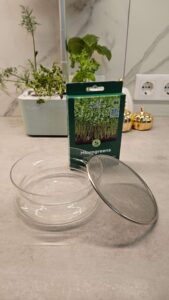
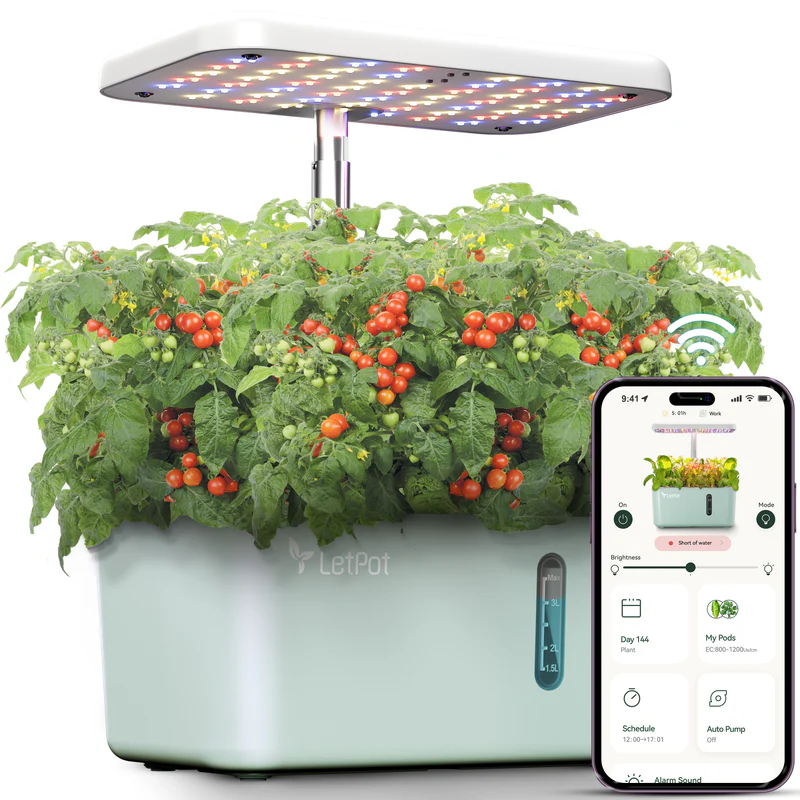
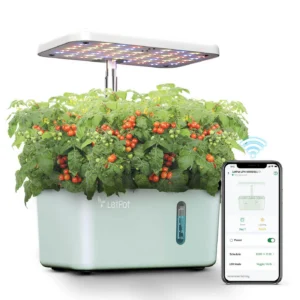
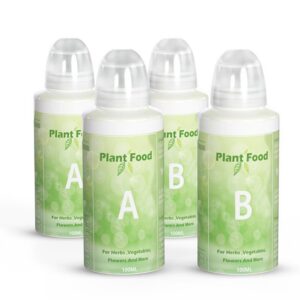
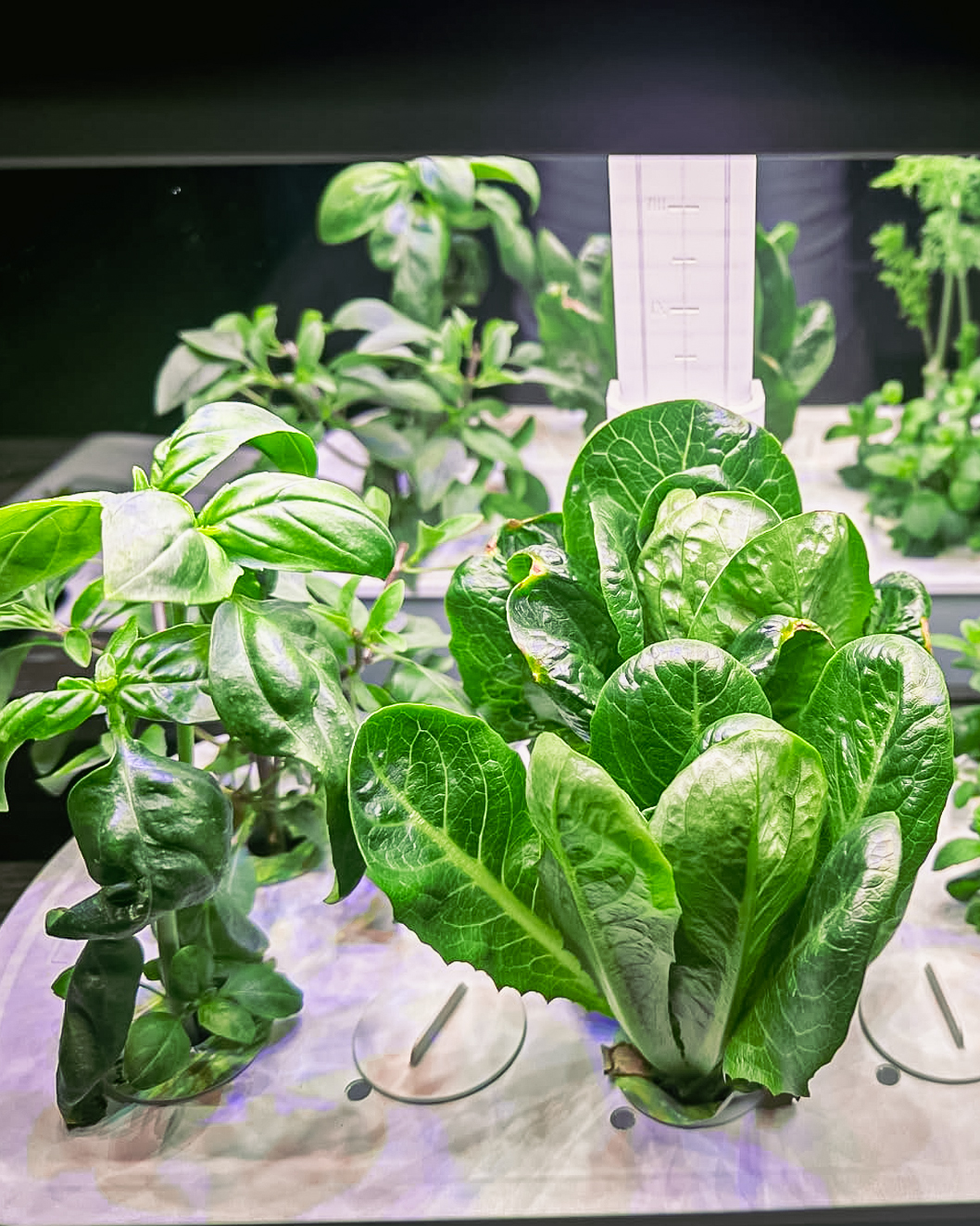
The simplest way to start is a ready-made smart garden, where the reservoir, light and timer are already in place — that way you don’t need to worry about pH or EC yourself at first, since the manufacturer has already set the nutrient dosing. The LetPot Mini 5-pod smart garden is one of the more compact options, fitting a narrow strip of kitchen counter and suited to a first attempt with herbs and salad greens. Herb seeds such as basil and parsley are usually the easiest place to start. If you want to get hands-on and sow your own seed, you’ll also need a suitable nutrient solution, such as LetPot liquid plant food, which you dose according to the growth stage.
pH and EC: the numbers that run hydroponics
pH shows how acidic or alkaline the nutrient solution is, and it directly affects how well roots can take up minerals. Most plants prefer a pH between 5.5 and 6.5; outside that range, some nutrients become unavailable to the roots even if there’s plenty in the water. EC, or electrical conductivity, shows how much dissolved mineral content the solution carries — tomatoes need 2.0 to 4.0 mS/cm by the figures above, while leafy greens and most herbs do fine at a lower level, roughly 1.2 to 1.8 mS/cm. In a ready-made smart garden these values are already set by the manufacturer, so as a beginner you don’t need to measure anything right away, but knowing what the numbers mean helps explain why a plant behaves the way it does.
How to set up your first hydroponic garden
Setup mostly follows the same order whether you’re using a ready-made smart garden or building a system yourself.
- Fill the reservoir. Ordinary tap water works unless it’s very hard, so fill the tank to the level the manufacturer specifies.
- Add the nutrient solution. A ready-made smart garden has the dosing pre-set by the manufacturer; in a DIY system, add nutrients according to the label and the EC your crop’s growth stage needs.
- Place the seed or plant in a grow sponge. Most seeds germinate better in a moist grow sponge than directly in water, and the sponge keeps the root zone oxygenated.
- Set the light schedule. Most leafy greens and herbs grow well on 12 to 16 hours of light a day; in a smart garden this usually runs automatically on a timer.
Light and schedule for beginners
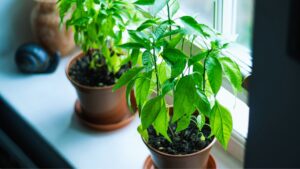
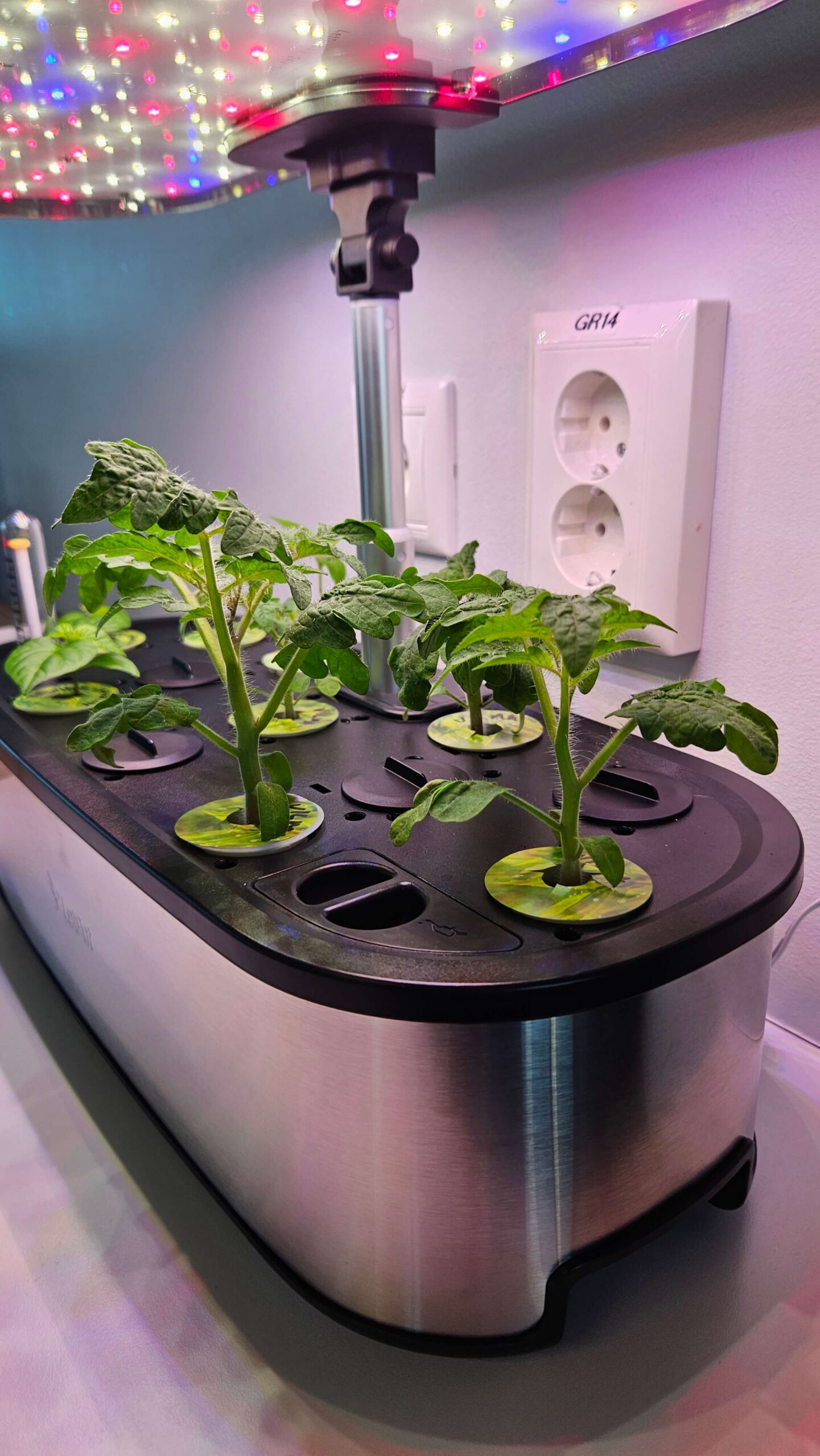
Light matters in hydroponics just as much as the nutrient solution, since without enough of it a plant can’t actually use the nutrients it’s given to grow. A Northern European windowsill in winter usually supplies too little light, especially from autumn to spring, which is why most smart gardens run a built-in full-spectrum LED on a fixed schedule regardless of the weather outside. Herbs and leafy greens generally do well on 12 to 14 hours a day, while fruiting plants such as tomato and chilli want more — typically 14 to 16 hours and stronger light — since flowering and fruiting demand more energy from the plant.
Maintenance and common beginner mistakes
Hydroponics needs less hands-on work than gardening in soil, but a few things are still worth putting on a schedule. The reservoir typically needs refilling every one to three weeks, depending on the model and how many plants are running, and the nutrient solution is worth replacing every couple of weeks rather than just topping up with plain water, since the mineral balance shifts over time. The most common beginner mistake is leaving the nutrient solution unchanged for too long without checking why growth has slowed — yellow or pale leaves usually point to a nutrient shortage. The second common mistake is leaving the reservoir exposed to direct light, which encourages algae growth; most smart gardens are designed so the tank stays shaded for this reason. You’ll find more nutrient solution and accessories in our hydroponic fertilisers category.
Which smart garden suits which household
The choice mostly comes down to two questions: how many plants you want growing at once, and how much counter space you actually have free.
| Model | Pods | Reservoir | Price |
|---|---|---|---|
| LetPot Mini | 5 | 1.5 L | €59.00 |
| LetPot Senior | 12 | 5.5 L | €129.00 |
| LetPot Max | 21 + 2 | 7.5 L | €249.00 |
Frequently asked questions
Is hydroponics faster than growing in soil?
Often, yes, since roots don’t need to search through soil for nutrients and take them up directly from the water instead. Speed still depends on the species and the amount of light, not just the growing method.
What plants can you grow hydroponically?
Herbs, leafy salad greens and microgreens are the easiest to succeed with. Compact fruiting plants such as cherry tomatoes and chillies also work, but need more light and taller growing clearance.
How often does a smart garden’s reservoir need refilling?
Usually every one to three weeks, depending on the model’s tank size and how many plants are growing. A larger reservoir means refilling less often.
Do you need separate equipment to measure pH and EC?
A ready-made smart garden has these values already set, so as a beginner you don’t need to buy a meter straight away. If you build your own system, a simple pH and EC meter helps keep the nutrient solution in the right range.
Does hydroponics work for larger plants like tomatoes?
Yes, as long as the smart garden has enough grow height and light strength. Compact tomato varieties suit it better than large outdoor varieties, which grow too tall.
What should I do if a plant’s leaves turn yellow?
The most common cause is a nutrient shortage or an unbalanced solution. Check first whether the nutrient solution has been changed recently, then look at light and water level.
Where to start
The easiest way into hydroponics is a ready-made smart garden where the light and nutrient schedule are already set up — the LetPot Mini is a good fit, since it needs little counter space and gives a first result within a few weeks. If you want to see the whole range before deciding, every model is listed in our smart gardens category. Every product ships from our Tallinn warehouse across the EU.