Succession planting cilantro indoors means sowing a small new batch every 1 to 3 weeks instead of one big tray, because a single planting bolts and stops giving usable leaves within weeks. Oregon State University Extension and the University of California’s Master Gardener Program both recommend this rotation for a steady, continuous harvest.
Cilantro is one of the fastest herbs to go from a full handful of leaves to a flowering, bitter stalk, which is why a single tray sown in January rarely has much left to cut by March. The plant’s whole strategy is to flower and set seed as soon as light and warmth allow, so one sowing simply runs out of leaf before most kitchens run out of uses for it. This guide covers how often to start a new batch, what the first two weeks look like, and how to keep a rotation running in a pot or a smart garden pod without losing track of which batch is which.
Products mentioned — in stock at IndoorGarden, shipped from Tallinn across the EU.
Why cilantro needs succession sowing rather than one big batch
Cilantro is an annual herb that races through its whole life cycle once it senses the conditions for flowering, and Oregon State University Extension notes that in warm weather it typically bolts into flower and sets seed within four to six weeks, while the same plant grown in cooler, shorter days can keep producing leaves for several weeks or months before doing the same thing. A heated kitchen running at a steady 20–24°C can behave like early summer as far as the plant is concerned, which is why an indoor planting often bolts faster than people expect from a single sunny windowsill. Once a plant commits to flowering, cutting it back does not reset the clock — the leaves that regrow are sparse and feathery rather than full and flat. Succession sowing sidesteps the problem entirely: instead of asking one planting to outlast its own biology, a new small batch is already coming up by the time the older one turns bitter.
How often to start a new sowing
The University of California’s Master Gardener Program of Sonoma County recommends succession planting every 1 to 3 weeks for continuous leafy growth, and Oregon State University Extension describes the same approach as small batches sown every few weeks rather than one large sowing. Indoors, where a pot or a smart garden pod holds far less than a garden row, the practical version of that advice is to start a fresh pinch of seed roughly every 10 to 14 days. That cadence usually means one planting is just germinating while another is a few weeks from its first cut, and a third is already past its best and ready to come out. Writing the sowing date on a small label or in a phone note is worth doing from the first batch onward, since cilantro at two different ages can look confusingly similar until one of them bolts.
Germination and the first two weeks indoors
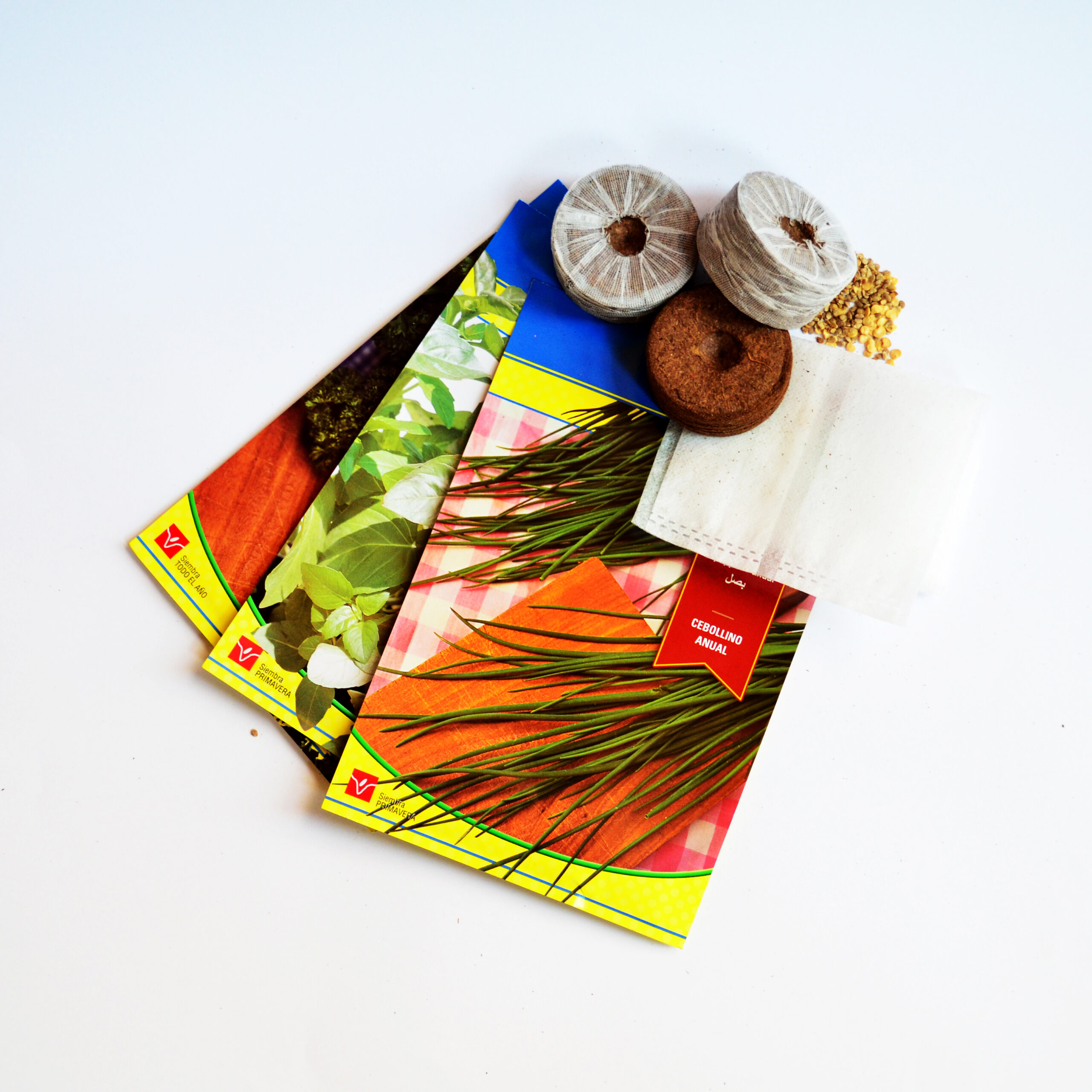
Both Oregon State University Extension and the UC Master Gardener Program recommend sowing cilantro seed about 0.5 to 1.3 cm deep directly into its final container, since the plant forms a long taproot early on and rarely recovers well from being moved as a seedling. Most growers report germination within roughly 7 to 10 days when the growing medium sits around 18–21°C, a touch slower in a cooler room and faster in a warm one. The UC Master Gardener Program thins seedlings to about 7 to 10 cm apart once they appear, which works well in a single pot or across two or three cells of a hydroponic tray. Keeping the medium evenly moist in these first two weeks matters more than it does later, since irregular watering is itself one of the triggers the UC Master Gardener Program lists for early bolting — a seed tray that dries out and gets soaked again is already nudging the plant toward flowering before it has grown much to cut.
Keeping the rotation from bolting before you can harvest it
Cilantro is generally treated as a cool-season herb, and keeping a planting below roughly 22–24°C for as much of the day as practical is one of the simplest ways to slow the shift into flowering, since Oregon State University Extension ties faster bolting directly to warmer temperatures and longer days. A spot away from a radiator, an oven, or a sunny afternoon window does more for a rotation’s lifespan than any feeding routine. Watering on a steady schedule rather than letting the medium swing between bone dry and saturated is the other half of the UC Master Gardener Program’s advice, and it is easy to manage in a small pot since there is little buffer either way. None of this stops a planting from eventually bolting — it is an annual herb and will flower regardless — but a cooler spot and steadier watering buy real extra weeks of leaf from each batch, which is exactly what a succession schedule is built to use.
Running the rotation in a pot or a smart garden
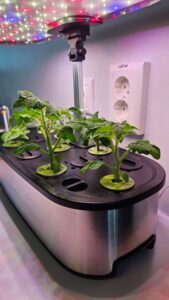
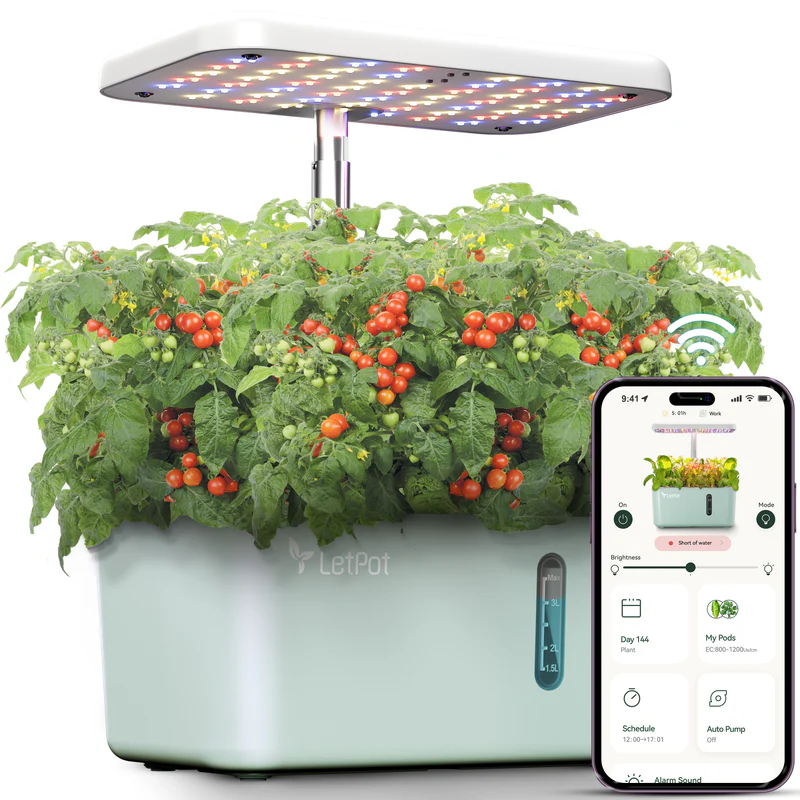
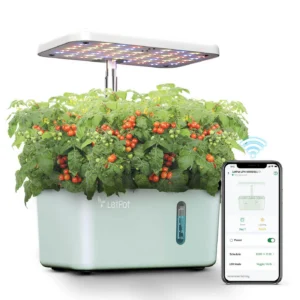
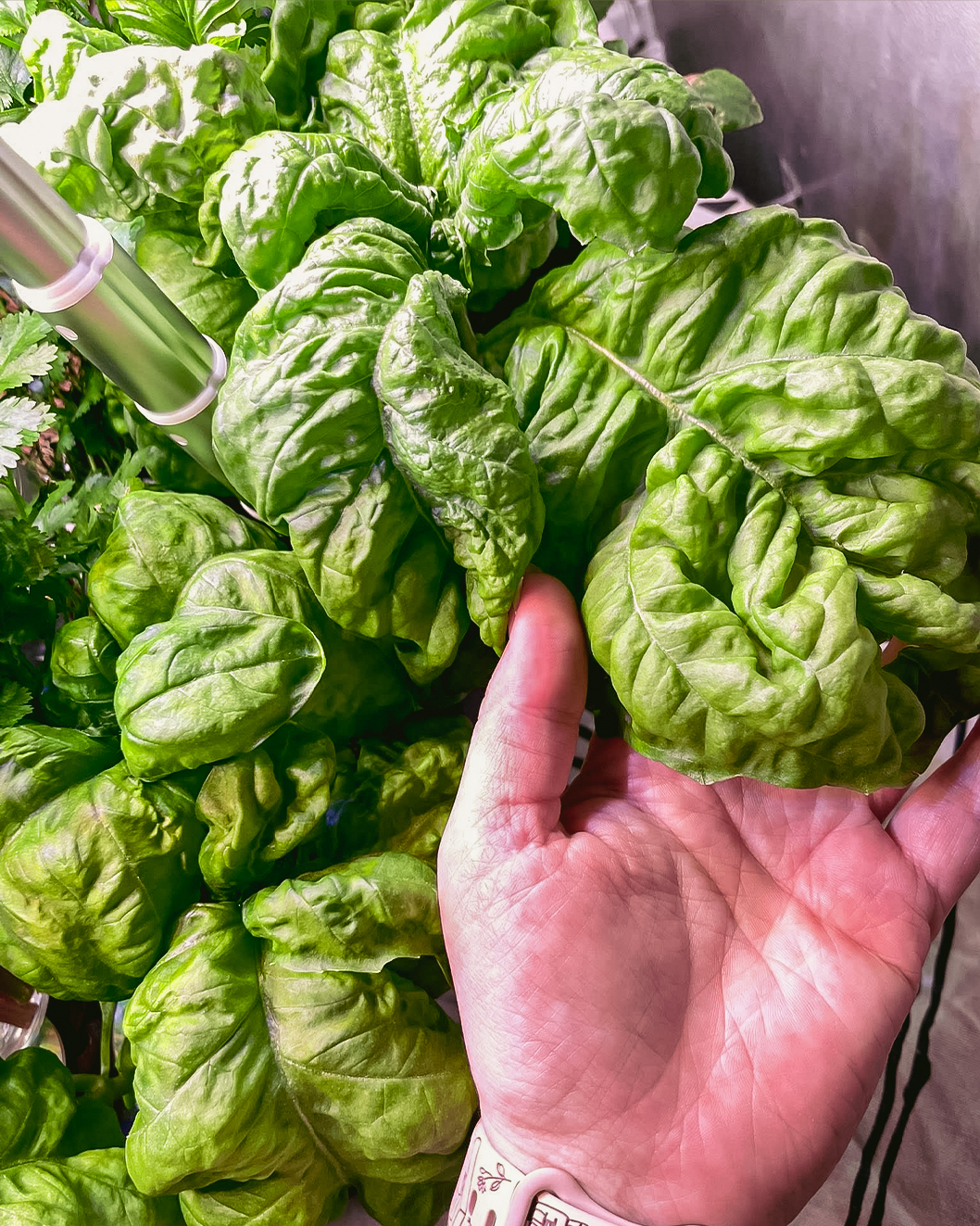
A windowsill rotation works with two or three small pots on a simple cycle: sow one, and by the time its neighbour is ready to come out, the new one is a couple of weeks along. A hydroponic pod system makes the staggering easier to see at a glance, since each pod is a separate, labelled planting rather than a shared tray. In a 5-pod LetPot Mini, sowing one pod every 10 to 14 days means two or three pods are usually producing cuttable leaves at once while the rest are either just germinating or already pulled for the next batch, rather than the whole unit flowering at the same time. The reservoir and timer keep light and moisture steady across every pod regardless of which one was sown last, which removes the uneven watering that the UC Master Gardener Program flags as a bolting trigger in the first place. Other fast herbs such as dill and cress suit the same rotating approach if cilantro alone does not fill every slot.
What to do once a batch bolts anyway
A bolted plant is not wasted. The same University of California guidance notes that the flowers draw beneficial insects, and left a little longer the plant sets seed that can be dried and used as coriander, so pulling a flowering pot the moment it turns is a choice rather than a requirement. If the goal is leaves rather than seed, though, it is simplest to treat a bolted planting as the signal to clear that pod or pot and start the next sowing in its place, keeping the rotation moving rather than waiting to see whether a few more leaves appear.
A simple rotation to copy
This is one way to stagger three plantings so there is almost always something to cut.
| Day | Action | What’s happening elsewhere in the rotation |
|---|---|---|
| Day 0 | Sow batch A | — |
| Day 10–14 | Sow batch B | Batch A is germinating or a few cm tall |
| Day 20–28 | Sow batch C | Batch A nearing first cut, batch B germinating |
| Day 35–50 | First cut from batch A, sow replacement | Batch B growing on, batch C germinating |
| Ongoing | Cut, resow, repeat every 10–14 days | Two to three batches always overlapping |
Frequently asked questions
How often should I start new cilantro seeds indoors?
Roughly every 10 to 14 days for a pot or pod rotation, which sits within the 1 to 3 week interval the UC Master Gardener Program recommends for continuous leafy growth.
Can I just keep cutting the same cilantro plant instead of resowing?
For a little while, yes, but cilantro is an annual that bolts on its own schedule regardless of how it is cut, so every planting eventually stops giving useful leaves. Succession sowing is what keeps the overall supply steady, not any single plant.
Why does my indoor cilantro bolt so quickly?
Warm temperatures and uneven watering are the two triggers most often cited by university extension guidance. A room that runs warm for several days, or a pot that dries out and then gets soaked, both push the plant toward flowering earlier than it otherwise would.
How long does cilantro take to germinate indoors?
Most growers report seedlings appearing within about 7 to 10 days at a growing medium temperature around 18–21°C, a little longer in a cooler room.
Can I run a cilantro succession rotation in a smart garden?
Yes. Sowing one pod every 10 to 14 days in a multi-pod system keeps several batches at different stages at once, and the shared reservoir and light timer give every pod the same steady conditions regardless of when it was sown.
What should I do with cilantro once it flowers?
Either let it finish and collect the seed as coriander, since the flowers also attract beneficial insects, or pull the pot and start the next sowing in its place if fresh leaves are the goal.
Where to start
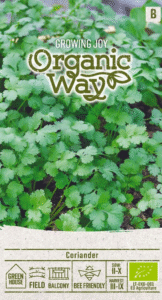
A succession rotation starts with a single small sowing, so there is no need to plant a large batch to get going — a pinch of coriander seeds every 10 to 14 days is enough to keep a steady supply coming. Browse the full herb seed range for other fast crops to rotate alongside it, and use our free indoor gardening tools to check whether your spot gets enough light for a steady rotation. All seeds ship from our Tallinn warehouse across the EU.