
An indoor garden in a care home or day centre works best as a small, fixed routine: a countertop hydroponic unit or a wall-mounted vertical planter that one or two residents tend each day, offering touch, smell and taste without soil, bending or sharp tools. A 2024 study found mood and communication improved over ten weeks of horticultural sessions compared with other scheduled activities, though results vary by person and by programme.
Many care homes and day centres already run gardening or sensory activities, but outdoor beds depend on weather, season and staff availability, and raised beds still involve soil, kneeling and tools that do not suit every resident. An indoor, soil-free setup removes most of that friction: it sits on a counter or against a wall, runs on a low-voltage LED, and needs no digging. This article covers what a realistic routine looks like, how to make the space accessible, what research on horticultural activity actually shows, and which setup fits a shared care setting.
Products mentioned — in stock at IndoorGarden, shipped from Tallinn across the EU.

What counts as an indoor garden in this setting
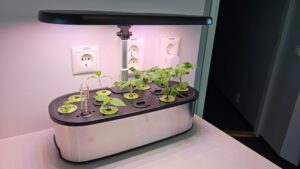
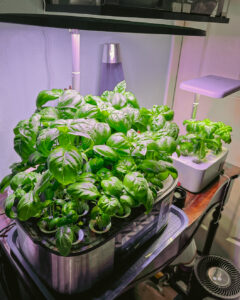
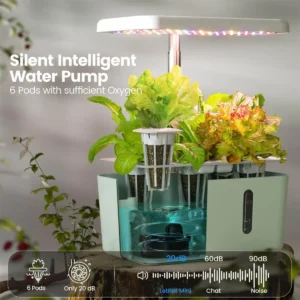
An indoor garden for a care home or day centre is usually one of two things: a self-contained smart garden that grows herbs or leafy greens hydroponically, in water rather than soil, or a wall-mounted vertical planter with its own watering system. Both run on mains power through a low-voltage adapter, hold their own water and nutrient reservoir, and use a built-in LED light rather than a sunny window, so placement is not limited to a conservatory or south-facing room. Staff add seed pods and top up the reservoir every one to three weeks depending on the model, while residents handle the parts that carry no risk: touching leaves, smelling herbs, and picking a harvest.
Building a routine staff can actually keep
A unit nobody refills becomes a dead plant on a shelf within a month, so the routine matters more than the equipment. A workable pattern is one named staff member per shift who checks the water level and any app reminder, a fixed day each fortnight for topping up nutrients, and a separate, scheduled harvest-and-taste session rather than letting residents pick at will. Budget roughly 10-15 minutes of staff time a week for refilling and light pruning, on top of whatever time the group activity itself takes. A Wi-Fi vertical planter needs less routine attention than a tabletop hydroponic unit, since its irrigation timer runs on its own; the trade-off is that residents have less to actually do day to day.
Making the space accessible
A unit that sits on a standard table or counter avoids the bending and kneeling that rule out raised outdoor beds for residents with limited mobility. Check three things before choosing a spot: a grounded socket within reach of the cable so nothing runs across a walkway, a surface residents can approach from a seated position, and an LED angled away from anyone’s eyeline. None of these units contain sharp tools, open soil or loose chemicals; the growing medium is a small foam or coir sponge, and nutrients stay in a sealed reservoir inside the unit. Confirm your own institution’s accessibility and health-and-safety guidance before installing one, since requirements differ between countries and facility types. For a quote covering several units across several facilities, our contact page is the quickest way to reach us.
What research says about horticultural activity and wellbeing
Horticultural therapy programmes — structured, staff-led gardening activities, usually run in small groups — are one of several non-drug approaches used alongside standard dementia care. A 2024 study across day centres and a care community in Israel found residents showed better mood and more communication during ten weeks of horticultural sessions than during other scheduled activities, measured through observation rather than self-report. An earlier review led by the University of Exeter found a promising reduction in agitation among UK care home residents with regular access to a garden, alongside a reminder that gardens need to offer a range of experiences to suit different needs. These are findings about structured activity, not a claim that any single product produces a therapeutic effect on its own — a countertop unit or vertical planter is a tool that supports the kind of sensory, hands-on activity these programmes use, not a substitute for a trained facilitator or a planned programme.

What to grow first
Start with something that shows visible progress within a week or two, so residents see a result before interest fades. Garden cress seeds germinate in a sprouting bowl in about a week and need no electricity at all, which makes cress a low-cost way to trial the idea before any unit is purchased. Leaf lettuce and basil are the next step up in a hydroponic unit, reaching a first harvest in roughly three to four weeks and giving a repeatable pick-and-taste activity. Stick to edible, familiar crops from a known list rather than ornamental houseplants, since some common ornamentals are unsuitable where residents may put leaves in their mouths.
Which setup fits a group setting
| Option | Best for | Capacity | Price | What it needs |
|---|---|---|---|---|
| Garden cress seeds | A first trial, no budget approval needed | One bowl per session | 1,39 € | No power; water change every day or two |
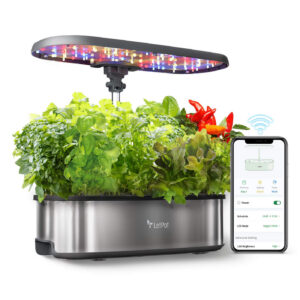
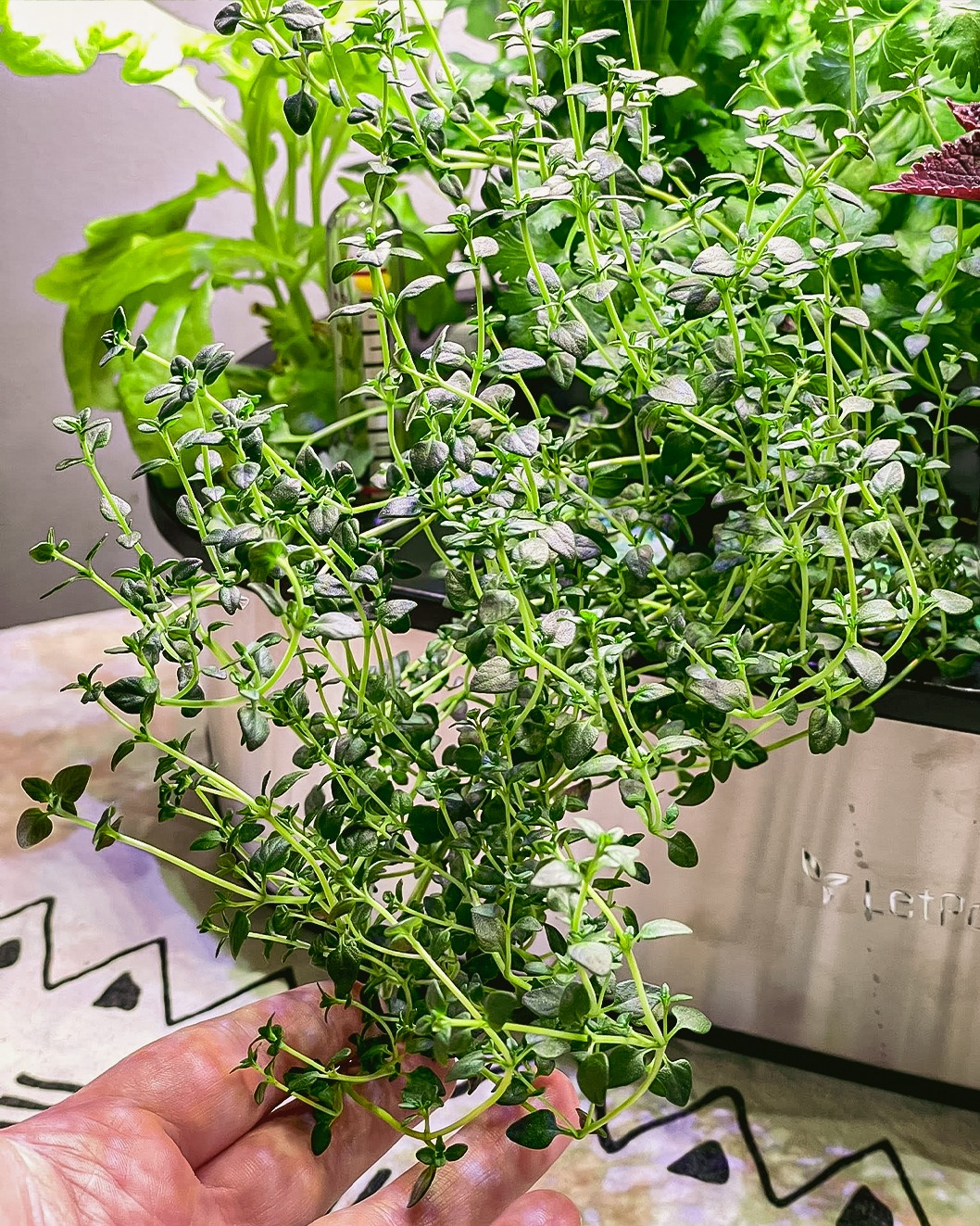
| LetPot Senior 12-pod | A small group tending herbs and greens together | Up to 12 plants | 129,00 € | Mains power, nutrient top-up roughly every 14 days |
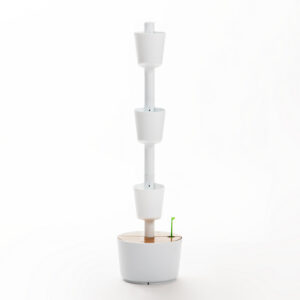
| CitySens vertical planter, 3 pots | A wall feature in a shared lounge or corridor | 3 pots | 189,00 € | Mains power, Wi-Fi for the watering timer, occasional soil top-up |
Frequently asked questions
Is horticultural activity proven to help people with dementia?
Several peer-reviewed studies report better mood, lower agitation or more communication during horticultural sessions compared with other scheduled activities, though sample sizes are often small and results vary with dementia severity and activity design. Treat it as a promising, low-cost activity rather than a guaranteed clinical outcome.
Do residents need gardening experience to take part?
No. The unit handles light, water and nutrient timing automatically, so a resident’s role is limited to sensory contact — touching, smelling and harvesting — rather than technical plant care.
How much staff time does a small hydroponic unit take each week?
Budget around 10-15 minutes for reservoir top-ups and occasional pruning, separate from whatever time is set aside for the group activity itself. A Wi-Fi vertical planter needs slightly less routine attention, since its watering timer runs on its own.
Is it safe to have water and electrical units around residents with mobility or cognitive difficulties?
The units run on a low-voltage adapter, keep nutrients in a sealed reservoir, and contain no sharp tools, so the main precautions are cable placement and supervision during sessions, following your institution’s own safety guidance.
What should a day centre grow first?
Garden cress or another fast microgreen is the easiest and cheapest way to trial an indoor growing activity before committing to a powered unit, since it germinates in about a week with no electricity involved.
Can residents who use wheelchairs take part?
A countertop unit placed at table height and approached from a seated position suits wheelchair users better than an outdoor raised bed. Confirm reach and clearance for your own furniture and unit before the first session.
Where to start
For most care homes and day centres, the practical starting point is a cheap, low-risk trial: a bowl of garden cress seeds run for one or two sessions to see how residents respond, before deciding whether a powered smart garden is worth the budget. If the trial goes well, a 12-pod unit gives a small group something to tend together without the bending or tools that rule out an outdoor bed.