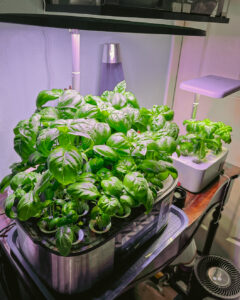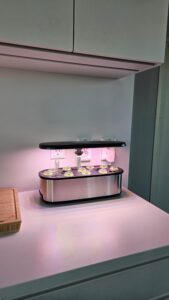
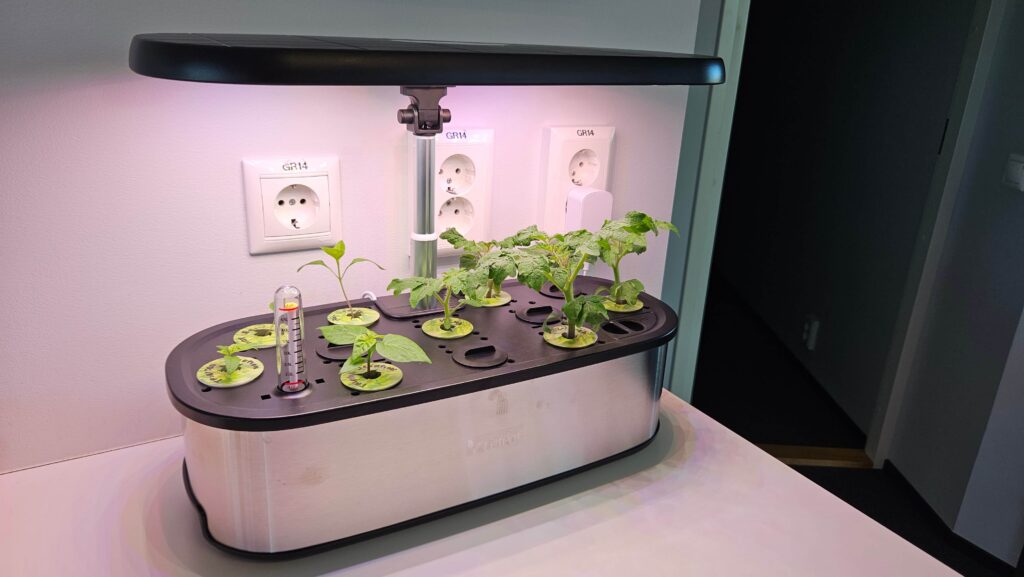
A smart hydroponic garden on the breakfast counter gives guests fresh herbs they can see growing, rather than cut sprigs sitting in a bowl. Because the plant stays alive and uncut until someone snips a leaf, it falls outside the display-time limits that apply to prepared food under EU hygiene rules, which commonly cap chilled ready-to-eat items at around four hours out of refrigeration.
Breakfast is the one meal almost every guest experiences, and a visible herb garden on the buffet or at a show-cooking station signals freshness in a way a bowl of pre-cut garnish cannot. It also removes a food-safety variable from the morning routine: a living plant, trimmed to order, is not yet a prepared dish, so it does not sit on the same clock as cut produce left out on a buffet line. This guide covers which models fit a breakfast counter, the hygiene routine behind one, what it costs to run, and which herbs guests will actually recognise.
Products mentioned — in stock at IndoorGarden, shipped from Tallinn across the EU.
Why a hotel breakfast is a good place for a growing herb garden
A buffet or show-cooking counter is usually judged on how fresh it looks as much as how it tastes, and a tray of basil or chives still rooted in their pods reads differently to a guest than a bowl of pre-cut garnish sitting under a heat lamp. It also gives the kitchen a visible talking point at a station that otherwise looks the same every morning. None of this requires a large installation — a single counter unit growing two or three herb varieties is enough to make the point.
Which smart garden fits a breakfast counter or show-cooking station
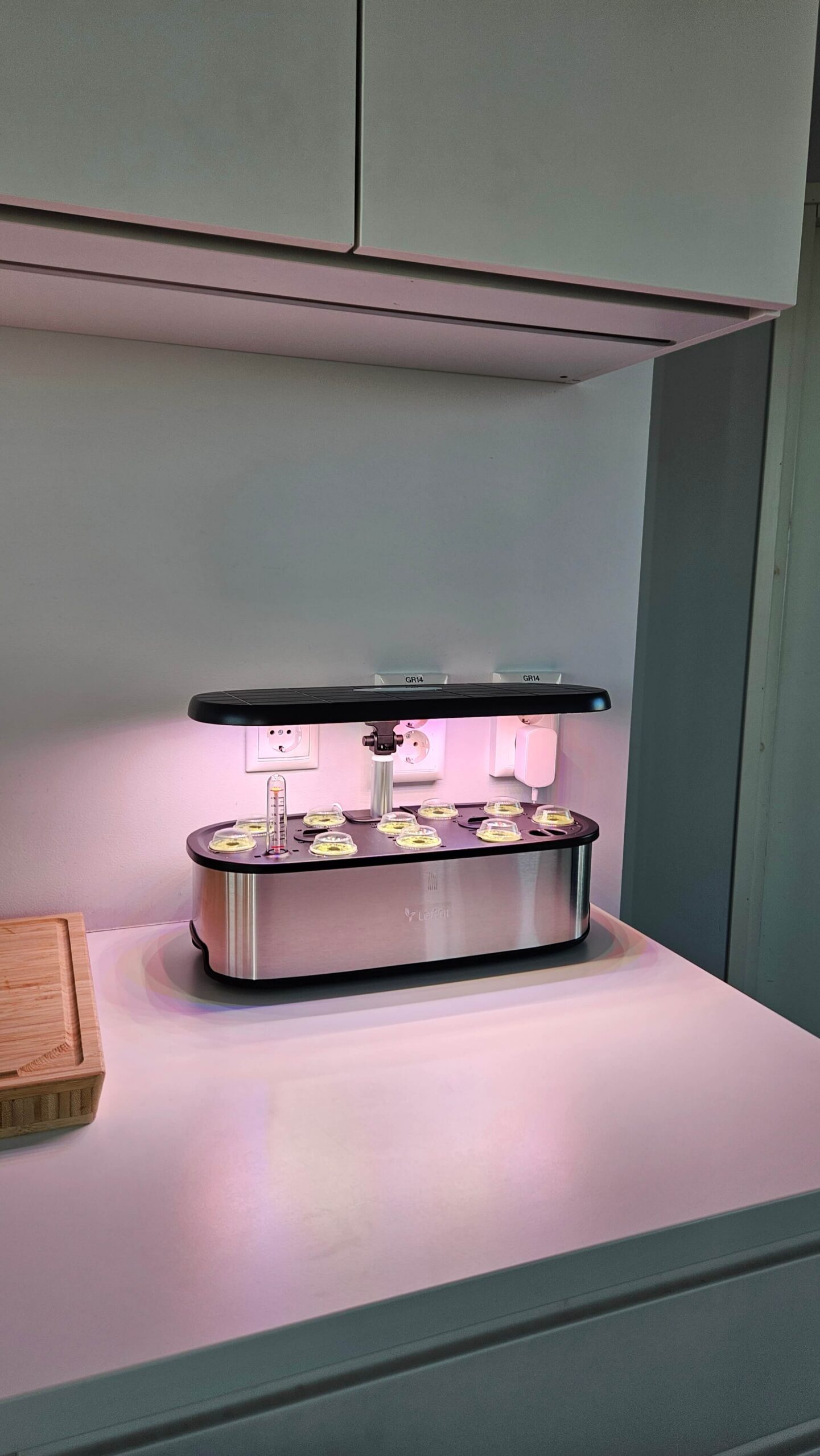
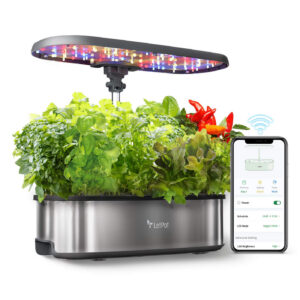
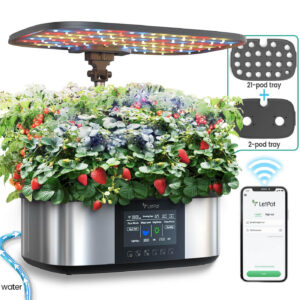
For a single counter position, the LetPot Senior holds 12 plants, grows up to 76 cm tall and runs a 24 W full-spectrum LED with a 5.5 L reservoir, which is enough for a steady rotation of basil, parsley and chives without daily topping up. Where breakfast service covers more guests or a show-cooking station wants more visual presence, the LetPot Max scales up to 21 plants with a 36 W light and a 7.5 L tank, in a footprint of roughly 43 × 29 cm. Both run from their own buttons without needing the companion app, which matters in a kitchen where staff turnover is common and nobody wants to be the one account holder tied to a plant pot.
Why a growing plant skips the usual buffet food-safety clock
EU hygiene legislation (Regulation (EC) No 852/2004, Annex II, Chapter IX) requires that once a food is prepared, the cold chain is not interrupted except for limited periods, and most national guidance built on it treats a cut, ready-to-eat item on display the way a buffet treats any chilled dish: typically allowed out of refrigeration for a few hours before it has to be discarded rather than topped up. A bowl of snipped basil or chives counts as prepared food from the moment it is cut, so it falls under that same clock like any other garnish. A smart garden avoids the question for as long as nothing has been removed from the plant, because it is a growing plant on the counter rather than a dish already on display. The point of risk shifts to the moment someone actually cuts a leaf, which is also the moment the herb tastes and looks its best.
The hygiene routine: what staff actually do each day
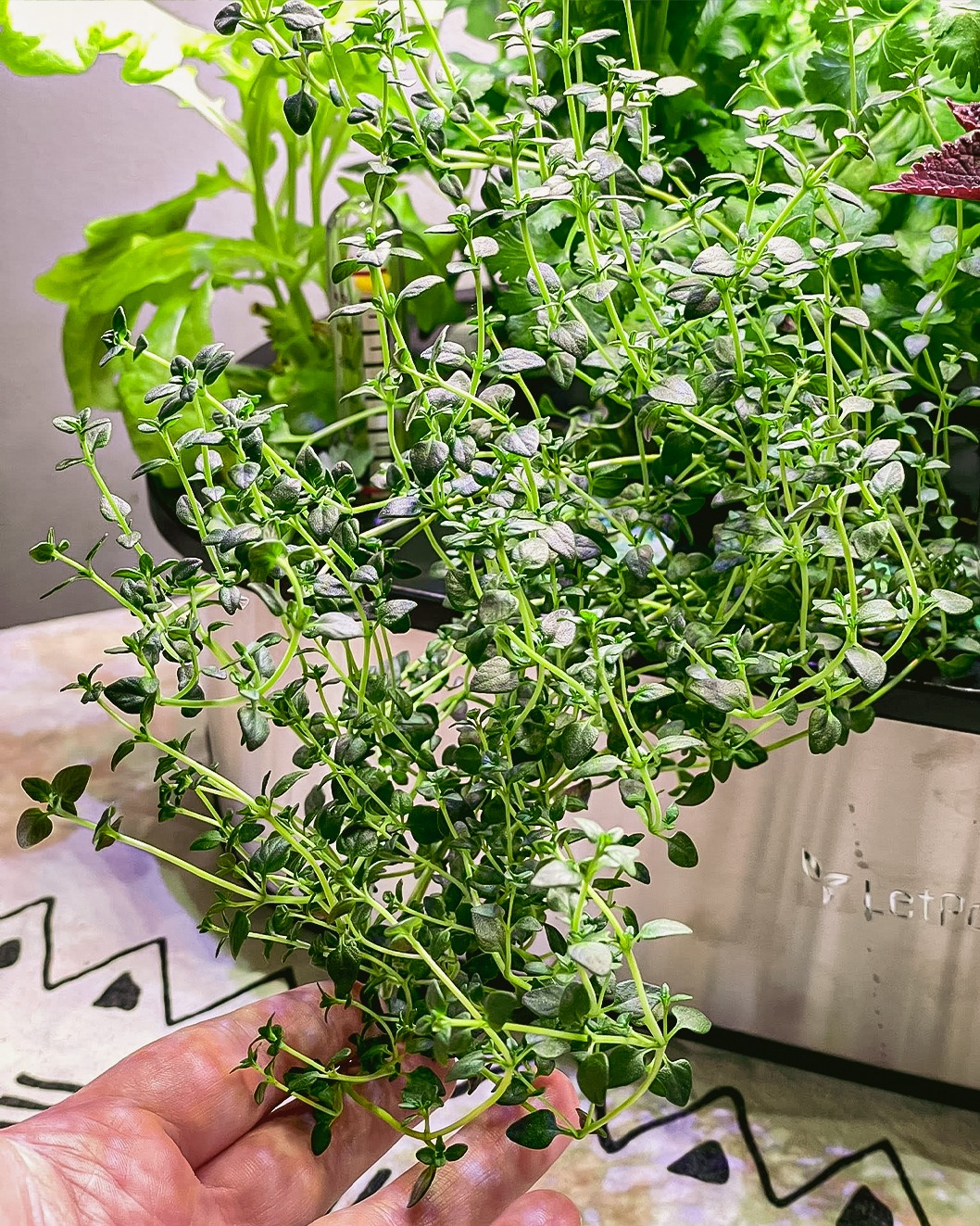
The plant itself needs the same light upkeep as any smart garden: refilling the water and nutrient reservoir every one to three weeks, pruning growth that outgrows the unit, and cleaning the tank between crop cycles. What changes in a food-service setting is the cutting step. General buffet guidance is consistent on one point — never top up a dish that has already been sitting out, and discard anything left exposed rather than mixing it in with a fresh batch. The same logic favours cutting straight from the plant into the dish at the point of service, rather than pre-cutting a bowl of herbs early in the morning and letting it sit through the whole breakfast period. A pair of clean scissors kept at the station and used only for that job is the simplest way to keep the one cutting step hygienic, and it is worth treating that tool the same way as any other shared serving utensil — cleaned between shifts, not left loose on the counter.
What it costs to run, and which herbs guests will use
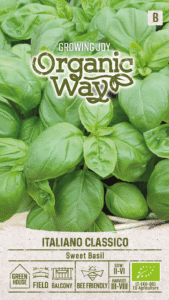
At roughly €0.25 per kWh and 16 hours of light a day, a 24 W unit such as the Senior costs around €2.90 a month to run, and the 36 W Max around €4.30 — small enough that most hotels will fold it into general kitchen electricity rather than track it separately. Basil seed pods cost a couple of euros per variety and typically seed several growing cycles, so seeds and nutrient solution are the main ongoing consumables. The larger cost is staff time, though it is a small one: someone has to notice when the reservoir runs low and top it up, usually folded into the same rounds as restocking jam or topping up the coffee machine rather than treated as a separate task.
Basil, chives and parsley from our herb seed range are the most useful picks for a breakfast counter because guests recognise them on sight and know what to do with them on eggs, tomatoes or avocado without needing a label. Mint works well positioned next to a fruit or yoghurt station rather than the savoury side. Chilli is best kept off an unsupervised buffet, since the varieties grown hydroponically carry real heat and a surprised guest is not the impression a breakfast room wants to leave. Rotating two or three herbs through the pods, rather than filling every slot with the same crop, keeps the display looking full as plants are cut back and regrow.
| Model | Plant capacity | Max height | Light power | Price |
|---|---|---|---|---|
| LetPot Senior | 12 | 76 cm | 24 W | 129,00 € |
| LetPot Max | 21 | 76 cm | 36 W | 249,00 € |
Frequently asked questions
How many breakfast covers can one system realistically supply?
A 12-pod unit growing basil, chives and parsley gives a modest handful of fresh herbs available at any one time, not enough for a large buffet, so most hotels use it as a visual and flavour accent at a garnish or show-cooking station rather than the kitchen’s sole herb source. A 21-pod Max stretches further but still works best as a supplement to kitchen-prepped herbs on the busiest mornings, not a replacement for them.
Does a growing herb garden need the same food hygiene paperwork as a buffet dish?
The plant itself is not a prepared food, so it does not sit under the display-temperature rules that apply once something has been cut and set out. The cutting step is where ordinary food hygiene practice applies: clean tools, clean hands, and cutting straight into the dish rather than onto an open surface where trimmings could sit around.
How often does the reservoir need refilling?
Every one to three weeks depending on the model and how warm the room runs, with an indicator on the unit prompting a top-up before the tank runs dry.
Is the pump too noisy for a quiet breakfast room?
The pump cycles in short bursts of roughly 15 to 30 seconds every few hours and registers at around 30 to 40 dB at its loudest, quieter than normal conversation, so it is rarely noticeable against breakfast-room background noise.
What happens if nobody tops it up for a day or two?
Nothing dramatic. The reservoir holds enough water for the plants to keep growing for several days past the recommended refill window, and the main effect is slower growth rather than dead plants.
Can the unit sit on an open buffet counter rather than behind the pass?
Yes, that is the point of using one at breakfast. Keep it clear of where guests could reach into the water reservoir, position it away from hot-holding equipment and spills, and treat the cutting tool the same way as any other shared serving utensil.
Where to start
For most breakfast counters, the LetPot Senior is the practical starting size, with enough variety for a garnish station without outgrowing a typical counter footprint. Browse the full range in our smart gardens category, or get in touch through our contact page for a quote on multiple units across several properties.