
A smart garden works well for a kindergarten growing project because the hydroponic system gives a quick, reliable result even in the darkest months — most fast-growing microgreens, cress among them, reach a harvestable size under LED light within about a week, while the same crop on a windowsill often takes longer.
Growing plants with a kindergarten group gives children a hands-on link to food and to the rhythm of the seasons, even when it is snowing outside. A smart garden makes this easier for staff, because watering and lighting run largely on their own, so there is no need to worry about a missed watering day. This article looks at which smart garden and which plants suit a kindergarten group, how to set up the growing project, what to keep in mind for safety, and what recent research says about children and growing plants.
Products mentioned — in stock at IndoorGarden, shipped from Tallinn across the EU.


What a smart garden is and why it suits a kindergarten
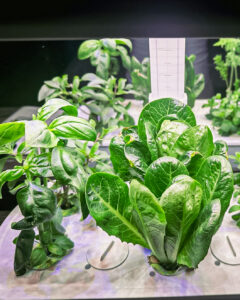
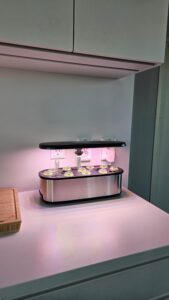
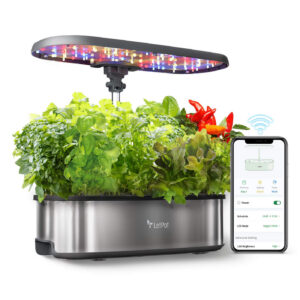
A smart garden is a soil-free hydroponic system where plant roots sit in a nutrient solution and a built-in LED light provides the light. In a group room, that is useful mainly because it removes the soil and spilled-water mess that is hard to manage with young children around. A larger unit, such as a 12-pod smart garden, holds enough plants for every child or smaller group to have a pod to watch, and its screen or app shows when water or nutrient solution is running low. From November to March, when natural daylight in group rooms is weak, the built-in grow light is what keeps the plants healthy without needing to add a separate lamp by the window.
Which smart garden suits a kindergarten group
How many pods you need depends on the size of the group. A smaller group, or a single corner in a classroom, is well served by a 5-pod model, where a few children take turns tending their own plant. If you want a larger share of the group to follow plants at once, or several smaller groups working in parallel, a 12-pod unit or larger makes more sense, since every group gets its own pod. All the models work on the same principle — a water tank, a nutrient solution and an LED light — and the main difference is pod count and overall size. You can compare sizes and prices on our smart garden comparison page.
Which plants to grow with a kindergarten group
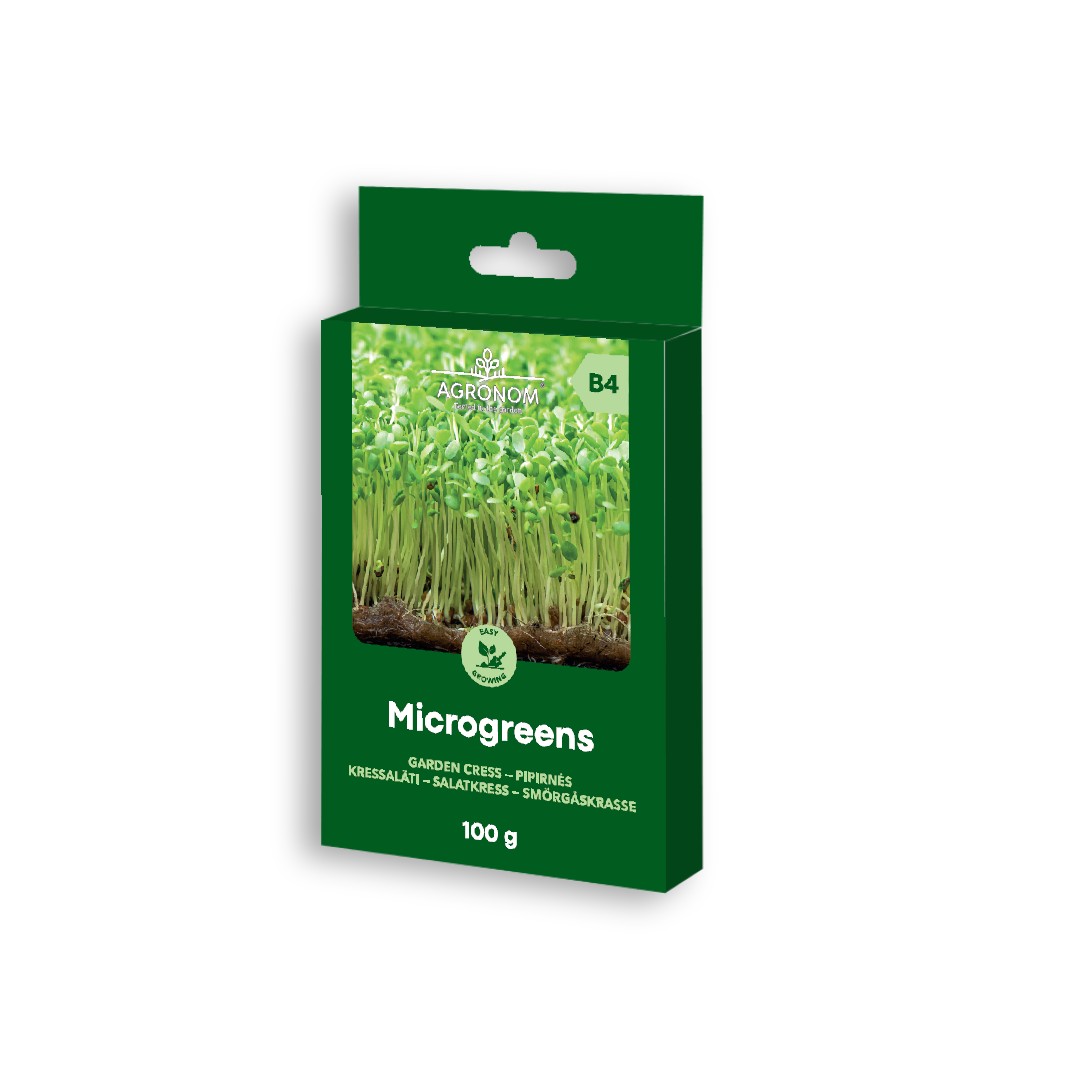
For a kindergarten project, pick plants that grow fast, need no sharp tools, and give children a visible result within a couple of weeks. Cress is a good example: the seeds germinate quickly and the whole mat of greens can be snipped without scissors in small hands getting near a blade. Pea microgreens work on the same principle and add a second crop children can compare for growth speed. Neither crop needs soil or feeding outside the smart garden’s own nutrient solution, which keeps hygiene and clean-up in the group room simple. If the group later wants more variety, such as leaf lettuce or herbs, our seed category has a wider range.
Setting up the growing project: setup and routine
Place the smart garden somewhere it won’t sit next to a radiator or in a draught, and make sure the socket is within easy reach without the cable crossing a walkway. From there, setup is simple and works well as a shared activity:
- Fill the water tank with clean tap water as the manual describes.
- Add the right amount of nutrient solution — most units mark the correct quantity for one fill on the tank itself.
- Place the seeds in the pods; this is the part where each child can plant their own seed and claim a pod as theirs.
- Agree on a weekly “plant minder” role, where one staff member takes turns checking the water level and plant condition (with older children helping under supervision).
- Check in a little more often during the first couple of weeks until the routine settles — after that, upkeep usually drops to a few minutes a week, since watering and lighting run automatically.
According to the manufacturer’s specifications, the LetPot Senior’s water tank holds 5.5 litres, which typically lasts around three weeks between refills, and its built-in 24 W LED light covers the plants’ light needs even on a grey, short winter day. In practice, that means the weekly “plant minder” job is mostly a water-level check, not daily watering.
Safety in a kindergarten group
A smart garden runs from a standard 230 V socket, so no separate electrical work is needed. The LED light runs at a low temperature and does not get hot enough to burn on touch, but it is still worth agreeing in the group that the light and the unit itself are not something children handle unsupervised. The water tank is shallow, but with children under 3 an adult needs to stay present during any growing activity, since the water and the nutrient bottle should never be left within unsupervised reach. Check that smaller detachable parts, such as pod caps, are kept out of reach of children under 3, since these can be a choking hazard. Secure or route the cable so it does not cross the floor of the group room or sit within reach of small hands near the socket. The growing activity itself, such as snipping microgreens, works well as a shared task where an adult holds the scissors and children only watch or touch the finished harvest, which keeps any risk from sharp tools out of the picture. For the detailed safety requirements around electrical equipment and water use in a group room, check your own country’s childcare safety guidance, since these vary between institutions and municipalities.
What research says about children and growing plants
A 2025 study carried out in kindergartens in Seoul, South Korea, followed 30 five-year-olds, half of whom took part in one hour of gardening a week over 16 weeks. The study, published in Acta Psychologica, found a clear improvement in the gardening group’s familiarity with plants and where food comes from, and teachers also noted better table manners and a more positive attitude to food in that group. Parents did not report a similar change at home, which the researchers suggest may reflect the structured mealtime setting at kindergarten. The sample was small and the study was not randomised, so the results cannot be generalised to every kindergarten, but they support the broader idea that growing plants in a group helps children become more familiar with food. An earlier review published in 2015 in Public Health Nutrition on the impact of school gardens on health outcomes reached a similar conclusion: garden-based programmes are associated with better vegetable familiarity and intake, but this review found no evidence of an effect on attention or academic outcomes, and that is not a claim worth making. Taken together, the existing research supports a modest but real expectation: growing plants as a group helps children try vegetables and herbs more willingly and get more familiar with food, without a measurable effect on learning outcomes to expect from it.
Funding and what the kindergarten gets out of it
Some Estonian kindergartens have funded this kind of growing project with national environmental-awareness grants, which can be applied for through environmental education centres. If you want to know what funding is currently available, it is worth checking with your local municipality’s education department or looking into the small-purchase rules that let a single-unit purchase go through quickly from the institution’s own budget. For equipment, warranty and spare parts suited to schools and kindergartens, read more on our page for kindergartens and schools. If you want to talk through which unit and quantity suits your group, or need an invoice made out to the institution, get in touch with us.
| Product | Price | Role in the group |
|---|---|---|
| LetPot Senior 12-pod smart garden | €129.00 | Main unit, holds up to 12 plants at once |
| Garden cress seeds | €1.39 | Fastest first harvest, good for starting out |
| Microgreens pea seeds 100 g | €6.99 | Larger quantity, good for repeat sowing through the winter |
Frequently asked questions
How many plants fit at once?
A 12-pod smart garden holds up to 12 plants or seed pods at once, which is enough in a larger group for several smaller groups to each follow their own share.
How soon will children see the first harvest?
Cress and microgreens are the fastest options — most fast-growing microgreens give a visible harvest under LED light within one to two weeks, depending on the seed and the light conditions.
Is a smart garden suitable for a group with children under 3?
Yes, but with children under 3 an adult needs to stay present throughout any growing activity and make sure smaller detachable parts are not left within the group’s unsupervised reach.
Who looks after the plants in the group?
Most kindergartens find a weekly rotating “plant minder” role works well, where one staff member is responsible each week for checking the water level and the plants’ condition.
Do you need extra lighting in winter?
No — the smart garden’s built-in LED light covers the plant’s light needs even when there is little natural light in the room, so a separate grow lamp is not needed.
Can the growing project be funded by outside grants?
Some Estonian kindergartens have funded this kind of project through national environmental-awareness grants, but the most accurate and current information comes from your local municipality’s education department.
Where to start
If you want to pick a smart garden that fits your group, start with the LetPot Senior 12-pod smart garden, which holds enough plants for a whole smaller group at once, and add fast-growing cress seeds for a first trial. You can find more sizes and options in our smart gardens category.