Funding a kindergarten growing project in Estonia rarely comes from one grant: it is usually a mix of the institution’s own teaching-materials budget, a KIK environmental-awareness grant routed through an environmental education centre, money the parent council collects, and the municipality’s small-purchase procedure, whose threshold rises from €30,000 to €50,000 from 1 November 2026.
This article looks at where a kindergarten in Estonia can find money for a smart garden, grow trays or a sprouting kit, when the budget rarely comes from a single source. We cover what Estonia’s KIK environmental-awareness grant actually funds and what it does not, how the municipal budget and the newly simplified procurement threshold affect a small purchase, what role the parent council (hoolekogu) plays in the decision, and how parents can help. The aim is to give a teacher or director a clear picture of which doors to knock on, and in what order, before the smart garden is actually bought.
Products mentioned — in stock at IndoorGarden, shipped from Tallinn across the EU.
Estonia’s KIK environmental-awareness grant: what it actually funds
Estonia’s Environmental Investment Centre (KIK) runs an environmental-awareness programme that mainly funds environmental-education study programmes, training and teaching materials delivered by environmental education centres — a kindergarten does not usually apply to KIK directly, but goes through its regional education centre, which then builds the topic into the kindergarten’s curriculum. KIK’s own environmental-awareness programme evaluation criteria show that the funding is aimed at the programmes these centres run, not at equipment purchased by an individual institution. In practice, applying to KIK directly to fund a smart garden usually leads nowhere — though an education centre’s own lesson might include using a smart garden as part of a session, with the centre arranging the equipment itself.
Application rounds generally open in spring and are aimed at the centres rather than kindergartens directly, so it is worth contacting your regional environmental education centre in autumn, while next spring’s programme is still being planned. Earlier green-technology-style rounds have already brought smart gardens into a handful of Estonian kindergartens, but those were one-off, time-limited rounds rather than a funding source you can count on every year. If you are looking for growing ideas rather than funding, our guide to running a kindergarten growing project covers the timeline and plant choice; this article focuses on the money.
The municipal budget and a simplified small-purchase threshold
Most Estonian kindergartens belong to a municipality, so buying a smart garden usually goes through the municipality’s own purchasing rules rather than a full public tender. An amendment to Estonia’s Public Procurement Act, adopted by the Riigikogu, raises the simplified-procurement threshold for goods and services from €30,000 to €50,000; according to the Estonian Chamber of Commerce and Industry, the change takes effect from 1 November 2026. Because a single smart garden, grow trays or a sprouting kit sit well below even the old threshold, most kindergartens never touch the simplified-procurement rules at all — the purchase runs through the institution’s or the municipality’s education department budget as an ordinary small purchase. The higher threshold mainly matters for larger, combined purchases, for example when a municipality buys smart gardens for ten kindergartens in one tender.
A practical step is to ask the municipality’s education department directly through the kindergarten director whether a purchase counts as a small purchase the institution can decide on itself, or needs separate approval from the municipal government. In most smaller municipalities, equipment purchases under a few hundred euros sit within the director’s own authority and go through ordinary bookkeeping, without a separate tender.
The parent council’s role: proposals, not purchase approval
The parent council (hoolekogu) does not decide the kindergarten’s budget, but its opinion carries real weight with the director and the municipality. Under a typical hoolekogu operating rule, the council gives the director and the municipality recommendations on drafting the budget and on using budget funds purposefully, and makes proposals aimed at securing a favourable development environment for children. In practice, that means it is worth bringing a growing-project idea to a parent council meeting first: if the members back it, the director can use that support as an argument when requesting extra funding from the municipality or involving parents. The council has no formal purchase veto, but its backing makes finding the funding considerably easier.
Parent contributions and other smaller sources
Some kindergartens cover part of a smaller growing project from money parents raise themselves, for example a shared fund collected through the parent council or a one-off donation — more flexible than changing a budget line, but it only works if every parent is informed and agrees. Good practice is to record that kind of collection as a parent council decision and keep the accounting transparent, so any parent can check where the money went. Some kindergartens split the cost between several groups sharing one smart garden, or ask a local business for a small sponsorship in exchange for a thank-you in the kindergarten newsletter. The most realistic approach is usually a mix: part from the institution’s own teaching-materials budget, part from money the parent council raises, and, if needed, a small parent contribution.
What a growing project actually costs
How much a growing project costs depends on how many groups share the equipment and how fast you want the first harvest. The prices below are checked against the IndoorGarden store and can be used as budget line items.
| Product | Price | Fits |
|---|---|---|
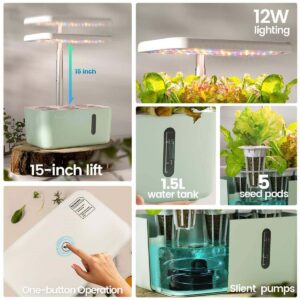
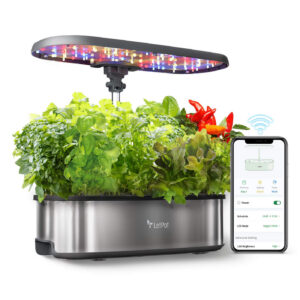
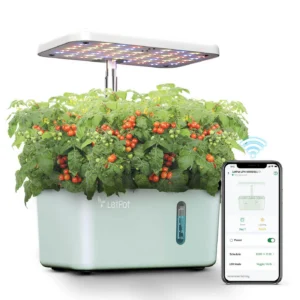
| LetPot Senior, 12 pods | €129 | Shared smart garden for one larger group (around 20 children) |
| LetPot Mini, 5 pods | €59 | Smaller group, or a second unit for fast crops |
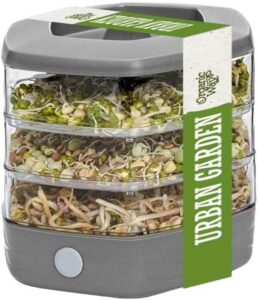
| Microgreens Sprouter | €11.99 | Cheap add-on for cress or pea shoots in days, not weeks |
If the project stays to one smart garden and a sprouting kit, the starting cost is usually under €150 — a sum most kindergartens can cover from their own teaching-materials budget line without waiting for a separate parent-council or municipal decision. If you are planning to buy several units at once (say, one larger unit for groups and one smaller one), it is worth adding up all the prices and checking whether the total still fits inside the institution’s own teaching-materials budget, which is often quicker than preparing a separate request for one small item.
Over the longer run, budget for seeds and growing medium as a separate, small, recurring cost rather than a one-off investment like the smart garden itself. Most kindergartens add seed purchases to the same budget line used for other teaching materials, so it needs no separate tender even in a very small institution’s budget.
Putting together a funding request or budget ask
When preparing a request to the municipality, the parent council or an environmental education centre, it helps to write down: which equipment and seeds you need and why, the total cost of the set, how the project fits the curriculum (for example Estonia’s “Me and the Environment” learning field), and who is responsible for day-to-day care. A specific budget figure and a clear link to learning goals make approval considerably easier for a decision-maker than a general request for money.
Add a firm timeline too — when the equipment will be bought, when the first harvest is expected, and how the project runs without interruption through the school year, holidays included. To a decision-maker choosing between several requests, that kind of detail signals a project that is already thought through, not just an idea.
Frequently asked questions
Does KIK fund buying a smart garden directly?
Generally not. Estonia’s KIK environmental-awareness programme mainly funds the study programmes run by environmental education centres, not equipment bought by an individual kindergarten. A smart garden might feature in a centre’s own lesson, but the kindergarten itself usually does not apply to that round directly.
How high is the simplified-procurement threshold after the change?
Under the amended Public Procurement Act, the simplified-procurement threshold for goods and services rises from €30,000 to €50,000, with the change planned to take effect on 1 November 2026. Most kindergarten growing projects cost so much less than that threshold that the simplified-procurement rules never come into play at all.
Can the parent council block a purchase?
The parent council has no formal veto over how the kindergarten’s budget is used, but its recommendations and proposals directly influence how the director and the municipality allocate money. In practice, it is worth involving the council from the earliest stage of the idea.
Is it allowed to ask parents for money?
Kindergartens usually ask for extra funding from parents as a voluntary donation or through money the parent council collects together, not as a compulsory fee. Always check your own kindergarten’s and municipality’s specific rules before starting a collection.
What is the cheapest way to start a growing project?
The cheapest starting point is a sprouting kit and cress seeds, which give a first harvest within a week and cost under €15 — a quick win for the group before you invest in a larger smart garden. If that trial goes well, the next logical step is a bigger smart garden that grows several crops at once.
How do I justify the purchase to the municipality’s education department?
The most convincing justification ties the equipment to a specific part of the curriculum, such as Estonia’s “Me and the Environment” learning field, and adds how many children benefit and exactly what it costs. A general request to “go greener” rarely persuades on its own without a concrete budget figure and a usage plan.
Where to start
The simplest starting point is one shared smart garden and one sprouting kit, a cost that usually fits inside the institution’s own teaching-materials budget. If the project grows bigger, or you need help explaining how it fits municipal education funding, our page for kindergartens and schools covers pricing and the holiday math in more detail.