Yellow leaves in a smart garden usually trace back to one of eight checks, run in order: which leaves are affected, the solution’s pH, its EC strength, iron availability, magnesium levels, root health, water temperature and light. Cornell Cooperative Extension notes that a solution pH above 6.5 is the most common cause of iron lockout in hydroponic crops.
A smart garden removes most of the guesswork around watering, but yellow leaves still turn up on LetPot and similar pods, and the cause is rarely obvious from colour alone. Because every plant in the tray draws from the same shared reservoir, one wrong setting can affect several pods at once, which makes diagnosing it properly worth the extra five minutes. This guide walks through eight checks in the order worth running them, from which leaves are affected through to light, so the actual cause gets fixed rather than guessed at.
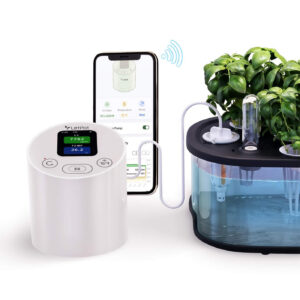
Products mentioned — in stock at IndoorGarden, shipped from Tallinn across the EU.
Step 1: work out which leaves are affected first
Before touching the water, look at where the yellowing actually sits on the plant, because that alone rules out half the possible causes. Nitrogen and magnesium are mobile nutrients, so a plant short on either one pulls them out of its oldest leaves to feed new growth, which is why both deficiencies show up lowest on the plant first. Penn State Extension describes the first signs of nitrogen deficiency as light green foliage and overall stunting, sometimes with dead or yellow leaf margins, which is a different pattern from the sharp interveinal yellowing magnesium causes.
Iron behaves the opposite way. It cannot move from old tissue to new, so an iron problem always shows up on the newest leaves at the top of the plant first, with the veins staying green while the tissue between them pales. Noting whether the affected leaves are old or new before reading any further narrows the next six steps down to two or three worth checking closely.
Step 2: check the solution’s pH before anything else
pH decides whether the nutrients already in the tank can actually be absorbed, so it is worth checking before changing any feed. Cornell University’s Controlled Environment Agriculture programme recommends keeping the solution between 5.5 and 6.0 for leafy greens and basil, and notes that hydroponic pH can swing by 1 to 2 units within a single day as plants take up nutrients, which is why it is worth checking daily rather than weekly. A reading sitting above 6.5 is the detail to watch for, since that is the point where iron in particular starts to fall out of solution and becomes unavailable to the roots even though it is still physically present in the tank.

Step 3: measure the EC, not just the colour of the water
Electrical conductivity, or EC, measures how concentrated the nutrient solution is, and both too high and too low produce yellowing, just through different mechanisms. Oklahoma State University Extension lists target ranges of roughly 1.2 to 1.8 mS/cm for lettuce, 1.0 to 1.6 mS/cm for basil and sage, and 1.8 to 2.2 mS/cm for parsley, all noticeably different from one another, so checking the figure against the specific crop in the pod matters more than following one number for the whole tray.
Run the EC too high and the same extension describes osmotic stress and ion toxicity, which in practice tends to show up as unusually dark foliage alongside dead, burnt-looking leaf margins rather than a uniform pale yellow. Run it too low and the plant simply runs short of everything at once, producing the same light green, stunted look as a straightforward nitrogen shortage. A handheld EC meter removes the guesswork either way, since colour alone cannot tell the two problems apart reliably, and our guide to what EC means and how much nutrient solution to add covers the maths behind the target ranges above.
Step 4: rule out iron deficiency on the newest leaves
If step 1 pointed to new growth rather than old, iron is the first thing worth checking, and the pattern is distinctive once you know it. Research published by Cornell’s greenhouse floriculture programme describes the symptoms appearing initially on young, immature leaves, with the veins staying green while the tissue between them turns pale yellow to almost white in severe cases, before spreading to more mature leaves if nothing changes.
Most hydroponic nutrient mixes already supply iron at roughly 1 to 3 ppm, so an actual shortage in the bottle is less common than a lockout caused by the pH problem covered in step 2. Different iron chelators tolerate different pH ranges before they stop working: standard EDTA-chelated iron starts failing above pH 6.5, while EDDHA-chelated iron stays available up to around pH 11, which is why some concentrated feeds specify which chelator they use on the label. Correcting the pH is usually enough on its own without adding extra iron.
Step 5: check for magnesium deficiency on the lower leaves
Magnesium deficiency is the other interveinal yellowing pattern, and the leaf position is what separates it from iron. Penn State Extension notes that magnesium deficiency “usually shows up first on lower to middle leaves” rather than the newest growth, since magnesium, unlike iron, can be moved out of older tissue when the plant is short on it. The underlying cause is usually the same high-pH lockout covered above, or a nutrient mix that is simply light on magnesium relative to the other major nutrients.
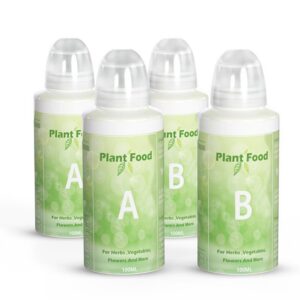
A magnesium-specific supplement, often sold as Epsom salt or magnesium sulfate for hydroponic use, can correct an isolated shortfall, but it is worth checking pH first, since dosing extra magnesium into a solution that is already locking out nutrients at the root rarely fixes the underlying problem. Our LetPot hydroponic nutrients already carry a balanced ratio of nitrogen, magnesium and the other major nutrients, and the guide to mixing hydroponic nutrients covers dosing a fresh batch from scratch if a full reservoir change turns out to be the simpler fix.
Step 6: pull a plant and look at the roots
If the leaves alone have not pointed to an answer, the roots usually will. Colorado State University’s PlantTalk programme identifies Pythium as the most common root rot pathogen in hydroponic systems, with Fusarium, Phytophthora and Rhizoctonia as occasional culprits, and notes that most of these pathogens are opportunists that do the most damage to plants already stressed by something else, such as poor pH or weak nutrients. Healthy roots in a smart garden pod should look white to pale tan with visible fine root hairs. Roots that have turned brown, gone soft, or lost most of their hairs point to rot rather than a nutrient problem.
The same source lists wilting or tip burn on the leaves as usually the first visible sign of root trouble, often before any yellowing spreads further, and recommends a balanced nutrient solution and regular checks of total soluble salts and pH as part of keeping roots healthy in the first place. This is also the point where pod design matters: most of our smart gardens use a closed, opaque reservoir specifically to keep light away from the root zone, since light reaching the water independently encourages algae alongside the pathogens covered here.
Step 7: check the water temperature itself
Root zone temperature decides how much oxygen the water can actually hold, and it is worth checking directly rather than assuming room temperature is close enough. The Colorado State material above puts the optimum root zone temperature at roughly 20 to 22 °C, and explicitly links low dissolved oxygen in warmer, stagnant water to a greater risk of the root rot covered in step 6. A reservoir that sits near a window in direct sun, or close to a radiator, can run several degrees above the surrounding room without it being obvious from the outside of the tank.
Cold water causes a quieter version of the same problem: root uptake of nutrients slows well before the leaves show any visible cold damage, which can look, from the top of the plant, identical to a straightforward nutrient shortage. A cheap thermometer left in the reservoir for a day settles the question faster than troubleshooting the feed.
Step 8: rule out light last
Light comes last on this list because a lighting problem tends to produce an overall pale, washed-out look across the whole plant rather than the specific patterns the earlier steps describe, which makes it the easiest cause to mistake for something more complicated. Most growers run leafy greens and herbs for 12 to 16 hours a day under a full-spectrum panel, and a schedule that has drifted shorter, a bulb that has dimmed with age, or a pod sitting in the shadow of a taller neighbour can all produce slow, generally yellow-green growth that looks a lot like a mild nutrient shortage from a distance.
If every other check in this list comes back normal and the yellowing is spread evenly rather than following a leaf-age pattern, checking the light schedule and the panel’s condition is the remaining explanation worth ruling out before assuming something is wrong with the water itself.
Which fix to try first
Work down this table in the same order as the eight steps above, since each one rules out several possible causes at once.
| What you see | Most likely cause | What to check |
|---|---|---|
| Oldest, lowest leaves pale or yellow first | Nitrogen or magnesium deficiency | EC and nutrient mix strength |
| Newest, top leaves yellow between green veins | Iron lockout | Solution pH (target 5.5–6.0) |
| Dark leaves with burnt, dead margins | EC too high | EC meter, €69.00 |
| Roots brown, soft, few root hairs | Root rot (commonly Pythium) | Water temperature and oxygen |
| Wilting or tip burn before yellowing spreads | Early root stress | Pull a plant and inspect roots |
| Whole plant pale green, evenly, slow growth | Not enough light | Light hours and panel condition |
Frequently asked questions
Why are my plant’s oldest leaves turning yellow in my smart garden?
This is the classic pattern for nitrogen or magnesium deficiency, since both nutrients move out of old tissue to feed new growth when the plant is short on them. Check the EC against the target range for that specific crop before adding anything extra.
Why are only the newest leaves turning yellow, with the veins staying green?
That pattern points to iron, which cannot move between leaves the way nitrogen and magnesium can. Check the solution pH first, since a reading above 6.5 is the usual cause of iron becoming unavailable even when enough is already in the tank.
Can the wrong pH cause yellow leaves even with plenty of nutrients in the tank?
Yes. Nutrients that cannot be absorbed because the pH is wrong behave exactly like nutrients that were never added. Checking and correcting pH is usually the fastest fix, and it should be checked daily, since it can shift by a unit or two in a single day.
Is yellowing from root rot reversible?
Leaves already yellowed from root damage generally do not recover, but a plant can put out healthy new growth once the roots are given cooler, better-oxygenated water and the dead root tissue is trimmed away. Prevention through stable temperature and clean equipment is more reliable than trying to reverse established rot.
Does my smart garden’s light schedule affect yellowing?
Yes, though it tends to cause an even, overall pale look rather than the leaf-position patterns the nutrient and root causes produce. It is worth checking last, after the water chemistry and root health, rather than first.
How often should I check pH and EC to avoid this happening again?
Daily is the safer habit, particularly for pH, since hydroponic solutions can shift meaningfully within a single day as the plants feed. A dedicated meter makes this a five-second check rather than a chore.
If you want to fix this today
Start with step 1: note whether the yellowing sits on old or new leaves, then test pH and EC before changing anything else, since both can be read in under a minute with the right meter. A LetPot smart EC and temperature meter covers steps 2, 3 and 7 at once, and our fertilizers for hydroponics category has nutrient mixes formulated for the ranges covered above. Every order ships from our Tallinn warehouse across the EU.