An indoor sowing calendar looks different from a garden one because the limiting factor indoors is light, not frost. Tallinn gets only around 6 hours of daylight at the December solstice and close to 18.5 hours at the June solstice, so with a grow light or a smart garden you can sow most crops in any month, but some months take noticeably less effort than others.
A garden sowing calendar is built around frost dates and soil temperature. Indoors, both of those limits disappear, because the room stays a steady 18 to 24 °C all year and frost is never a factor. What remains, and what actually shifts through the seasons, is how much natural daylight reaches the pot — from around 6 hours a day in December to nearly 19 hours in June. This calendar splits the year into four stretches and shows what is easiest to sow indoors or in a smart garden during each one.
Products mentioned — in stock at IndoorGarden, shipped from Tallinn across the EU.


Why an indoor sowing calendar looks different here
Most sowing advice, including Royal Horticultural Society guidance, is written for a garden, where the sowing window is set by spring frost dates and how quickly the soil warms up. Indoors those two limits disappear, because the room holds a steady 18 to 24 °C regardless of what is happening outside. What is left, and what genuinely swings through the year in Estonia, is natural daylight, which runs from around 6 hours a day at the December solstice to close to 19 hours at the June solstice. In summer almost anything grows well on a plain windowsill. In winter, without extra light, seeds usually germinate just as reliably, but the seedling comes up thin and pale because it is getting less than half the light it actually needs. So this calendar is not about what you cannot sow indoors — with enough light, you can sow practically any seed in our catalogue in any month — it is about which month gets you there with the least effort and the lowest electricity bill.
December to February: the darkest months
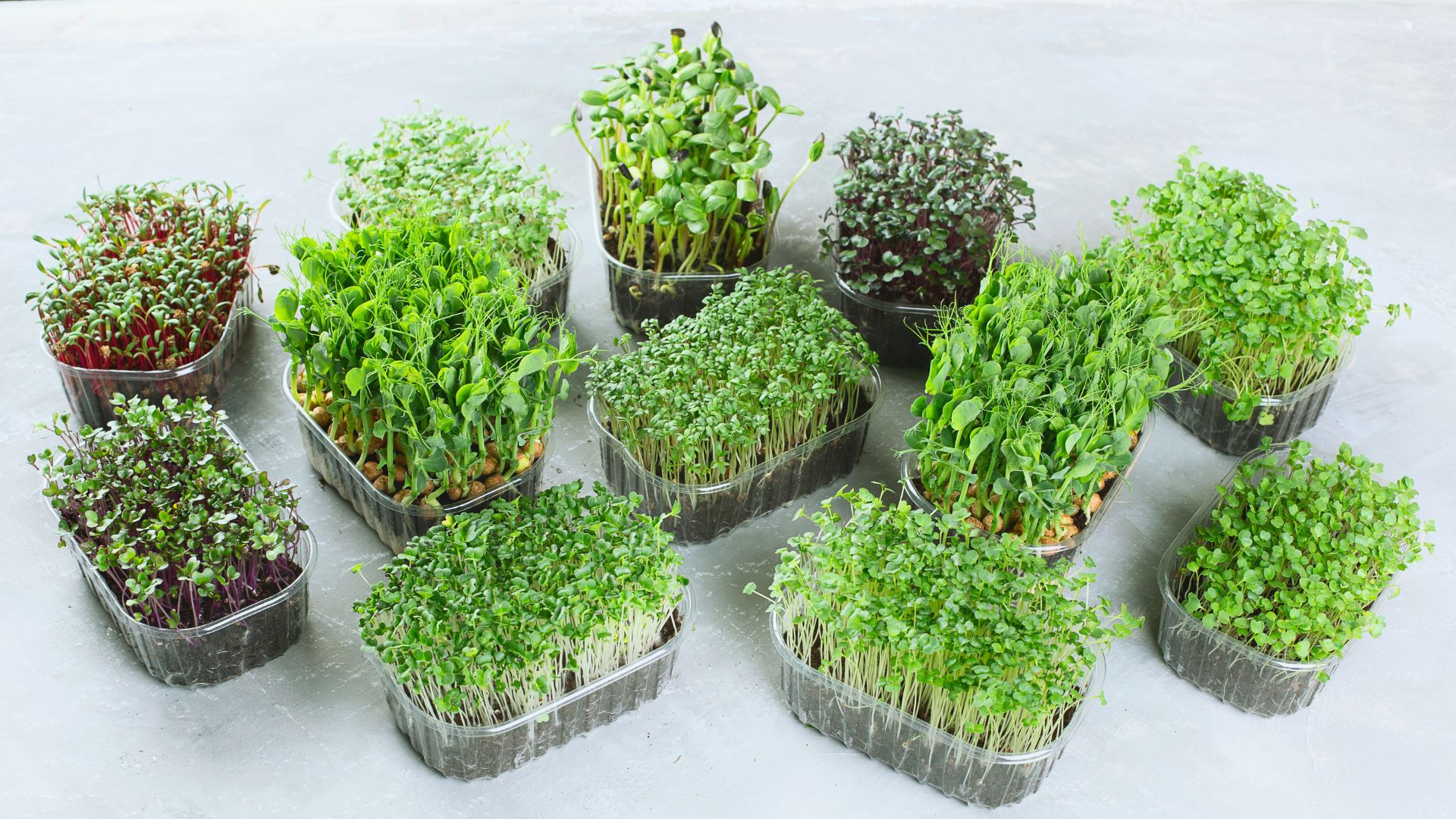
Natural daylight in Estonia drops below 10 hours a day through this stretch, and a windowsill seedling typically stretches toward the window rather than growing dense and sturdy. Microgreens are the easiest crop for exactly this period, because most of the growing cycle happens in a covered, blacked-out tray and the harvest arrives fast regardless of the season. Pea microgreen seeds germinate in 2 to 3 days after an 8 to 12 hour soak, and the first cut is ready 10 to 14 days from sowing, so a tray sown in December is already on the plate by January.
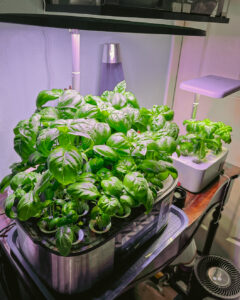
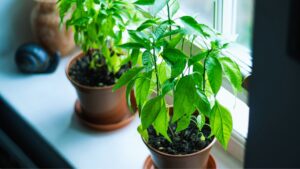
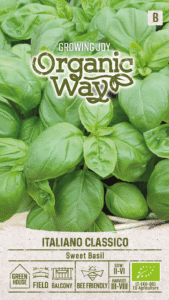
For herbs such as basil, this is the stretch where a grow light or a smart garden’s built-in LED makes the biggest difference compared with a plain pot on the sill. The University of Minnesota Extension notes that plants in low light grow more slowly and use less water, simply because they have less energy to put into growth. Without extra light, basil seed germinates normally, but the seedling comes up thin and pale because natural daylight never reaches the 12 to 16 hours a day it needs. Add a lamp and the result looks much like summer. The same logic applies to chilli, which typically takes 90 to 120 days from sowing to a first ripe fruit, so sowing in December or January under enough light can mean fruit by late spring.
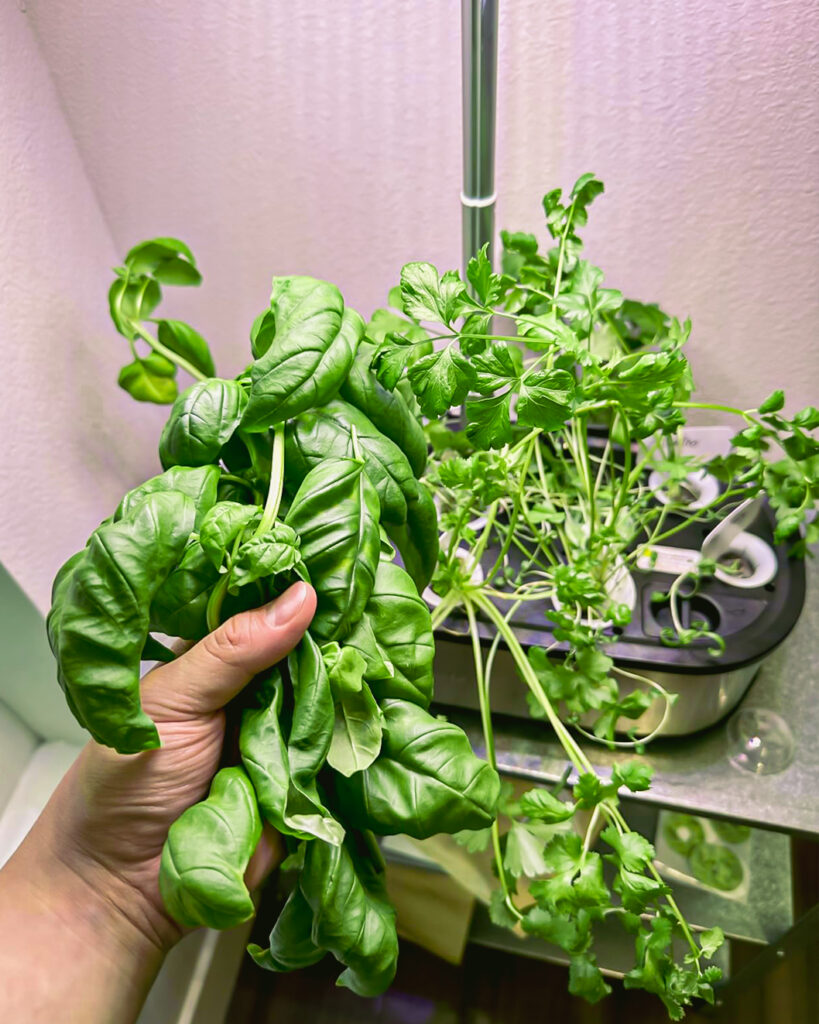
Other herbs respond to the dark months at their own pace. Dill and coriander both germinate in 7 to 14 days and tolerate a cooler room well, which makes them a safe choice in January, when the heating season often dries the air near a window too. Chives germinate more slowly, usually 14 to 21 days, but a single sowing keeps giving leaves for years, so a pod started in the middle of winter is less a rush job and more an investment that pays off by spring.
March to April: daylight starts to come back
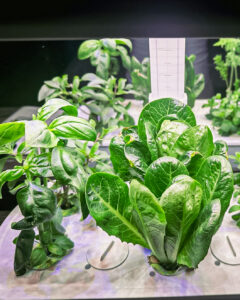
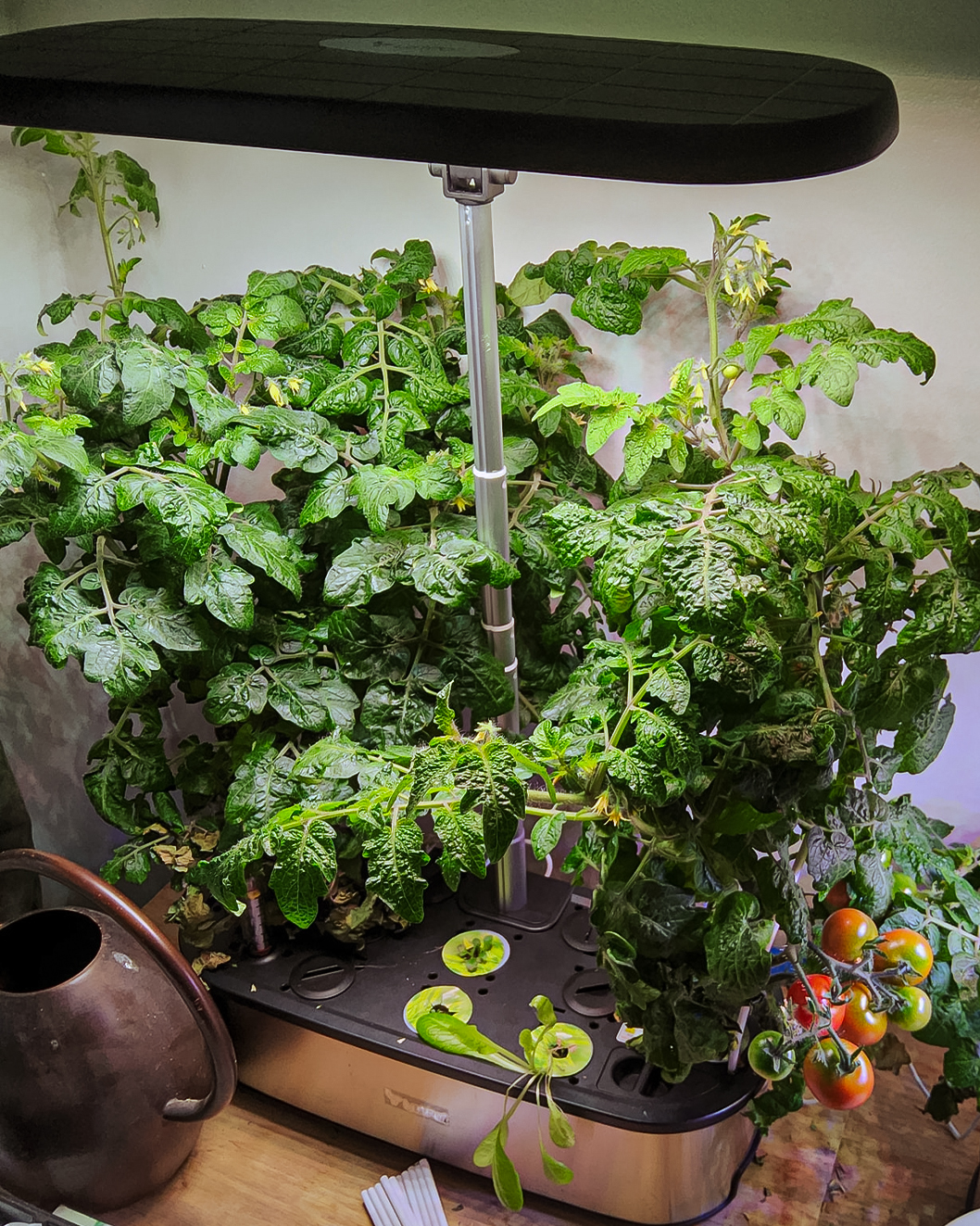
By late February, day length in Estonia already passes 11 hours, and it keeps climbing fast through March to around 14 or 15 hours by the end of April. This is the month many people start tomato seed, either for a smart garden or for later planting on a balcony. A compact, determinate variety such as Balconi Yellow H germinates in 10 to 14 days at 18 to 20 °C, and the first ripe fruit typically shows up 65 to 70 days later in a hydroponic system running a 100 W full-spectrum light above the plant. March and April are also a good window for resowing herbs and topping up a microgreens rotation, since the rising natural light eases the load on the lamp and trims the electricity bill a little, even though the result stays much the same as a winter sowing under a grow light. Lettuce germinates especially evenly in this stretch, because room temperature is moderate and day length is no longer a limiting factor, which is why many people start their salad rotation right in March for a first leaf by mid-April.
May to August: the most natural light of the year
At the June solstice, day length in Estonia reaches close to 19 hours, and this is the only part of the year when almost any crop does as well on a plain windowsill as it would in a smart garden with a built-in lamp. This is the easiest stretch to sow basil, lettuce and other leafy herbs, since a lack of light is simply not a problem for any of them. The one risk in these months is heat rather than light. Lettuce and spinach bolt and turn bitter once room temperature sits above 24 °C for several days running, so in summer they do better set back from a sun-facing window than right on the sill. Chilli and tomato, on the other hand, benefit most from the extra warmth and bright light in exactly this period, and plants sown back in winter under a lamp typically reach their full harvest right in the middle of summer.
September to November: switching back to winter mode
Day length falls off gradually, and September still carries enough natural light for most crops without a grow light. October and November change quickly, and this is the stretch worth moving windowsill pots over to a lamp or a smart garden before seedlings start stretching and fading the way they do in December. It is also a good window to sow one last batch of lettuce or herbs that can still make the most of the remaining daylight, and to get a smart garden ready for winter: clean the tank, check that the light and pump are both working properly, and lay in spare seed before the darkest months arrive. Microgreens can start running more often from here on too, since they are one of the few crops that day length never really affects. If you grew tomato or chilli on the sill over summer, early autumn is also the last practical chance to pick the remaining fruit before the plant itself starts settling into a dormant pattern under weaker light.
The whole year in one table
Here is how the three crops from this guide line up by germination time, best sowing window and today’s price in our shop.
| Crop | Best indoor sowing window | Germination time | Price |
|---|---|---|---|
| Pea microgreens | Year-round, most useful December–February | 2–3 days | €6.99 |
| Sweet Basil Italiano Classico | Year-round under a lamp, easiest March–August | 5–10 days | €1.99 |
| Tomato Balconi Yellow H | January–March for a smart garden, year-round under a lamp | 10–14 days | €1.49 |
Frequently asked questions
Can you sow any crop indoors in any month?
With enough light, whether natural in summer or from a grow light in winter, almost always yes. The difference between months is only how much extra effort and electricity it takes, not whether the sowing will actually succeed.
Why do my seedlings stretch and go pale in winter?
It means natural daylight is falling short of the 12 to 16 hours a day most seedlings need, which happens most often from November to February. A grow light or a smart garden with a built-in LED removes the problem completely.
Can pea microgreens be sown in summer too?
Yes, they grow just as well all year, since most of the cycle happens in a covered, blacked-out tray. In summer they are simply less necessary, because other crops also grow well without any extra effort.
When is the best time to sow tomato seed for a smart garden?
January to March gives the best odds of a first harvest by late spring or early summer. With enough light and warmth, tomato can be sown in other months too, but the harvest then shifts later to match.
Why does lettuce turn bitter so fast in summer?
That happens once room temperature sits above 24 °C for several days in a row, pushing the plant into flowering mode and making the leaves taste sharp. In summer, keeping lettuce further from a sun-facing window helps.
Does chilli sown in winter have time to ripen?
Sown in December or January with enough light, the 90 to 120 day cycle usually wraps up by late spring or early summer, which lines up with the period when natural daylight is already at its strongest.
Where to start
If you want the lowest-effort start regardless of the month, choose pea microgreen seeds — they give a harvest in as little as 10 to 14 days. The full range of seeds for every crop and season sits in our seeds category, with a dedicated selection for herbs in the herb seeds section. If light is your main obstacle, a smart garden with a built-in LED removes seasonality altogether. Every order ships from our Tallinn warehouse across the EU.