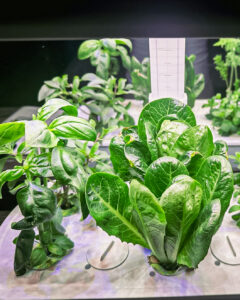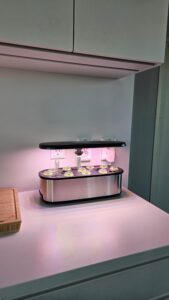
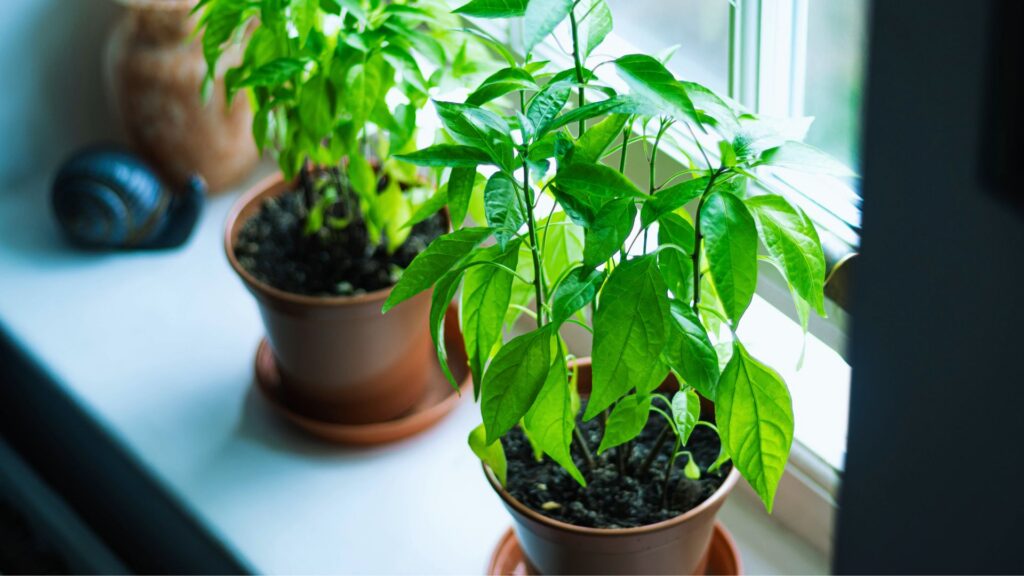
How much LED light herbs need indoors in winter varies a lot by plant: basil and rosemary want 12 to 16 hours of bright light a day, while parsley and chives get by on 8 to 10 hours. Iowa State University research found that raising daily light integral from 7 to 15 mol/m²/day increased basil’s fresh mass by 144%.
Natural light simply is not enough through a Baltic winter — a windowsill in December and January gets only a fraction of what a herb would receive in summer. That gap is often the real reason rosemary or basil stops growing in winter, no matter how carefully it is watered. This article covers 6 herbs that grow most often in the IndoorGarden range, and how much extra LED light each one needs to keep growing through the darker months.
Products mentioned — in stock at IndoorGarden, shipped from Tallinn across the EU.

Why herbs need extra light in winter
How fast a herb grows is decided not by how bright the light is at any one moment, but by the total amount of light reaching the plant over 24 hours — known as daily light integral, or DLI, measured in mol/m²/day. Iowa State University research found that raising basil’s DLI from 7 to 15 mol/m²/day increased its fresh mass by 144%. In Tallinn, natural DLI on a windowsill in December and January typically does not reach even 2 to 4 mol/m²/day, well short of what any of the herbs below actually need. That gap — not cold air or infrequent watering — is usually the real reason a herb stops growing in winter.
Basil: the most light-hungry of the six
Of the six herbs in this guide, basil wants the most light: 12 to 14 hours of bright full-spectrum light a day to keep growing at a normal pace. Under weak light the stem stretches long and pale and the leaves stay small. A grow light is best positioned 20 to 30 cm above the canopy. Basil seeds are one of the faster-growing herbs, so the right light shows a visible result within the first few weeks.
Rosemary and thyme: the Mediterranean herbs that struggle most
Rosemary and thyme are Mediterranean natives, and in the wild they are used to far brighter light than a Baltic winter can offer. The Royal Horticultural Society notes that both want as bright and sunny a spot as possible. In practice that means 14 to 16 hours of LED light a day for rosemary and 12 to 16 hours for thyme — noticeably more than the natural light either needs in summer. Both grow more slowly than basil, so not enough light in winter often means the plant stops growing entirely rather than just slowing down, until spring.
Parsley and chives: a more moderate need
Parsley and chives sit in a more moderate group — 8 to 10 hours of light a day is enough to keep them growing through winter, even if a little slower than in summer. Both tolerate a damper, more evenly moist growing medium better than rosemary or thyme, so they do well in a hydroponic system through the colder months too. On a fairly dark windowsill, both are a better pick than rosemary, since they need less supplemental light to keep going.
Peppermint: a moisture-loving herb with a middling light need
Peppermint gets by on 10 to 14 hours of light a day — less than basil, but more than parsley. Like parsley, what matters more to peppermint than light intensity is steady moisture, so it does best in its own pot rather than sharing one with another herb and competing for water and light. In winter, when daylight hours are short, 10 to 14 hours of LED light usually keeps the leaves dark green and full rather than pale and stretched.
Choosing a grow light for your windowsill
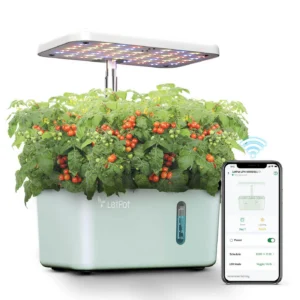
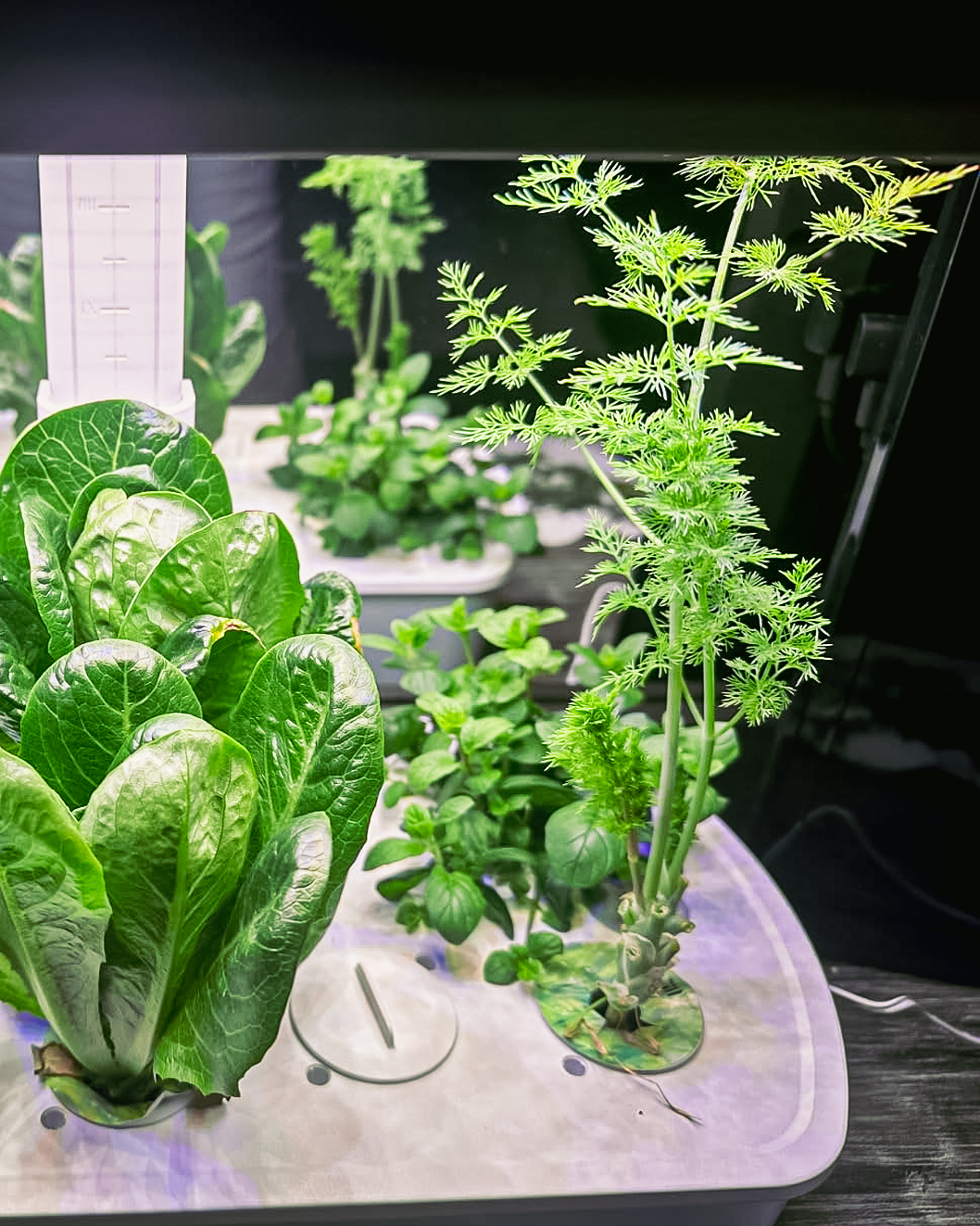
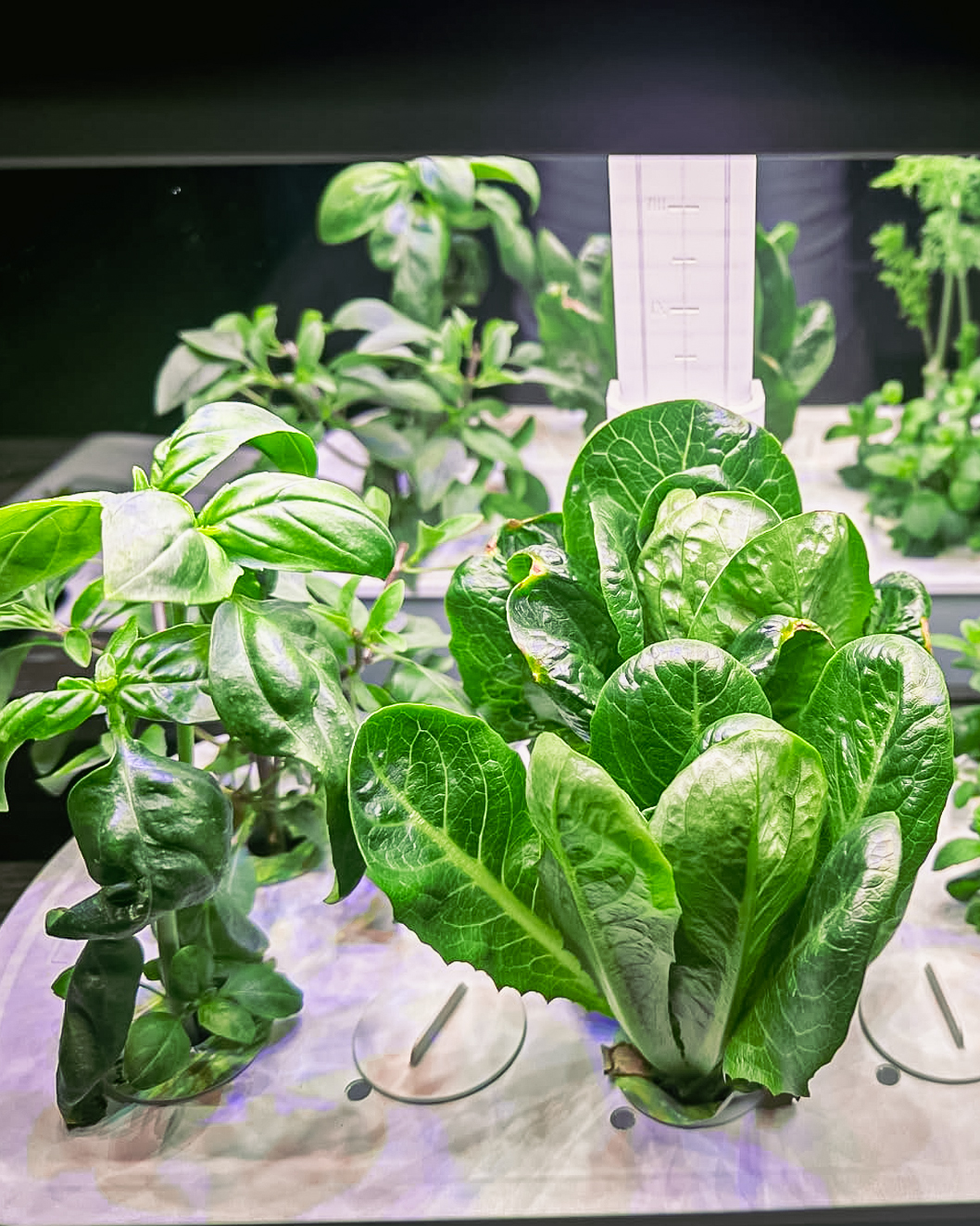
For a small windowsill collection of 2 to 3 pots, a compact LED panel positioned directly above the plants is enough, such as the tabletop model in our grow lights for indoor plants range. Distance matters most: doubling the gap between the lamp and the canopy cuts the light reaching the leaves to roughly a quarter of its original strength, so a lamp mounted too high can deliver far less light than it looks like it should. If the herbs are growing in a fully hydroponic system, such as a smart garden, the built-in LED removes this problem automatically, since the light’s distance and schedule are already set.
How many hours of light each of the 6 herbs needs
| Herb | LED light in winter | Group | Price |
|---|---|---|---|
| Basil | 12–14 h | Fast-growing, most light-hungry | €1.99 |
| Rosemary | 14–16 h | Mediterranean, most demanding | €1.49 |
| Thyme | 12–16 h | Mediterranean, slow | €1.99 |
| Peppermint | 10–14 h | Moisture-loving | €1.49 |
| Parsley | 8–10 h | Moderate | €1.99 |
| Chives | 8–10 h | Moderate | €1.49 |
Frequently asked questions
Why does my rosemary stop growing in winter even with regular watering?
Light is the more common cause, not water. Rosemary is a Mediterranean herb that needs considerably more light than a Baltic windowsill provides in winter, and below about 14 hours of bright light it often simply stops growing until spring.
Do all herbs need the same amount of light in winter?
No. Mediterranean herbs such as rosemary and thyme want the most light, 14 to 16 hours, while more moderate herbs such as parsley and chives get by on 8 to 10 hours.
How far should a grow light be from the plants?
In practice, 20 to 30 cm above the canopy is a good starting point for most herbs. A lamp mounted closer gives more intense light but can also scorch the leaves, so distance should be adjusted to the specific model.
Does a hydroponic smart garden solve the winter light problem?
Largely, yes. The built-in LED in a smart garden runs on a fixed schedule regardless of the season, so it supplies enough light even in December and January, when natural light on a windowsill is at its weakest.
How can I tell a herb is not getting enough light?
The clearest signs are a stretched, pale stem and small, light-coloured leaves. Once a grow light with enough daily hours is added, new growth usually appears within a few weeks.
Can peppermint and basil share the same pot in winter?
It is not a good idea, since peppermint grows very fast and its roots fill the whole pot, crowding out its neighbour. It is better to give each herb its own pot or a separate slot in a hydroponic system.
Where to start
If your windowsill is dark in winter, start by adding a compact grow light directly above your existing pots — that often fixes the problem without buying new plants. If you are starting from scratch, a smart garden with built-in light and watering removes the winter light problem entirely, regardless of the season. Everything ships from our Tallinn warehouse across the EU.