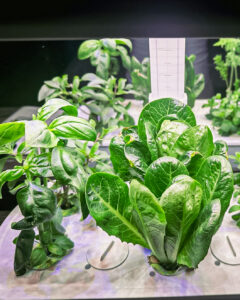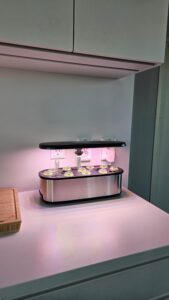

A hydroponic garden at home is simplest to start with a ready-made smart system such as the LetPot Mini, keeping the solution’s pH between 5.8 and 6.2 as recommended by University of Illinois Extension, with most lettuce, spinach and herb seeds germinating within 5 to 10 days of sowing.
Many people hear “hydroponics” and picture a complicated lab setup full of tubes and pumps, when in practice a home system is often simpler than keeping a pot on a windowsill alive, since there is no soil to replace and no guesswork about how much water a plant needs. This guide explains how hydroponics differs from growing in soil, which system suits a Baltic climate with short winter days, and the three mistakes that most often trip up a first attempt.
Products mentioned — in stock at IndoorGarden, shipped from Tallinn across the EU.
What a hydroponic garden actually is, and why it suits a Baltic climate
Hydroponics means growing in a nutrient solution instead of soil: the root sits in water or a moist substrate such as coconut coir or rockwool, and every nutrient a plant would normally draw from soil is dissolved directly into that solution. That solves two problems that are especially pronounced in Estonia and the rest of the Baltics: short, dark winter days when a windowsill alone does not deliver enough light, and the dry indoor air caused by radiators, which dries out potting soil faster than it does in summer.
A smart hydroponic garden solves both problems with one device: a built-in LED replaces spring sunshine, and the water reservoir keeps the root zone evenly moist even when you forget about the plant for a week. That makes hydroponics an easier starting point for a beginner than a classic pot on a windowsill, not a harder one, even though it sounds more technical at first.
Three types of system: from a simple bowl to a full smart garden
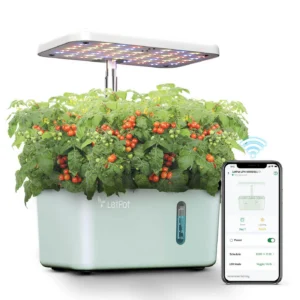
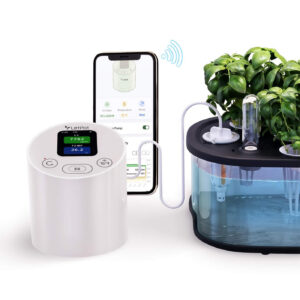
Before buying any equipment, it helps to know that hydroponic systems differ mainly in how much you have to do yourself. The simplest form is a sprouting bowl or glass dish with seeds on a moist disc, which suits microgreens but not a plant that grows for months. A middle step is a single pod with its own pump and light built in, suited to one plant such as basil or a strawberry. A full system such as the LetPot Mini runs 5 pods at once with its own LED and a water-level sensor, built for anyone who wants a shelf of herbs or salad greens that runs with almost no supervision.
Which of these suits you depends on how many plants you want to grow at once and how often you are willing to check the water level by hand. The full range of systems by size is in our smart gardens category.
The substrate the root sits in is the other detail that varies between systems. Rockwool or a coconut coir pad are the most common, since both hold moisture evenly and let the root breathe freely, which is why they are the default in ready-made systems. Clay pebbles are used less often, mainly in larger pots, because they dry out faster and need more frequent topping up. A beginner does not need to choose a substrate separately when a system is bought with its pods already included, which is one reason a ready-made system is simpler than a self-built one.
Water temperature, pH and nutrients: three numbers worth knowing
In hydroponics a plant draws nutrients straight from the solution, so three numbers decide whether it grows quickly or stalls. The first is pH: University of Illinois Extension recommends keeping the solution’s pH between 5.8 and 6.2 and checking it weekly with litmus paper or a digital meter, since a solution that is too acidic or too alkaline blocks nutrient uptake even when nothing is missing from the solution itself. Ready-made systems usually hold that range automatically through the chosen substrate and nutrient mix, so a handheld pH meter is not essential from day one, but becomes useful once you grow more than one crop at a time.
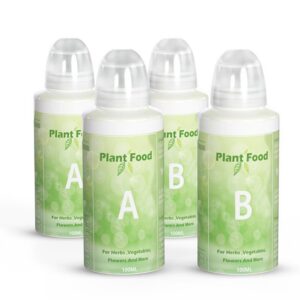
The second number is nutrient strength, measured as EC (electrical conductivity) in mS/cm. Manufacturers typically specify around 0.8 to 1.2 mS/cm for seedlings and young transplants, rising to 1.8 to 2.2 mS/cm for leafy greens and herbs in active growth; a stronger solution suits fruiting plants, but the same strength can scorch the leaf edges of leafy crops. A LetPot smart temperature and EC meter shows this number without manual testing every time, and a ready-mixed solution at the right strength is in our hydroponic fertilisers category. The third number is water temperature: most leafy greens and herbs grow best between 18 and 22 °C, and below 15 °C the roots take up nutrients noticeably more slowly.
Light: how many hours indoor plants need in winter
Light is the one thing a plant cannot substitute with anything else, and a lack of it is the most common reason a hydroponic system seems to “not grow” as fast in winter as in summer. In Latvia and Estonia, daylight in December can run under 7 hours, noticeably less than what leafy greens and herbs actually use for growth.
The built-in LED in a smart system removes this problem automatically: manufacturers typically set it to run 14 to 16 hours a day for leafy crops and herbs, regardless of how dark it is outside. Growing in a pot without a built-in light, a separate full-spectrum LED panel positioned around 25 to 30 cm above the plant has the same effect. Heat is not a problem here the way it would be next to a window, since LED light radiates far less heat than sunlight. A timer that switches the light on and off at the same time every day is the simplest way to avoid forgetting the schedule, though most smart systems already have this built in from the factory, so no separate timer is needed.
The most common beginner mistakes
Three mistakes come up more often than any others, and all three are easy to prevent once you know what to look for. The first is algae growing in the water reservoir, which happens when light reaches the solution itself rather than only the plant’s leaves. University of Illinois Extension materials recommend covering the sides of a clear container so light cannot reach the water, leaving only the top open where the plants sit. Closed, opaque reservoirs, the kind used in ready-made smart systems, remove this problem at the design stage.
The second mistake is root rot, caused by water that is too warm or too still and short of oxygen, with symptoms of brown, slimy roots and a wilting plant even though the reservoir is full. The fix is making sure the pump keeps the water moving and not leaving the solution unchanged for longer than 1 to 2 weeks. The third mistake is overfeeding: assuming more nutrient means faster growth, when an oversaturated solution actually blocks water uptake and leaf tips start to brown. If in doubt, the safe approach is to start at half the manufacturer’s recommended dose and increase it only if the plant looks pale.
What to grow first: crops that suit a beginner
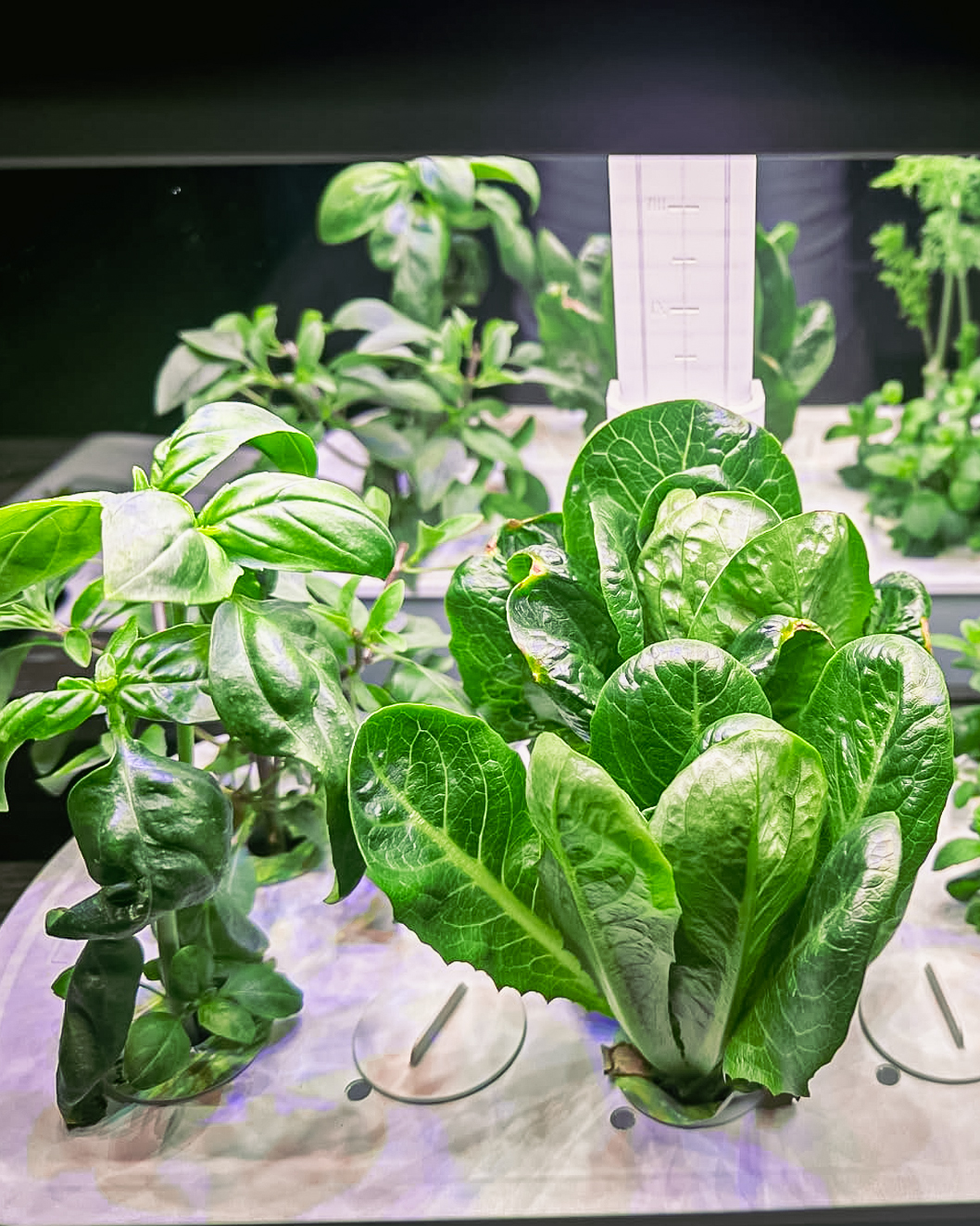
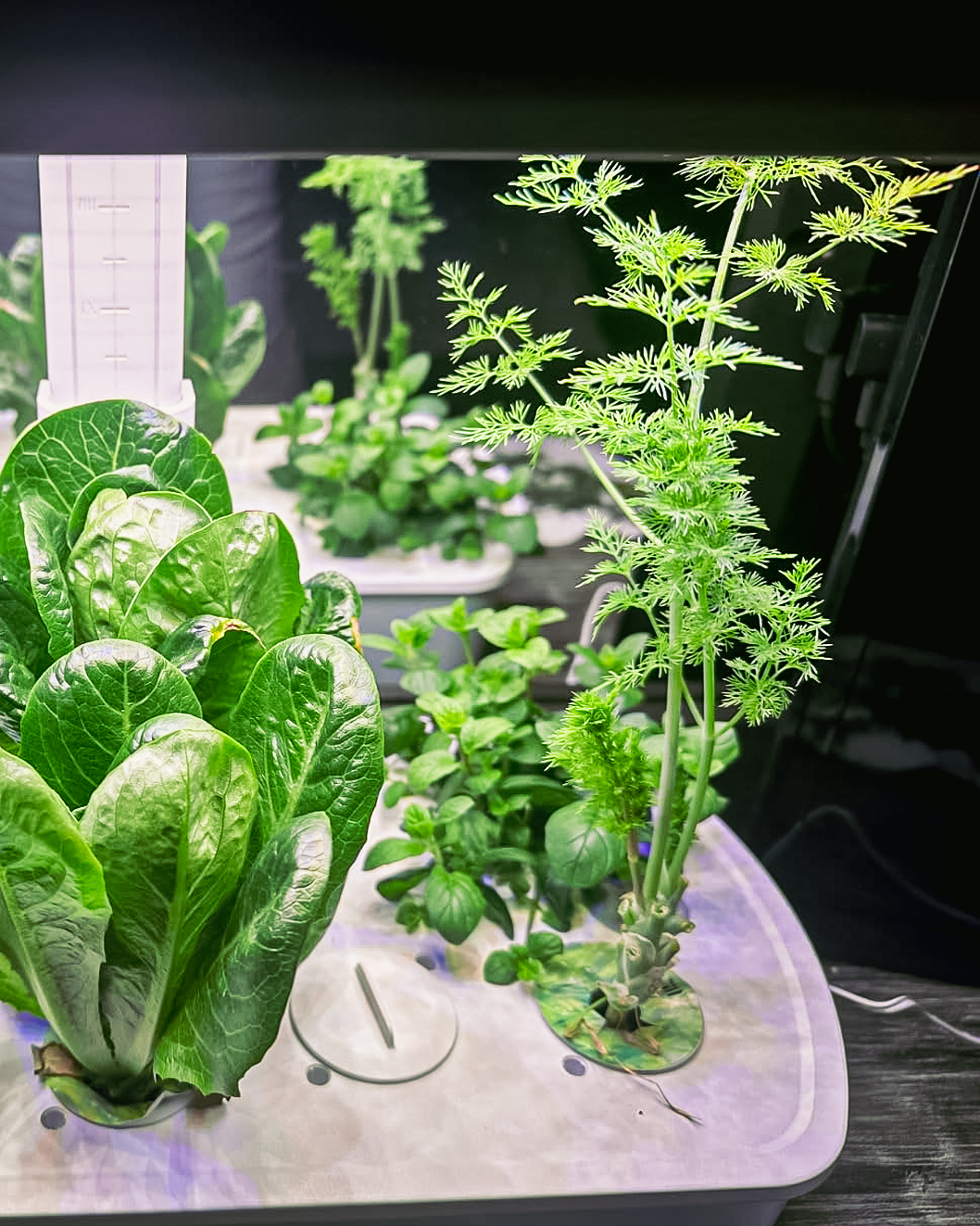
Not every crop suits a first attempt equally well. Lettuce, spinach and most herbs — basil, parsley, dill — adapt to hydroponics quickly and forgive small mistakes in pH or feeding during the first few weeks. Fruiting plants such as tomatoes or chillies need a steadier feeding regime and more patience, so they suit a second attempt better, once the basics are already clear. The full range of herb seeds suited to hydroponics is in our herb seeds category.
Microgreens are an even simpler starting point than full-system crops, since they need neither a pH meter nor an EC check — a moist disc and light are enough. They also suit anyone who wants to see a result within the first week, before committing time to a full 5- or 10-pod system.
Which system to choose: a quick comparison
Work down this table for what each product does and when it is worth buying.
| Product | What it does | Best for | Price |
|---|---|---|---|
| LetPot Mini (5 pods) | Full smart system with built-in LED and water sensor | Beginners who want a herb shelf with no daily supervision | €59.00 |
| LetPot Hydroponics Nutrients | Ready-mixed liquid feed at the right EC range | Everyday feeding without mixing by hand | €17.99 |
| LetPot Smart Temperature & EC Meter | Shows water EC and temperature in real time | Anyone running several systems or growing fruiting plants | €69.00 |
Frequently asked questions
Is a hydroponic garden expensive to run?
The equipment itself is the biggest cost. Day-to-day costs are the nutrient solution, which lasts several months per bottle, and electricity for the LED, which at 14 to 16 hours a day adds up to a small amount in a typical EU household.
How long before the first harvest?
Lettuce and herbs typically give their first harvestable crop within 3 to 5 weeks of sowing, depending on light levels and the crop itself. Microgreens are faster, usually ready to cut within 7 to 10 days.
Can you grow any plant hydroponically?
No. Leafy greens, herbs and strawberries adapt best. Root vegetables that form large tubers underground suit hydroponic systems poorly, which is why IndoorGarden’s seed range does not include them for this purpose.
How do you stop algae growing in the water reservoir?
Cover the sides of a clear container, or choose a system with an opaque reservoir, so light cannot reach the solution itself. Algae only grows where light and water meet, not on a plant’s leaves.
Does a hydroponic garden need direct sunlight?
No, and direct sun can even overheat a small water reservoir. The built-in LED in a smart system replaces daylight entirely, so the unit can sit anywhere in a room near a power socket.
What is the main difference between hydroponics and growing in a pot with soil?
In hydroponics the roots get nutrients straight from the solution rather than from soil, so there is no need to worry about soil quality or over-fertilising the ground. The trade-off is that the solution’s pH and strength need checking more often than soil, which buffers itself for longer.
Is a hydroponic system noisy?
The water pump is small and usually only audible if the room is completely silent and the unit sits close to a bed. During the day in a kitchen or living room, the noise is practically unnoticeable.
Where to start
If you are starting from nothing, the simplest route is a ready-made system where light, water level and timing are already combined — the LetPot Mini is built for exactly this. For a first attempt, pick lettuce or a herb from our herb seeds category, since they forgive mistakes and give a result faster than any other beginner project. Everything ships from our Tallinn warehouse across the EU.