Yes, and more than most people expect is possible. A balcony gives you something genuinely valuable for growing: outdoor light, natural airflow, and space that most apartments simply do not have inside. Whether you have a narrow strip of concrete or a generous terrace, the basics of making it productive are the same. You work with the space you have, choose plants that suit your conditions, and set up a system that does not require daily attention to keep running. Here is what you need to know to get started.
What Are the Basics of Balcony Gardening?
The foundation of any productive balcony garden is understanding your conditions before choosing what to grow. Light is the most important factor. A south or west-facing balcony in full sun gives you the widest range of growing options, including tomatoes, peppers, and herbs. A north or east-facing balcony with limited direct sun narrows the field, but leafy greens, herbs like mint and parsley, and many flowers still do well in partial shade.
Wind is the second factor that catches balcony gardeners off guard. High floors and exposed positions can create conditions that dry out soil quickly, damage fragile plants, and knock over containers. A simple windbreak — even a trellis or a row of taller plants along the exposed edge — makes a significant difference to what you can grow comfortably.
Weight is the third consideration. Balconies have load limits, and large containers filled with wet soil are heavy. Using lightweight containers and quality potting mixes rather than dense garden soil keeps weight manageable. If you are planning a larger setup, it is worth checking your building’s balcony load specifications.
What Are the Easiest Balcony Crops to Maintain?

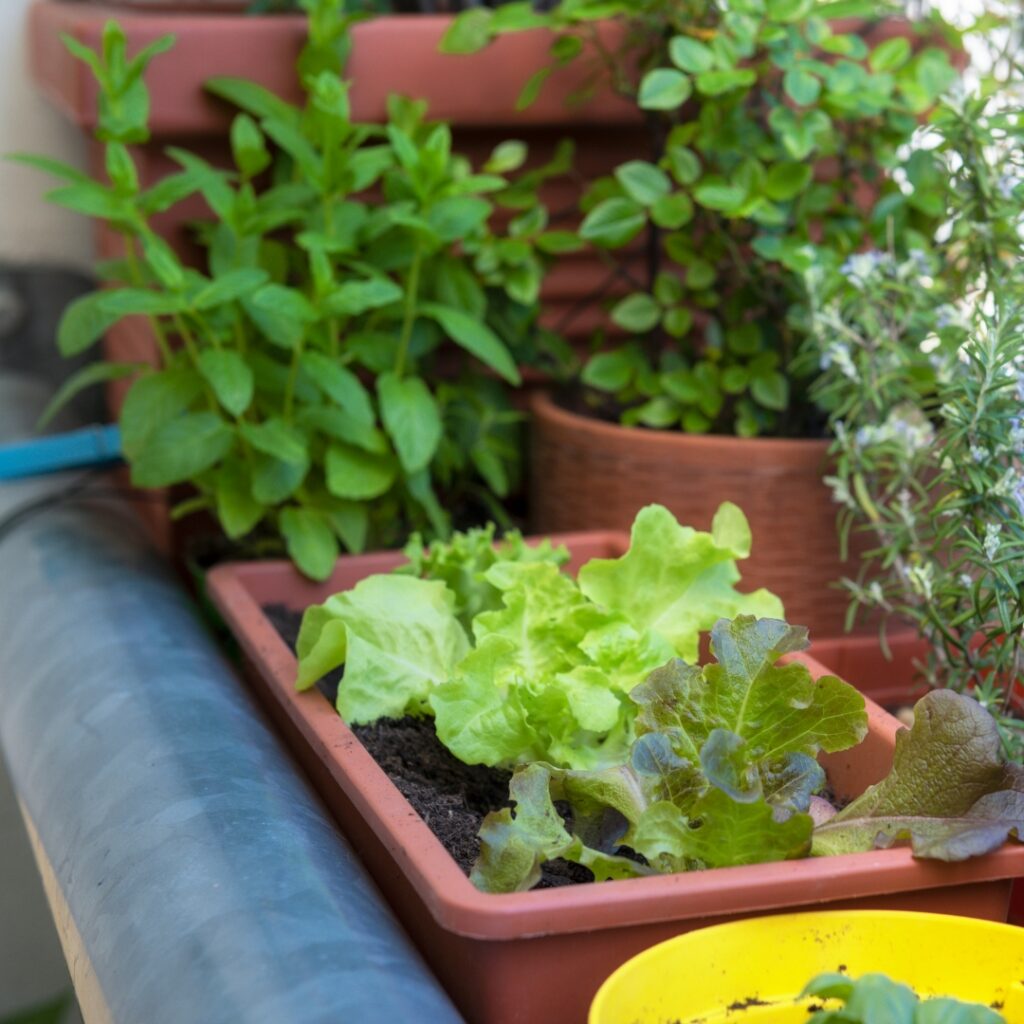
Herbs are consistently the lowest-maintenance balcony crops. Basil, chives, parsley, mint, oregano, and thyme all thrive in containers outdoors through spring and summer and need little beyond regular watering and occasional trimming. They are also the most immediately useful — having fresh herbs on a balcony within reach of the kitchen is one of those small daily improvements that genuinely changes how you cook.
Leafy greens are close behind. Lettuce, rocket, and spinach grow quickly, tolerate partial shade better than most vegetables, and can be harvested continuously by taking outer leaves rather than pulling up the whole plant. Lettuce and leafy green seeds are a reliable starting point for any balcony setup. Radishes are worth mentioning too — they are possibly the fastest edible crop you can grow, going from seed to harvest in as little as three to four weeks.
Can You Grow a Tomato Plant on a Balcony?
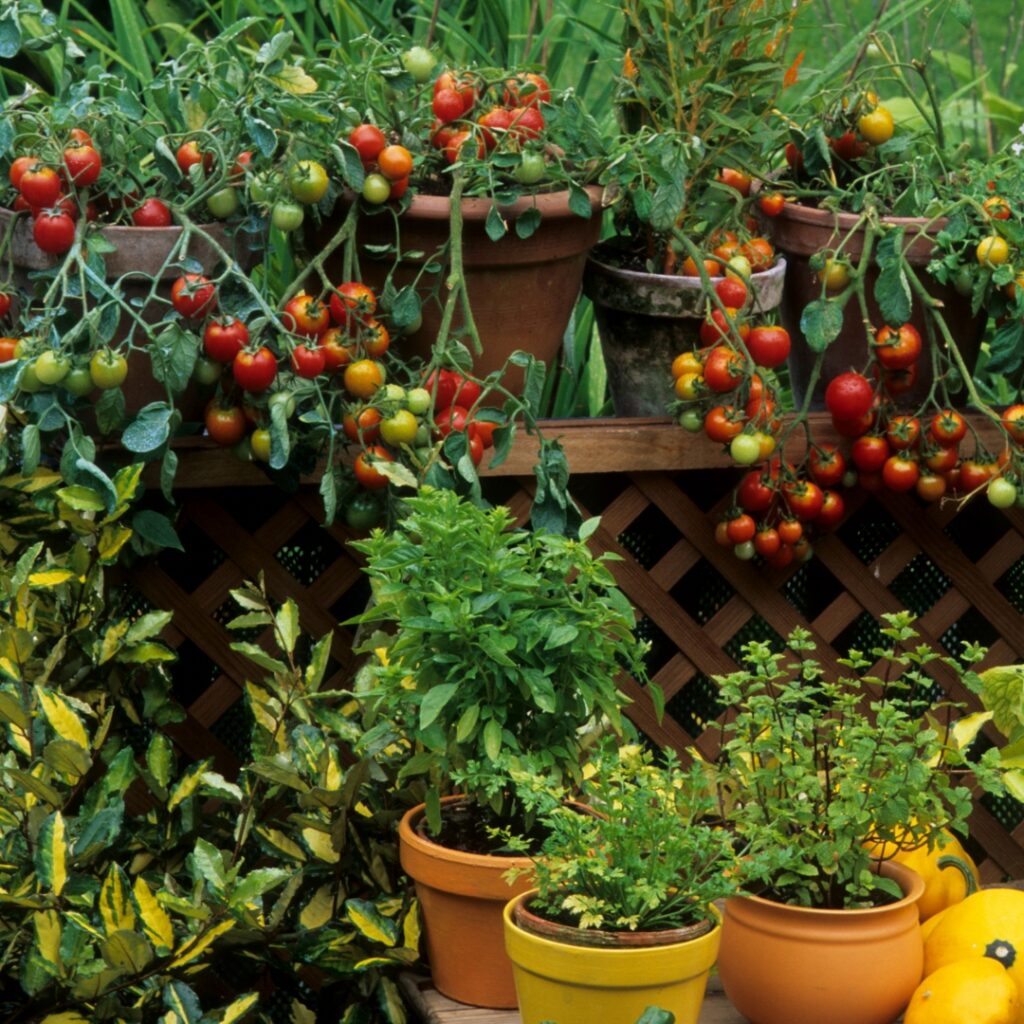
Absolutely, and a sunny balcony is actually one of the better places to grow tomatoes if you do not have a garden. The key is variety selection. Large indeterminate varieties that grow 1.5 metres or more are unwieldy in containers and need significant staking. Compact bush or patio varieties are far better suited — they stay manageable, produce well in containers, and do not need the same level of pruning and support. A container of at least 10 to 15 litres gives the roots enough room to develop properly.
Tomatoes need full sun — ideally six or more hours of direct sunlight per day — and consistent watering. In hot weather, containers dry out fast, so a self-watering planter with a built-in reservoir is worth considering for tomatoes specifically — learn how these systems work in our guide to self-watering systems for indoor plants. It maintains consistent moisture around the roots without requiring you to water every single day in summer. Browse tomato seeds for compact varieties suited to container growing.
Can You Put a Raised Garden Bed on a Balcony?
Yes, and it is one of the most productive things you can do with balcony space. A raised bed — or a deep container that functions like one — gives you more soil volume than individual pots, which means more consistent moisture, better root development, and the ability to grow a wider range of plants together. The practical constraints are weight and drainage. Make sure the container has adequate drainage holes and use a lightweight potting mix rather than garden soil. Position it where it will not block emergency exit routes or violate your building’s balcony use rules.
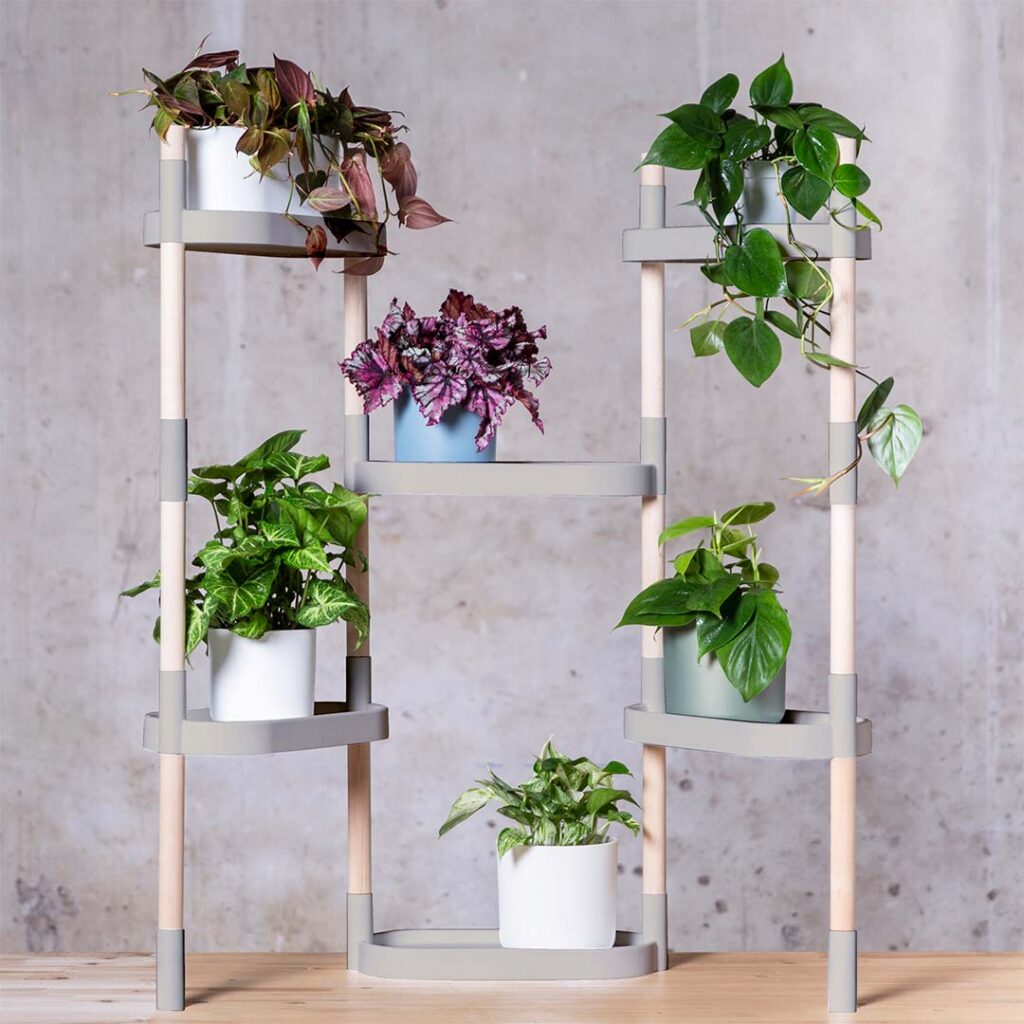
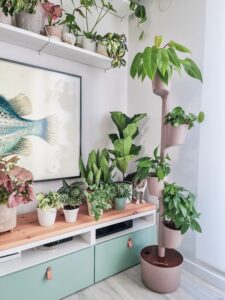
If a traditional raised bed is too heavy or takes up too much floor space, modular plant shelves offer a good alternative — they let you stack growing space vertically rather than spreading it across the floor, which is particularly useful on narrow balconies. Vertical planters work well on balconies for the same reason, and wall planters mounted on a balcony railing or wall free up floor space entirely while keeping herbs and greens within easy reach.
What Soil to Use for a Balcony Garden?
Garden soil is the wrong choice for balcony containers for the same reason it fails indoors: it is too dense, compacts in pots, and drains poorly. A quality container potting mix is lighter, retains moisture more evenly, and stays loose enough for roots to develop freely. For food crops, look for a mix with some nutrient content to support initial growth, and plan to supplement with a liquid fertiliser after the first few weeks once the starter nutrients are exhausted.
For larger containers or raised bed setups on a balcony, mixing a good potting soil with around 20 to 25 percent perlite improves drainage and keeps the mix from compacting over the season. You can find suitable indoor potting soil mixes that work equally well for balcony containers.
How Do I Create a Balcony Microclimate?
A microclimate is simply the local growing conditions you create on your balcony that differ from the general outdoor climate — and you have more control over this than you might think. A windbreak along the exposed side of the balcony, whether a trellis with climbing plants, a bamboo screen, or a row of taller containers, reduces wind speed and keeps moisture in the soil longer. Dark-coloured containers absorb heat and raise soil temperature, which suits heat-loving plants like tomatoes and peppers. Grouping containers together creates a more humid local environment as plants transpire moisture, which benefits leafy greens in hot weather.
In autumn, moving containers closer to the building wall protects them from the coldest nights and extends the growing season by several weeks. A simple fleece cover over plants on nights when frost is forecast can keep a balcony garden productive well into October and November in Northern Europe.
Conclusion
A balcony garden is one of the most accessible ways to grow your own food without a traditional garden. If you’re new to growing, our ultimate guide to indoor gardening for beginners covers all the essentials. Starting with herbs and leafy greens, choosing containers suited to your space and conditions, and protecting plants from wind and cold are the fundamentals that everything else builds on. Whether you go for a simple row of pots, a wall planter along the railing, or a full vertical setup with modular shelves, the principle is the same: use the space you have as productively as possible. If you are already growing on a balcony and have found something that works particularly well, share it in the comments.