
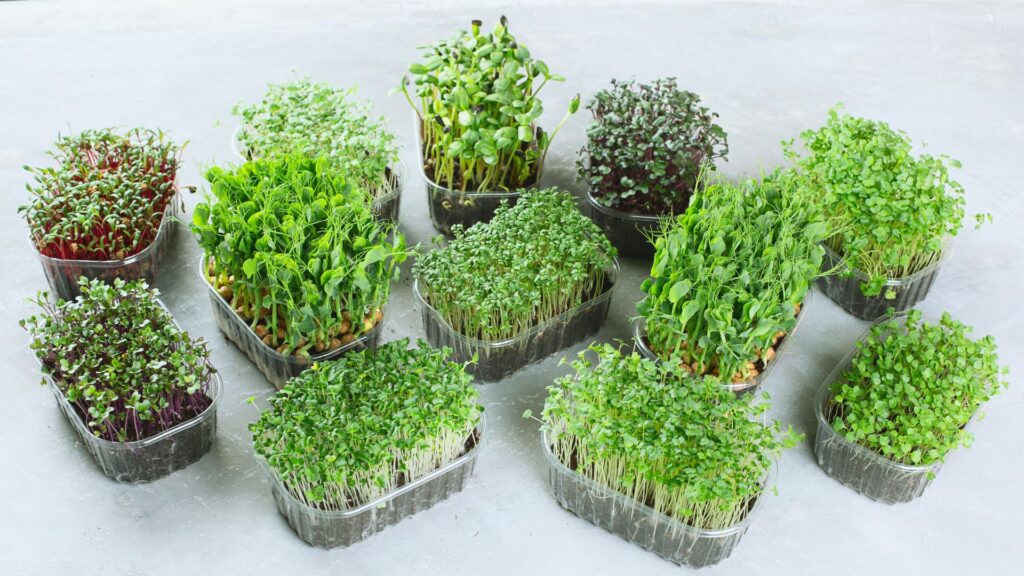
An advent seed calendar spaces small sowings of garden cress and radish microgreens across December’s 24 days, so something is ready to cut every few days rather than in one rushed batch. Penn State Extension notes most microgreens are ready within one to three weeks of sowing, which easily fits several rounds before Christmas.
December leaves little room for outdoor sowing, but a kitchen windowsill or a shallow tray under a lamp doesn’t need good weather. An advent-style sowing calendar borrows the daily-opening idea from a chocolate calendar and applies it to seeds instead: a handful of small sowings spread across the month, timed so several trays are ready to harvest on different days rather than all at once. This guide lays out a staggered schedule built around two fast, forgiving crops, plus a couple of ways to add variety, avoid the two most common failures, and keep trays going past Christmas.
Products mentioned — in stock at IndoorGarden, shipped from Tallinn across the EU.


Why December suits a sowing calendar more than one big batch
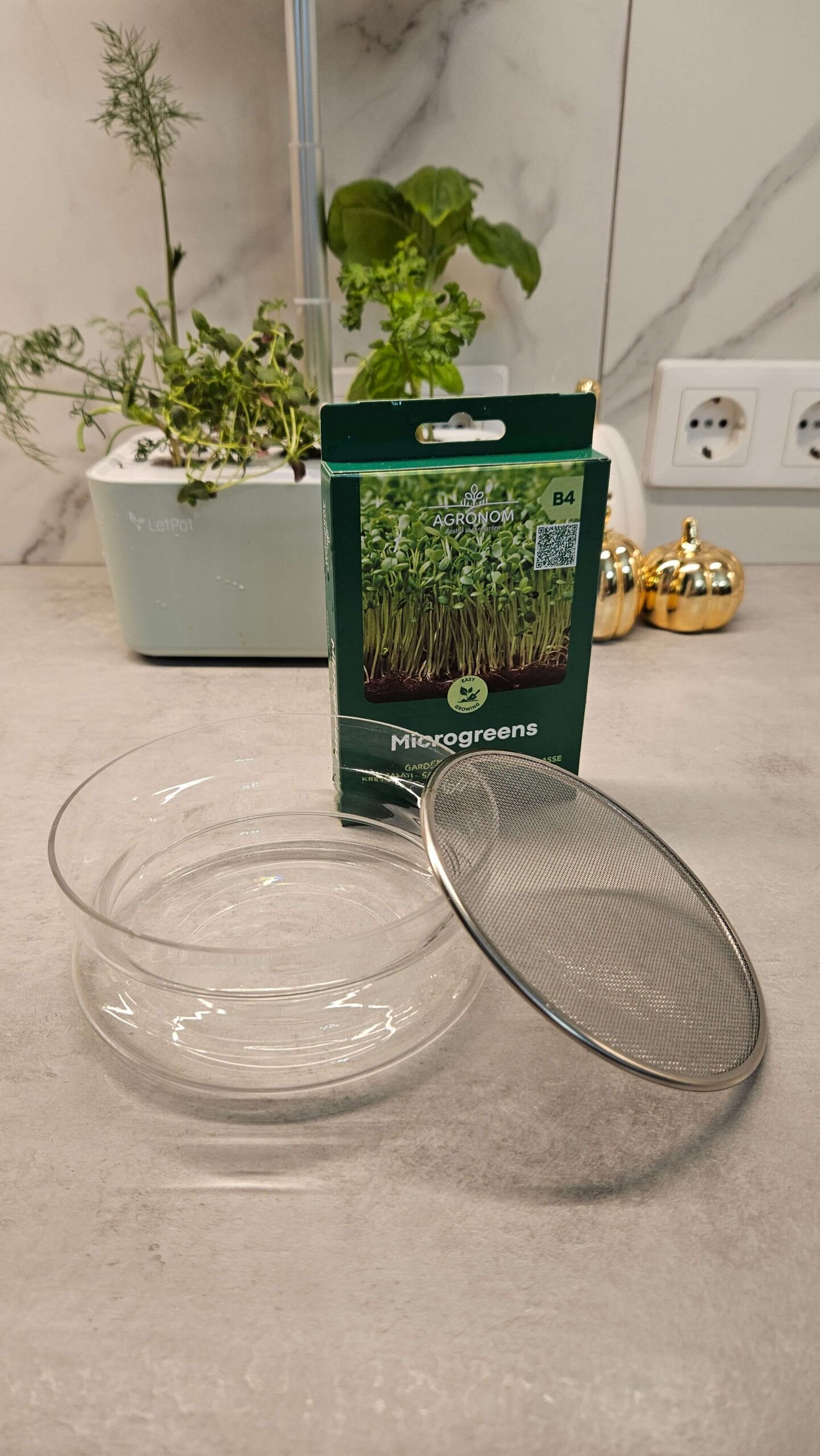
Natural daylight is thin for most of December at Baltic latitudes, and a single large sowing competes for the same small patch of bright windowsill all at once, which tends to leave half the tray stretched and pale. Spacing sowings out across the month solves that crowding problem and gives a better reason to check the kitchen counter every few days, which is the whole point of an advent calendar in the first place. A bright spot away from a cold windowpane, or a basic grow light on a timer, is usually enough for the fast crops below; neither needs the stronger, longer-running light a fruiting plant would want in winter. A shallow tray or glass jar can also be reused sowing after sowing through the whole month, so the only ongoing cost is the seed itself.
The two-crop backbone: cress and radish microgreens
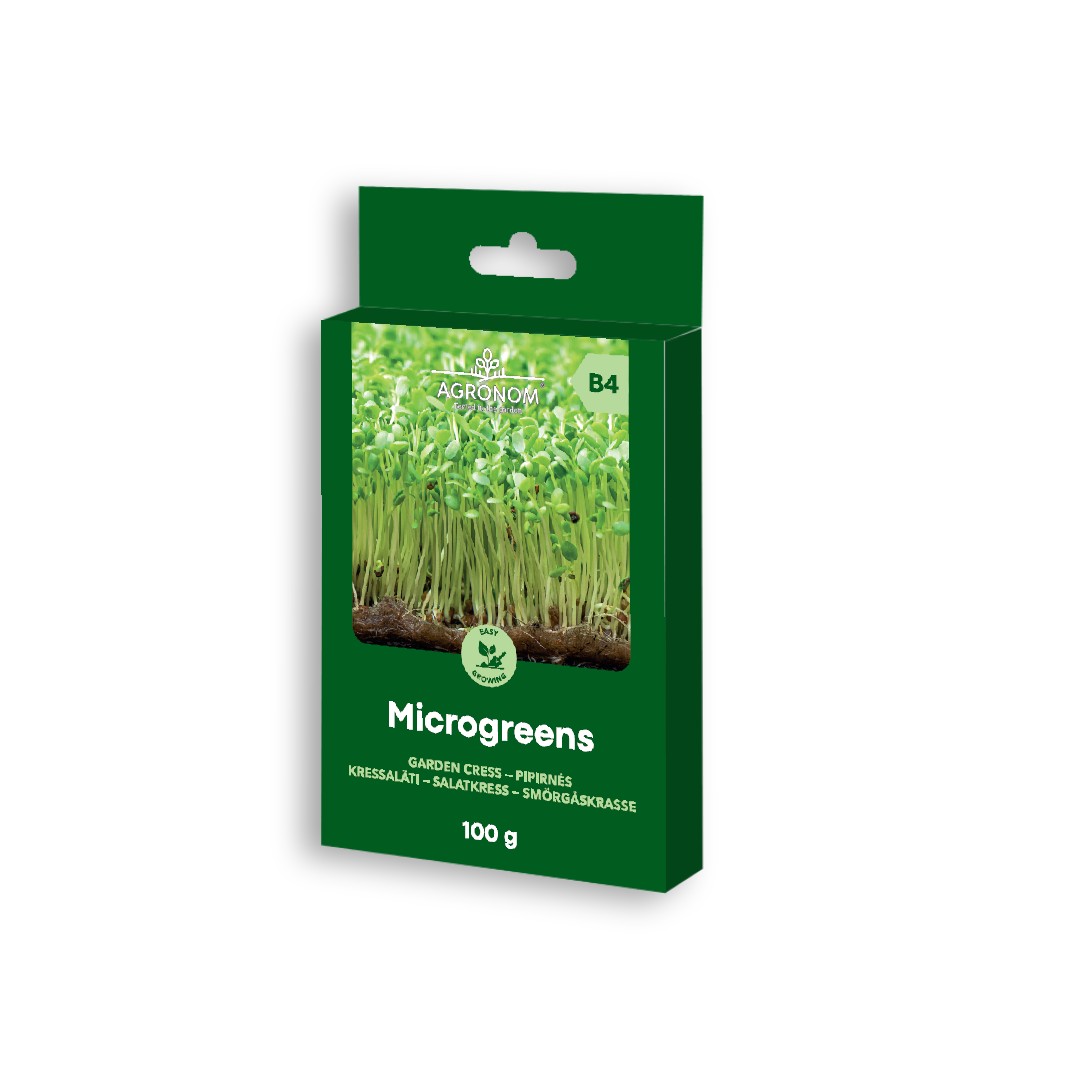
Garden cress and radish microgreens anchor the calendar because both forgive an inexperienced sower and both move fast enough to fit inside a few weeks of December. Garden cress needs no pre-soak, germinates within a couple of days on a damp surface, and is typically ready to cut around day 6 to 8. Radish microgreens take a little longer, with most growers cutting a tray somewhere around day 8 to 12, and Utah State University Extension places fast microgreen varieties generally in a 7 to 15 day window from sowing to harvest. Running both on a rotating schedule means there is rarely more than a few days between one tray finishing and the next one being ready. Cress leans peppery and radish leans sharp and slightly hot, so alternating the two also keeps the daily handful from tasting the same twice in a row.
A staggered sowing schedule for December
The table below spaces sowings so a tray is ready roughly once a week through the month, finishing with a batch timed for Christmas itself. Treat the dates as a starting point rather than a fixed deadline, since a cold kitchen or a dim corner can push any of these timings a few days later.
| Sow on | Crop | Typical harvest window | Price from |
|---|---|---|---|
| 1 December | Garden cress, tray 1 | 7–9 December | €1.39 |
| 4 December | Radish microgreens, tray 1 | 12–16 December | €5.99 |
| 8 December | Garden cress, tray 2 | 14–16 December | €1.39 |
| 11 December | Pea shoots (soak seed first) | 19–21 December | from the microgreens seeds range |
| 14 December | Radish microgreens, tray 2 | 22–26 December | €5.99 |
| 17 December | Garden cress, tray 3 | 23–25 December | €1.39 |
Keeping several trays going without crowding the counter
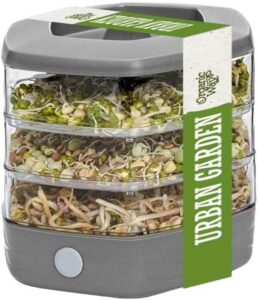
Once two or three trays are running at once, the practical limit is usually space rather than effort. A dedicated microgreens sprouter stacks the growing surface away from the rest of the kitchen and keeps the paper or mat evenly damp without a saucer underneath, which matters more in a heated room where trays dry out faster than they would in an unheated porch. Our guide to growing microgreens without soil covers the paper-towel method in full if a tray or jar is not yet on hand, and the whole sprouting jars and bowls range covers the smaller setups that suit a single tray at a time. A sprouting bowl also travels well as a small gift if someone else on the list wants in on the calendar, and most of the options in our gifts under €25 range are built for exactly this kind of low-effort starter kit.
Avoiding mould and leggy growth
Two problems account for most failed trays: mould from excess moisture, and pale, leggy stems from too little light. University of Minnesota Extension guidance recommends keeping the growing medium damp rather than wet, and giving trays airflow rather than sealing them under a lid for the whole cycle, since trapped humidity is what lets mould take hold. A few minutes of ventilation a day, or leaving a tray uncovered once the seed has germinated, usually solves it. Leggy, pale stems point to too little light rather than too little water: moving the tray closer to a window, or running a grow light for a few extra hours in the darkest weeks of December, generally fixes the stretch within a day or two.
Adding pea shoots and mustard for variety
Cress and radish carry most of the calendar, but a little variety keeps the plate interesting through a long month. Pea shoots need an 8 to 12 hour pre-soak before sowing and generally take a little longer than radish, landing closer to day 10 to 14 once the extra soaking step is accounted for, with a sweeter, milder flavour that works well stirred through a soup rather than as a sharp garnish. Mustard sits at the spicier end, germinates almost as fast as cress, and is worth sowing in a smaller tray since a little goes a long way on a sandwich. Both sit in the same microgreens seed range as cress and radish, so no new supplier or delivery wait is needed to add either one mid-month.
Frequently asked questions
Do I need a grow light to run an advent seed calendar?
Not strictly, though it helps. A bright windowsill away from the cold glass is usually enough for cress and radish microgreens over a few weeks, while a basic LED on a timer keeps growth more even if the room is dim or the tray sits further from the window.
What happens if a tray is not ready exactly on the date in the schedule?
Nothing to worry about. The schedule above is a guide built from typical ranges, and a cooler room or a slightly later sowing can push a harvest a few days past the table. Check the tray rather than the calendar date, and cut once the first true leaves appear.
Can I sow more than one crop in the same tray?
It is possible but not ideal, since cress and radish germinate and mature at slightly different speeds, which makes an even cut harder to judge. Separate trays, even small ones, give a cleaner result and an easier harvest.
Is this schedule only for Christmas, or can it run into January?
The same staggered approach works in any month. December is simply a natural anchor point, since the daily-opening idea mirrors an advent calendar, but nothing about cress, radish, pea shoots or mustard is seasonal in the sense that it only works in winter.
How much seed do I need for one tray?
A standard small tray typically uses a light, even single layer rather than a measured weight, so a single packet of cress or radish seed covers several sowings through the month rather than running out after one tray.
Do these crops need any feeding while they grow?
No. Microgreens and cress are cut so early that they are still running on the energy stored in the seed itself, so plain water is enough for the whole cycle from sowing to harvest.
Where to start
Sow the first tray of garden cress today and it will be ready to cut inside the first week of December, which leaves plenty of the month left to stagger the rest. The full microgreen seeds range covers every crop in this calendar if radish, pea shoots or mustard are the better starting point instead. Everything ships from our Tallinn warehouse across the EU.