
Rosemary that won’t flower indoors almost always comes down to one of four things: not enough direct light, flower buds pruned off before they open, soil kept too rich or too wet, or no cooler stretch to trigger the main flush. Sort out the light and the timing first, and most plants start budding within a season.
It’s a common complaint, and an understandable one. A rosemary plant can look completely healthy indoors — glossy needles, strong scent, steady new growth — and still never produce a single flower. That’s because flowering asks for something different from the plant than leaf growth does. Below are the four causes I see most often with indoor rosemary, in roughly the order worth checking, along with what actually fixes each one.
Products mentioned — in stock at IndoorGarden, shipped from Tallinn across the EU.


Cause 1: not enough direct light
Rosemary is a Mediterranean shrub bred by full sun, and that habit doesn’t soften indoors. Growers generally recommend at least 6–8 hours of strong, direct-equivalent light a day to keep rosemary vigorous enough to flower — a dim windowsill, even a bright-looking one, usually falls well short of that over a full day, especially from autumn through late winter at Northern European latitudes. The plant can survive on low light for months. It just won’t commit energy to buds until it has a light budget to spare.
If your rosemary sits on a windowsill that gets a few hours of indirect brightness, a full-spectrum grow light closes that gap reliably. The LetPot 100 W full-spectrum grow light runs on a timer through the app, which makes it easy to give rosemary a consistent 10–12 hour photoperiod without remembering to switch anything on or off. It’s worth browsing the wider grow lights for indoor plants range if you’re lighting more than one herb, since panel size and mounting options vary by shelf and windowsill setup.
Cause 2: the flower buds were pruned off
This is an easy one to miss, because harvesting rosemary and pruning rosemary can look like the same action but land on different parts of the plant. The Royal Horticultural Society advises pruning rosemary only after it has finished flowering, and never cutting back into old bare wood, since the plant is slow to recover from a hard cut. If you’re trimming stems for the kitchen through the colder months — exactly when rosemary tends to bud — you may be snipping off the very tips that were about to open.
The fix is just a change in timing rather than a change in care. Once you notice small bud clusters forming along the stems, stop harvesting from those tips and pick leaves from older growth lower down instead. You can resume normal trimming once the flowers have faded.
Cause 3: soil kept too rich or too wet
Rosemary flowers best when it’s not entirely comfortable. According to the North Carolina State Extension plant database, rosemary tolerates drought, poor soil and heavy pruning well, but has low tolerance for consistently wet or humid conditions. Rich, regularly fertilised, constantly moist soil pushes the plant toward soft leafy growth instead of flowers, and in pots indoors it’s also one of the more common routes to root problems.
If your rosemary is in a dense potting mix that stays damp for days after watering, repotting into a coarser, free-draining mix and cutting back on feeding is usually enough to nudge it back toward flowering. Let the top few centimetres of soil dry out between waterings, and skip fertiliser altogether for a season if growth already looks lush and leafy rather than compact.
Cause 4: no cooler season to trigger the main flush
Even with good light and the right soil, rosemary often needs a seasonal cue to flower heavily. Based on observations from the University of California Master Gardener program, rosemary’s long bloom period typically begins around October and can run through March, with flowers usually appearing in shades of blue, and sometimes pink or white. Indoors, a plant kept in a uniformly warm room year-round, with no real seasonal dip in temperature or daylight, can miss that trigger almost entirely.

A cooler room for a few weeks in autumn, combined with the extra light from a grow light panel to make up for shorter days, tends to replicate that outdoor cue reasonably well. You don’t need anything dramatic, just a noticeably cooler spot than the rest of the home, away from radiators and heating vents.
Which fix to try first
| What you’re seeing | Likely cause | What to change | Where to start |
|---|---|---|---|
| Healthy green growth, no flowers, grown on a shaded windowsill | Not enough direct light | Add 10–12 hours of full-spectrum light daily | LetPot 100 W Grow Light — €159.00 |
| Small buds appear, then vanish before opening | Buds trimmed off while harvesting | Stop picking stem tips once buds form | Harvest lower, older stems instead |
| Lush, fast leaf growth but never any buds | Soil too rich or kept too wet | Repot into a free-draining mix, ease off feeding | Let topsoil dry between waterings |
| Plant looks fine but stays leafy through autumn and winter | No cooler season to trigger flowering | Move to a cooler spot for a few weeks, add grow light hours | LetPot 100 W Grow Light — €159.00 |
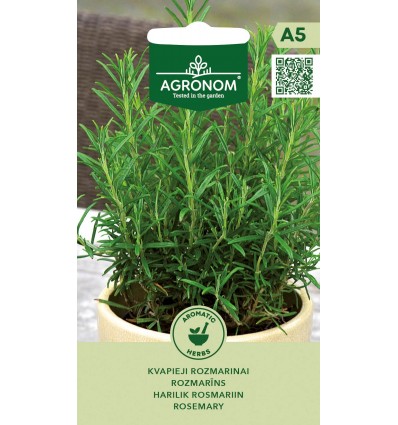
| No rosemary plant yet, or last one struggled | Starting point | Begin with reliable seed and steady light from day one | Rosemary seeds — €1.49 |
FAQ
Does indoor rosemary need to flower to be healthy?
No. Flowering is a bonus, not a health indicator. Plenty of indoor rosemary plants stay vigorous for years and produce all the leaves you need for cooking without ever blooming.
How long does it take rosemary to flower after you fix the light?
Often a full season rather than a few weeks. Rosemary responds to light and temperature changes gradually, so give any adjustment at least a couple of months before deciding it hasn’t worked.
What colour are rosemary flowers?
Usually a soft blue, though some varieties bloom pink or white. They’re small and cluster along the stem rather than forming large showy blooms.
Can you force rosemary to bloom with fertiliser?
Not really, and it can backfire. Extra nitrogen tends to push leafy growth at the expense of flowers, so a lighter feeding schedule usually helps more than a heavier one.
Is a grow light enough on its own, or does rosemary also need a cold spell?
Light solves the most common cause on its own for many growers, but if your home stays warm and stable all year, pairing extra light with a few cooler weeks tends to bring on a fuller flush.
Will rosemary flower in a smart garden or hydroponic setup?
It can, provided the light duration and intensity are adequate, though rosemary is usually grown for leaves in hydroponic setups and flowering is treated as a welcome side effect rather than the goal.
Where to start
If light is the likely gap, start with the grow lights for indoor plants category to compare panel sizes for your space. If you’re planting rosemary for the first time or replacing a struggling plant, the herb seeds range covers rosemary and the other Mediterranean herbs that like similar conditions. For general winter care of an established plant, see our guide on keeping rosemary alive through winter, and for more on light budgets generally, what is DLI and how much light do indoor plants actually need goes into more detail.