Plants at work and allergies don’t have to be a problem. Flowering, highly pollinating species are the most common trigger, and allergy specialists note that up to 70% of people with a birch or grass pollen allergy also react to raw lettuce and similar produce. For a shared office, leafy edible greens and herbs grown hydroponically are usually the lower-risk choice over flowering ornamentals planted in soil.
A colleague’s sneezing fit next to the office ficus is usually blamed on “plant allergies,” but the real culprits are a specific set of pollen-heavy or flowering species, not greenery in general. This matters for any workplace thinking about a shared herb corner or smart garden: the wrong plant choice can genuinely bother someone with hay fever, while the right one is barely different from a bowl of fruit on the counter. This article covers which plants to avoid, which catalogue crops are considered low-risk, and how growing them hydroponically instead of in soil changes the cleaning routine.
Products mentioned — in stock at IndoorGarden, shipped from Tallinn across the EU.

Why plants get blamed for office allergies
Most complaints about “allergic to the office plants” trace back to a short list of causes rather than greenery in general. Workplace safety guidance, such as Australia’s Comcare office safety tool, lists allergies as one of the potential harms of indoor plants, alongside bugs and insects that can live in damp potting soil, and recommends simply checking with staff before bringing plants in and keeping them well maintained. The two practical issues are airborne pollen from flowering species, and dust or mould that builds up on leaves and in overwatered soil. Neither issue is specific to having plants at work at all; it is specific to a handful of plant types and a maintenance routine that lets moisture and debris build up.
The plants more likely to cause a reaction
Flowering, heavily pollinating ornamentals are consistently the ones flagged in gardening and workplace guidance: chrysanthemums, daisies, and other members of the Asteraceae family produce pollen that can trigger classic hay-fever symptoms indoors. Foliage plants with small or inconspicuous flowers release far less airborne pollen and are the safer default for a shared space. A separate issue is fragrance: some people are sensitive to strong plant scents such as concentrated mint or basil oil, which is a smell sensitivity rather than a pollen allergy, but the practical fix is the same — ask before clustering strongly scented pots right next to someone’s desk, and spread plants out rather than grouping them in one corner.

Low-risk edible greens worth growing at a desk
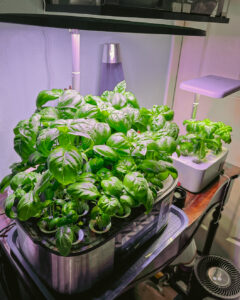
Among the crops in our lettuce and leafy green seeds range, salad-bowl lettuce, basil, dill and chives are all foliage crops with no significant airborne pollen, which makes them a sensible starting point for an office garden. One detail worth knowing: a small number of people with an existing pollen allergy, most often to birch, grass or ragweed, experience mild mouth or throat itching after eating raw lettuce and a handful of other fresh vegetables. Allergists call this oral allergy syndrome, and it is a food cross-reaction rather than an airborne plant allergy — it tends to ease once the food is cooked, and it does not make lettuce a high-risk plant for a shared office garden. It is simply useful context if a colleague already manages a pollen allergy and mentions it.
Why hydroponics is easier to keep allergy-friendly than potted soil
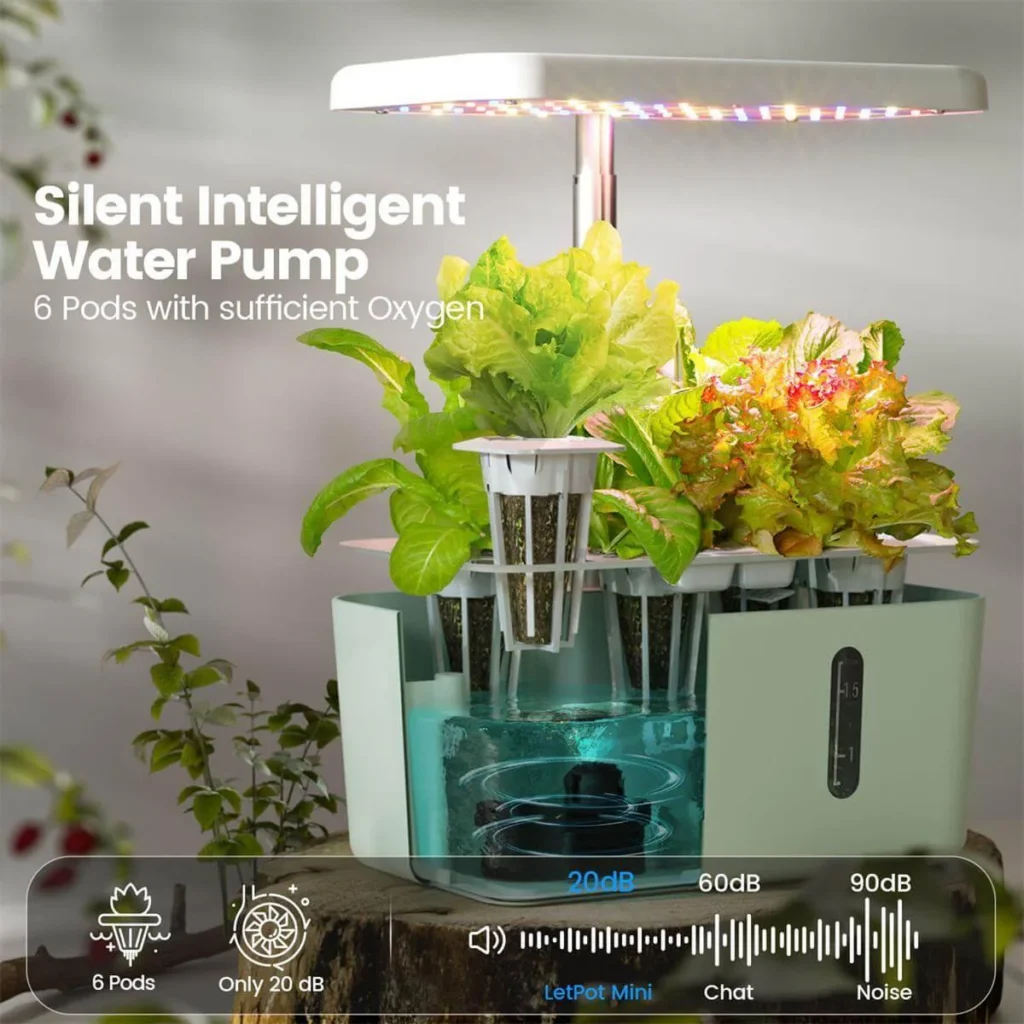
A large share of indoor “plant allergy” complaints are really about what builds up in the growing medium rather than the plant itself. University extension services that study houseplant pests are consistent on this point: fungus gnat larvae need moist soil rich in decaying organic matter to breed, and overwatered potting mix is by far the most common indoor source. A hydroponic system such as a smart garden replaces that soil with a water-and-nutrient reservoir, so there is no compost or organic debris for larvae to feed on, and nothing comparable for dust to settle into between waterings. The trade-off is that the reservoir still needs refilling and an occasional rinse, which is the kind of light weekly upkeep IndoorGarden’s own smart garden pages describe as roughly 5 to 10 minutes.

Keeping a shared growing space genuinely allergy-friendly
A few habits do most of the work. Wipe down leaves occasionally to clear dust, since even low-pollen plants can collect it and make breathing issues worse for sensitive colleagues. Stick to the refill and cleaning schedule the system’s instructions set out rather than letting the reservoir go stagnant. Keep flowering ornamentals out of the shared area and favour foliage and herb crops instead. Ask before adding anything strongly scented near someone else’s desk, and name one person as the point of contact for watering and harvesting so the routine doesn’t slip. None of this requires special equipment — it is closer to normal kitchen hygiene than to managing a health hazard.
| Product | Type | Price |
|---|---|---|
| Lettuce salad bowl seeds | Low-pollen edible foliage crop | 1,99 € |
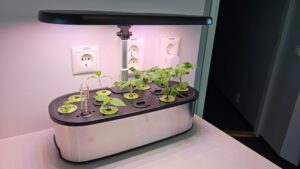
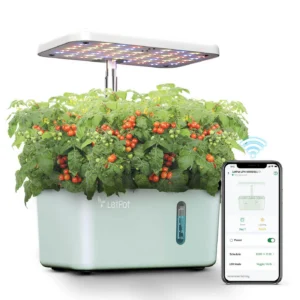
| LetPot Mini 5-pod smart garden | Soil-free hydroponic system, 10 W LED, 1.5 L reservoir | 59,00 € |
Frequently asked questions
Can office plants really cause allergy symptoms?
A small number of species can, mainly flowering, heavily pollinating ornamentals. Most foliage and edible greens release very little airborne pollen and are not typically linked to noticeable allergic reactions indoors.
Which plants should be avoided if a colleague has pollen allergies?
Flowering members of the daisy family, such as chrysanthemums, and other strongly pollinating ornamentals are the usual culprits named in gardening and workplace-safety guidance. Foliage plants and herbs with small, inconspicuous flowers are generally a safer substitute.
Does lettuce trigger allergic reactions?
For most people, no. A minority with an existing birch, grass or ragweed pollen allergy can experience mild mouth or throat itching after eating raw lettuce, a cross-reaction called oral allergy syndrome. It usually eases when the lettuce is cooked and is unrelated to airborne plant allergies.
Are fragrant herbs like basil or mint a problem for sensitive colleagues?
Strong scents can bother people with fragrance sensitivities, which is a different issue from a pollen allergy. Spacing plants out and checking with nearby colleagues before adding strongly scented herbs avoids most complaints.
Does a hydroponic system attract fungus gnats the way potted soil does?
Gnat larvae need moist soil with decaying organic matter to breed, which a hydroponic reservoir does not provide. This is one of the practical reasons a soil-free system is easier to keep clean in a shared space.
How often does a shared office garden need cleaning?
Beyond the refill schedule the system’s own instructions set out, an occasional wipe of the leaves and growing tray to clear dust is usually enough for a small desk or break-room setup.
Where to start
If allergy concerns have been holding a team back from adding greenery to the office, start with a foliage crop rather than a flowering one: a tray of lettuce or leafy green seeds in a small hydroponic unit covers most of the low-risk, low-maintenance ground. Questions about a specific colleague’s allergy or a larger shared setup can go to our contact page and we’ll point you in the right direction.