The most reliable plants for growing indoors in winter are fast microgreens, cold-tolerant herbs such as chives and parsley, and lettuce and spinach, which University of Vermont Extension lists as crops you can still harvest from containers in January. Basil, the most demanding of the eight, needs 12 to 16 hours of grow-light exposure a day once daylight runs short.
A Baltic winter does to houseplants roughly what a hard frost does to an outdoor bed: growth simply stalls once light runs short. Some crops shrug this off, others need a grow light to keep going at all. This guide covers eight plants from our own range that genuinely keep producing indoors through winter, grouped by how much light each one actually needs.
Products mentioned — in stock at IndoorGarden, shipped from Tallinn across the EU.

Why indoor growing gets harder in winter
Natural daylight in the Baltics in winter is a fraction of what it is in summer, and light, not temperature, is behind most winter growing problems. Iowa State University Extension recommends keeping supplemental lighting 15 to 30 cm above the foliage and running it 12 to 16 hours a day once natural window light falls short. Most herbs tolerate a minimum of around 6 hours of direct light daily, though most do better with 8 hours or more. That is also why a windowsill that grows lush basil all summer simply stops feeding the same plant once winter sets in.
A second common mistake is leaving a plant pressed against cold glass. University of Vermont Extension’s winter gardening guide recommends keeping plants away from cold drafts and away from touching window glass, since contact damages leaf tissue and slows growth even further than low light alone. The simplest first check is overall growth habit: a plant stretching tall with thin, pale leaves is usually telling you it needs more light, not more water or feed.
The fastest option for the darkest months: microgreens
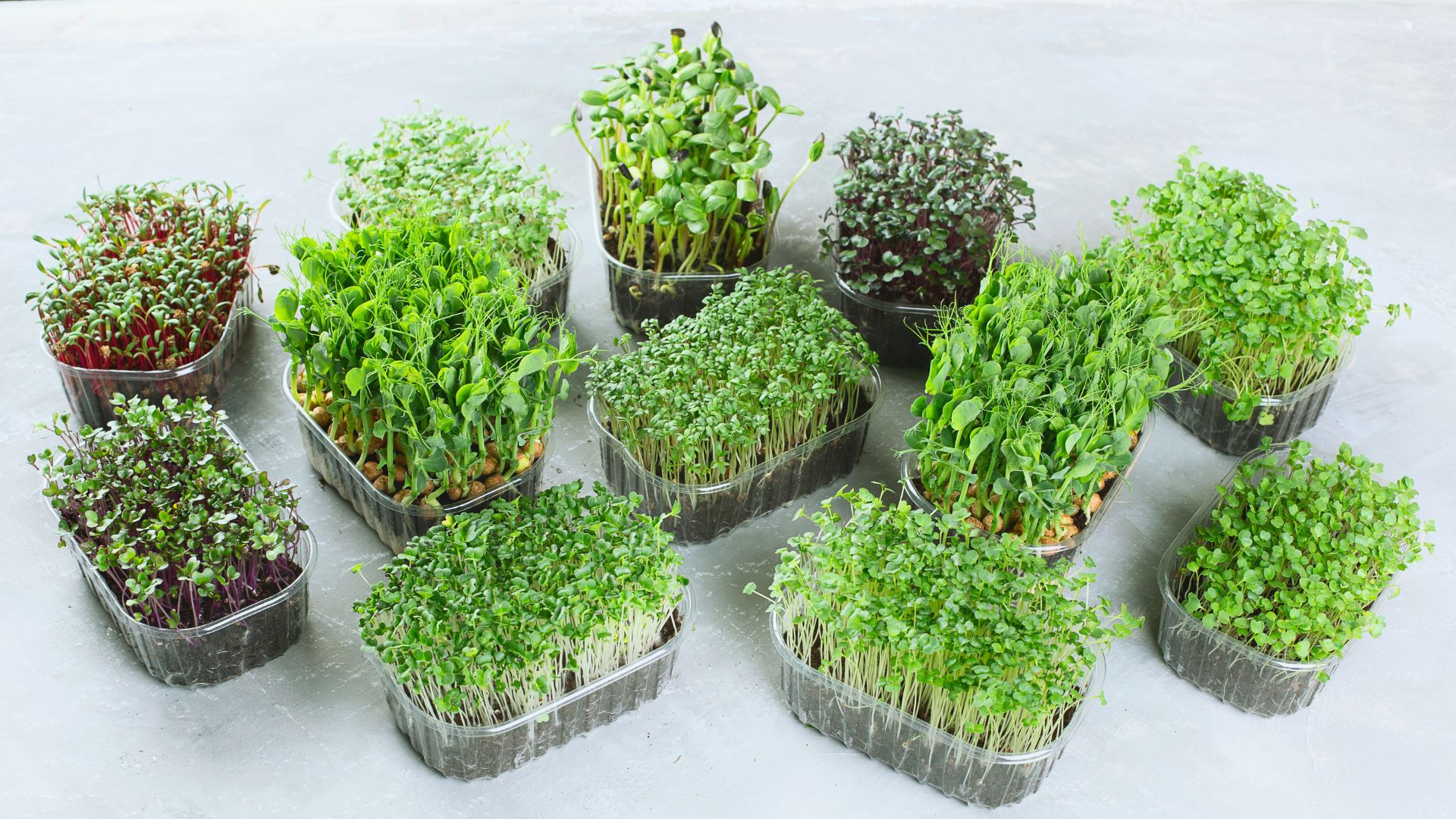
Microgreens are the most rewarding winter crop because their growing cycle is so short that they reach harvest before a light shortage can really slow them down. Garden cress is typically the fastest of all, giving a first cut in about 6 to 8 days from sowing and needing only bright, indirect light to do it. Pea microgreen seeds take a little longer: the manufacturer recommends soaking them 8 to 12 hours before sowing, after which a first cut typically follows in 10 to 14 days. Both grow perfectly well in an ordinary bowl with no supplemental light at all, though a bright spot near a window speeds things up further. Because a microgreen tray is cut once and re-sown rather than nursed along for weeks, it suits winter well when you want a quick, reliable result without planning a longer light schedule. The full range is in our microgreen seeds category.
Cold-tolerant herbs that cope with less light
A few herbs handle a dim winter windowsill surprisingly well, even while others on the same sill are already stretching and fading. University of Vermont Extension names chives, basil and thyme as herbs that can manage on a bright windowsill in winter, though basil is the most light-hungry of the three. Chives bounce back quickly after cutting and tolerate a cooler room, which makes them the safest starting point for a beginner. Parsley is also fairly forgiving of modest light and uneven watering, though it germinates more slowly than most herbs, typically taking 2 to 3 weeks against chives’ faster start. Peppermint needs at least 6 hours of bright light a day but still keeps growing in more moderate light if kept near a window and away from a radiator. Peppermint also spreads vigorously on its own, so it is worth giving it its own pot in winter rather than sharing a container with slower-growing neighbours that would otherwise lose out. All three do equally well in a soil pot or a hydroponic smart garden pod. The quickest way to check whether a herb is getting enough light is to watch stem length week to week: tight, compact growth means light is adequate, while a plant starting to stretch is telling you the windowsill alone is no longer enough, and it is worth adding light before the plant starts dropping leaves.
Leafy greens that still crop in December and January
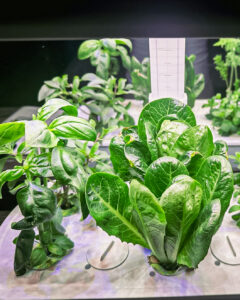
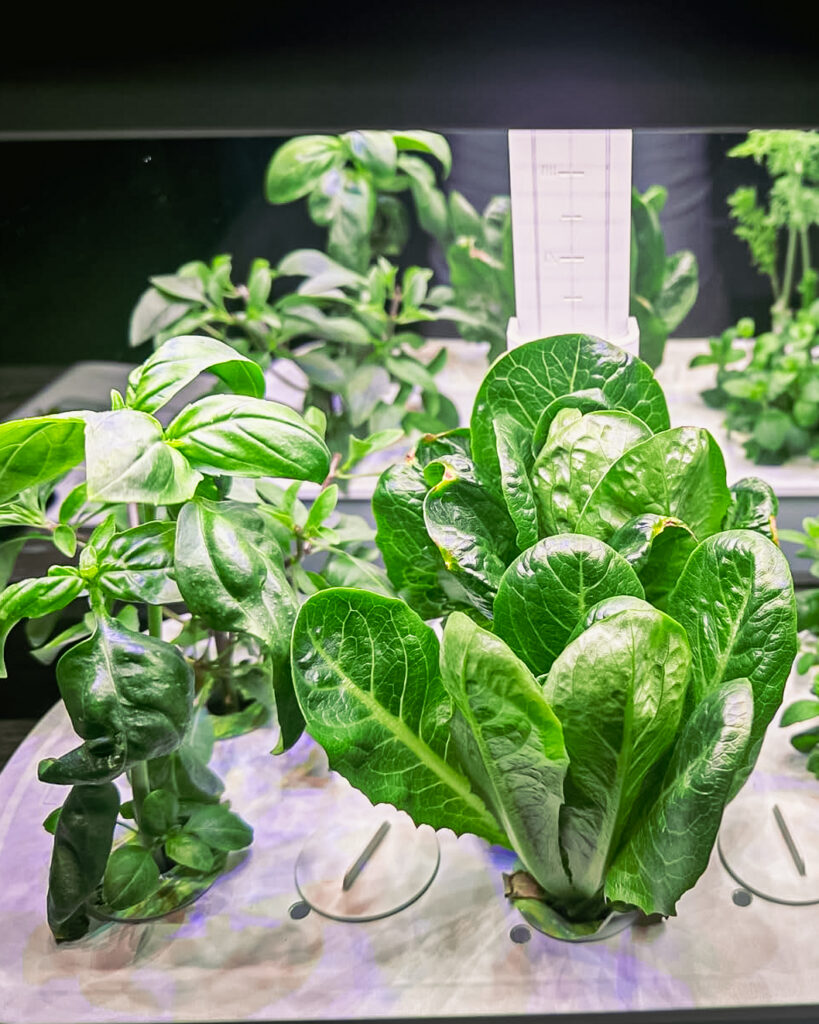
Lettuce and spinach are two crops University of Vermont Extension names directly as suitable for a January harvest from containers, provided they get a decent light source, a good growing medium and even moisture. Salad Bowl lettuce typically gives its first cuttable leaves within 3 weeks and regrows every 5 to 7 days after that if you only cut the outer leaves. Spinach is the more cold-tolerant of the two and copes better than most leafy crops when positioned near a cold winter window, though it still needs a decent light source to avoid thin, pale leaves. Both grow well in a pot or a smart garden pod, where steady moisture keeps them stable between cuttings. Unlike herbs, which are picked in small amounts over months, lettuce and spinach give a bigger harvest at once, so sowing them a week or two apart through winter spreads the crop out instead of landing it all on the same day.
If you want more: basil and a grow light
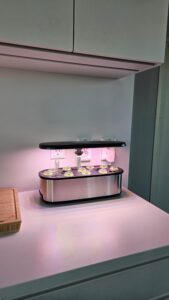
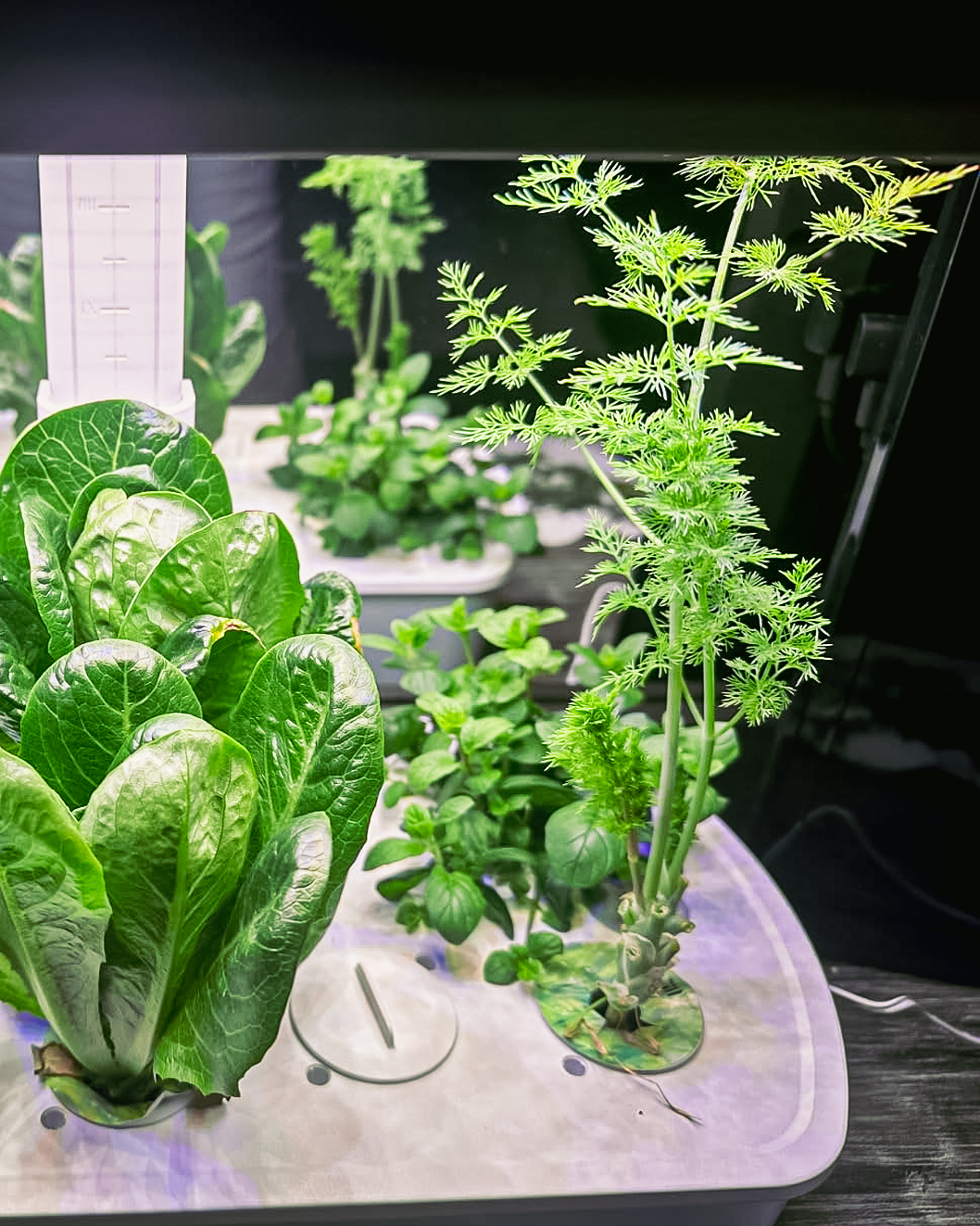
Basil is the most light-hungry of the eight and also one of the most requested indoor crops, which is why it still earns its place here, just with one extra condition attached. Iowa State University Extension’s guidance puts basil’s winter light need at 12 to 16 hours a day of supplemental light positioned roughly 15 to 30 cm from the foliage, since window light alone usually falls short through the darkest months. A compact tabletop LED plant light that holds 3 pots supplies exactly that kind of top-up without needing to build a dedicated shelf by the window. If you would rather the light and watering ran entirely on their own, a smart garden does that job, with a timed LED and a water tank keeping conditions steady all winter regardless of how dark it gets outside. Other grow lights suited to basil and other demanding crops are in our grow lights category. Consistency in the light schedule matters too: a lamp running 16 hours some days and only 8 on others produces slower, patchier growth in basil than a fixed schedule that switches on and off at the same time every day.
Temperature and humidity in winter
Light is not the only factor in winter, even though it is the biggest one. Most of the plants here prefer a room temperature between 18 and 22 °C and suffer if the pot sits in a draft from a cold window or an open door. Central heating commonly drops indoor humidity to 30-40% in winter, which is lower than most herbs and leafy greens would prefer. Moving pots a little further from the radiator and misting occasionally, or keeping a bowl of water nearby, helps raise humidity without having to overwater the growing medium itself.
8 plants at a glance
The table below shows how much light each one needs and how quickly to expect a first harvest.
| Plant | Light need | First harvest | Price |
|---|---|---|---|
| Garden cress | Bright, indirect light | 6-8 days | see category |
| Pea microgreens | Bright, indirect light | 10-14 days | €6.99 |
| Chives | Moderate, 6+ h | 3-4 weeks | see category |
| Parsley | Moderate, 6-8 h | 4-6 weeks | see category |
| Peppermint | At least 6 h | 3-4 weeks | see category |
| Lettuce (Salad Bowl) | 8+ h or grow light | 3 weeks | see category |
| Spinach | 8+ h or grow light | 4-5 weeks | see category |
| Basil | 12-16 h of grow light | 3-4 weeks | see category |
Frequently asked questions
Do all houseplants need a grow light in winter?
No. Microgreens and cold-tolerant herbs like chives usually manage fine on a bright windowsill without extra light, while basil and other light-hungry crops generally need a grow light in winter to keep growing at all.
Which plant grows fastest in winter?
Garden cress is the quickest of the eight, giving a first cut within 6 to 8 days of sowing. That makes it a good choice when you want a fast result before slower crops are ready.
Can basil be grown in winter without a grow light?
Sometimes, on a very bright south-facing window, but most Estonian homes fall short of what basil needs through winter. Iowa State University Extension puts basil’s requirement at 12 to 16 hours of light a day, which supplemental lighting delivers more reliably.
How far should a grow light sit from the plant?
Iowa State University Extension recommends roughly 15 to 30 cm from the foliage for stronger light intensity. A light hung too far away delivers far less light to the plant than it appears to.
Does a smart garden solve the winter light problem?
Largely, yes, since a smart garden’s LED runs on its own schedule regardless of how dark it is outside, and the water tank keeps moisture steady even if you miss a watering. The exact balance of light and nutrients still depends on the crop you grow.
Why is my houseplant getting tall and pale in winter?
That is the most common sign of too little light. The plant stretches toward whatever light it can find and grows thin, pale leaves. Supplemental light for 12 to 16 hours a day usually fixes it faster than changing feed or watering.
Which plant recovers best after cutting?
Chives and lettuce both bounce back quickly if you only cut part of the plant at a time. Microgreens, by contrast, are a one-cut crop and need a fresh sowing after every harvest.
Where to start
If you want a quick, reliable result this week, start with pea microgreen seeds or garden cress. If basil or something more demanding is the goal, add a proper grow light from the start, or move to a fully automated smart garden that keeps light and watering steady all winter, however early it gets dark outside. Everything ships from our Tallinn warehouse across the EU.