Mint dying indoors nearly always comes down to water and light rather than bad luck. Soggy compost starves roots of oxygen and root rot can set in within 7 to 10 days, while anything under 6 hours of usable light leaves stems thin and leaves pale. Fix drainage, cut the plant back hard, and most mint recovers in about three weeks.
I have killed more mint on a windowsill than I ever managed in a garden bed, which still feels absurd for a plant that takes over half a border outdoors. The difference is that indoors, nothing dries out. A pot that would shed its excess water in a day outside stays wet for four or five days on a kitchen counter in February, and the roots pay for it. Once I started treating indoor mint as a drainage question first and a plant question second, the yellow leaves mostly stopped appearing.
What dying mint actually looks like
Mint decline is a set of visible symptoms — yellowing, wilting, crisp margins or long bare stems — that each point back to a different cause. The pattern tells you more than the severity does. A plant that has lost half its leaves to underwatering will bounce back in ten days, while a plant with three yellow leaves and wet soil may already have lost most of its root system. Before you change anything, push a finger 3 cm into the compost and note whether it comes out damp or dusty. That single check rules out roughly half the possible causes.
| What you see | Most likely cause | First fix |
|---|---|---|
| Lower leaves yellow, soil damp, stems limp | Overwatering and root rot | Stop watering, repot into fresh mix with drainage holes |
| Whole plant wilts quickly, leaf edges crisp | Underwatering | Soak until water runs out, then water when the top 2 cm are dry |
| Long bare stems, small pale leaves | Too little light | Move to a brighter spot or run a grow light 14 hours a day |
| Even pale green, growth has stalled | Nutrient shortage | Half-strength liquid feed every 14 days |
| Orange or brown pustules under the leaves | Mint rust | Remove affected leaves, keep foliage dry |
| Yellowing from the leaf margin inward, stem by stem | Verticillium wilt | Discard the plant and its compost, start again |
Overwatering is the cause I see most
Root rot is a fungal breakdown of the root system that happens when compost stays saturated long enough to push out air. Mint likes consistently moist soil, and that wording trips people up. Moist means the compost holds together when squeezed and releases a drop or two of water, not that it glistens. Indoors at 19 to 21 °C with no wind, a 12 cm pot on a windowsill can hold usable moisture for five days in winter against one to two days in July.
The tell is yellow lower leaves on damp soil. Roots that cannot breathe stop moving water upward, so the plant wilts while sitting in a puddle, which is why so many people water again and finish the job. Tip the plant out. Healthy mint roots are white to pale cream and smell of nothing much. Rotted roots are brown, soft, and pull away between your fingers. Trim every soft root, repot into fresh peat-free mix in a pot with drainage holes, and skip watering for three days. Utah State University Extension makes the same point for garden mint, noting that overwatering promotes rust and cuts oil production in the leaves.
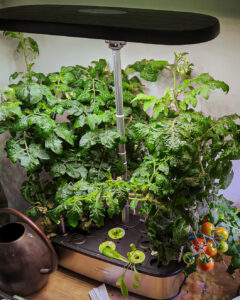
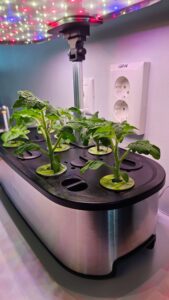
Two habits cause most of it. The first is a decorative outer pot with no drainage, which quietly holds 100 to 200 ml of water under the root ball. The second is watering on a schedule instead of by feel. If you would rather take the guesswork out entirely, a wicking or hydroponic setup delivers water on demand, which is one reason mint behaves so well in smart gardens.
Underwatering looks dramatic but is easy to reverse
Underwatering is water loss faster than the roots can replace it, and mint shows it within hours. The whole plant flops at once, leaf edges go papery and brown, and the pot feels noticeably light. Unlike root rot, this is usually recoverable in a single afternoon. Stand the pot in 3 to 4 cm of water for 20 minutes so the compost rehydrates from below, then let it drain fully. Dry compost often repels water from above, so top watering just runs down the sides and out.
Mint in a small pot next to a radiator is the classic case. A 9 cm pot holds so little compost that it can dry out completely in 36 hours during the heating season. Moving up to a 15 to 18 cm pot, or grouping plants to raise local humidity, buys you several days of margin.
Light is the quiet reason mint gets leggy
Leggy growth is stem stretching caused by low light, and it is the most common non-fatal problem I see on indoor mint. Stems reach 15 to 20 cm with big gaps between leaf pairs, and the leaves themselves come in smaller and paler. Mint wants 6 to 8 hours of direct light or 12 to 16 hours under a grow light. A north-facing windowsill in Tallinn in December delivers a fraction of what mint needs, and no amount of careful watering makes up for it.
Aim for 200 to 400 µmol/m²/s at leaf level under an LED, which for most household panels means hanging it 20 to 30 cm above the plant. A timer set to 14 hours is simpler than trying to judge daylight. If you want the underlying numbers on how much light a herb actually needs, our guide to whether mint can grow indoors covers the practical thresholds.
Tired compost, cramped pots and hungry plants
Mint is a heavy feeder that exhausts a small pot faster than most herbs. After 8 to 12 weeks in the same compost, nitrogen runs low and the whole plant fades to a flat pale green with no new growth. This is different from overwatering yellowing, which starts at the bottom and comes with damp soil. Feed at half the label strength every 14 days during active growth, and repot into fresh mix once a year.
Rootbound plants show a second version of the same problem. When roots circle the pot wall and water runs straight through in seconds, there is no compost left to hold nutrients. Divide the root ball into two or three pieces with a knife and repot each one. Mint takes this treatment without complaint and usually grows back stronger.
Pests and disease indoors
Indoor mint dodges most outdoor pests, but two problems still turn up. Aphids are small soft-bodied insects that cluster on the undersides of young leaves and cause curling, yellowing and sticky honeydew. A firm rinse under the tap knocks most of them off, repeated every 3 days for two weeks. Insecticidal soap handles the rest.
Mint rust shows as small raised spots on leaf undersides that turn orange, then reddish brown. It needs wet foliage to spread, so watering the compost rather than the leaves prevents nearly all of it. Verticillium wilt is the serious one. Washington State University plant pathology lists it as the most destructive disease of mint, and the symptom is yellowing that starts at the leaf margin and works inward, often taking one stem at a time. There is no home cure. Bin the plant and the compost, wash the pot, and start from seed.
The three-week recovery routine
This is the sequence I use on any mint that still has firm green stems somewhere.
- Check the compost 3 cm down and identify which side of the water problem you are on.
- Tip the plant out and inspect the roots. Trim anything brown and soft with clean scissors.
- Repot into fresh peat-free compost in a pot with drainage holes, 3 to 5 cm wider than the root ball.
- Cut every stem back to 2 to 3 cm above the compost. This feels brutal and is the step that works.
- Water once until it drains, then wait until the top 2 cm are dry before watering again.
- Give 12 to 14 hours of light a day, at 20 to 30 cm under an LED if daylight is short.
- Hold off feeding for 14 days, then start at half strength.
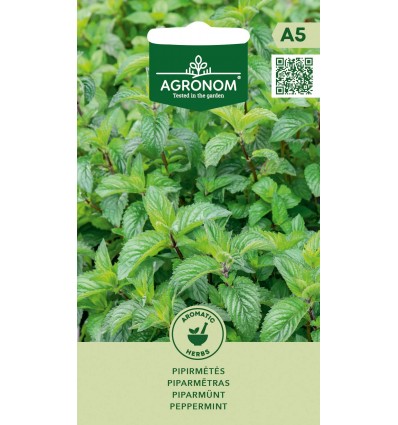
Expect the first new shoots in 7 to 10 days and a usable plant by week three. If nothing appears after 21 days, the crown is dead and a fresh start from peppermint seed is faster than nursing what is left.
Frequently asked questions
Why is my mint turning yellow but the soil is wet?
That combination points to root rot rather than thirst. Waterlogged compost pushes air out of the root zone, the roots begin to break down, and the plant cannot move water upward even though there is plenty of it. Repot into fresh mix, trim soft roots, and let the compost dry to 2 cm before watering.
Can mint come back from being almost dead?
Usually yes, as long as the crown and some stem tissue are still firm and green. Mint regrows from the base, so cutting everything back to 2 to 3 cm and correcting the watering will produce new shoots within 7 to 10 days in most cases.
How often should I water mint indoors?
By feel rather than by calendar. Water when the top 2 cm of compost are dry, which typically means every 2 to 3 days in summer and every 5 to 7 days in winter for a 15 cm pot. Always water until it drains from the bottom, then empty the saucer.
Does mint need a grow light indoors?
In northern Europe, from October to March, yes. Natural light in that period rarely gives mint the 6 hours of direct sun it wants, and the result is leggy stems and small leaves. A modest LED running 12 to 14 hours a day fixes it.
Why does my indoor mint smell weak?
Essential oil concentration drops when the plant is overwatered, overfed with nitrogen, or allowed to flower. Pinch off flower buds as they appear, feed at half strength, and harvest the youngest leaves, which carry the most oil.
Should I repot mint that keeps struggling?
If it has been in the same compost for more than a year, or water runs through in under 5 seconds, repotting is the single most useful thing you can do. Divide the root ball into two or three sections at the same time.
Is it worth starting over from seed?
When the crown is soft or verticillium wilt is involved, yes. Mint germinates in 10 to 15 days at 20 °C and reaches a first harvest in around 8 weeks, so you lose less time than you would nursing a failing plant.
Start again with a plant that will not sulk
Most indoor mint failures trace back to a pot that holds water and a windowsill that does not hold light. Sort those two things and mint becomes one of the easiest herbs in the house, and one of the hardest to stop. If you are replanting, our range of herb seeds for indoor growing is the place to start, and it is worth reading how to keep mint contained indoors before it decides to colonise the rest of your kitchen.