Tomato flowers falling off without setting fruit is called blossom drop, and indoors it comes down to three things. Pollen goes sticky and sterile above 29 °C by day or 21 °C at night, nothing shakes the flower so pollen never moves, and humidity sits outside the 40 to 70 percent window. Fix those and fruit follows.
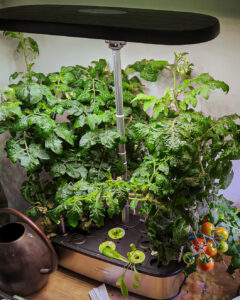
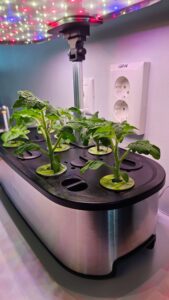
The first winter I grew tomatoes in a smart garden I counted 34 flowers and harvested four tomatoes. The plant looked magnificent. Every truss opened, went yellow at the stalk, and dropped within a few days. It took me two seasons to work out that none of it was the plant’s fault, and that indoors you are the pollinator whether you signed up for the job or not. Here is the sequence I now run, in order, whenever flowers start falling.
What blossom drop actually is
Blossom drop is the abortion of an unfertilised flower, where the plant severs the flower at a joint in the stalk called the pedicel rather than spending resources on it. The tell is unmistakable once you know it: the pedicel turns yellow first, then the whole flower comes away cleanly at that joint, leaving a bare stub on the truss. A flower that was fertilised does the opposite, the petals shrivel and hang on while a green bead swells behind them.
The timing matters more than most people realise. According to University of Maryland Extension, a tomato flower must be pollinated within roughly 50 hours of opening or it dies, because that is how long the pollen needs to germinate and travel down the style to the ovary. You have about two days per flower. Miss the window and no amount of correction afterwards saves that particular bloom.
Step 1: get the temperature into the range pollen tolerates
Tomato pollen has a narrower comfort zone than the plant it comes from. Work from University of Missouri Extension puts the failure points at daytime temperatures above 29 °C or nighttime above 21 °C, at which pollen turns tacky and non-viable, and nighttime below 13 °C, which damages both pollen viability and the growth rate of the pollen tube. Sustained exposure above 40 °C aborts flowers outright within hours.
Indoors the night figure is the one that catches people. A kitchen that holds 24 °C all evening because the oven ran, the fridge vents nearby and the LED fixture has been on for 16 hours is a room where tomato pollen quietly fails every single night, while the plant itself looks perfectly healthy. Measure at canopy height rather than trusting the wall thermostat, and measure at 23:00 rather than midday.
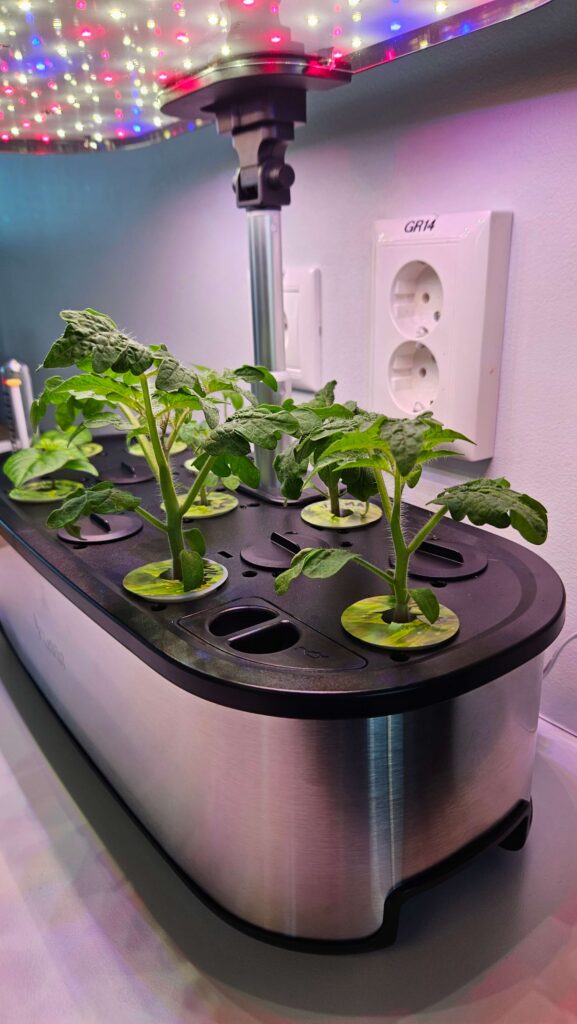
The fixes are dull and effective. Shift the light schedule so the lamp goes off earlier and the room has a genuine cool period. Move the plant off a heat source. If the grow light sits under 20 cm from the truss it is adding several degrees of radiant heat directly onto the flowers, so raise it. Aim for 21 to 29 °C by day and 15 to 20 °C overnight, which is a comfortable home rather than a heated one.
Step 2: pollinate by hand, every day
Tomatoes are about 98 percent self-pollinating, which sounds like it should make this easy. The catch is that the pollen still has to physically fall from the anther cone onto the stigma inside the same flower, and outdoors that happens because wind shakes the truss. A sealed room has no wind. The flower opens, holds its pollen, and times out.
Three methods work, and I have used all of them. Flick each open flower sharply with a fingernail, once a day. Hold an electric toothbrush against the stem just behind the truss for two seconds, which is what commercial growers imitate with vibrating wands. Or run a small clip fan on the plant for a few hours a day, which handles the whole plant at once and doubles as humidity control. Do it around midday when humidity is at its lowest, because that is when pollen sheds most freely.
You will know it worked within about a week. The full method, including what a successfully pollinated truss looks like at day three, is in my guide to hand-pollinating tomatoes indoors.
Step 3: correct humidity, feeding and load
Relative humidity governs whether pollen can leave the anther and whether it sticks once it lands. The workable range is 40 to 70 percent. Below that, pollen dries out and slides off the stigma. Above 80 percent it clumps and never sheds from the anther in the first place, which is the failure mode inside a closed smart garden dome or a plastic-covered propagator.
Feeding is the quieter cause. Excess nitrogen pushes a tomato into leaf production at the expense of fruit set, so a plant that is enormous, dark green and flowerless is usually overfed rather than underfed. Once trusses form, switch to a tomato-specific feed that is lower in nitrogen and higher in potassium, and in hydroponics hold EC around 2,0 to 2,4 mS/cm during fruiting. There is more detail on measuring this in the post on EC in hydroponics.
Finally, watch the load. Once the bottom trusses carry a heavy set, developing fruit outcompete new flowers for resources and the middle trusses drop. This is normal self-regulation. Thin to four or five fruit per cluster and the upper trusses set again once the lower fruit is picked.
Diagnose it from what you can see
| What you observe | Most likely cause | Fix | Time to first fruit set |
|---|---|---|---|
| Every flower drops, plant otherwise vigorous | No pollination happening | Flick or vibrate each flower daily at midday | 7 to 14 days |
| Drops worst in a warm room or late summer | Night temperature above 21 °C | Shorten light hours, raise the lamp, cool the room | 10 to 21 days |
| Drops on a cold windowsill in winter | Night temperature below 13 °C | Move 20 to 30 cm off the glass | 10 to 21 days |
| Huge dark green plant, few flowers | Excess nitrogen | Switch to a high-potassium tomato feed | 14 to 28 days |
| Inside a closed dome or covered garden | Humidity above 80 percent | Vent the cover, add a small fan | 7 to 14 days |
| Lower truss loaded, middle truss dropping | Competition from set fruit | Thin to 4 or 5 fruit per cluster | Resumes after harvest |
The daily routine that ended the problem for me
- Check canopy temperature at night, not room temperature during the day.
- Flick every open flower once, around midday, taking about ten seconds per plant.
- Keep a fan on low for three to four hours to move air across the trusses.
- Vent any dome or cover as soon as the first flowers open.
- Switch to a high-potassium feed the week the first truss appears.
- Thin clusters to four or five fruit and remove the rest early.
- Choose a compact determinate variety bred for containers rather than a full-size beefsteak.
That last point does more work than it seems. Compact determinate varieties set and ripen a whole crop in a shorter window and cope far better with the limited root volume and light of an indoor system. I grow Balconi Yellow H for exactly this reason, and there is a wider comparison in my post on dwarf tomatoes for a smart garden.
Frequently asked questions
Is it normal for some tomato flowers to fall off?
Yes. Losing the first truss or two on a young plant is routine, and a mature plant will always shed a proportion. Concern is warranted when you are losing effectively all of them across several weeks with no fruit forming at all.
How long after pollination does a tomato start to form?
A fertilised flower shows a visible green swelling behind the shrivelled petals within 5 to 10 days. From there, a cherry tomato typically takes 25 to 40 days to reach full colour, depending on variety and temperature.
Can I use a spray to stop blossom drop?
Blossom set sprays containing a synthetic auxin do force fruit development without fertilisation, and they are sold for this. The fruit is often seedless and can be hollow or misshapen. Hand pollination costs nothing and gives a better tomato, so I would exhaust that first.
Why do my tomato flowers fall off but the plant looks healthy?
That combination points almost exclusively at pollination or temperature rather than at plant health. A stressed, diseased or starved plant looks stressed. A vigorous plant dropping every flower is a plant whose pollen is either not moving or not viable.
Do I need a grow light for indoor tomatoes to fruit?
In practice, yes, outside high summer. Fruiting tomatoes want a daily light integral around 20 to 30 mol/m²/day, and a northern European windowsill delivers a fraction of that from October to March. You can check your own figure with the free indoor gardening tools.
Should I remove flowers from a very young plant?
Yes, if the plant is under about 30 cm tall or still has a thin stem. Pinching off the first truss lets it build root and leaf area first, and the second truss then sets far more reliably than the first would have.
Where to start if your trusses keep emptying
Run the three steps in order rather than all at once, because temperature and pollination are the cause in the large majority of indoor cases and both are free to test. Give each change a full two weeks before judging it, since any flower already open when you made the change was probably beyond saving. If the variety itself is a full-size outdoor type squeezed into a small pot, no amount of technique will fully compensate, and starting again from a compact indoor variety is the faster route. You can browse the tested options in the tomato seed range at IndoorGarden.