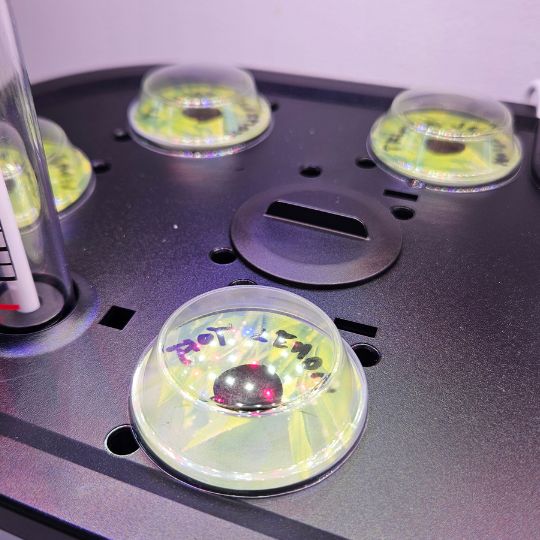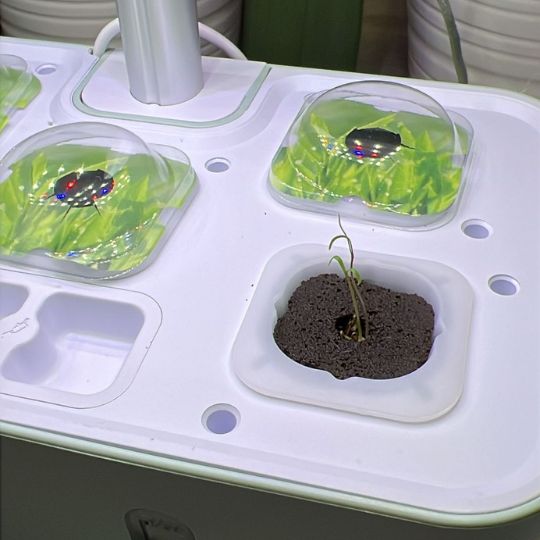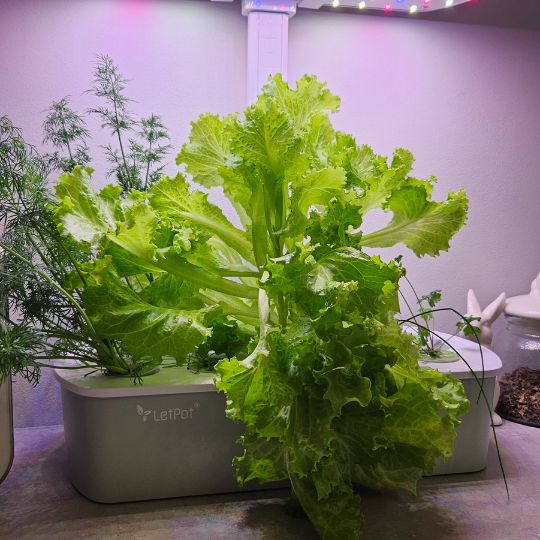


When I first started growing herbs in a hydroponic system, the one thing nobody explained clearly was EC. I knew I needed to add nutrients. The bottle said to add a capful per litre. I did that, and for a while it seemed fine. Then my basil started yellowing at the edges, my lettuce grew slowly, and I had no idea whether I had added too much or too little. The problem was not the nutrients. The problem was that I had no way of knowing what was actually in my water.
EC — electrical conductivity — solved that for me. Once I understood it, nutrient management stopped being guesswork and became something I could actually control. This post explains what EC is, why it matters, what the research says about target ranges for different crops, and how to use the calculator below to work out exactly how much to add to your reservoir.
Table of Contents
What EC actually measures
Pure water does not conduct electricity. When you dissolve mineral salts in water — which is exactly what plant nutrients are — the solution starts to conduct a small electrical current. The more dissolved minerals, the higher the conductivity. EC is simply a measure of that conductivity, expressed in millisiemens per centimetre (mS/cm).
This matters because plant roots absorb nutrients as dissolved ions. If the concentration of those ions is too low, plants are undernourished. If it is too high, the osmotic pressure of the solution actually pulls water out of the roots rather than letting the plant absorb it — a condition growers call nutrient burn. EC gives you a reliable, measurable number that reflects both of those risks in real time.
The foundational science behind this comes from research by Dennis Hoagland and Daniel Arnon at the University of California, who developed the first complete mineral nutrient solutions for plant growth in the 1930s and 1940s. Their work, The Water-Culture Method for Growing Plants Without Soil, established that plants require specific concentrations of dissolved minerals and that conductivity is a practical proxy for measuring those concentrations. It is still referenced in hydroponic research today.
Why different crops need different EC levels
Not every plant tolerates the same concentration of dissolved nutrients. Leafy greens and herbs have lower EC needs because they grow quickly, have shallow roots, and are sensitive to salt stress. Fruiting crops like tomatoes and peppers need higher concentrations to support the energy demands of flowering and fruit production.
The most widely cited crop-specific EC recommendations for commercial hydroponics come from Wageningen University & Research in the Netherlands, which has been running controlled environment crop trials for decades. Their greenhouse horticulture division publishes nutrient management guidelines used by professional growers across Europe. The ranges used in the calculator below are drawn from that research: lettuce and salad crops at 1.0–1.4 mS/cm, herbs at 1.2–1.6, tomatoes at 2.0–3.5, and seedlings kept low at 0.5–0.8 to avoid stressing young roots.
The FAO also published a practical hydroponics manual that covers EC management for food production in low-resource settings. Their document on soilless culture for food production confirms these ranges and is a useful reference for anyone who wants to go deeper into the underlying agronomy.
How to read the EC in your reservoir
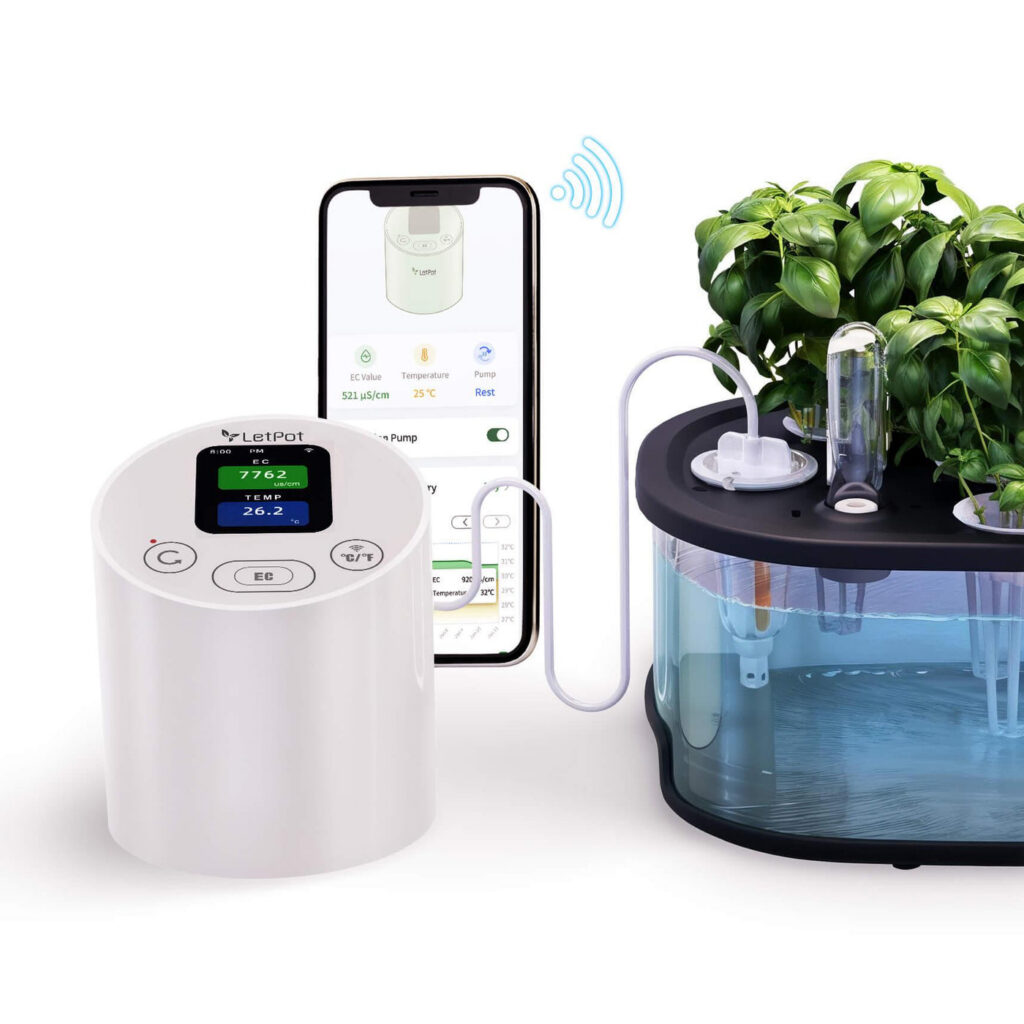
You need an EC meter. There is no reliable way to estimate the conductivity of your water by looking at it, and the dosing instructions on nutrient bottles are a starting point, not a precise recipe — they assume you are starting from zero, which tap water in northern Europe never is. Tap water in Estonia and most of northern Europe already has an EC of around 0.2–0.5 mS/cm before you add anything. If you ignore that and dose as if your water starts at 0.0, you will consistently overshoot your target.
A basic EC meter costs very little and lasts for years. You can find ones suitable for home hydroponic use in our testers and meters category. Measure your tap water before adding nutrients so you know your baseline, then measure again after mixing to confirm you have hit your target.
Use the calculator to get the right dose
The calculator below does three things. It tells you how many millilitres of nutrient concentrate to add to raise EC from your current reading to your target. It tells you how much fresh water to add if you have accidentally overshot. And it gives you a practical pH reference, because EC and pH work together — getting EC right while ignoring pH means your plants still cannot access the nutrients you have added.
The dosing formula it uses is straightforward: millilitres to add equals the difference between your target and current EC, multiplied by your reservoir volume in litres, divided by the EC contribution rate of your specific product. That rate — how much one millilitre raises EC in one litre of water — is different for every nutrient product and is where most DIY calculators go wrong by using a generic number. This calculator uses figures verified from the actual product pages and technical data sheets of the nutrients we stock, including LetPot Plant Food A+B, Botanium Nutrients, and CitySens Mineral Nutrients.
EC Calculator
EC and pH work together
One thing I learned the hard way is that you can have a perfect EC reading and still see nutrient deficiency symptoms. The reason is almost always pH. At the wrong pH, certain minerals become chemically unavailable to plant roots even when they are present in the solution at the right concentration. Calcium and magnesium lock out when pH drops below 5.5. Iron and manganese lock out when it rises above 6.5. The safe window for hydroponics is 5.5–6.5, with 6.0 being the practical target for most crops.
The pH guide tab in the calculator covers this in more detail, including how much pH Up or Down to add and in what increments. The key habit to build is always adjusting EC first and then checking pH, because adding nutrients to your water changes its pH. Doing it in the opposite order means re-doing the work.
A note on tap water and seasonal variation
One thing specific to growing in northern Europe that most international guides miss is seasonal EC variation in tap water. Municipal water EC in Estonia can shift by 0.1–0.2 mS/cm between summer and winter depending on the water source. This is not dramatic, but it means you should measure your tap water at the start of each new reservoir fill rather than assuming a fixed baseline. Over a growing season, that small variation adds up and can explain inconsistent results that otherwise seem hard to diagnose.
Getting started
If you are new to hydroponics, the simplest approach is to start at the lower end of the EC range for your crop and increase gradually over the first two weeks. Plants adjust better to increasing concentration than to being hit with a high EC from day one. Seedlings in particular need a low-EC environment — around 0.5–0.8 mS/cm — until their root systems are established enough to handle higher concentrations.
The nutrients, meters, and growing systems that work with this calculator are all available in our fertilizers for hydroponics section. If you have questions about dosing for a specific system or crop, leave a comment below — I read every one. And if this calculator saves you from a batch of yellowing basil, share it with someone else who is just getting started.