Herb seeds germinate indoors at very different speeds: basil and dill come up in 5 to 10 days, while parsley and rosemary can take up to 3 weeks. We tested 10 herbs in our Tallinn test kitchen in autumn 2026, both on a windowsill and in a smart garden. All 10 grew year-round once they had at least 12 hours of light a day.
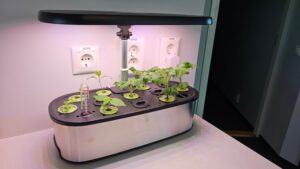
I look after the test bench at IndoorGarden in Tallinn, and in September 2026 we sowed ten common kitchen herbs side by side: five in pots on the windowsill and five in a LetPot Mini smart garden on the kitchen counter. I logged the germination day and first harvest for each variety. The result was clear: the smart garden herbs were ready to use 9 days earlier on average, because the grow light ran a steady 14 hours a day regardless of how dark it was outside.
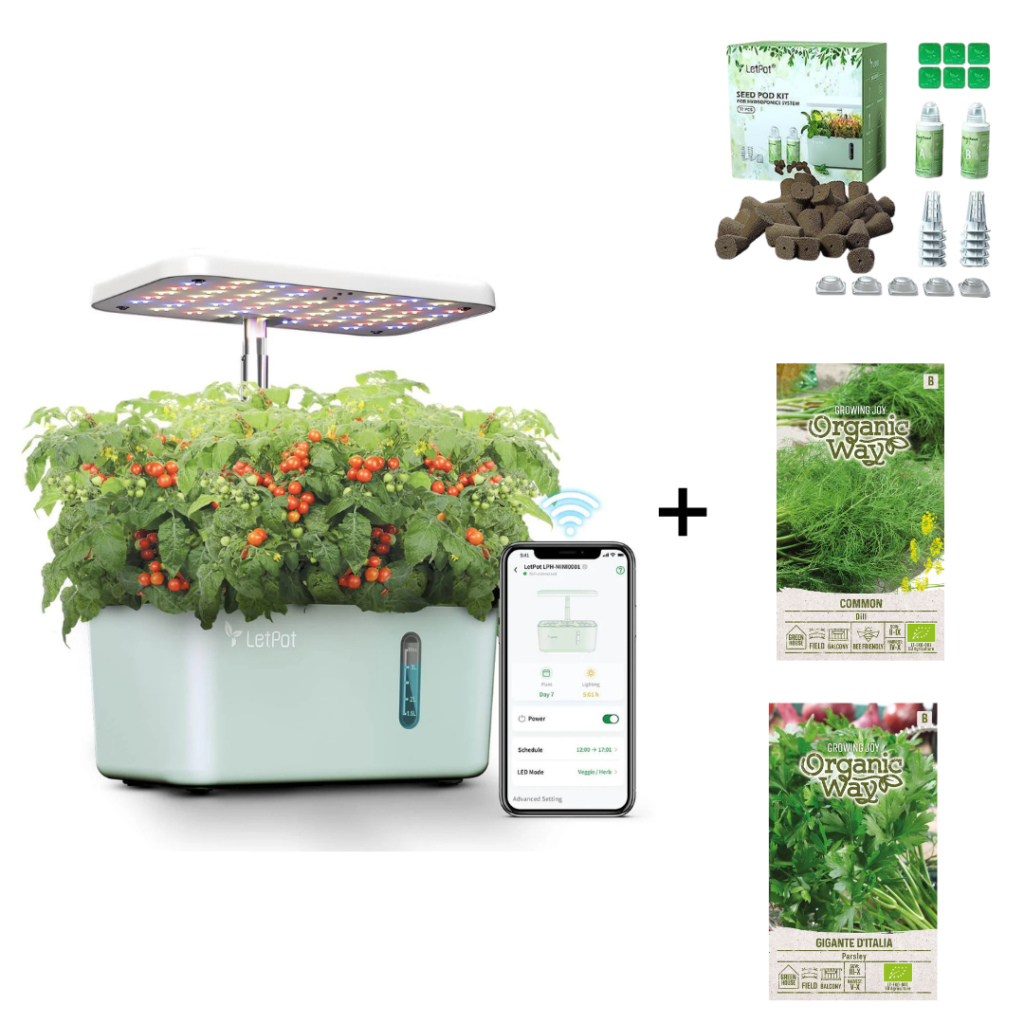
What we used — tested in our Tallinn test kitchen, ships from Estonia across the EU.
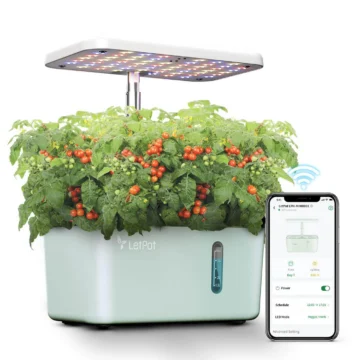
LetPot Mini 5-Pod Smart Indoor Hydroponic Garden – Grow Herbs, Greens & Veggies Year-Round
59,00 €Add to cart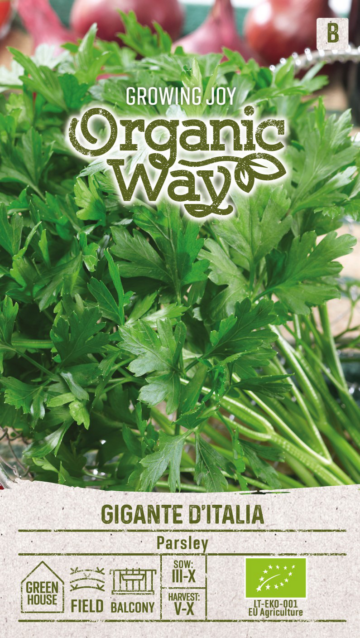
Organic Parsley ‘Gigante d’Italia’ Seeds | Smooth-Leaf Parsley for Hydroponics & Smart Indoor Gardens
1,99 €Add to cart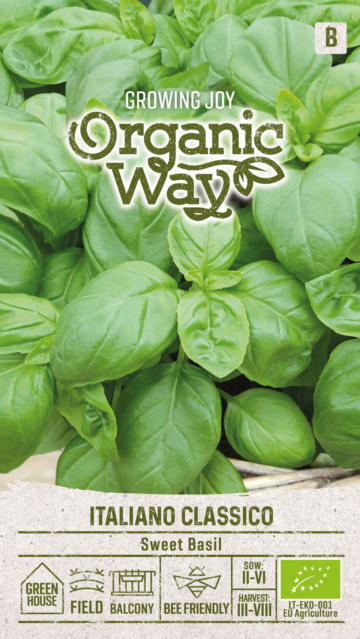
Organic Sweet Basil Italiano Classico Seeds | Aromatic Culinary Basil for Hydroponics & Smart Indoor Gardens
1,99 €Add to cart
Why herb seeds are worth starting indoors
In Estonia and the Baltics the outdoor season for herbs runs from May to September, but a herb grown from seed indoors produces a harvest all year if it gets enough light and warmth. Illinois Extension recommends sowing herb seeds at 18 to 24 °C and keeping the growing medium evenly moist until the seedlings emerge. That is just as easy indoors in winter as in summer, because room temperature stays constant.
The main difference from growing outdoors is that indoors you control both temperature and light yourself. Sowing time is no longer tied to the weather, so you can start a new batch of herbs in any season.
Fast germinators: basil, coriander and dill
Basil was the fastest in our test: the first seed leaves appeared in 5 days in a warm growing medium at around 22 °C. Coriander and dill followed at 7 to 10 days. The advantage of these three is that they suit an impatient beginner too, because results show up quickly and enthusiasm does not have time to fade.
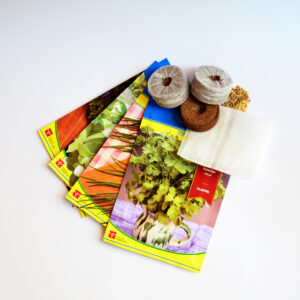
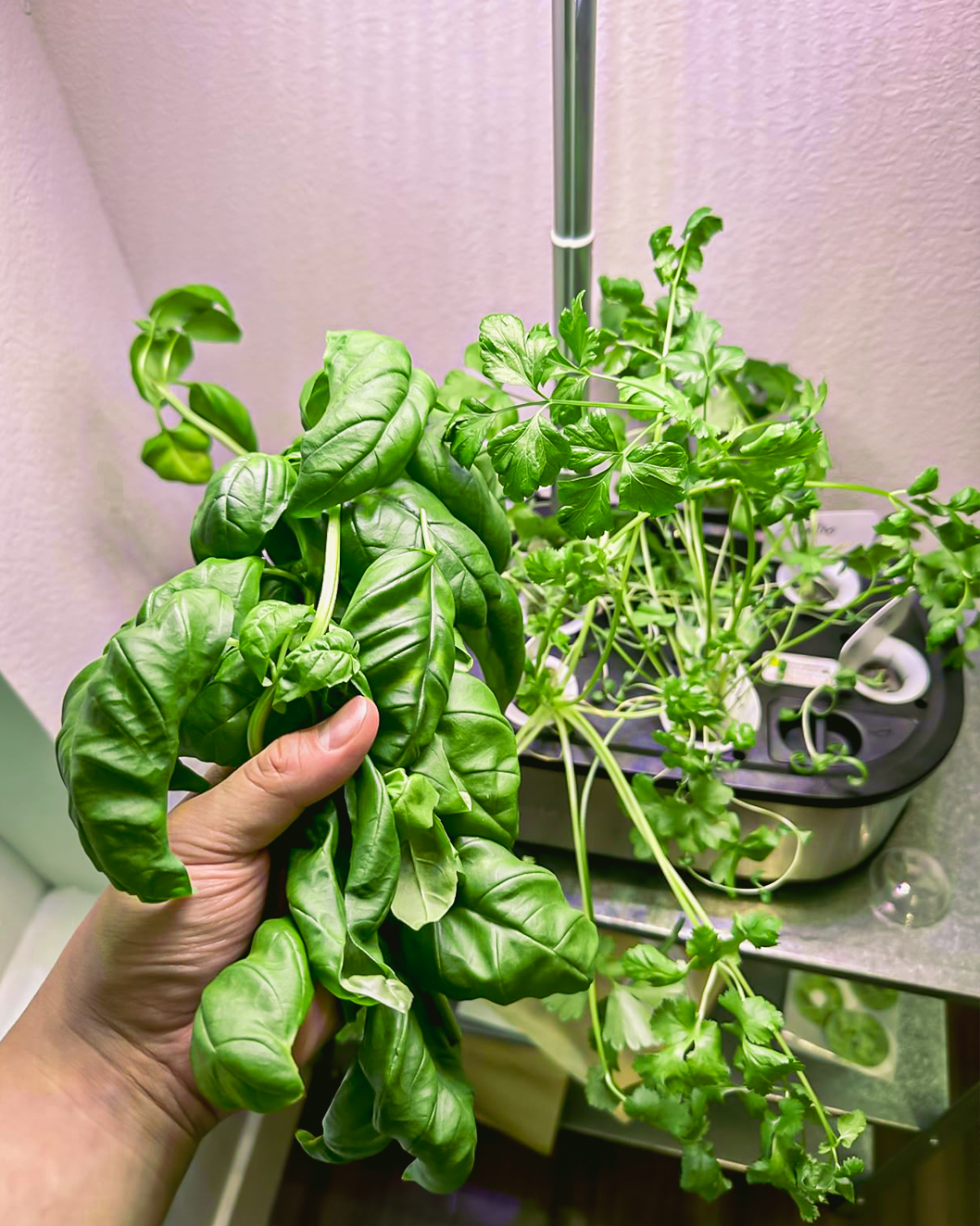
Basil is also the most sensitive to cold: nights under 15 °C stop growth completely, so on a windowsill keep basil further from the glass in autumn and winter. We tested organic Italiano Classico basil, which came up evenly both in a pot and in a smart garden growing pod.
Slow but reliable: parsley, chives and thyme
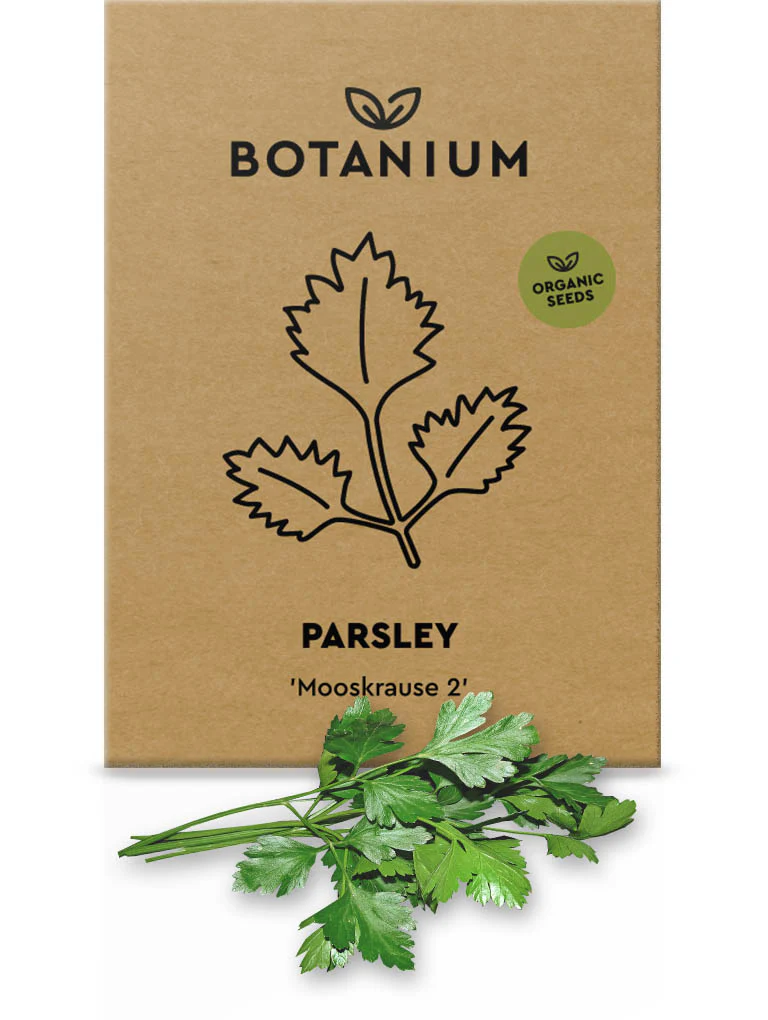
Parsley is famously a slow germinator. Our batch did not come up until day 16 to 19, which matches the general experience of a 14 to 21 day germination time. Chives and thyme were in the same range, 14 to 21 days. The patience pays off with a long harvest, though: all three are perennial or near-perennial indoors and keep producing for months from a single sowing.
To speed up germination, soak parsley seeds for 12 hours in lukewarm water before sowing and keep the growing medium moist but never waterlogged the whole time. We tested Gigante d’Italia flat-leaf parsley, our favourite for kitchen use for its flavour and dense growth habit.
Perennials for the windowsill: rosemary, oregano, peppermint and lemon balm
Rosemary germinates unevenly and slowly, often 14 to 21 days, and some seeds do not come up at all. Oregano was more consistent, at 7 to 14 days. Peppermint and lemon balm germinate quickly but need light to germinate, so the seed must not be covered with growing medium, just pressed lightly onto the surface.
Over time these four become small bushy plants that tolerate weekly cutting. On a windowsill they stay compact if you trim the growing tips regularly. Grown in a smart garden, growth is steadier because the roots get a constant supply of oxygen and nutrients from the solution.
How much light herbs need through a Northern European winter
In Helsinki in December daylight lasts only about 6 hours at best, and direct sun often adds up to under an hour. University of Minnesota Extension recommends at least 6 hours of direct light a day for most herbs, and in winter that in practice means a grow light. 12 to 14 hours of grow light a day is enough for most herbs to make up for the short day.
A herb on a windowsill stretches and pales if it does not get enough light, which is the clearest sign it needs supplemental light. In a smart garden this is not a problem, because the LED runs on a timer regardless of the time of day or cloud cover.
The 10 herbs we tested, compared
We put the germination times and notes into one table so you can see at a glance which herb to start with.
| Herb | Germination time | Note |
|---|---|---|
| Basil | 5–10 days | Sensitive to cold, keep above 15 °C |
| Coriander | 7–10 days | Bolts easily in warm conditions |
| Dill | 7–10 days | Needs light to germinate |
| Oregano | 7–14 days | Perennial, tolerates cutting |
| Parsley | 14–21 days | Soak seeds before sowing |
| Chives | 14–21 days | Perennial, regrows fast |
| Thyme | 14–21 days | Drought-tolerant, water sparingly |
| Rosemary | 14–21 days | Uneven germination, be patient |
| Peppermint | 10–14 days | Spreads fast, give it its own pot |
| Lemon balm | 10–14 days | Needs light to germinate |
Frequently asked questions
Which herb is best for a beginner?
Basil. It germinates quickly, grows visibly within a week and gives a fast win that keeps you motivated to continue.
Can I sow herb seeds directly into a smart garden growing pod?
Yes. Moisten the growing sponge, press 2 to 3 seeds onto the surface and keep the dome lid on until you see the first seed leaves.
Why hasn’t my parsley germinated after two weeks?
Parsley is slow, so 2 to 3 weeks is completely normal. Just make sure the growing medium has not been allowed to dry out in between.
Do I need a grow light if my window faces south?
Often not in summer, but from October to February direct light in the Baltics and Northern Europe drops so low that most herbs benefit from supplemental light.
How many times can I harvest from the same herb?
Perennial types such as chives, thyme, oregano and peppermint tolerate weekly cutting for months. Basil and coriander are best resown every 6 to 8 weeks.
What is the difference between growing in a pot and a smart garden?
A smart garden waters and lights the plants automatically, so growth is steadier and harvest starts 9 days earlier on average than in a pot on the windowsill.
If you want to start today
Start with fast-germinating basil or coriander, so you see a result within a week. Sow parsley at the same time, since its long germination time is worth starting right away. Our range has herb seeds chosen for indoor growing, and if you would rather remove the light and watering guesswork entirely, a mini smart garden handles both for you.