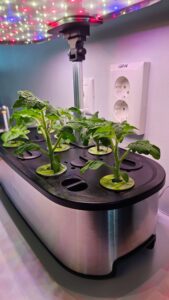
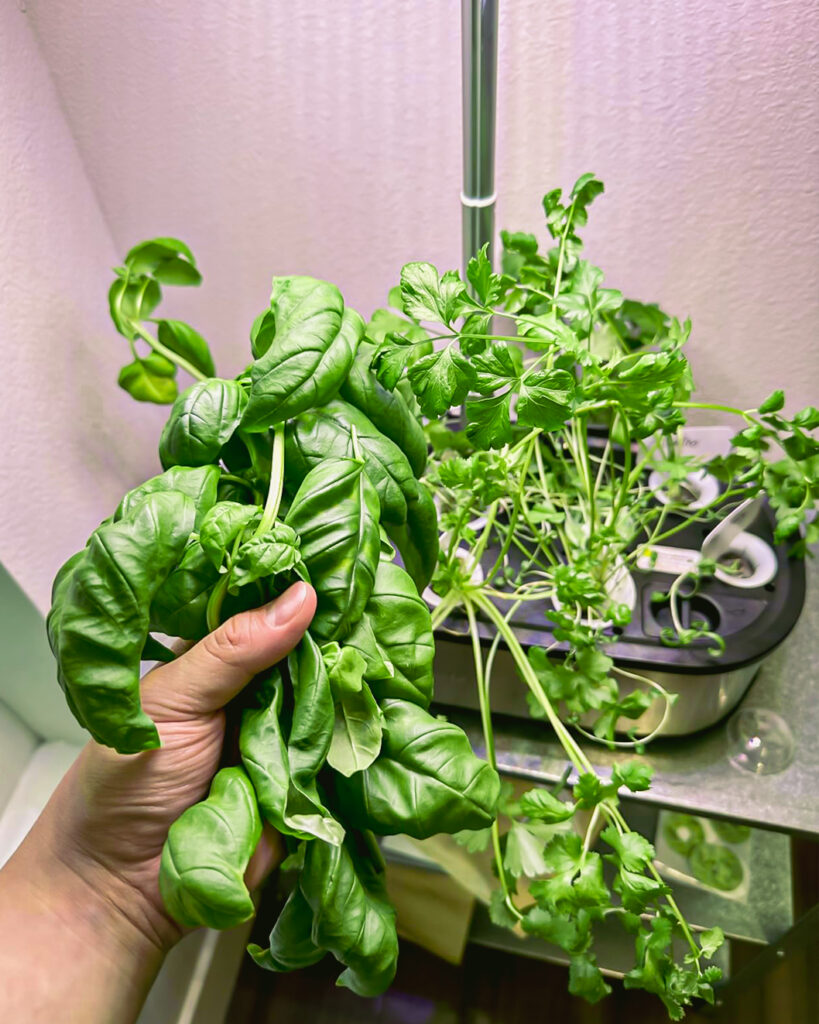
Herb seeds for indoor gardens come down to a choice between at least 10 species that genuinely thrive on a windowsill or kitchen counter all year — from basil and parsley, which germinate in 5 to 7 days, to rosemary and thyme, which grow slower but keep producing year after year. We tested all of these in our Tallinn test kitchen.
I run product testing at IndoorGarden’s Tallinn test kitchen, and over the last six months of 2026 we sowed and rated the ten most popular herb seed varieties — both in traditional pots on a windowsill and in a LetPot Mini smart garden. This guide sorts them by germination speed, light needs and how long a single sowing keeps producing, so you can pick the right seeds for your windowsill or counter instead of buying at random.
What we used — tested in our Tallinn test kitchen, ships from Estonia across the EU.
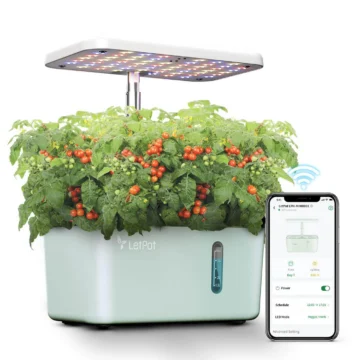
LetPot Mini 5-Pod Smart Indoor Hydroponic Garden – Grow Herbs, Greens & Veggies Year-Round
59,00 €Add to cart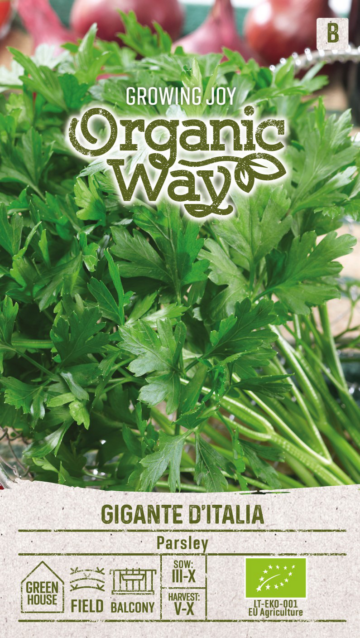
Organic Parsley ‘Gigante d’Italia’ Seeds | Smooth-Leaf Parsley for Hydroponics & Smart Indoor Gardens
1,99 €Add to cart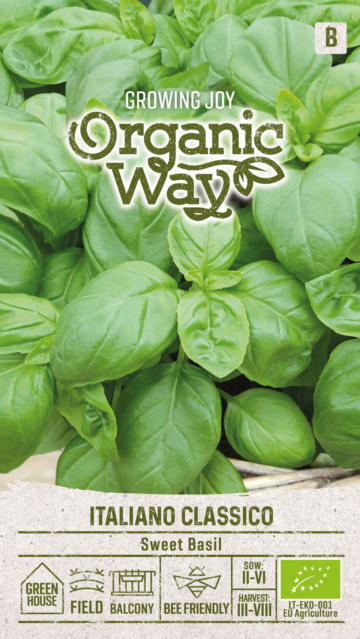
Organic Sweet Basil Italiano Classico Seeds | Aromatic Culinary Basil for Hydroponics & Smart Indoor Gardens
1,99 €Add to cart
Why only some herb varieties suit indoor growing
Indoors, light is the main limit, not temperature. At Baltic latitudes, a winter windowsill delivers only a fraction of the light a herb would get outdoors in summer, so the variety you choose has to cope with fewer hours while staying compact enough not to stretch and topple. Iowa State University Extension notes that most herbs indoors need at least 6 hours of direct light a day, well-drained soil and containers with drainage holes — exactly what a standard outdoor variety on a windowsill usually lacks. The herb seeds in our catalogue are chosen for these three criteria first, not flavour alone.
Basil and parsley — the fast classics
Basil and parsley are the two herbs we use most in testing, because they germinate quickly and give a cuttable harvest several times from a single sowing. Our Sweet Basil Italiano Classico seeds germinated in 5 to 7 days at 21 to 24 °C, and we took the first cut after 3 to 4 weeks, then kept cutting weekly for about ten weeks. Our Parsley Gigante d’Italia seeds germinated slower, in 12 to 18 days, but once established kept giving leaves for more than 2 months. Both do well in a pot on a windowsill or in a LetPot Mini pod.
Coriander, dill, chives and cress — the fast-growing extras
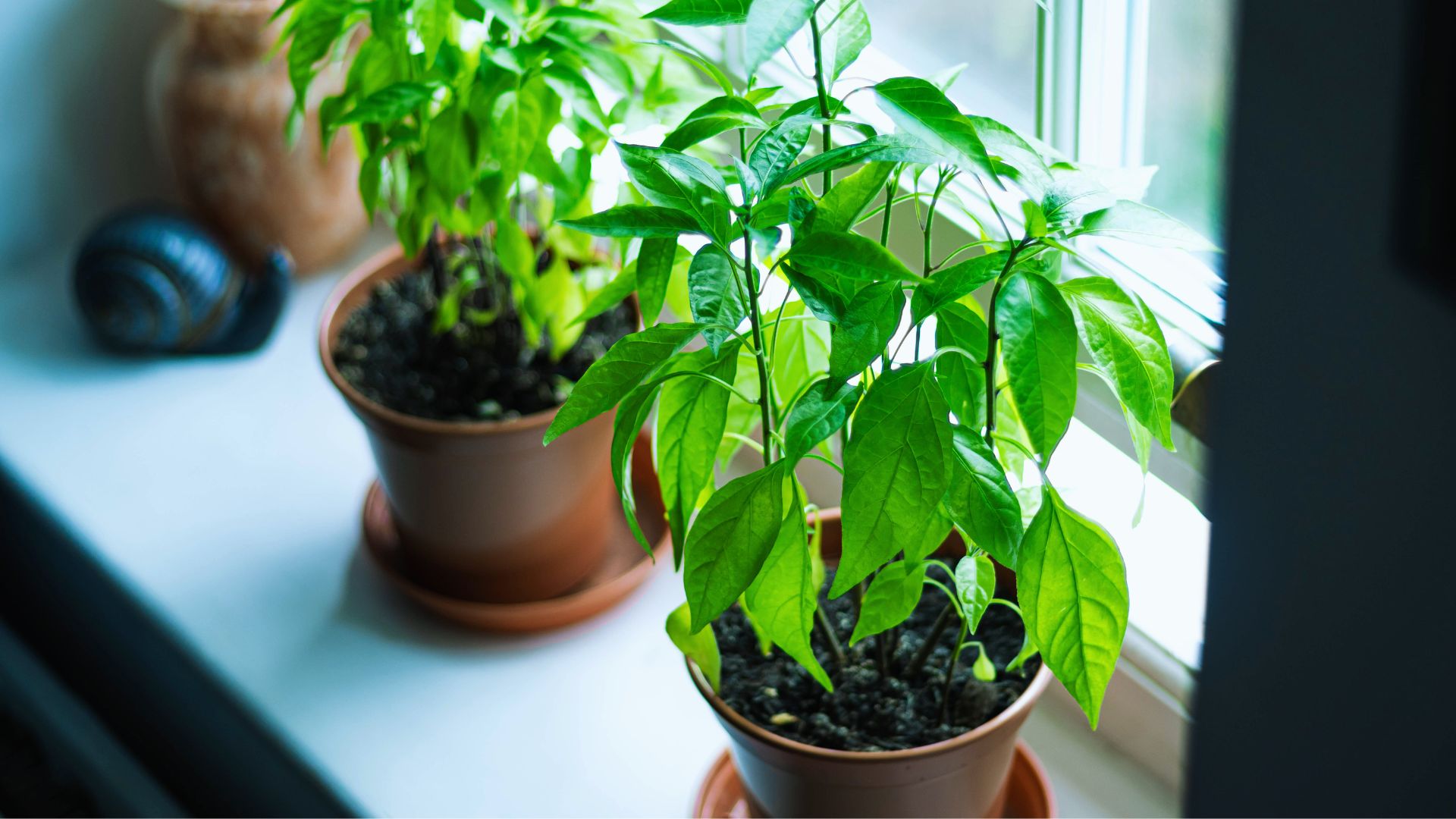
This group is what we recommend most often for beginners, because it forgives even inconsistent watering. University of Vermont Extension lists chives, mint, parsley and thyme as the most forgiving indoor herbs, tolerating uneven watering and a range of light conditions better than most. In our test, coriander germinated in 7 to 10 days, dill in 10 to 14 days, and chives were the slowest of the group at 14 to 21 days, but then grew back for years, giving a fresh cut every spring. Cress is the fastest of all — the first cut came in just 6 to 8 days, so it suits anyone who wants a result within a week.
Rosemary, thyme, sage and lavender — the slow-growing perennials
This group needs patience, but pays off with years of harvest from one sowing. Rosemary and thyme seeds germinated unevenly and slowly, often 14 to 21 days, and we only got a usable first harvest after 3 to 4 months. Sage and lavender were just as slow, but once established survived several years on the same windowsill with minimal upkeep. We recommend growing these alongside the fast crops — while you wait for rosemary, you’ll already have basil and parsley for everyday cooking.
Pot or smart garden — how to choose
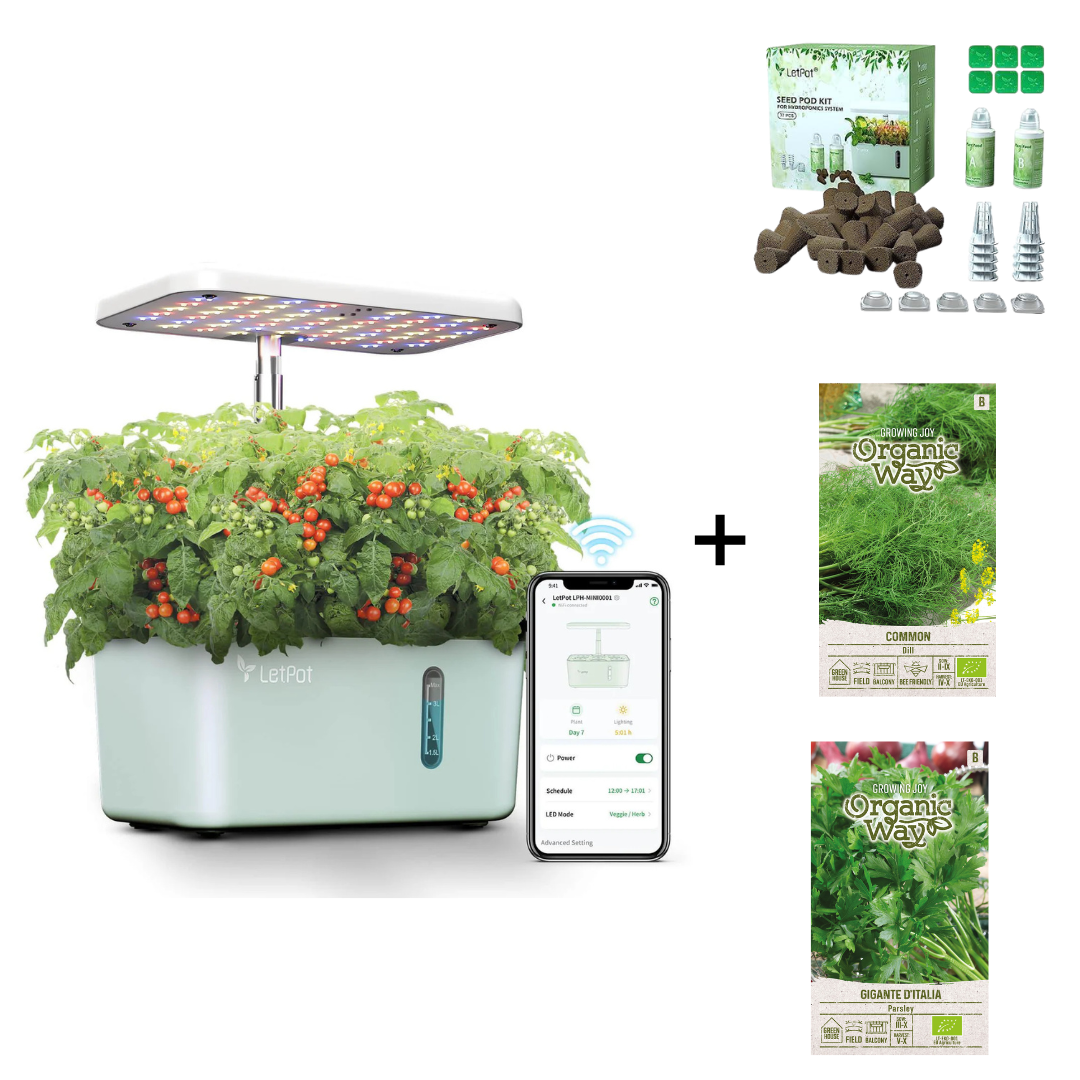
A pot on a windowsill works if you have steady, bright light for at least 6 hours a day and remember to water regularly. If light or time is limited, a mini smart garden such as the LetPot Mini solves both problems at once — the built-in LED runs on a timer, and the water tank keeps the root zone evenly moist between refills. In our test, this combination of fast-growing seeds plus a smart garden gave the quickest first harvest, in just 3 weeks from sowing.
Ten herbs compared
| Herb | Germination time | Light needed | Price |
|---|---|---|---|
| Basil (Italiano Classico) | 5–7 days | 12–14 h | €1.99 |
| Parsley (Gigante d’Italia) | 12–18 days | 8–10 h | €1.99 |
| Coriander | 7–10 days | 8–10 h | see category |
| Dill | 10–14 days | 8–10 h | see category |
| Chives | 14–21 days | 8–10 h | see category |
| Cress | 6–8 days | 6–8 h | see category |
| Rosemary | 14–21 days | 14–16 h | see category |
| Thyme | 14–21 days | 12–16 h | see category |
| Sage | 14–21 days | 12–14 h | see category |
| Lavender | 14–21 days | 12–14 h | see category |
Frequently asked questions
How long do herb seeds stay viable?
Most herb seeds stay viable for 2 to 4 years when stored cool and dry. The germination rate printed on the packet shows what share of seeds will actually sprout for that batch.
Do herb seeds for indoors need different treatment than seeds for the garden?
No. The same seed germinates in soil or in a hydroponic sponge — what changes is the growing environment and nutrient delivery, not the seed itself. Indoors, the main difference you need to make up for is the amount of light.
How much light do herbs on a windowsill need?
In natural light, that’s at least 6 to 8 hours of direct light a day. Under an LED grow light, that rises to 12 to 16 hours, since a lamp isn’t as intense as summer sun.
Which herbs can I grow in a LetPot Mini smart garden?
All ten covered in this article. Basil, parsley, coriander, dill, chives and cress do best because they’re compact and fast-growing, while rosemary, thyme, sage and lavender need more time but will still do well in the same pod.
Why isn’t my basil or parsley growing fast enough?
The most common reason is not enough light — a windowsill in winter supplies only a fraction of what’s needed. Check whether the plant gets at least 6 hours of direct light, and if not, an LED grow light or a smart garden solves the problem without moving the plant to another room.
If you want to start today
The easiest place to start is with basil and parsley seeds in a pot on a bright windowsill, or in a mini smart garden — both varieties give a first harvest faster than anything else on this list. Once those are sown, add the slower-growing perennials alongside them, and within a few months you’ll have a full range of herbs on one windowsill, all year round.