Parsley seeds typically take 14 to 28 days to sprout indoors, which is roughly three to five times longer than basil or dill. Most home growers assume the seeds are dead by day 10 and start over — wasting another month. The slow germination is biology, not bad seed: parsley contains natural compounds called furanocoumarins in the seed coat that suppress sprouting until water has thoroughly leached them out. In this guide I will explain why parsley behaves this way, walk through the three tricks that consistently cut germination time roughly in half, and share the exact timing I use for a continuous indoor harvest.
Why parsley germination is so slow
Parsley (Petroselinum crispum) is a biennial in the Apiaceae family, the same family as carrots, celery, dill, and fennel. Among that group, parsley is the slowest to germinate. Two biological factors are responsible.
First, the seed coat contains furanocoumarins — a class of germination-inhibiting compounds that protect the seed from sprouting during a brief warm spell that would later kill the seedling. These compounds dissolve slowly into surrounding water. Until they are washed out, the embryo inside the seed stays dormant.
Second, parsley seeds have a tough, ridged coat that resists water uptake. The combination of chemical inhibitors plus a slow-to-imbibe coat means parsley regularly takes three to four weeks to break the soil surface — even under perfect conditions. The Royal Horticultural Society notes that seedlings can take “a month or more” to appear, and Illinois Extension specifically recommends overnight soaking because the germination is “slow.”
That long window is also why parsley fails so often: any one of dry soil, cold soil, or buried seed depth can stretch 28 days into 42 days, by which point most beginners have given up.
3 tricks that cut parsley germination roughly in half
I have tested every common trick for parsley germination in my own indoor sowings over the past several years. Three of them — used together — consistently bring first sprouts to days 7 to 12 instead of days 14 to 28.
1. Pre-soak the seeds for 24 hours in warm water
This is the single highest-impact trick. Place the parsley seeds in a small dish, cover with water that feels warm to the touch (around 30 to 35 degrees Celsius — about the temperature of a comfortable bath), and leave them for 18 to 24 hours. I change the water once at the 12-hour mark. The fresh warm water carries away the furanocoumarins that the first soak pulled out of the coat.
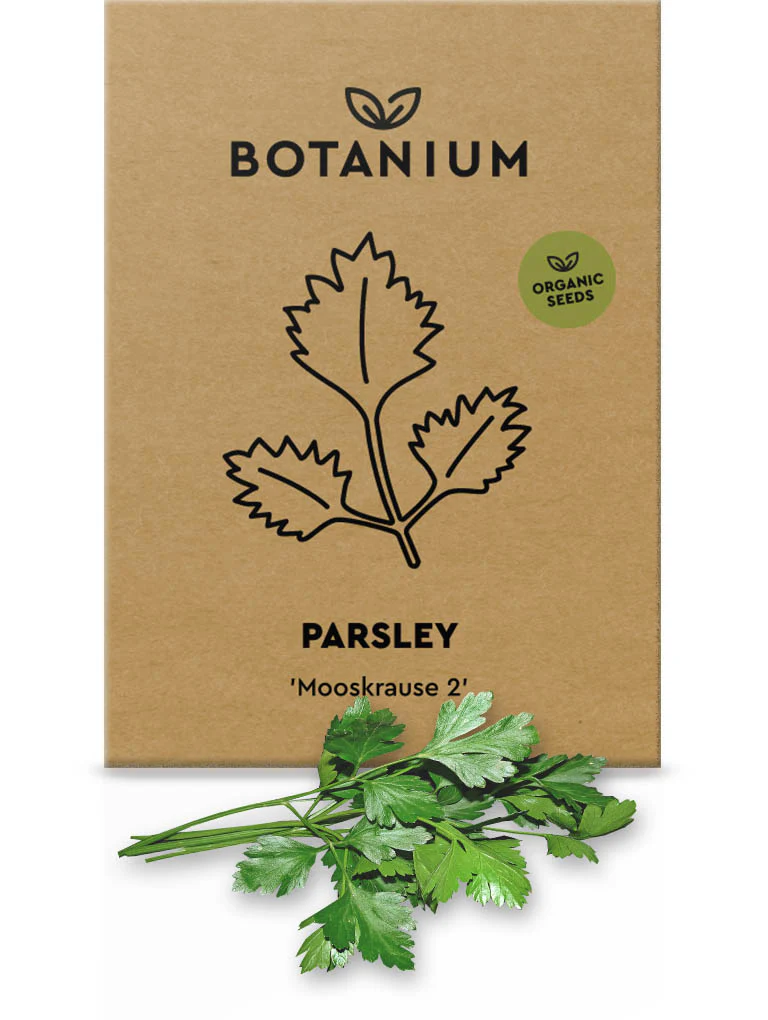
After soaking, the seeds will look slightly swollen and darker. Sow them immediately while the coat is still soft; do not let them dry out again, or you will rebuild the dormancy you just broke. Buying fresh seed matters here too — old parsley seed germinates poorly even with soaking, so check the packet date on your parsley seeds before sowing.
2. Provide steady bottom heat at 21 to 24 degrees Celsius
Parsley germinates fastest in soil that is held in a narrow warm range. Air temperature is not enough; what matters is the temperature of the seed-zone medium. A standard heat mat under your seed tray, set to roughly 22 degrees Celsius, keeps the medium evenly warm day and night.
Cold windowsills slow germination dramatically. A tray sitting on a 17-degree windowsill at night will easily double the sprout time even if the daytime temperature is fine. If you do not own a heat mat, place the tray on top of a router, refrigerator, or other appliance that runs warm but not hot. Once seedlings emerge, remove the bottom heat — warm roots after germination encourage weak, leggy growth.
3. Keep the surface lightly and constantly moist — never wet, never dry
Parsley seeds need to stay damp for the entire two-week germination window. A single dry-out, even for a few hours, can kill the embryo mid-sprout. But waterlogged soil is just as bad: it starves the seeds of oxygen and invites damping-off fungus.
The reliable approach is a humidity dome (or plastic wrap with a few holes) over the seed tray, plus a daily light mist with a spray bottle. Bottom-water the tray once or twice a week so the surface never gets compacted by a watering can. Sow shallow — about 5 to 8 millimetres deep, no more — and cover with a fine layer of vermiculite rather than dense potting mix. Vermiculite holds water at the seed surface without smothering it.
Indoor parsley timing table
Here is the timeline I follow for an indoor sowing using all three tricks above.
| Stage | Days from sowing | What to expect |
|---|---|---|
| Pre-soak | −1 to 0 | Seeds swell slightly, coat softens. |
| First sprouts | 7 to 12 | Pale white-green hooks push above the surface. |
| Cotyledons open | 10 to 16 | Two narrow seed-leaves visible. Remove the dome. |
| First true leaves | 20 to 30 | Familiar parsley shape emerges. Start light feeding. |
| Thin or pot up | 30 to 40 | Move to final container, 1 plant per 15 cm pot. |
| First harvest | 70 to 90 | Cut outer stems near the base; leave the centre alone. |
Without the three tricks, expect to add roughly 7 to 14 days to every stage in the first half of the table.
The indoor setup I use
For an indoor windowsill sow, I use a shallow seed tray with a clear humidity dome, a heat mat underneath, and a south- or west-facing window. Parsley is not particularly fussy about light intensity during germination — light is more important after the cotyledons open. Once the seedlings are up, a basic 20- to 30-watt LED grow light on a 14-hour cycle produces tight, dark green growth and prevents the leggy stretching that windowsill-only parsley often shows in winter.
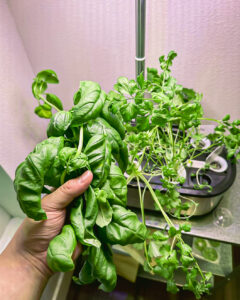
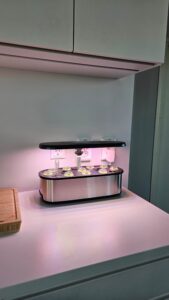
If you want to skip the seed-tray stage entirely, a small countertop hydroponic kit makes parsley dramatically easier — the water level around the roots is constant, the LED runs on a timer, and germination usually happens in 7 to 10 days because the seed pods stay perfectly moist and warm. The LetPot Mini herb starter bundle ships with parsley pods specifically because parsley is the herb that benefits most from a controlled setup.
If you would like a broader overview of which herbs perform best indoors and how parsley fits into a full herb shelf, my guide on what herbs you can grow indoors is a useful next read.
Common reasons parsley still fails to germinate
If parsley still refuses to sprout after four full weeks, one of these is almost always the cause:
- Old seed. Parsley seed viability drops sharply after 2 years. If the packet is older, expect very poor germination even with perfect conditions.
- Buried too deep. Anything deeper than 1 centimetre dramatically reduces sprouting. Surface-sow and barely cover.
- Cold seed medium. Air temperature of 22 degrees does not mean seed-zone temperature of 22 degrees. Check with a soil thermometer or a heat mat.
- Surface dried out. Even one dry afternoon in week one can stop germination. Keep the dome on.
- Skipped the soak. Sowing dry parsley seed directly is the most common reason for 30+ day germination times.
For broader seed-starting fundamentals that apply to parsley and any other slow-germinating herb, see my walk-through of the best way to start seeds indoors.
Frequently asked questions
How long does parsley take to germinate indoors?
Untreated parsley seed indoors typically takes 14 to 28 days to sprout. With overnight warm-water soaking, bottom heat around 22 degrees Celsius, and consistent surface moisture, expect first sprouts in 7 to 12 days.
Should I soak parsley seeds before planting?
Yes. Soak them in warm water for 18 to 24 hours before sowing. The water dissolves the natural germination inhibitors (furanocoumarins) in the seed coat and softens the coat itself. This single step roughly halves germination time. Change the water once during the soak for best results.
Can I grow parsley from seed on a windowsill without a heat mat?
Yes, but expect germination to take 21 to 35 days instead of 7 to 14. Use the warmest, brightest windowsill you have, keep the seed tray covered with a humidity dome, and do not let the surface dry out at any point.
Why is my parsley so slow even after sprouting?
Parsley grows slowly by nature in its first six weeks because it puts most of its energy into a long taproot before pushing out true leaves. This is normal. Once the first true leaves expand, growth speeds up. Avoid transplanting after week 3, as the taproot is easily damaged.
Flat-leaf or curly parsley for indoors?
Both work, but flat-leaf (Italian) parsley generally has stronger flavour and slightly faster growth indoors, while curly parsley is more compact and tolerates lower light. I grow flat-leaf for cooking and a small curly plant for garnish.
Final word
Parsley is not a difficult plant — it is just a patient one. Once you understand that the seed coat is doing a slow chemical handshake with water for two weeks, the three fixes above stop feeling like tricks and start feeling like common sense: soften the coat, keep the seed warm, and never let it dry out. Do all three and you will have parsley seedlings up in under two weeks, then a steady cutting harvest by early autumn that lasts well into winter on a sunny indoor shelf.