
Growing your own food indoors used to feel like something only people with a lot of space and time could manage. Vertical planters have changed that. By stacking growing space upward rather than spreading it across a floor or windowsill, you can produce a surprising amount of fresh food in a small apartment, a narrow kitchen wall, or a dim corner that gets a grow light pointed at it. The benefits go beyond just saving space, though that is where most people start.
You Can Grow Real Food in a Small Space
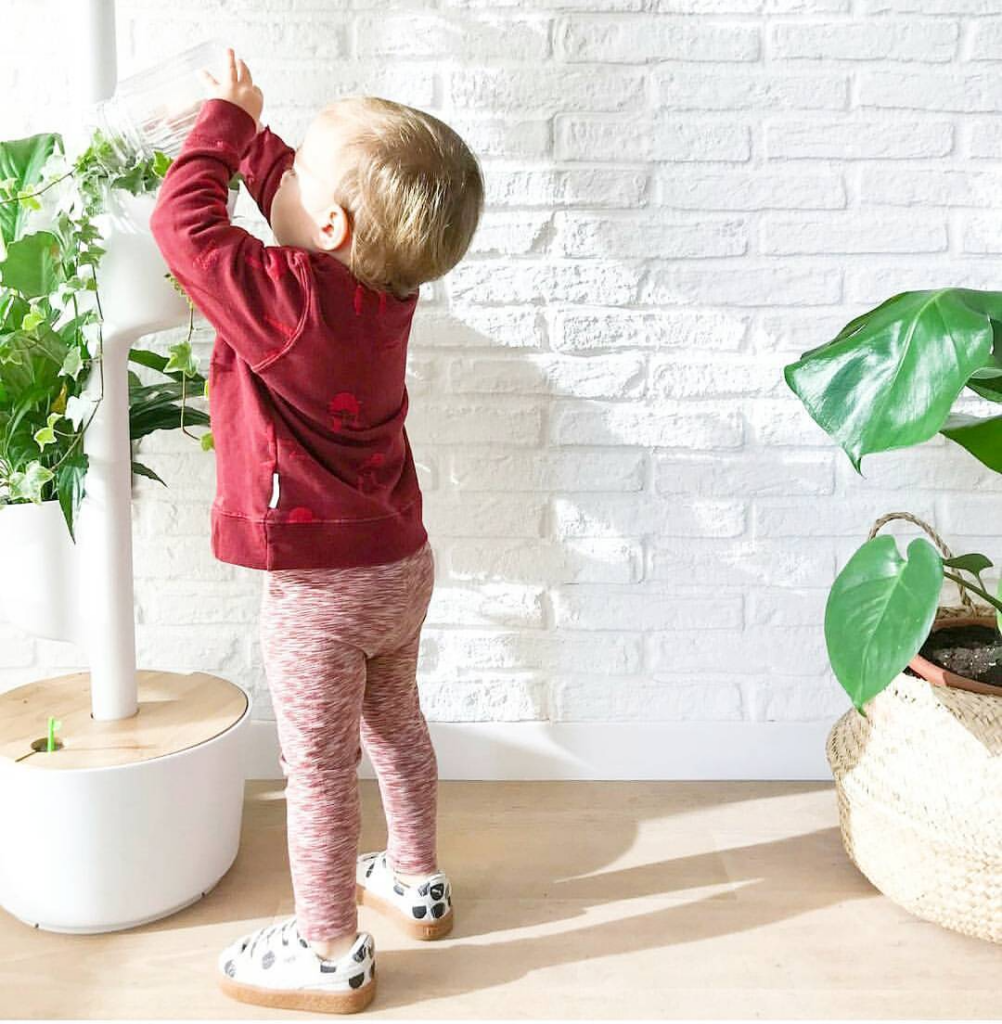
The most practical benefit of a vertical planter is how much food you can grow per square metre of floor space. A single vertical unit mounted on a wall or standing in a corner can hold anywhere from six to twenty individual planting pockets, each producing its own crop. That is a significant amount of fresh food that would otherwise require a row of individual pots taking up countertop or floor space you probably do not have.
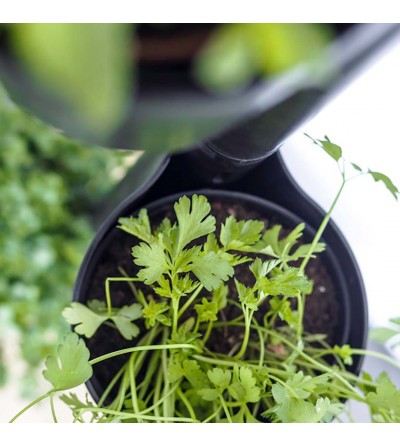
Herbs are the obvious starting point. Basil, mint, parsley, chives, and coriander all thrive in the compact pockets of a vertical planter and are exactly the kinds of plants that make a difference in daily cooking. Rather than buying a wilting bunch from the supermarket, you cut what you need and the plant keeps producing. Browse herb seeds for indoor growing if you are planning what to start with.
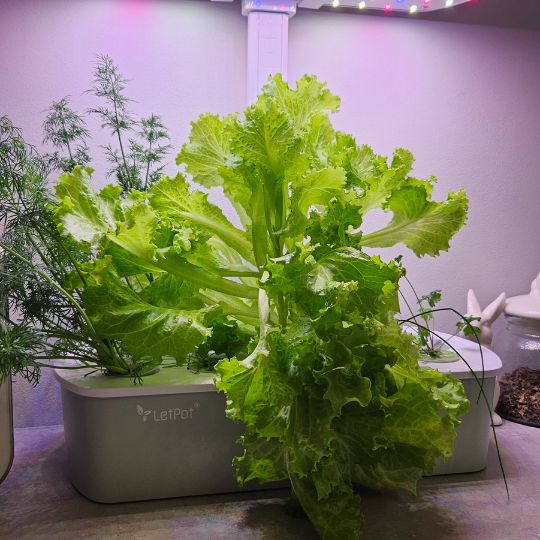
Leafy greens are the other category that works exceptionally well vertically. Lettuce, spinach, rocket, and Swiss chard all have shallow root systems that suit the pocket size of most vertical planters. You can cut leaves as needed and the plant regrows, giving you a continuous harvest rather than a single-use crop. If you want to build a productive food wall, lettuce and leafy green seeds are a good place to fill the gaps between herb pockets.
Fresh Harvests Without Leaving the House
There is something genuinely useful about having food growing on your kitchen wall. It is not just about saving money on herbs — though that adds up — it is about having fresh produce available without planning around it. You walk past your vertical planter, pinch off a few leaves of basil for dinner, or snip some rocket for a salad, and the plant is already regrowing for next time. For anyone who cooks regularly, this kind of access to fresh ingredients changes how you shop and what you cook.
Edible flowers and microgreens also work well in vertical setups if you want to go beyond the basics. Nasturtiums, for example, produce edible flowers and leaves and grow quickly in smaller pockets. They add variety to a food wall and look good doing it.
Better Use of Light — Natural and Artificial
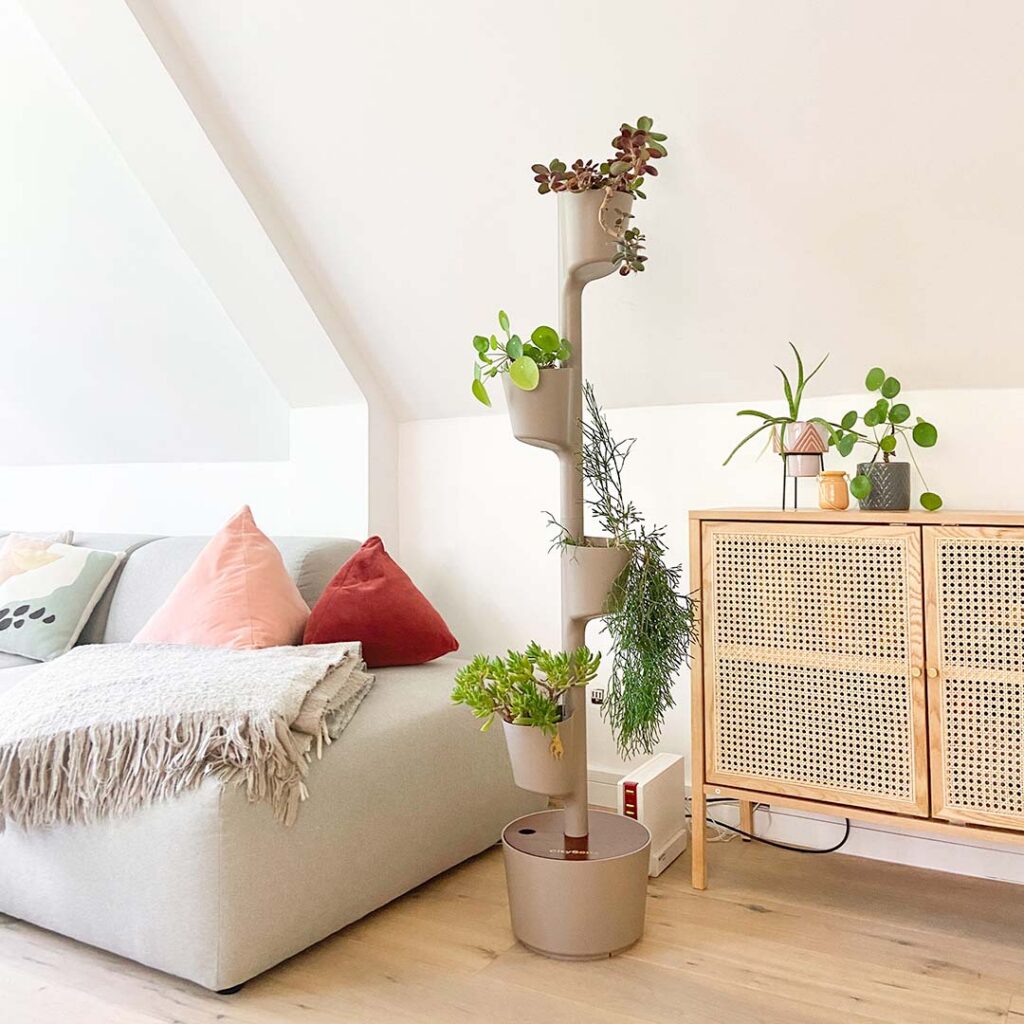
One underappreciated benefit of growing vertically is how it interacts with light. A vertical arrangement exposes more leaf surface to a light source than the same plants growing horizontally on a shelf. If you position a vertical planter near a bright south or west-facing window, more plants benefit from the available light at the same time.
In winter, particularly in Northern Europe, natural light becomes a real constraint. Days are short, the sun stays low, and most herbs and leafy greens simply do not get the 12 to 14 hours of light they need to grow well. A vertical planter positioned next to or below a dedicated grow light solves this cleanly — one light source can cover the full height of the planter and keep multiple pockets producing through the darker months. You can find options worth considering in the grow lights for indoor plants category. It is worth investing in a decent light if you plan to grow food year-round, because without adequate light, no soil mix or watering system will compensate.
The other advantage of growing vertically under artificial light is consistency. A grow light on a timer delivers the same intensity and duration every day regardless of weather or season. That consistency tends to produce steadier, more predictable growth than relying on variable natural light through a window.
Easier Maintenance Than You Would Expect
Managing a vertical planter with a built-in reservoir is genuinely less work than maintaining a collection of individual pots. You water the reservoir, and moisture is distributed gradually through the system. There is no need to check every pot individually or worry that one has dried out while another is still wet. For food growing specifically, consistent moisture matters — herbs and leafy greens are sensitive to cycles of drought and overwatering, and a reservoir-fed system smooths those out naturally.
Feeding is straightforward too. A liquid fertiliser added to the water once a week keeps plants well-nourished without the need for soil amendments or top-dressing. The fertilisers for indoor plants category has options that work well in this kind of setup. Food crops in particular benefit from regular feeding because they are constantly producing new growth and pulling nutrients from a limited volume of soil.
It Encourages You to Actually Grow More
This one is harder to quantify but genuinely true in my experience: when growing is visible and accessible, you engage with it more. A vertical planter on a kitchen wall is something you walk past multiple times a day. You notice when something needs water, when a plant is ready to harvest, when a pocket has space for something new. Compare that to a pot tucked in a corner that is easy to forget about, and the difference in how consistently you tend to things is significant.
Starting with a few herb pockets and a couple of leafy greens is a low-commitment way to get a feel for vertical growing. Once you see how productive even a modest setup can be, it becomes easy to expand — adding more pockets, trying different crops, or upgrading to a larger system. The vertical planters range includes options at different scales, so there is no need to commit to a full wall setup from the start.
The Aesthetic Benefit Is Real Too
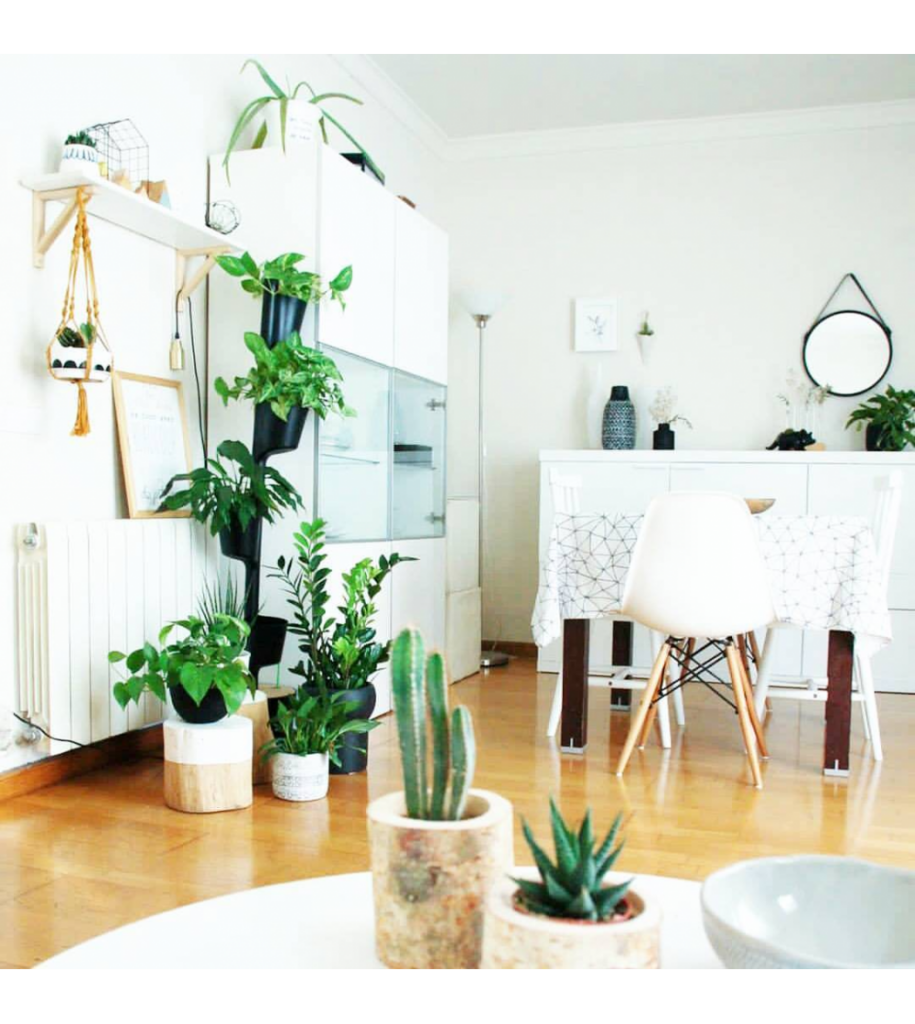
A productive food wall also happens to look good. A vertical planter filled with different varieties of herbs and greens — varying textures, shades of green, the occasional flower — adds life to a room in a way that a framed print or a shelf of books simply does not. It is a functional design feature, which is a rare thing. You get fresh food, cleaner air, and a wall that looks genuinely alive.
Conclusion
The benefits of vertical planters come down to a combination of practical and personal gains: more food from less space, easier maintenance, better light use, and a growing setup that is visible and engaging enough that you actually stick with it. If you are ready to start, picking a few herb seeds or leafy green seeds alongside a planter that fits your wall is all it takes to get going. If you are already growing food vertically, share what is working best for you in the comments.