
The most common reason indoor plants underperform has nothing to do with nutrients, watering, or the variety of seed you chose. It is light. Specifically, not enough of the right kind of light, measured in a way that actually reflects what plants experience. I spent two winters wondering why my chilli seedlings were leggy and slow before I started measuring DLI. Once I did, the problem was obvious — and fixable in an afternoon.
This post explains what DLI is, why it matters more than watts or lumens, what the research says about how much light different crops need, and how to use the calculator below to work out whether your setup is delivering enough.
Table of Contents
Why watts and lumens tell you almost nothing useful
When most people buy a grow light, they look at watts. A 45W light sounds more serious than a 15W light. The problem is that wattage measures electricity consumption, not how much light reaches your plants. A cheap 45W LED panel might deliver significantly less photosynthetically useful light than a well-designed 20W one, because the conversion efficiency from electricity to plant-usable photons varies enormously between fixtures.
Lumens is worse. Lumens measure brightness as perceived by the human eye, which is heavily weighted towards green light because that is what our visual system is most sensitive to. Plants have almost no use for green light — they primarily drive photosynthesis using red and blue wavelengths. A warm-white lamp can score impressively high in lumens while being a mediocre grow light. Checking lumens to evaluate a grow light is like checking how loud a car engine is to evaluate its fuel efficiency.
The number that actually matters is PPFD — photosynthetic photon flux density, measured in micromoles of photons per square metre per second (μmol/m²/s). PPFD tells you how many photons in the photosynthetically active range are hitting a surface each second. It is what your plants are actually responding to.
What DLI is and why it matters more than PPFD alone
PPFD is an instantaneous measurement — it tells you the light intensity at a single moment. But plants do not photosynthesize in a moment. They accumulate light energy across an entire day. DLI — Daily Light Integral — is the total amount of photosynthetically active light delivered to a surface over a full 24-hour period, expressed in moles of photons per square metre per day (mol/m²/day).
The formula is straightforward: DLI equals your PPFD multiplied by the number of hours the light runs, multiplied by 3600 (seconds per hour), divided by 1,000,000 (to convert micromoles to moles). A light delivering 300 μmol/m²/s for 16 hours gives a DLI of 17.3 — which is ideal for lettuce, good for herbs, and barely adequate for tomatoes.
DLI matters because it captures both dimensions of light that plants care about: intensity and duration. You can hit the same DLI with a very bright light running fewer hours, or a moderate light running longer. For most home growers, adjusting the photoperiod timer is far easier than changing the light, which is why understanding DLI unlocks a practical lever you already have.
The scientific foundation for DLI as a production metric comes primarily from research at Utah State University and Purdue University. Bruce Bugbee’s work on photobiology and controlled environment agriculture established DLI as the standard measurement for predicting crop performance under supplemental lighting. The peer-reviewed research from Utah State’s Crop Physiology Laboratory is still the most cited source in commercial LED horticulture. Cary Mitchell and colleagues at Purdue’s Controlled Environment Agriculture program have published extensively on crop-specific DLI thresholds for food crops, and their findings are what the crop ranges in the calculator below are based on.
How much DLI different crops need
Crops fall into three broad categories. Low-light crops — lettuce, salad greens, spinach, microgreens, and seedlings — do well at 10–17 mol/m²/day. They are efficient photosynthesizers, grow quickly, and are sensitive to excess light, which can cause tip burn in susceptible varieties. These are the easiest crops to grow under modest supplemental lighting.
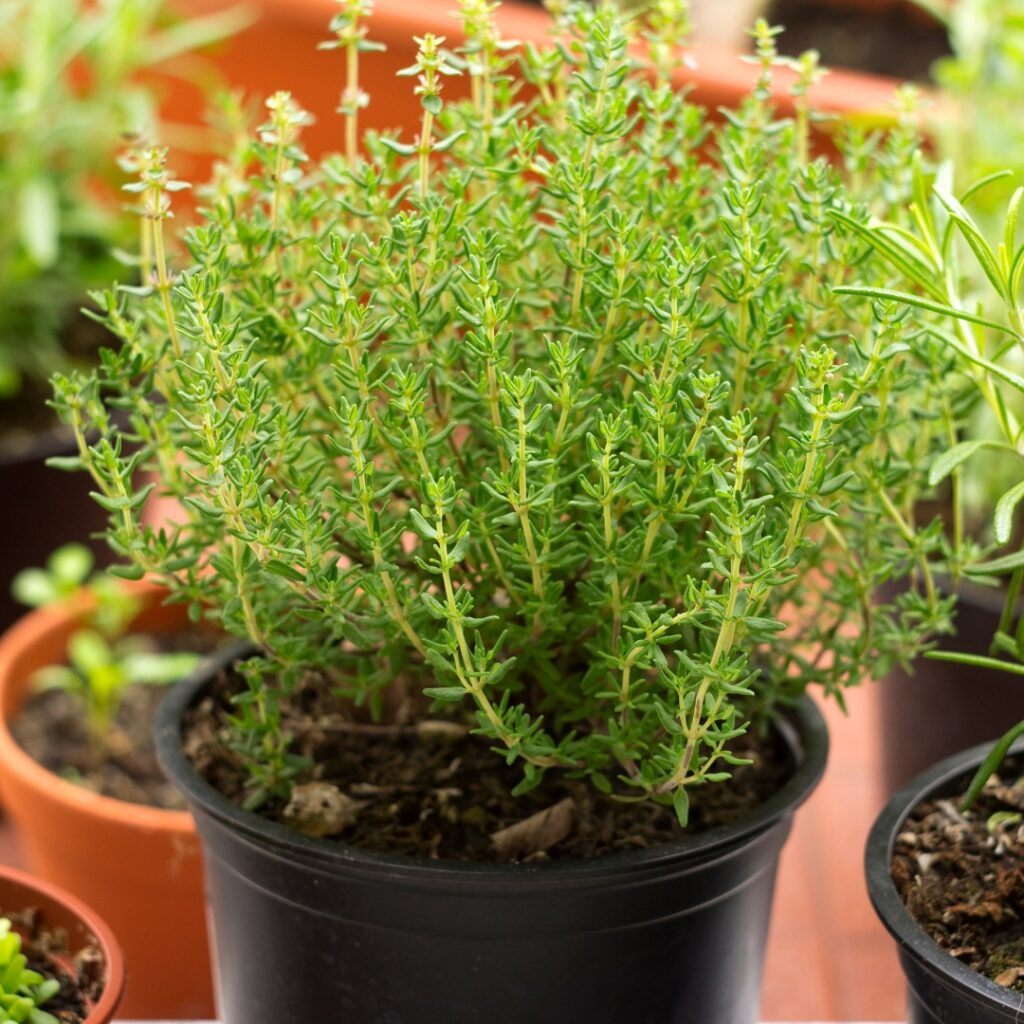
Mid-range crops like herbs and strawberries sit in the 12–25 range. Basil, mint, and parsley all perform well around 14–18 DLI. Essential oil concentration in culinary herbs actually increases with DLI, which is why greenhouse-grown basil under good lighting tastes more intense than supermarket herbs. Strawberries need sustained higher DLI for fruit set — 15 DLI is the practical minimum if you want berries rather than just leaves.
Fruiting crops — tomatoes, peppers, cucumbers — need 20–30 mol/m²/day to perform properly. Commercial greenhouse growers in the Netherlands target 22–28 DLI for tomatoes year-round, supplementing with high-intensity LEDs throughout winter. Below 15 DLI, fruit set in tomatoes drops significantly and flavour development suffers. This is why most home growers struggle with fruiting crops in winter without a serious grow light — the numbers simply do not work at lower intensities.
Why northern Europe makes this especially important
Natural daylight in Estonia and across northern Europe is dramatically lower than most growing guides assume. In Tallinn, outdoor DLI in December is approximately 1 mol/m²/day on a clear day — barely enough to keep most houseplants alive, let alone grow food. January is around 2, February 4. Even by March, outdoor DLI only reaches about 9, which is below the minimum for most food crops.
This matters because most grow light advice online comes from American sources calibrated for latitudes around 40–45°N, where winter DLI is two to four times higher than what we get in the Baltic. A grow light that works as a modest supplement in Denver is the primary light source here. The crop guide tab in the calculator below includes the Estonian DLI calendar by month precisely because this context changes the advice.
The inverse square law — why height matters as much as power
One thing that catches beginners out is how dramatically PPFD drops with distance. Light intensity follows the inverse square law: double the distance from the light source to the canopy and you reduce PPFD to roughly a quarter of its original value. A light delivering 400 μmol/m²/s at 20 cm delivers only about 100 μmol/m²/s at 40 cm.
This means the height you hang your grow light is as important as its wattage. For leafy greens and herbs, positioning the light 20–30 cm above the canopy is usually right. For fruiting plants that grow tall, you either need a very powerful light to maintain adequate PPFD at greater distance, or you need to lower the light as the plants grow. The PPFD figure you enter into the calculator should always reflect the distance you actually use — not the maximum figure quoted in the spec sheet, which is usually measured at the closest possible distance.
Use the calculator to find your numbers
The calculator below covers three things. The My DLI tab takes your light type, wattage bracket, and daily photoperiod, estimates your PPFD, and calculates the DLI your plants are receiving — with a colour-coded verdict against your selected crop. The Hours needed tab works in reverse: pick your crop, enter your PPFD, and it tells you how long to run the light to hit the target range. The Crop guide tab shows the full DLI reference table and the Estonian DLI calendar by month.
The PPFD estimates use typical photon efficacy values by light category — quality LED panels, budget LEDs, T5 fluorescent tubes, and CFL bulbs all convert electricity to plant-usable photons at different rates, and the calculator accounts for that difference. All estimates carry a ±25–35% variance note because PPFD genuinely varies that much between fixtures in the same category. If you know the exact PPFD from your light’s specification sheet, entering that number directly gives a more accurate result than any estimate can.
DLI Calculator
What to do when your DLI is too low
If the calculator tells you your DLI is below the target for your crop, you have three options. The easiest is to extend your photoperiod — adding two or three hours to the timer costs nothing and can meaningfully increase DLI. Most crops tolerate up to 18 hours of light per day, though a minimum of 6 hours darkness is important for healthy cell function. Going beyond 18 hours rarely helps and can stress certain crops.
The second option is to lower the light closer to the canopy to increase PPFD, which directly increases DLI without changing your timer. The inverse square law works in your favour here — moving a light from 40 cm to 25 cm roughly doubles the PPFD at the canopy.
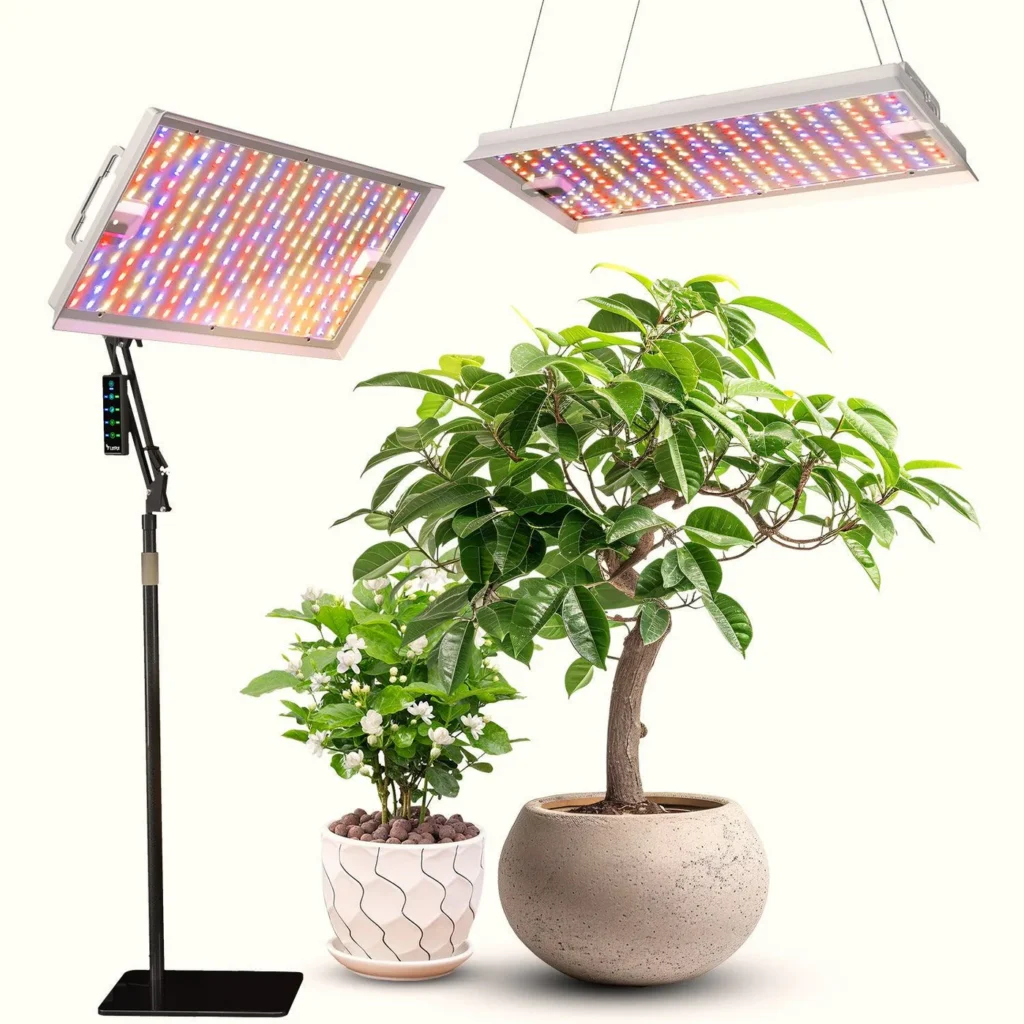
The third option is a more powerful or more efficient light. If you are trying to grow tomatoes or peppers through a northern European winter with a small CFL bulb, the math does not work no matter how long you run it — the PPFD is simply too low to reach 20 DLI within a safe photoperiod. Our grow lights category covers options at different scales, from compact single-plant lamps to panel lights suited to larger growing setups.
Getting started practically
If you are new to measuring light, the useful first step is simply to run the calculator with your current setup and see where you land relative to your crop. Many people discover they are at 60–70% of what their plants need — close enough that a timer adjustment fixes it entirely. Others discover their light is genuinely underpowered for what they are trying to grow, which is useful to know before spending another winter wondering why the tomatoes never set fruit.
If you have questions about your specific setup — a particular light, a particular crop, a particular room — leave a comment below. The more context you give, the more specific I can be. And if the calculator saves you a batch of leggy seedlings or an underperforming pepper plant, share it with someone else who is trying to grow food indoors this winter.