
This is one of the questions I get asked most often, and it is also one of the most misunderstood topics in indoor gardening. Most people judge their room light by how bright it feels to the human eye — but our eyes are terrible light meters. A room that feels pleasantly bright to you may be delivering a fraction of the light a plant actually needs. Understanding a few straightforward concepts will tell you, with real accuracy, whether your space can support the plants you want to grow — or whether you need supplemental lighting.
If you want a direct answer for your specific room right now, use the quiz below. This post then explains the science behind every question so you understand exactly why each factor matters.
Table of Contents
What is DLI and why does it matter more than lux?
DLI stands for Daily Light Integral. It measures the total amount of photosynthetically useful light — the wavelengths plants can actually use for photosynthesis — that a surface receives over a full day. The unit is moles of photons per square metre per day (mol/m²/day). Unlike lux, which measures a single instant and weights light the way human eyes perceive it, DLI captures the cumulative dose a plant receives. It is the measure that matters for growth.
The concept was developed extensively by researchers including Dr. Erik Runkle at Michigan State University and Dr. Bruce Bugbee at Utah State University, whose work on controlled-environment agriculture and plant lighting has been foundational in this field. Their published research established the DLI thresholds for different crop categories that form the backbone of the quiz.
For herbs and leafy greens, the practical minimum DLI for sustained productive growth is around 8–10 mol/m²/day. Fruiting and flowering crops like tomatoes and peppers need 14–20 mol/m²/day or more. Low-light tropical foliage plants can survive at 3–5 mol/m²/day, and succulents and cacti need at least 3–4 mol/m²/day despite their reputation as drought-tolerant plants that supposedly thrive on neglect.
Why the northern European context changes everything
Almost every indoor plant guide published in English was written for a US or southern European audience at roughly 35–45°N latitude. At those latitudes, a south-facing window in a reasonably unobstructed room receives around 15–25 mol/m²/day in summer and 5–10 mol/m²/day in winter. Those numbers are what the phrases “bright indirect light” and “needs a sunny window” are calibrated to.
Tallinn, Riga, Helsinki, and Stockholm sit at approximately 59–60°N. The geometry of the sun’s path across the sky at this latitude is fundamentally different. In December, the sun rises at roughly 9:00 and sets by 15:30, barely clearing the horizon at a low angle. A south-facing window in Tallinn in December might deliver 1–3 mol/m²/day on a good day. A north-facing window delivers almost nothing measurable. Data from the Finnish Meteorological Institute consistently shows that November through February in northern Europe have solar radiation levels that place them in a completely different category from the conditions most English-language plant guides assume.
This means that advice like “a bright windowsill is fine for basil” is simply wrong for our conditions in winter. I have killed more than a few herb plants following advice that was perfectly valid for someone growing in Madrid but completely inappropriate for a north-facing kitchen in Tallinn in January. The quiz is calibrated specifically for 59°N conditions to account for this.
Why window direction is the single biggest factor
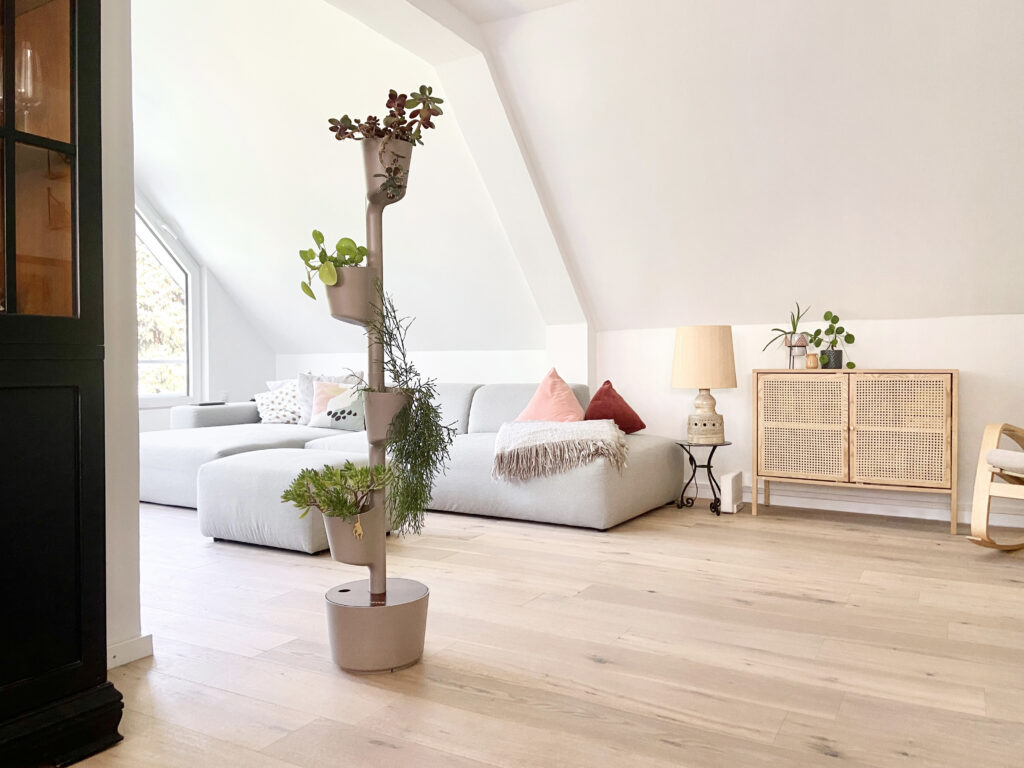
The compass direction your window faces determines both the duration and the angle of direct light reaching your plants. In the northern hemisphere, south-facing windows receive the most light across all seasons because the sun arcs across the southern sky. At 59°N in summer, a south window gets long, relatively direct sun through most of the day. A north-facing window at the same latitude receives no direct sun at all — only diffuse skylight reflected indirectly.
East-facing windows receive gentle direct sun only in the morning hours, and west-facing windows receive it only in the afternoon. In terms of annual DLI, a south window at 59°N delivers roughly four times the light of a north window, and about twice that of an east or west window. That is not a small difference — it determines which plant categories are even viable without supplemental lighting.
The distance problem most beginners underestimate
Light intensity follows the inverse square law: double the distance from the source, and intensity drops to one quarter. In a domestic room, this means that the difference between a plant sitting on the windowsill versus a plant sitting on a table 1.5 metres away is not subtle — you are looking at roughly 70% less light at the table than at the glass. At 3 metres from the window, a plant may be receiving as little as 10% of the available light.
This is why I always emphasise getting plants as physically close to the window as possible. Even a move of 30 cm further into a room makes a real, measurable difference. If your room layout or aesthetic makes this impractical, that is useful information — it means supplemental lighting is likely the only reliable solution for anything other than the most shade-tolerant species.
Seasonal variation and the winter bottleneck
At 59°N, the difference between summer and winter light is dramatic enough to change your entire growing strategy. In July, days are around 18–19 hours long and the sun reaches a useful angle. In December, you have roughly 6 usable hours at a very low angle. Combined, this means winter DLI can be as low as 15–20% of summer DLI at the same window. A room that comfortably grows basil in July may not sustain it at all in December without a grow light.
This is why the quiz asks specifically about your growing season. If you are only growing in summer, the calculation is much more favourable. If you want year-round production or are starting seeds in late winter for spring transplanting — which many gardeners do — you almost certainly need supplemental lighting regardless of your window size or direction.
How obstructions reduce what your window can actually deliver
Even a perfectly positioned south-facing window delivers far less than its theoretical maximum if the sky view is blocked. A neighbouring building directly opposite can reduce incoming light by 50% or more depending on proximity and height. Trees reduce light variably — in winter when deciduous trees have no leaves the effect is modest, but in summer a mature tree can block 60–70% of available light. Deep balconies and roof overhangs are particularly problematic because they block the high-angle summer sun that would otherwise be most useful.
The quiz estimates obstruction impact conservatively. If you have a south-facing window but look directly at a building wall three metres away, the effective DLI is closer to a north or east window with a clear view.
Grow Light Quiz
So when do you actually need a grow light?
The honest answer is: for most productive indoor growing in northern Europe, especially between October and March, a grow light will improve results at a minimum and be essential at a maximum. This is not a sales pitch — it is a straightforward consequence of the physics of our latitude and the biology of the plants we want to grow. For purely decorative low-light tropicals on a well-positioned south or east windowsill, natural light can be sufficient year-round. For anything you want to eat or that needs to flower and fruit, supplemental lighting makes the difference between success and disappointment in winter.
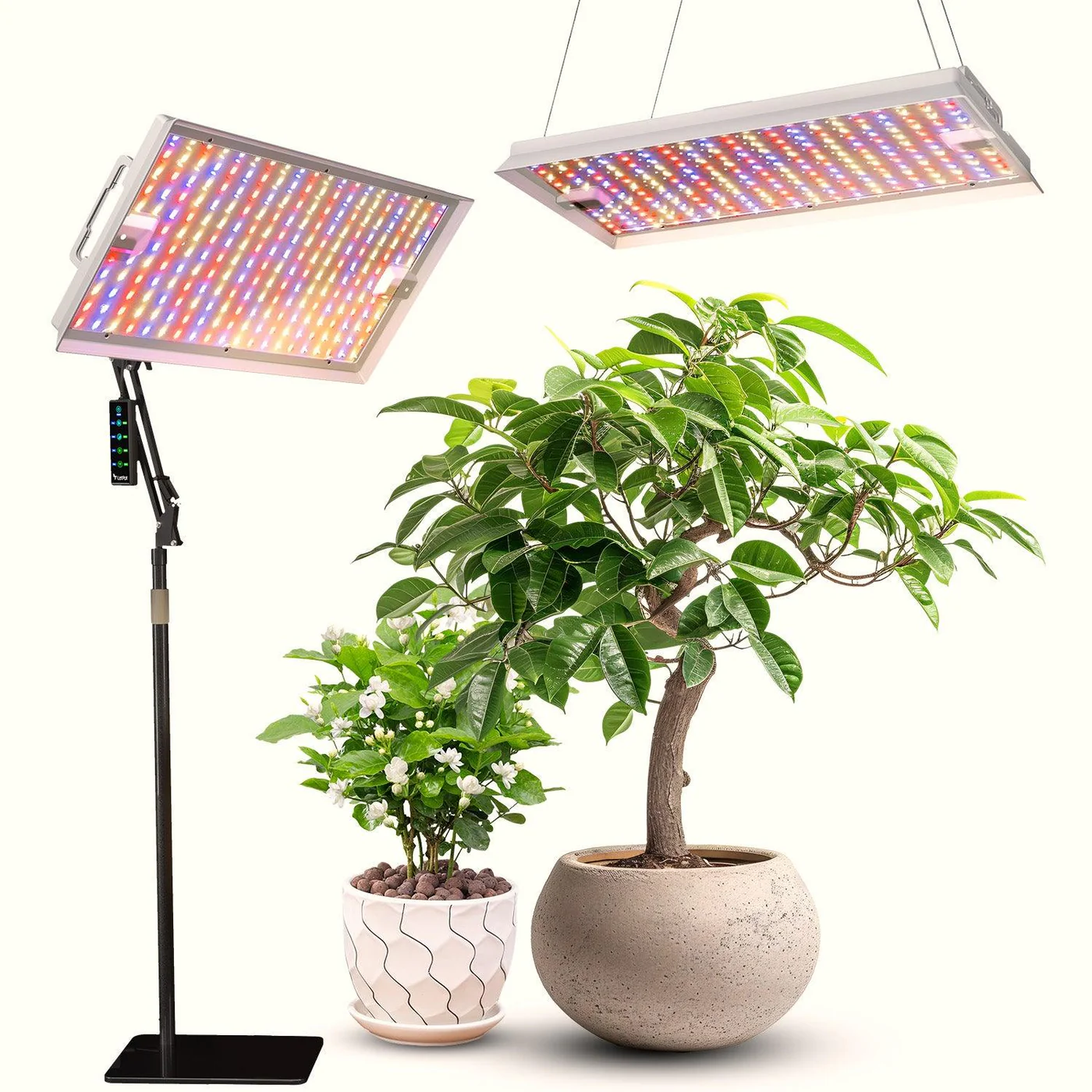
A good grow light does not need to be large or expensive to make a meaningful difference. Even a compact full-spectrum LED panel running 12–14 hours per day adds several mol/m²/day to what your window provides. You can browse the grow lights range at IndoorGarden to find options suited to different growing setups and room sizes.
If you want to pair your grow light correctly with your plants, the DLI Calculator lets you calculate exactly how many hours of supplemental light you need based on the model you choose and your natural light baseline. Between that tool and the room quiz, you have everything you need to plan an indoor growing setup that will actually work at our latitude.
I have been growing indoors at these latitudes for over a decade and the single biggest improvement I made was accepting the light reality of northern winters rather than fighting it with plants that were always going to struggle. Once you have a clear picture of what your room can actually deliver, the rest of the decisions — what to grow, where to place it, whether to add lighting — become much more straightforward.