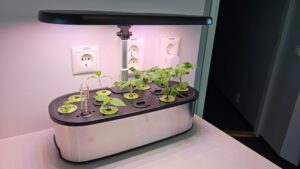

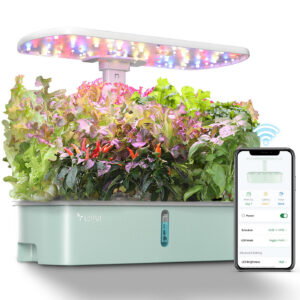
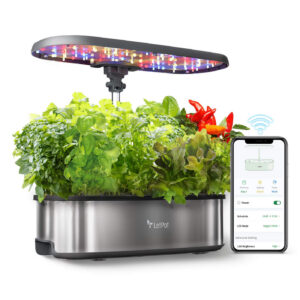
LetPot Air vs Senior comes down to size, material and light reach: the 10-pod Air costs €89 with an all-ABS plastic body and a light arm that extends to around 35cm, while the 12-pod Senior costs €129 with a stainless-steel frame and a light arm LetPot’s own specifications list as reaching up to roughly 76cm, useful for taller crops.
Both the LetPot Air and LetPot Senior are hydroponic smart gardens with their own LED light and water pump on a timer, so the real choice between them is less about whether hydroponics works and more about how many plants you want running at once and how much headroom they need as they grow. This guide compares the two on build, light, water tank and running cost, using LetPot’s published specifications, so you can match the model to your kitchen rather than to the bigger box.
Products mentioned — in stock at IndoorGarden, shipped from Tallinn across the EU.
Why compare the Air and Senior specifically
LetPot sells five models in total, but the Air and Senior sit closest together in price and are the two most commonly confused, since both are mid-sized units built for a full counter of herbs or greens rather than a single plant. Our broader LetPot model comparison covers the full five-model range if neither of these two fits; this guide goes deeper on just these two, since they are the pair we get asked about most.
As a rough guide to household size, the 10-pod Air suits one to two people who mainly want a rotating supply of herbs and a salad green or two, while the 12-pod Senior has enough spare capacity for a household of three or four, or for anyone who wants to dedicate one or two pods to a slower-growing crop without crowding out the herbs. Neither figure is a hard rule, since harvest frequency depends more on which herbs and greens you grow than on pod count alone.
Build, size and material: plastic vs stainless steel
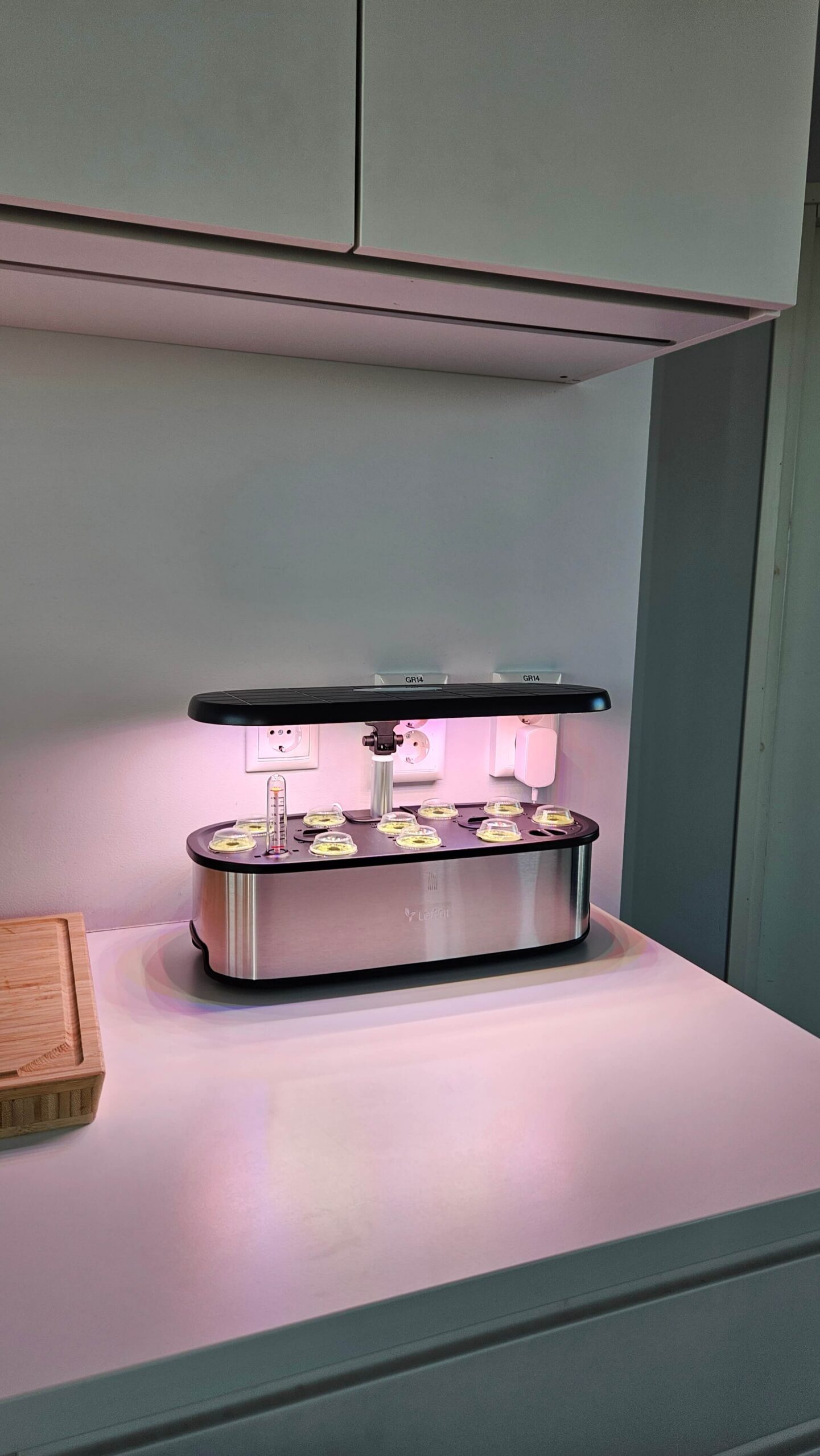
The clearest difference between the two is what they are made of. The Air uses an all-ABS plastic body throughout, which keeps it light at around 1.7kg and easy to move between a counter and a shelf. The Senior is built around a stainless-steel frame, according to LetPot’s own product specifications, which pushes its weight to roughly 2.5kg and gives it a sturdier base for a unit that is also taller once the light arm is raised. Neither material affects how the plants grow, since both use the same sealed reservoir and pod system, but the Senior’s metal frame is the better fit if the unit will sit somewhere it might get bumped, such as a shared kitchen counter.
Footprint is similar at the base: LetPot lists the Air at roughly 38 × 13 × 13cm and the Senior at around 41 × 18 × 25cm before the light arm is raised, so the Senior takes a little more counter depth and stands taller once the light is extended to its full height. Neither unit needs more than a standard EU socket nearby, and both run on the same low-voltage adapter design.

Light reach and growth speed
Both models run a 24W full-spectrum LED, so the two units draw the same amount of power for lighting and should grow a given herb or leafy green at a similar underlying pace. Where they differ is reach: the Air’s light arm extends to about 35cm above the pods, while the Senior’s adjustable, rotatable arm reaches up to roughly 76cm per LetPot’s specifications, with the panel itself also detachable. That extra height matters mainly for crops that grow tall before they are ready to harvest, such as a dwarf tomato or a chilli plant, since the light needs to move up with the plant rather than scorching the top leaves. For herbs and leafy greens, Iowa State University Extension recommends 12 to 16 hours of light a day under a grow light, which the app on both models can schedule automatically regardless of which one you choose.
Water tank, noise and daily upkeep
The Senior’s reservoir holds 5.5 litres against the Air’s 4 litres, which in practice means fewer refills between top-ups for a full 12-pod planting than for a 10-pod one, since more plants are also drawing from the larger tank. Both units circulate water on the same 30-minute pump cycle, according to LetPot’s specifications, so the mechanics of watering are identical between the two. On noise, LetPot states the Senior runs below 20 dB, while the Air’s listing only claims “ultra-quiet” without a decibel figure, so if a near-silent kitchen matters to you specifically, the Senior is the one with a number behind the claim. Neither model publishes a figure for pump wattage, so we can’t compare running cost on that point directly.
Price, running cost and which to buy for your kitchen
At €89, the Air is the cheaper entry point and suits two to four people growing herbs and a few salad leaves without needing a tall crop. At €129, the Senior’s extra €40 buys two extra pods, a larger tank, a sturdier frame and roughly double the light-arm reach, which is the better value if you already know you want to grow a dwarf tomato or chilli alongside your herbs, or simply want fewer refill trips. Our medium smart gardens category groups both alongside similar 7 to 12-plant units if you want to compare further before deciding, and a growing trellis stand is available separately for the Senior if you plan to grow a trailing or climbing plant in it later.
On running cost, a 24W LED on a 14-hour daily schedule works out to roughly 0.34 kWh a day, which typically comes to a few euro cents a day at average EU household electricity rates — a small, ongoing cost that is the same for either model, since both use the same wattage of light. The price difference between the two is almost entirely in the hardware itself, not in what it costs to run afterwards.
| Spec | LetPot Air | LetPot Senior |
|---|---|---|
| Pods | 10 | 12 |
| Price | €89.00 | €129.00 |
| Body material | ABS plastic | Stainless steel frame |
| Weight | ~1.7kg | ~2.5kg |
| LED light | 24W full-spectrum | 24W full-spectrum |
| Light arm reach | up to ~35cm | up to ~76cm, rotatable, detachable |
| Water tank | 4 litres | 5.5 litres |
| Stated noise level | “Ultra-quiet” (no dB figure given) | Below 20 dB |
| Pump cycle | 30-minute intervals | 30-minute intervals |
Frequently asked questions
Which is better for a complete beginner, the Air or the Senior?
Either works equally well for a first hydroponic herb garden, since both automate light and watering the same way. The Air is the lower-cost way to try the format; the Senior is worth the extra €40 mainly if you already plan to grow something taller than a herb.
Can I grow tomatoes or chillies in the Air, or do I need the Senior?
Both can grow a dwarf tomato or chilli, but the Senior’s taller, adjustable light arm gives more room before the plant reaches the panel, which matters more as the fruiting stage goes on. In the Air, a tall-growing crop may need the light raised earlier or moved to a shelf with more headroom.
How much heavier is the Senior than the Air?
The Senior weighs roughly 2.5kg against the Air’s 1.7kg, a difference that comes mostly from the Senior’s stainless-steel frame rather than the electronics, which are similar between the two.
Is the Senior actually quieter than the Air?
LetPot states the Senior runs below 20 dB. The Air’s own listing does not give a decibel number, only a general “ultra-quiet” claim, so we can only confirm a figure for the Senior.
Do the Air and Senior use the same app?
Yes. Both connect to the same LetPot app for scheduling the light and monitoring the water level, so switching between models later does not mean learning a new system.
How often do I need to top up the water tank?
LetPot does not publish an exact refill interval for either model, since it depends on how many plants are drawing water and the room’s temperature. The Senior’s larger 5.5-litre tank will generally need topping up less often than the Air’s 4 litres for a similarly full planting.
Where to start
If you are growing mostly herbs and salad leaves for two to four people, the LetPot Air is the simpler, lower-cost starting point. If you already know you want extra pods, a larger tank or room to grow something taller, the Senior and the rest of our medium smart gardens range are worth the difference. Both ship from our Tallinn warehouse across the EU.