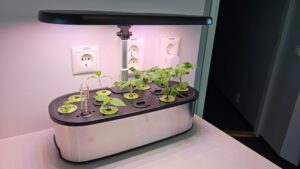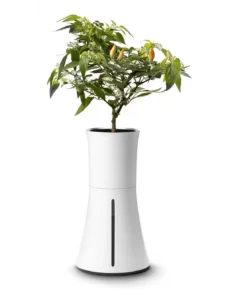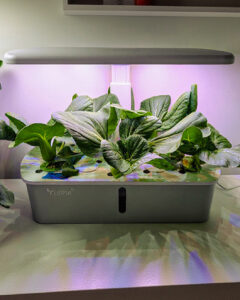
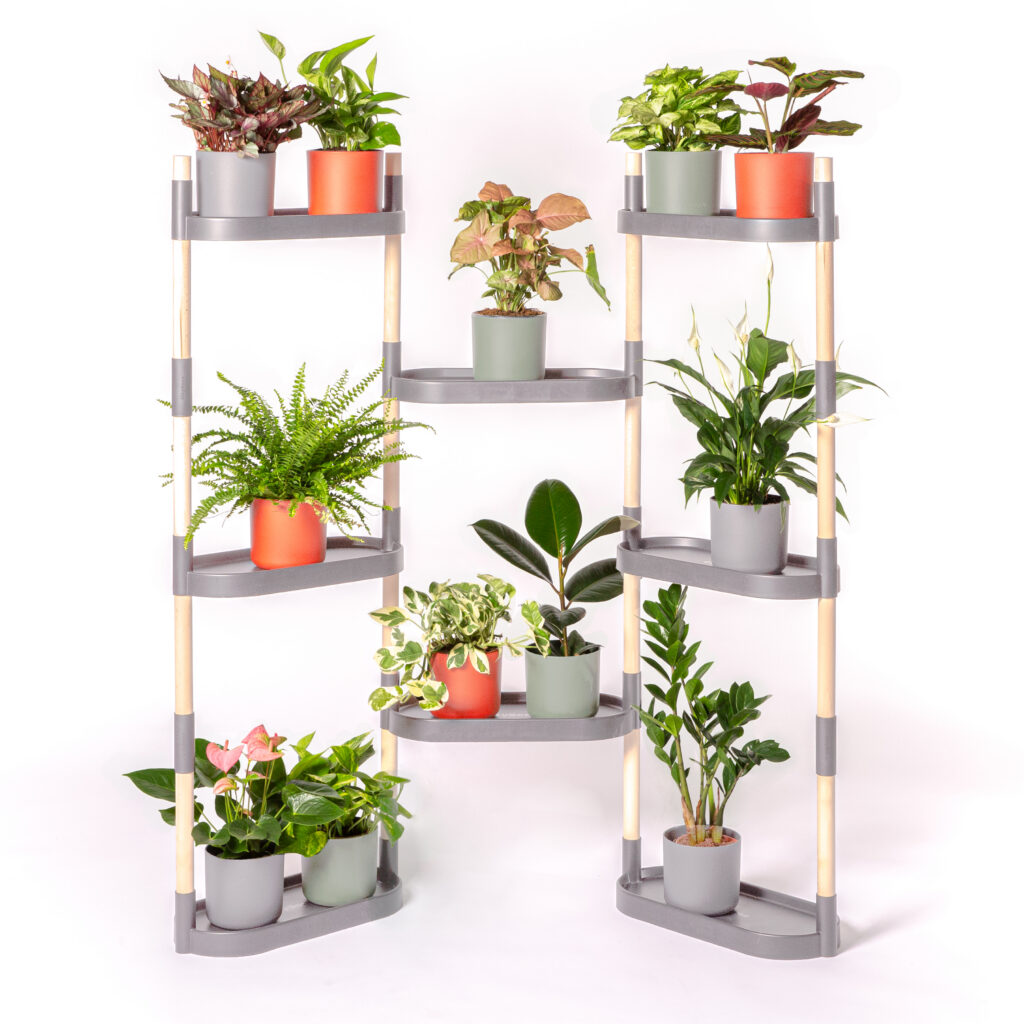
Lettuce grown at home in a vertical garden can usually be picked for the first time 4–6 weeks after sowing, and once the first harvest is cut correctly, the same plant often grows back and gives a new harvest every 3–4 weeks, several times in a row.
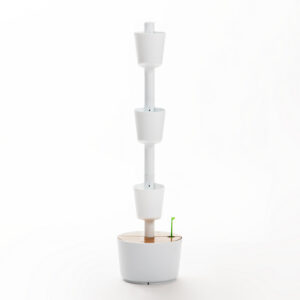
If you’re short on space at home, a vertical planter lets you grow several types of lettuce at once and always have something to pick for dinner. We’re IndoorGarden, based in Tallinn, and we ship from Estonia across the whole European Union, so we know that for most people the most important thing is simplicity: plant it, water it, and wait for a harvest, without needing a garden or a balcony. In this article we show step by step how to do that using a vertical planter with automatic watering.
This guide works whether you’re growing lettuce for the first time or you already have a planter on the balcony or in the kitchen and want more than one harvest from the same planting. The steps apply to other vertical systems too, not just CitySens, because the growing principles — sowing density, moisture, light and how you cut — stay the same.
Products mentioned — in stock at IndoorGarden, shipped from Tallinn across the EU.


Why a vertical garden suits growing lettuce
Most lettuce grown at home belongs to the type that gardening sources, such as the UK’s Royal Horticultural Society (RHS), call “cut-and-come-again”. That means you can get several harvests from one sowing if the leaves are cut correctly rather than pulling up the whole plant. A vertical planter suits this growing method particularly well, because several plants fit in a small area and each pot gets a similar amount of light and water.
According to the same sources, one sowing typically gives 3–4 harvests before the plant starts to flower or weakens. At that point it’s better to sow a fresh batch than wait for another harvest from an old plant. In a vertical planter, like CitySens, that’s convenient — you can refresh one pot while the others keep growing.
A further advantage is space. Three or four pots fit in the area one large outdoor planter would take, so a vertical planter can sit in the kitchen, by a window, or on a small balcony. Because it’s grown indoors, a harvest is possible year-round, regardless of the outdoor season, provided the plants get enough light.
How to plant lettuce in a vertical planter
Start with seeds suited to growing without garden soil, such as leaf lettuce or rocket seeds. Sow the seeds thinly — plants sown too densely compete for light and tend to flower earlier. RHS recommends a container at least 30 cm wide and deep for leaf lettuce; a single pot in a vertical planter is usually smaller, so it’s better to plant a few seeds per pot rather than a dense row.
Keep the growing medium evenly moist but not waterlogged — roots need oxygen too. If the planter has a Wi-Fi-controlled watering system, that immediately lowers the risk of over- or under-watering, since watering follows a set schedule rather than memory.
Before sowing, check each pot’s drainage — water needs somewhere to go, otherwise the medium at the bottom stays constantly wet and roots can start to rot. If you use your own growing medium instead of the one in the kit, choose a light, well-draining material suited to seedlings or hydroponics, not garden soil.

How much light, water and nutrients are needed
Lettuce and rocket grow best in a bright spot that isn’t too hot. If there’s little light near a window, it’s worth adding a grow light — that helps plants stay compact instead of stretching into a tall, thin stem reaching for light. Heat, irregular watering and overly dense planting are the most common reasons lettuce and rocket flower early and turn bitter — this is confirmed by RHS guides on lettuce and rocket as well.
In summer, when growth is more intense, RHS advises feeding every two weeks. In winter, when growth slows, feeding can be reduced. When using mineral nutrients made for hydroponics, choose the dose based on the manufacturer’s stated concentration rather than guessing.
If windows are darker in winter or the planter sits farther from a window, a supplementary grow light running for a dozen or so hours a day often helps maintain even growth. This isn’t essential, but it reduces the risk of plants stretching and turning pale as they search for light.
When and how to cut a harvest so the plant keeps growing
The most important rule is not to cut the plant down to the root. RHS recommends cutting leaf lettuce about 2.5 cm above the base of the plant, without damaging the central growing point — a new cluster of leaves then grows from it. With rocket, it’s better to pick a few leaves at a time from each plant rather than stripping the whole plant at once — that way the planting keeps giving a harvest for longer.
The first harvest is usually ready 4–6 weeks after sowing, for both lettuce and rocket. After the first cut, with the right care, a new harvest often matures within a few weeks, so it’s realistic to get 3–4 harvests from one planting before the plant starts to flower. It’s worth thinning rocket to about 15 cm apart — that leaves each plant more light and room to grow, and less reason to flower early.

Lettuce or rocket: which to choose for a first try
If you’re unsure where to start, the simplest choice is leaf lettuce, such as a “Salad Bowl” type mix. It grows quickly, the flavour is mild, and the leaves work both on their own and mixed with other ingredients. Rocket grows at a similar pace, but the flavour is stronger and nutty, so it suits people who use salad greens more as an addition to other dishes than as the main component.
In a vertical planter with several pots, you don’t have to choose just one plant — one pot can grow lettuce, another rocket, and a third can be left for the next sowing, so the harvest doesn’t all mature at once but in sequence. That way there’s always something to pick, even when one pot has already finished its cycle.
The most common mistakes growing lettuce at home
The most common mistake is sowing too densely, where several plants compete for space and light inside one pot. A second common mistake is cutting down to the root or digging the plant up entirely, after which it simply doesn’t grow back. A third is uneven watering: a growing medium that’s too dry causes stress and encourages flowering, while one that’s too wet can damage roots.
It’s also worth checking whether the planter is getting enough light. If the leaves turn pale, thin, and stretch to one side, the plant lacks light — in that case it’s worth moving the vertical planter closer to a window or adding a grow light.
A fourth mistake is forgetting to thin out seedlings. If more seeds germinate than needed, leave only the strongest seedlings and remove the rest while they’re still small. Otherwise all the seedlings stay small and thin, since they’re sharing the same limited space and nutrients.
Prices and what you need to get started
| Product | Price | Link |
|---|---|---|
| CitySens Vertical Planter, white, 3 pots, Wi-Fi watering kit | €189 | View product |
| Organic Lettuce “Salad Bowl” Seeds | €1.99 | View product |
| Rocket Salad Rucola Seeds | €1.49 | View product |
Prices can change, so always check the current price on the product page.
Frequently asked questions
How long does it take for lettuce at home to produce its first harvest?
Usually the first harvest is ready 4–6 weeks after sowing, for both leaf lettuce and rocket, according to RHS guidance.
Does lettuce grow back after cutting?
Yes, if you cut about 2.5 cm above the base without damaging the central growing point. That typically gives 3–4 harvests from one planting.
How much light does lettuce need in a vertical planter?
It needs a bright spot that isn’t too hot. If there isn’t enough light near a window, a supplementary grow light helps plants stay compact instead of stretching tall and thin.
Why does lettuce start to flower (bolt) and how can I avoid it?
The most common causes are heat, irregular watering and overly dense planting. Even watering, enough space between plants and a cooler spot all reduce this risk.
Does rocket grow the same way as lettuce?
The growing principle is very similar, but rocket is better thinned to about 15 cm apart and picked a few leaves at a time from each plant rather than all at once from one.
How often does lettuce need feeding in a vertical garden?
RHS advises feeding every two weeks in summer, during intense growth, using nutrients made for hydroponics at the manufacturer’s stated dose.
Where to start
If you want the simplest way to begin, choose the CitySens Vertical Planter with Wi-Fi watering kit and pair it with leaf lettuce or rocket seeds. You’ll find more options in the vertical planters category. Plant thinly, water evenly, and cut correctly above the growing point, and you can expect a first harvest within a few weeks, followed by a new harvest every 3–4 weeks.
If you haven’t decided which seeds to choose yet, start with one pack of leaf lettuce and one of rocket — both grow at a similar pace, so you can watch and care for the planter on one schedule until you settle into the watering and cutting rhythm.