Direct answer: A smart garden is safe for pet owners when you stick to plants the ASPCA’s toxic plant database classifies as non-toxic to cats and dogs. The safest options for an indoor hydroponic unit like my LetPot Mini smart garden are basil, dill, sage, thyme, parsley (in moderation), and most lettuces. The ones to keep off-limits are chives, garlic, onion greens, mint (mildly toxic to cats), oregano, marjoram, lemongrass, and any allium. I grow with two curious cats in the room, and this is exactly how I decide what goes in the pods.
I have two cats — a tabby who licks anything green and a black cat who knocks pots off shelves for sport. When I set up my first smart garden two years ago, I assumed “edible herb = safe.” I was wrong. After a vet visit involving a chewed chive stem and one unhappy tabby, I rebuilt my pod list from the ASPCA database up. Here is what I plant now without worry, what I never plant, and the small habits that keep the kitchen counter both productive and pet-safe.
Why pet safety matters more in a smart garden than on a windowsill
A smart garden is a self-watering hydroponic appliance that produces fresh herbs and greens on your counter year-round. The accessibility is the point — and the problem. Unlike a pot on a high shelf, a smart garden sits at counter or floor height, lights up like an exhibit, and stays lush 24/7. To a cat, it looks like an all-you-can-chew salad bar with mood lighting. The 2023 review by Radin and Wellman in Veterinary Clinics of North America (PMID 36270836) notes that owners are often unaware of which household plants are toxic to dogs and cats, and that ingestion is one of the most common avoidable causes of small-animal poisoning. The fix is not to skip the smart garden — it is to be deliberate about what goes in the pods.
Safe vs toxic: the comparison table I keep on my fridge
A comparison table is the fastest way to plan a pet-safe pod layout. The list below is built from the ASPCA toxic and non-toxic plant database, cross-checked against the seeds IndoorGarden sells for hydroponics. “Safe” means non-toxic to both cats and dogs in normal accidental nibble amounts. “Avoid” means flagged toxic to one or both species — even if the toxicity is mild GI upset.
| Plant | Cats | Dogs | Verdict for my pods |
|---|---|---|---|
| Basil (sweet, Thai, Genovese) | Non-toxic | Non-toxic | Safe — grow freely |
| Dill | Non-toxic | Non-toxic | Safe — grow freely |
| Sage | Non-toxic | Non-toxic | Safe — grow freely |
| Thyme | Non-toxic | Non-toxic | Safe — grow freely |
| Parsley (curly, flat-leaf) | Non-toxic in small amounts | Mild toxicity in large amounts | Safe — but harvest before flowering |
| Lettuce, leaf and butterhead | Non-toxic | Non-toxic | Safe — grow freely |
| Rosemary | Non-toxic | Non-toxic | Safe — grow freely |
| Cilantro / coriander | Non-toxic | Non-toxic | Safe — grow freely |
| Mint | Mildly toxic (essential oils) | Mildly toxic in quantity | Avoid in open units |
| Chives | Highly toxic (allium) | Highly toxic (allium) | Never plant |
| Garlic greens | Highly toxic (allium) | Highly toxic (allium) | Never plant |
| Onion / spring onion | Highly toxic (allium) | Highly toxic (allium) | Never plant |
| Oregano | Toxic | Toxic | Avoid |
| Marjoram | Toxic | Toxic | Avoid |
| Lemongrass | Toxic | Toxic | Avoid |
| Lavender | Toxic (essential oils) | Toxic (essential oils) | Avoid in open units |
What I actually grow in my LetPot Mini right now
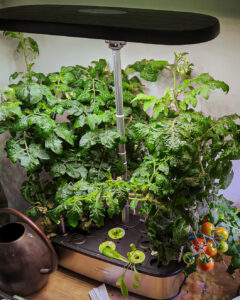
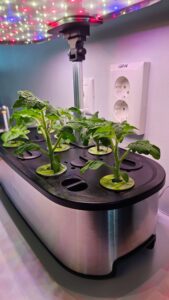
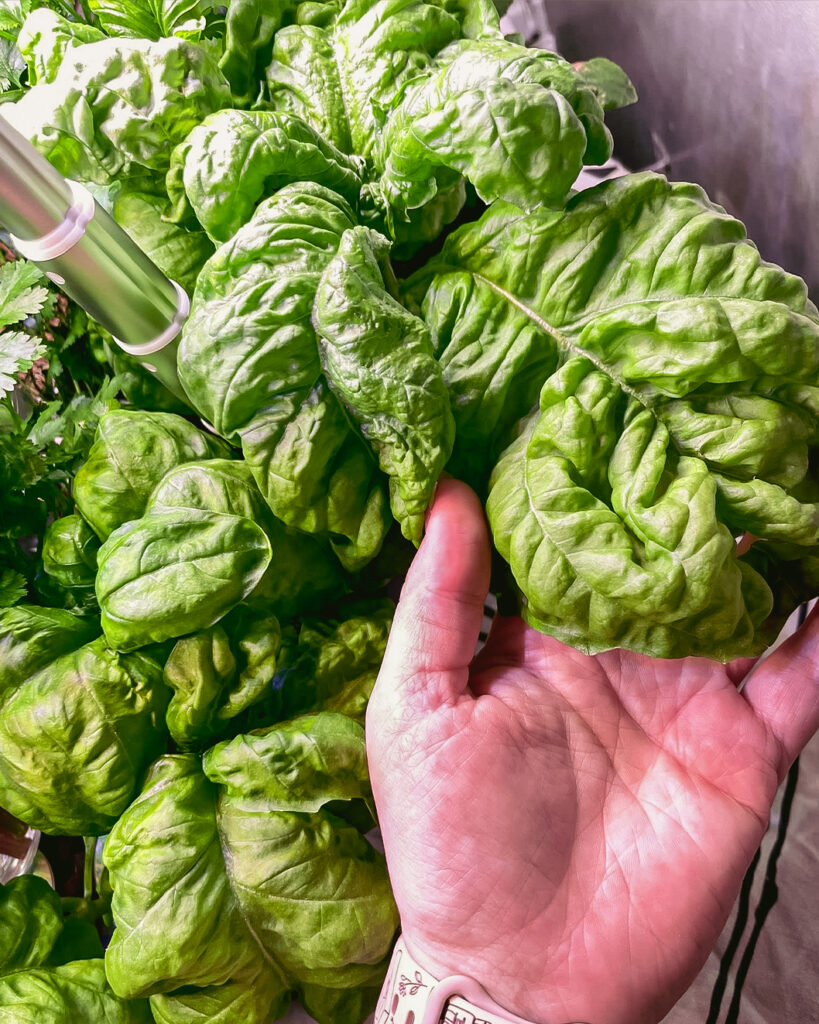
My LetPot Mini has five pods. The current rotation is two basil (one Genovese, one Thai), one dill, one parsley, and one butterhead lettuce. None of these will hurt my cats if a stem gets chewed. Basil is the workhorse — it grows fast in a hydroponic unit, the cats sniff it once and lose interest, and I get pesto for weeks. Dill is the second cat-favourite sniff but also non-toxic. The lettuce gets occasional cat attention; some cats nibble greens to aid digestion, and butterhead is on the ASPCA non-toxic list, so I let it happen.
If you want a deeper list of safe indoor herbs to rotate through, I keep a separate guide on which herbs I can grow indoors. Almost every herb on that shortlist is also pet-safe, with the obvious allium and essential-oil exceptions called out above.
What I keep off-limits — even though it is tempting
“Off-limits” means I do not put it in any pod that lives at cat-reachable height. Top of my no-list: chives, garlic chives, spring onion, and anything in the allium family. The toxicity for cats is severe — allium ingestion can cause hemolytic anemia, and cats are more sensitive than dogs because they metabolise the disulfides poorly. Lavender is another one I want but cannot grow indoors in an open unit; the essential oils that make it relaxing for humans are mildly toxic to both species, and the leaves are tempting for a chewer. I cover that trade-off in detail in my piece on whether you can grow lavender indoors — short version: yes, but not where pets roam.
The three habits that make my setup work
Plant choice is 80% of pet safety. The remaining 20% is daily habit. First: I keep the smart garden on a kitchen counter the cats can technically reach but rarely do — height is a mild deterrent, not a hard barrier. Second: I harvest aggressively. A pot full of bushy basil is more interesting to a bored cat than a freshly trimmed one. Frequent harvesting also reduces the chance of any pod flowering, which is when even safe plants can develop compounds I do not want in a curious mouth. Third: I never use any nutrient additive that is not labelled food-safe. LetPot’s stock nutrient solution is fine; I would not pour something exotic in there with cats licking spilled water.
What to do if your pet eats something from the smart garden
“What to do” means act fast and call a professional — do not wait to see if symptoms develop. If your cat or dog chews any plant from the toxic column above, call your local emergency vet immediately. In the US, the ASPCA Animal Poison Control Center hotline is (888) 426-4435; in Europe, contact your national veterinary poison line or 24-hour vet clinic. Bring the plant or a photo with you. Vomiting, drooling, lethargy, loss of appetite, or pale gums are all red flags. The faster you act, the better the outcome — particularly with allium and lily toxicity, where damage compounds quickly.
Frequently asked questions
Is basil safe for cats and dogs?
Yes. The ASPCA lists sweet basil (Ocimum basilicum) as non-toxic to both cats and dogs. Casual chewing is fine. Avoid letting a pet eat large amounts, but normal nibbling poses no risk.
Why are chives so dangerous if onions are a common ingredient?
All alliums — chives, garlic, onion, leek, shallot — contain organosulfur compounds that cause oxidative damage to red blood cells in cats and dogs. Cats lack a key liver enzyme and are especially vulnerable. Even small amounts can trigger hemolytic anemia. That is why allium plants stay out of any pet household, smart garden or not.
Can I grow microgreens safely with pets?
Yes, with the same rules. Avoid onion, garlic, leek, and chive microgreens. Basil, broccoli, sunflower, beet, and pea microgreens are non-toxic to cats and dogs per the ASPCA database. Microgreen trays sit low — keep them in a closed cabinet or on a high shelf if your pets are determined chewers.
Does the LED grow light in a smart garden harm pets?
No. Smart-garden grow lights use the visible spectrum at low intensity and have no measurable UV output that would harm cats or dogs. My cats sit under the LetPot Mini’s light all the time. If your pet stares directly into any bright LED for long periods, redirect them — same rule as for a TV screen.
What about lettuce and salad greens?
Lettuce — butterhead, romaine, leaf — is non-toxic to both cats and dogs. Some cats actually enjoy a chewed leaf as occasional roughage. Avoid spinach in quantity (it contains oxalates that can stress kidneys in older pets), but a torn leaf or two is fine.
The bottom line: a smart garden and pets coexist beautifully if you build the pod list around the ASPCA non-toxic database. I have lost zero pet-related sleep over my LetPot Mini in two years, and the herb supply has been continuous. If you want to start safe, browse the pet-safe herb seed range or pick a unit from the full smart garden lineup and load it with basil, dill, parsley, and lettuce on day one.